
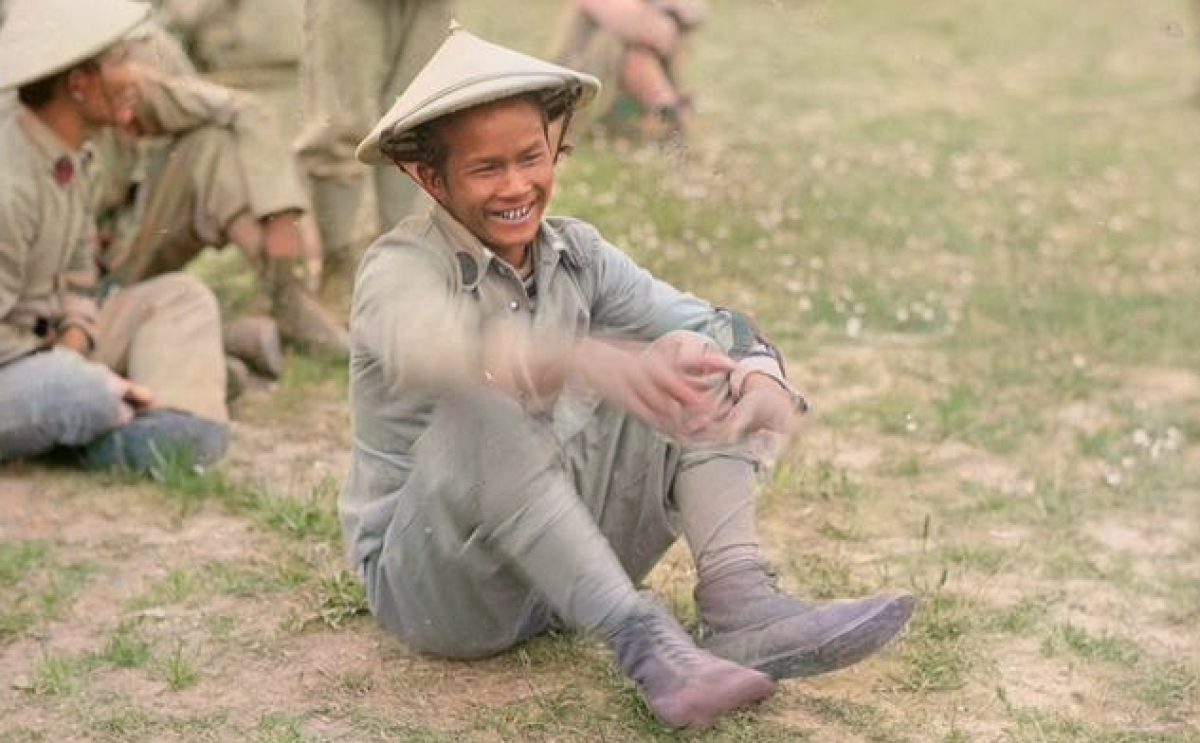
The Victoria Cross was first introduced on 29th January 1856 to honour acts of valour during the Crimean War. Two VCs were awarded in the Macedonian campaign, one in 1916 and one in 1918. It’s the first of these, to Private Hubert William Lewis of 11/Welsh, that I want to celebrate today.
Continue reading “Celebrating a Salonika VC Winner”Category: Faces of Salonika
A series of images of those – from all sides – who took part in, or witnessed, the First World War campaign in Macedonia from 1915 to 1918.
Happy New Year!
We wish all our members, friends, their families and loved ones all the very best for a happy and healthy 2023. And we send special Hogmanay greetings to our Scottish members and friends.
Continue reading “Happy New Year!”It’s Panto time again … Oh! yes it is!
This year I have been to a pantomime for the first time in about 25 years. We bought tickets last year but Covid meant that we didn’t get to use them. This year’s offering was Robin Hood and the Babes in the Wood by the Littleport Players. Not one of the more common productions – and not one I’ve come across in Salonika – but I do recall going to see it with my grandfather when I was a nipper. For many years he and I went to East Barnet Royal British Legion Hall to see the show put on by – I think – the Warren Players and Concert Party. You don’t hear of concert parties these days, so that makes me feel very old.
Continue reading “It’s Panto time again … Oh! yes it is!”…if needs be to stop there for good.
My thanks go to Lucy London (of the excellent Forgotten Poets of the First World War site) for sending on this poem, and details of its author, written in 1915.
A Candid Opinion
Do we want to back to the trenches?
To get biscuits and bully to eat
To get caught by a sniper’s chance bullet
Or crippled with frost bitten feet.
There are some say they’re anxious to get back
There are others who say they are not.
It is not that they care for the danger
Or are frightened that they will get shot.
It’s the awful conditions you live in,
Midst the rain and the mud and the dirt.
Where you’d give a month’s pay for a square meal,
And twice that amount for a shirt.
No, I’m not at all anxious to go back,
But I’ll have to go that’s understood
So I’m willing and ready to go there
And if needs be to stop there for good.
The poem’s author was William Fox Ritchie, born on 15th June 1887 in Bellshill, Lanarkshire, Scotland. William joined Princess Louise’s Argyll and Sutherland Highlanders in April 1909 and served in Malta and India. With the outbreak of war he served in Flanders where he suffered from frostbite and, in 1915, was invalided home.
Perhaps as his poem suggests, William felt compelled to return to active service. In 1917 he volunteered and joined 12th Battalion of the Argyll and Sutherland Highlanders in Salonika. Serjeant William F. Ritchie was killed in action at the Grand Couronne, Salonika on 12th September 1918. He is buried at Doiran Military Cemetery where his inscription reads, Until the day break and the shadows flee away.

Source: https://livesofthefirstworldwar.iwm.org.uk/lifestory/3753074
Ludwik and Hanka Hirszfelds’ Remarkable Medical Research at the Salonika Front
Almost every week, for me at least, a new insight about the Salonika Campaign presents itself. In this case how the campaign, in bringing together forces from Europe, Africa, and Asia, gave an opportunity to continue the study of blood types and distribution. So my thanks go to Harry Fecitt for bringing to attention this interesting article about the work of Ludwik and Hanka Hirzfeld during the campaign years.
Featured image: Doctors Ludwik and Hanka Hirszfeld in the Balkans. Source: here
The Italians are here!
On Friday 11th August 1916, Italian troops landed in Salonika to bolster the allied effort. Fortunately for us, the event was captured on film. Not only do we see troops of the Italian 35th Division, but there are also other allied personnel and – best of all – we get to see central Salonika in its heyday, before the catastrophic fire that destroyed so much of the city just a year later. And there is much more besides. So, sit back and enjoy 36 minutes of fascinating vintage film footage.
If you want to know more about the Italian role in the campaign, be sure to attend the Society’s annual meeting on 1st October 2022, where Jake Gasson will be presenting a talk on the Italian experience of the Macedonian Front.
Continue reading “The Italians are here!”On International Dance Day …
… these photos from the IWM’s incomparable online collections immediately sprang to mind to share with you:
Continue reading “On International Dance Day …”Adding colour to old photographs
Applying modern production techniques to material from the Imperial War Museums’ First World War film archive, director Peter Jackson transformed grainy black and white footage into vibrant, moving and startling colour images. The film, ‘They Shall Not Grow Old’, has received many positive reviews. The Guardian’s film critic, Peter Bradshaw said of it,
“The effect is electrifying. The soldiers are returned to an eerie, hyperreal kind of life in front of our eyes, like ghosts or figures summoned up in a seance. The faces are unforgettable.”
It is a remarkable film.
While it is unlikely that any of us will have family film archives from that time, many have photographs. What if we could ‘colourise’ these in the way Peter Jackson has with film? Well, there are a few websites that provide this service. Image Colorizer is easy to use, has free and paid accounts, and says that, “All uploaded items will be cleared every 24 hours. No photos will be stored and used for other purposes without your permission.”
I tried the service with a couple of photographs from the family collection. The first is of my grandfather, Arthur Hutt, shortly before leaving for France in 1915 at the age of 17. The second shows him presenting the Histon homeguard for inspection during World War Two. To my eyes, there is some added vibrancy to the first photo but much more so with the second image. See what you think.


My grandchildren, aged seven and nine, were impressed with these and other colourised photos of their great-great-grandfather. For younger generations, colourising, like the Peter Jackson film, may be a way to bring the past more readily into the present. If you would like to try it, here’s that link again: Image Colorizer.
Frohe Weinachten!
Remembering those from all nations who found themselves far from home and loved ones in those Macedonian Christmases from 1915 to 1919.
Continue reading “Frohe Weinachten!”New Book: ‘Iant’ – a novel based on the life of a man who served in the Salonika Campaign
Author Steve Blandford got in touch with the society recently to share news of his new novel, Iant. Much of the novel is set in Salonika and is based on his grandfather’s experiences. As I haven’t read it (yet), it’s best to leave the introduction to Steve himself:
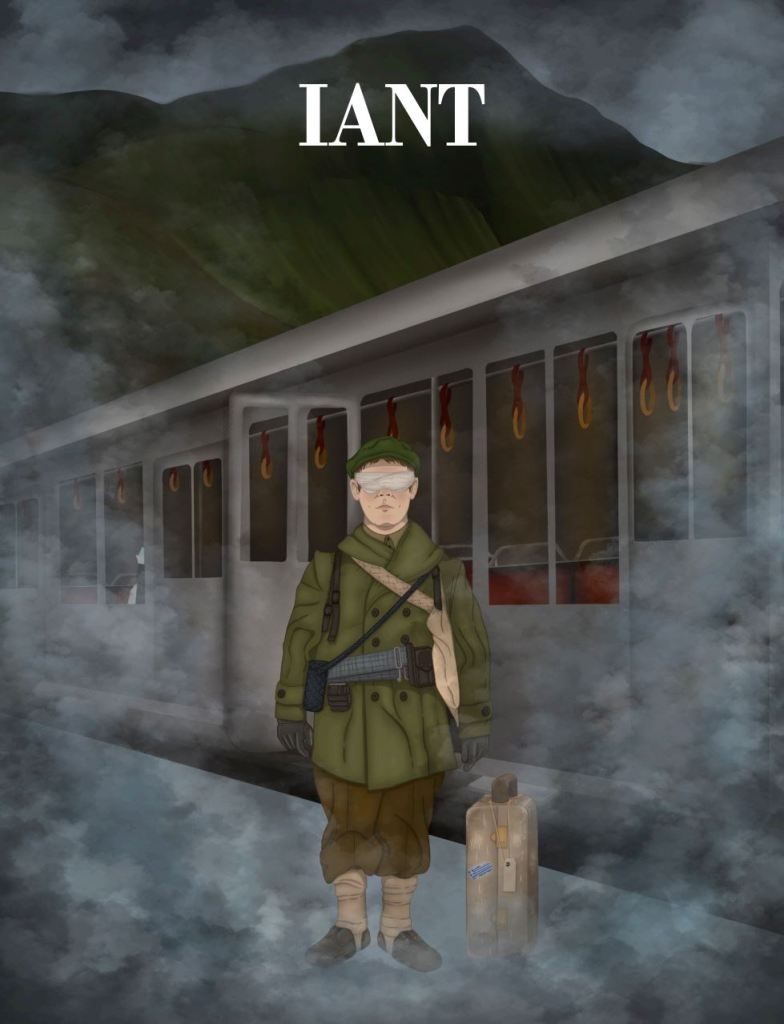
“My recently published novel Iant was inspired by my grandfather, David Owen, who died in 1956, aged 59. I knew little about him as I was two when he died, but the few stories I was told stayed with me and I finally got around to weaving some of these into a novel.
Some of what I was told concerned his service in and around Salonika during the later part of the First World War.
I am not a historian of course, though I have tried to base what I have written on some credible writing about the Salonika Campaign. If I have made errors then I apologise, though it is important to reiterate that Iant is a work of fiction.
What became clear to me as I began to write this section of the book was how little is known about this part of the war, at least by the wider public. I was finishing a new draft of Iant during the celebrations of 2018 and little was made of the Salonika Campaign in the wider media. I felt pleased therefore that I had perhaps made a very small contribution at least to a wider sense of a fascinating time and place where so many died and suffered.
The story of Iant Evans is only partly a story of a young man sent to fight of course. I was also very interested in the impact of such experiences on men and women who returned to the small places from which they came. How did they try and remake their lives and relationships?
In the case of my grandfather, one thing he coped with was the terror of temporary blindness, though in the novel this leads him to a very different set of experiences. His blindness became the inspiration for the cover of the book which was produced by my daughter, Beth Blandford, an illustrator whose work can be found via @blandoodles. The book therefore provides a thread across three generations.”
I’ve often wondered about the emotional and physical impact of the campaign on my own grandfather, a 16 year-old enlistee from rural Gloucestershire, who returned home in December 1918 seriously ill with malaria , so I very much look forward to reading Steve’s exploration of Iant’s war service and post-war life.
The book can be purchased from Cambria Books or as a paperback or e-book from Amazon.
A final thought from Steve: “I am so glad to have been put in touch with the Salonika Campaign Society. The scope of what it seems to have achieved looks remarkable. If anyone would like to contact me about Iant please do get in touch.”
- Steve.blandford@southwales.ac.uk
- Facebook via: @Iantthenovel
- Website: https://steveblandfordwrites.wixsite.com/website
- Cover design by Beth Blandford: https://blandoodles.com/

