

Today, 21st May, is International Tea Day.
Author: Rob Elliott
By the start of World War 1, tea was firmly entrenched as Britain’s national drink. Consumption had increased from about 1.4 pounds per person in the 1850s to about 6.5 pounds during the war and almost 9 pounds during the 1920s. At the outbreak of the war about 90 per cent of tea drunk in the UK was imported from British owned plantations in India and Ceylon (now Sri Lanka). The UK had become the world’s largest consumer of tea, with the market controlled by tea auctions at Mincing Lane, London. Imported teas would be transported in lead-lined chests marked with the tea’s origin and stored in bonded warehouses until they were inspected, and subsequently blended to satisfy the taste of consumers in the UK. While supplied in bulk to the armed forces, popular suppliers for the civilian market included Liptons, Ridgways and the Mazawattee Tea Company.
The importance of tea to British troops was recognised long before World War 1. There are numerous accounts and photographs or groups of Tommies sitting around a dixie, brewing up.
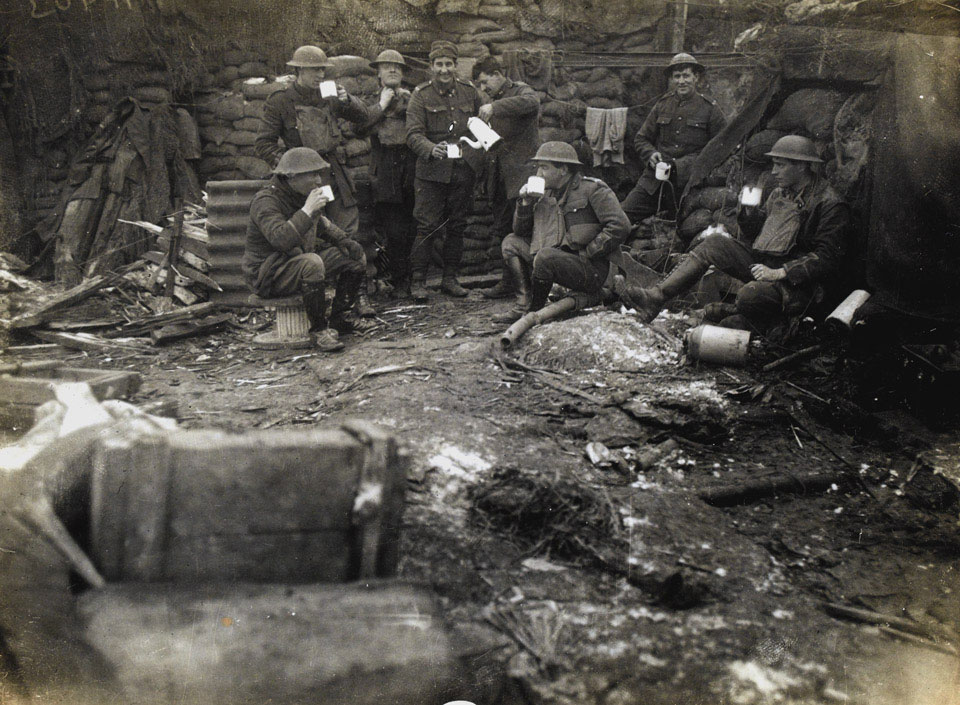
Photograph by Bayley Harrison, World War One, Western Front (1914-1918), 1918.
National Army Museum, Study collection https://collection.nam.ac.uk/detail.php?acc=2004-09-3-16
We have tales of soldiers using the cooling water from Lewis Guns to brew tea once it has boiled around the gun barrel. Tea kettles were installed in tanks to ensure crews always had a ready supply. There are several accounts which point out that it often tasted of petrol since it was brewed in petrol cans not properly cleaned before use.
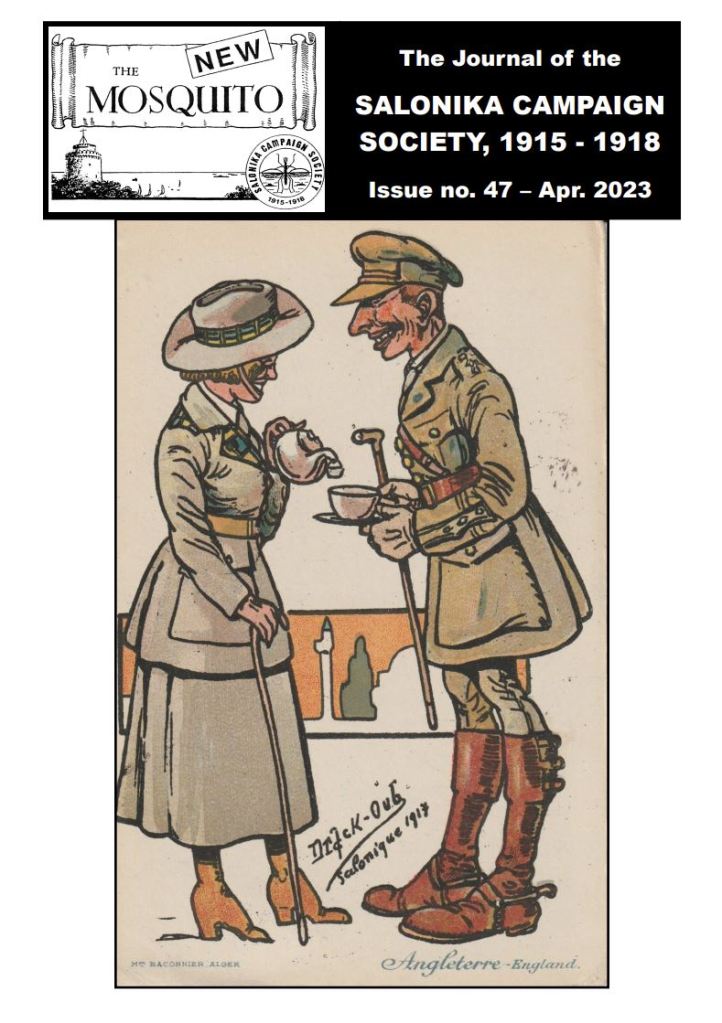
The social importance of tea was also reflected in a postcard featured on the front cover of the New Mosquito in April, 2023.
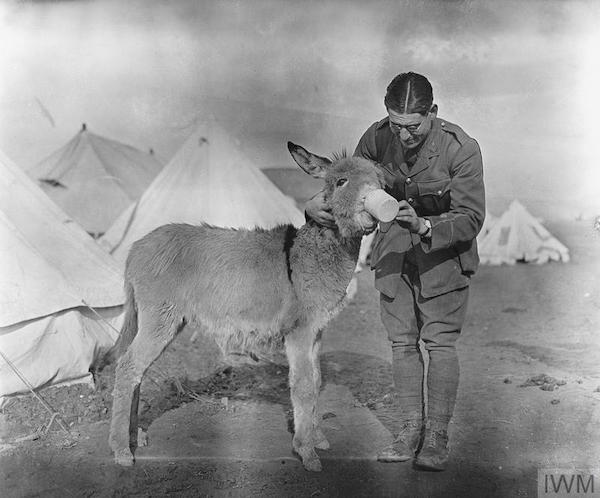
And, as we reported a couple of years ago, even donkeys enjoyed the occasional cuppa!
At least soldiers were able to get a ready supply, despite tea having no nutritional value. Half an ounce of tea was included in a soldier’s daily ration. But on the home front, by 1916 the cost of tea had risen to the point where price controls were introduced. Tea was subsequently rationed in 1918. Despite this, the Government recognised the value of tea for both soldiers and civilians and according to at least one source, it was protected as a weapon of war.
The importance of tea and tea-time can be measured by the frequency with which tea is mentioned in the literature. For example, the word “tea” appears almost 400 times in the pages of The Mosquito and at least 50 times in The New Mosquito. Many books, especially memoirs, are littered with references that clearly show the important the armed forces placed on tea being available at “tea time”, or any other time they could get it. My favourite reference, though, is found in the pages of H. Collinson Owen’s excellent book, “Salonika and After, The Sideshow That Won the War”. (Hodder and Stoughton, 1919, p. 64-5). He writes:
“One day we went for a long ride to Langaza and back, and I thought, as we thudded at full gallop across the plain, of crowded and smelly Salonika, wih its eternal noise and discomfort. Here, in the pure air of Spring, with not a soul in sight, it was like being uncaged and given wings. Langaza is a big Turkish village, about two miles from the large lake of the same name and set in a broad and fertile valley. The Army had just started a big potato farm there. We found the officer in charge of it away, but had an excellent tea in his rooms, an old Turkish house, all the same. How little we English change wherever we are. It was a splendid burst of freedom, but for me the whole glorious day would have been spoiled if we had not found a teapot in Langaza. And all over Macedonia at that moment, up to the confines of Serbia, Bulgaria and Albania, innumerable parties of Britons were sitting down to tea, in tents, huts or dug-outs, and asking each other to pass the marmalade.”
Discover more from Salonika Campaign Society, 1915-1918
Subscribe to get the latest posts sent to your email.


Excellent article dedicated to this special Tea Day, Congratulations! An excellent passage as well! The references to tea reveal British habits and bring the historical atmosphere to life. At the same time, the text feels exceptionally vivid thanks to its expressive language, rich imagery, and emotional depth, allowing us, the readers to fully experience the atmosphere of the journey and the beauty of the Salonika landscape.