5 May 1916 – A “momentous day”

If you read a timeline of the First World War you could be forgiven for thinking that the only event of note in any theatre that day was the bringing down near Salonika of Zeppelin LZ 85.  Several items on this have been published in The New Mosquito, the most recent being Andy Hutt’s account of the death of Doctor Norman Yellowlees (see Issue No 53, p 18-22). However, another event of major importance also took place on that day.

A day earlier, on 4 May, a message had been received at Salonika HQ from Egypt quoting a War Office telegram to Sir Archibald James Murray, Commander-in-Chief of the Egyptian Expeditionary Force. This telegram explained that General Bryan Mahon, then in command of British Forces in Salonika, was to be moved to command the Western Front in Egypt including the defence of the Nile Valley and the Mediterranean coast west of Alexandria. His place in Salonika was to be taken by Lieutenant-General George Milne, then in command of XVI Corps (a post he had only held since January).

While he did not take up his new post until 10 May (Mahon departed on the 9th), the “momentous day” (as Milne described it) was 5 May – it was on this day that George Milne was promoted Major-General in preparation for his new appointment. He was not happy, since he recognised that the commander of XII Corps, General H M Wilson, was senior to him. As quoted by Graham Nicol in his book “Uncle George, Field Marshall Lord Milne of Salonika”, on page 88, Milne wrote in his diary:

A bitter blow as I hate the whole thing and am only too anxious to be out of it. Wilson is the senior. I spend an unhappy evening…Can’t say I feel any too happy. The difficulties ahead are great and there are too many rocks to be rounded.

Whatever General Wilson thought of the event, to his great credit their relationship was a good one, supplemented by the appointment of Lieutenant-General Sir Charles Briggs to the command of XVI Corps in Milne’s place.

The rest, as they say, is history.


With apologies to author Rob Elliott for posting this later than he had planned
Andy Hutt
Happy National Illustration Day!

I have always loved illustrated books, so couldn’t let National Illustration Day go unnoticed. Obviously, as children, we start off looking at picture books but my love of illustrated books has continued, although I do read the words too – honest!

Continue reading “Happy National Illustration Day!”

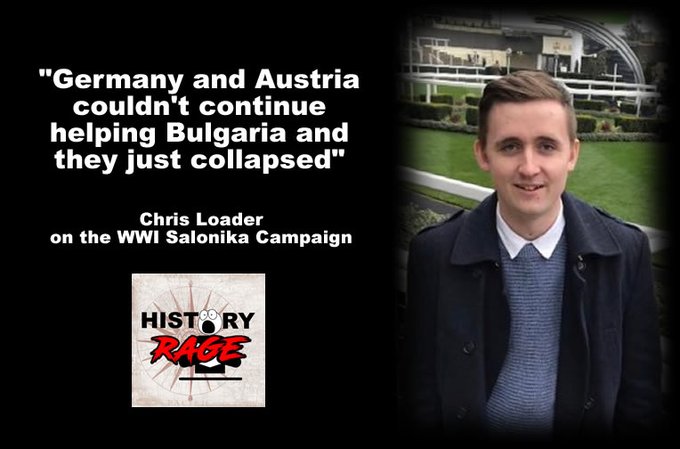
Podcast: “Lost in the Balkans: The Salonika Campaign of World War I with Chris Loader”

SCS Secretary Chris Loader recently recorded (on July 28th) a new podcast as part of the History Rage series in which he shares his personal connection to the Salonika Campaign, through his family history, and discusses the background and complexities of the war in Greece.

You can listen to the podcast here (or via the image below):

The podcast is also available via these other podcast channels:

Wot … no tanks?

A recent holiday in Dorset gave me the opportunity to visit the Tank Museum at Bovington, something I haven’t done for more than 50 years. It was very exciting, although a little alarming to find myself older than some of the exhibits! Although I did have a quick look at the First World War monstrosities (and took a few photos, below), they were not the reason for my visit. What I wanted to see were tanks from the Second World War: Matildas, Valentines, Churchills, Shermans – especially ‘The Funnies’ – and, my all time favourite, Cromwells … but that’s what happens when your formative years were spent with war comics, classic war movies and Airfix kits … lots of Airfix kits! Anyway, I wasn’t disappointed, but this is not the place to discuss my favourite tanks.

Continue reading “Wot … no tanks?”

Remembering Harry Tate’s Cavalry

On a recent trip to London I took a stroll through Hyde Park and, for the first time ever, came across the dramatic Cavalry Memorial, unveiled in May 1924. A little under a year later, the first wreath laying ceremony was held at the memorial and, in 1927, the Combined Cavalry Old Comrades Association was formed. The Association has organised an annual parade and memorial service on the second Sunday in May, ever since.

Continue reading “Remembering Harry Tate’s Cavalry”

Join the 2025 Tour of the British Salonika Force Battlefields

The ‘Artillery & Small Operations’ Tour – Sunday 21 to Tuesday 30 September 2025

Explore the key locations of the British Salonika Force during the 2025 battlefield tour, with a special focus on artillery and the small-scale but intense operations that defined the campaign—raids, ambushes, and offensive patrols.

At Doiran, we’ll examine the crucial role of both British and Bulgarian artillery during the First and Second Battles of Doiran. On the Kosturino battlefield, we’ll revisit the desperate December 1915 fighting of the 10th (Irish) Division. In the Struma Valley, we’ll explore the sites of XVI Corps’ limited offensives between 1916 and 1918, as well as the defensive positions held by British forces.

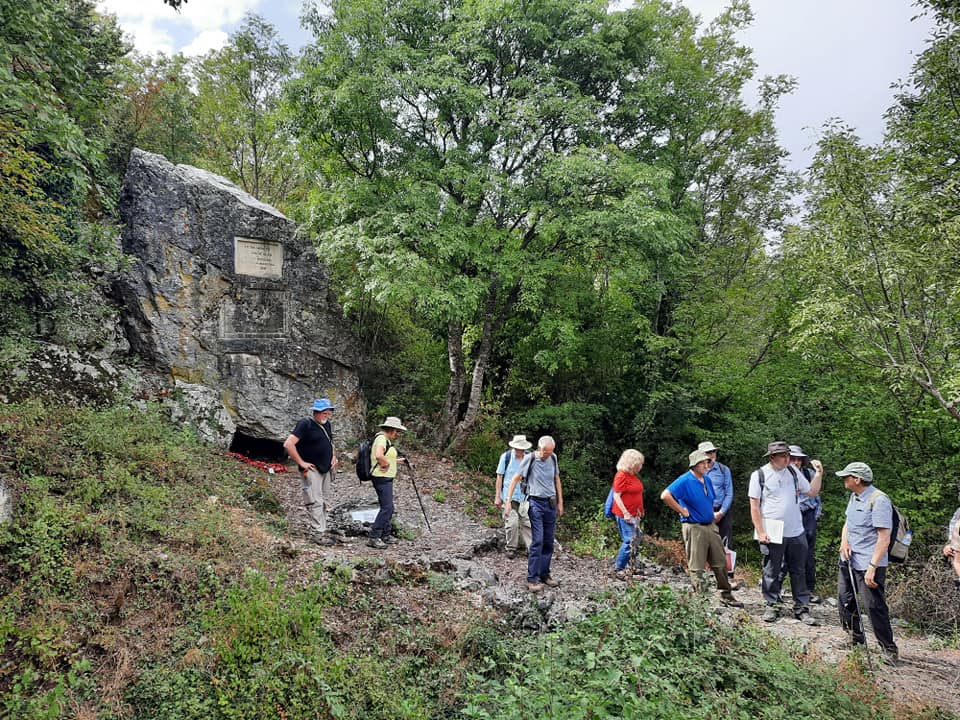
Exploring sites during the 2024 tour

Our journey continues to Bowls Barrow and Smol (now Micro Dassos) in the Vardar sector, where we’ll see firsthand how operations were often designed to divert Bulgarian attention from Doiran. We’ll also visit sections of the Birdcage Line defences and the village of Mavroplagia (formerly Karamudli) in the Krusha Balkan Hills.

The tour will include visits to several Commonwealth War Graves Commission cemeteries, including Doiran (with the Memorial to the Missing), Karasouli, Kirechkoi-Hortakoi, Lembet Road, and Struma.

Running from Sunday 21 to Tuesday 30 September 2025, the tour is timed to coincide with the official commemorations marking the end of the Salonika Campaign, held over the last full weekend of September.

Led by SCS Chair, Alan Wakefield, this is a great opportunity to walk in the footsteps of BSF history.

To register your interest and receive further details, contact Alan Wakefield via email.


Happy Year of the Snake!

As today sees the start of the Lunar New Year, I take this opportunity to wish all our readers a happy Year of the Snake. A brief online search suggests that snakes symbolise good luck and rebirth, the pursuit of love and happiness, and wealth and wisdom; so reasons for optimism in 2025! If you were born in a Year of the Snake, heading east is said to be auspicious, so perhaps you should sign-up for a Salonika battlefield tour with the SCS. It’s almost certainly a good idea, even if you were born under another animal!

Continue reading “Happy Year of the Snake!”

It was Christmas Day in the Cookhouse …

As you eat your Christmas meal – whether it’s traditional, exotic, vegetarian or vegan – spare a thought for the Mongey Wallahs, the cooks who had to feed large numbers of men everyday of the year during the Macedonian campaign: with no gas or electric hobs and ovens, often unreliable provisions and extremes of temperature to work in, not to mention the activities of the enemy. These unsung heroes of the BSF get little attention so, at this time of year when food plays such an important in the festivities, it’s good to remember them and their vital role.

Continue reading “It was Christmas Day in the Cookhouse …”

Once Through The Alphabet

Whilst the BSF did not produce a poet of the stature of Wilfred Owen, it did have Rifleman T. B. Clark of the King’s Royal Rifle Corps whose poetry was published in a small volume – Rhymes of A Rifleman – by William Nicholson & Sons Ltd of London. Whilst this has not been perpetuated through exam syllabuses, from it we get an interesting view of the campaign from a thoughtful, pre-war private soldier. So, for National Poetry Day, here is Rifleman Clark’s poem, Once Through The Alphabet – Tommy’s Version, composed in the trenches in Macedonia, October 1917.

Continue reading “Once Through The Alphabet”

South Asian troops in the BSF

South Asian Heritage Month seems as good a time as any to consider the, often overlooked, South Asian contribution to the Macedonian campaign. Indeed, had the campaign continued into 1919, this contribution would have been even greater as plans were well underway to “Indianize” the BSF as had already happened in Palestine, but on an even greater scale.

Continue reading “South Asian troops in the BSF”