Sir Harold Fairbank: Surgeon, Soldier and Pioneer of Orthopaedics

Searching recently through the Internet for information on the 85th Field Ambulance (famed for its pantomimes), I stumbled across an article about Sir Harold Arthur Thomas Fairbank. Today he is remembered as one of the great pioneers of British orthopaedic surgery, but his career was not confined to hospital wards and consulting rooms. For those of us studying the Salonika campaign, it is Fairbank’s Macedonian wartime service that is of interest.

Born in Windsor in 1876, Fairbank came from a family steeped in medicine. After training at Epsom College and Charing Cross Hospital, he qualified in medicine in 1898. Adventure seemed to appeal to him early on. During the Second Boer War he volunteered as a civilian surgeon, where he crossed paths with figures such as Arthur Conan Doyle.

Back in London, he quickly made a name for himself at Great Ormond Street Hospital. By the age of thirty he had become the first surgeon at a London teaching hospital to practise purely as an orthopaedic specialist — something rather unusual at the time, when most surgeons still divided their work with general surgery.

Then came 1914. Fairbank joined the Royal Army Medical Corps and was posted to the 85th Field Ambulance of the 28th Division – donating both the family car and chauffeur for ambulance work. After serving in Ypres, he was posted to Salonika in early 1916.
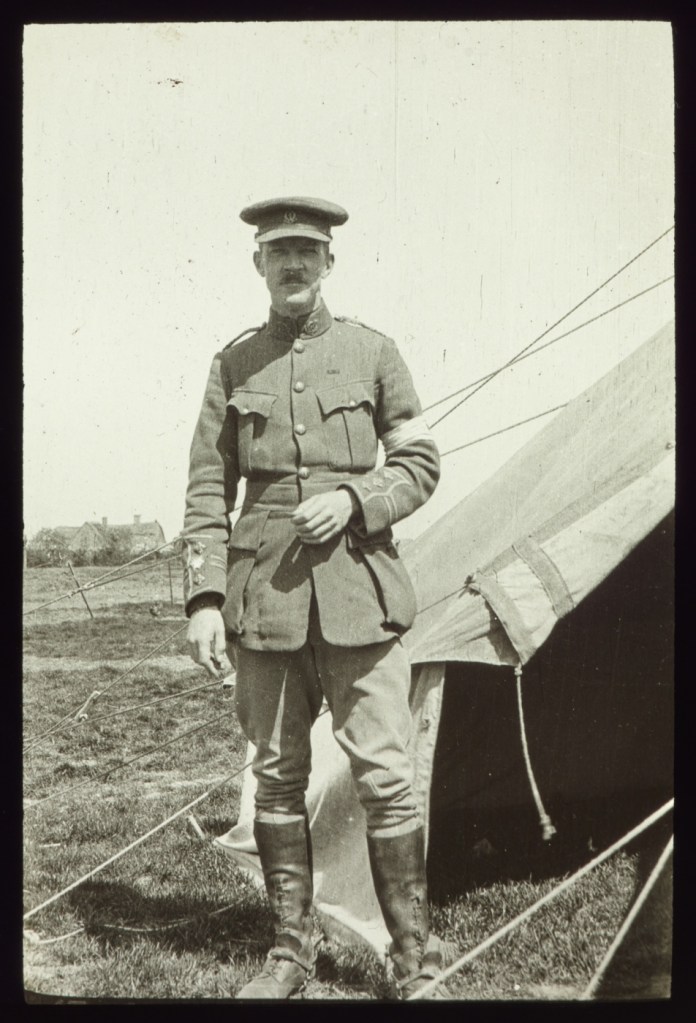
Captain Harold Fairbank
Capt. Harold Fairbank, 1915
Image source: https://specialcollections-blog.lib.cam.ac.uk/?p=12795

The Salonika setting hardly needs explaining: heat, dust, flies, endless sickness, and a constant battle against malaria that often seemed more dangerous than the enemy. Fairbank seemed to thrive in the middle of it. As well as handling surgery and casualty care, he was heavily involved in organisation and transport, and his abilities soon earned him promotion to Lieutenant Colonel and appointment as Consulting Surgeon to the Salonika Army in 1917.

In this role, he travelled widely in the Doiran and Struma areas, advising and helping younger surgeons and making a major contribution by establishing the first overseas convalescent centre for British troops. In the second world war such units became known as Rehabilitation Centres.

The world Fairbank worked in was later captured by Stanley Spencer, whose paintings of dressing stations and camp life remain some of the most vivid images of the Macedonian Front, especially those at Sandham Memorial Chapel. When looking at Spencer’s sketches and paintings, it’s not too difficult to imagine Fairbank moving through the chaos of a casualty station and helping other surgeons in their work.
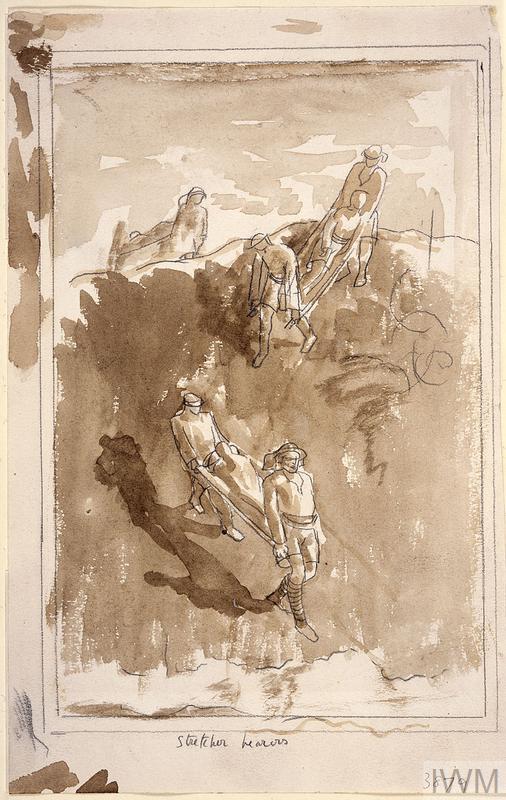
Stretcher Bearers – Stanley Spencer. Source: IWM

Like so many in Salonika, Fairbank eventually became a casualty himself. On 20 August 1918, suffering from malaria and typhoid fever, Fairbank was admitted to the 43rd General Hospital where he stayed until his medical evacuation to Malta on 18 September. He remained in Malta until late December 1918.

Incidentally, it was while recovering in Malta that Fairbank developed a lifelong fascination with butterfly collecting — a surprisingly gentle legacy from such a harsh campaign.

His diaries from his time in Salonika are available at Cambridge University Library but not online, as far as I can tell. The library gives a synopsis of them:
“Fairbank frequently remarks on the cold temperatures endured and the treatment of those sick with malaria and diarrhoea. The diary carries reports of the autumn 1916 offensive from 10 September to 18 December when Fairbank returned to England for a period of leave; of Fairbank’s involvement in a serious railway accident involving a British troop train in France on 17 January 1918 which killed ten; the bombing of the 29th General Hospital in Salonika on 1 and 5 March 1917; and of the fire which destroyed two-thirds of Salonika from 18 to 20 August 1917. After 11 March 1917 entries become less frequent with only eight entries from 1 April to 6 December… There are no entries after 6 December 1917 until 4 August 1918. .. The diary ends with Fairbank’s arrival in England on 3 January 1919. There are only five extremely brief entries from 20 August 1918 to 3 January 1919.”

Fairbank’s wartime service earned him the Distinguished Service Order, an OBE, and three Mentions in Despatches. After the war he returned to civilian medicine, specialising in orthopaedic surgery at King’s College Hospital and Great Ormond Street Hospital where Uncle Tom, as he was known, was widely considered a superb clinician with an extraordinary gift for reassuring children and their families. His later achievements in orthopaedics are reported as considerable, particularly his landmark 1950 textbook An Atlas of General Affections of the Skeleton.

Sir Harold Arthur Thomas Fairbank died February 26, 1961.
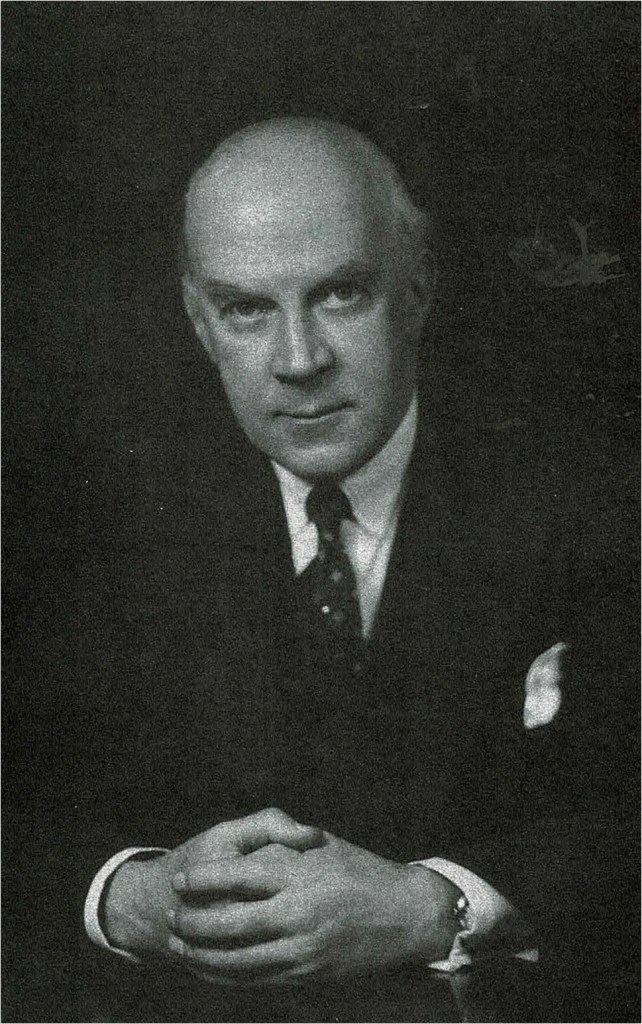
Sir Harold Fairbank
Image source: https://link.springer.com/article/10.1007/s00264-025-06696-w/figures/6

Sources


Remembering Samuel Jenkins and 6/Royal Inniskilling Fusiliers

My thanks go to David Jenkins who – rather longer ago than I am prepared to admit – shared the story of his grandfather, along with some fascinating photos.

Samuel Jenkins enlisted in the 6th (Service Battalion), Royal Inniskilling Fusiliers on 1 September 1914, the Battalion having been raised in Omagh during the previous month. Samuel’s service with The Skins is a little hazy, but we know he sailed from Liverpool in early July with the rest of 10th (Irish) Division, with his overseas service commencing with his disembarkation on 11 July 1915, probably on Lemnos. One (!) of his National Archive medal index cards give this date with the note ‘(2B) Balkans’, meaning ‘Balkan Theatre – Gallipoli and Aegean Islands’. This made him eligible for the 1914/15 Star. Four weeks later, the Division landed at Suvla Bay, Gallipoli.

Continue reading “Remembering Samuel Jenkins and 6/Royal Inniskilling Fusiliers”

Dr Isobel Tate

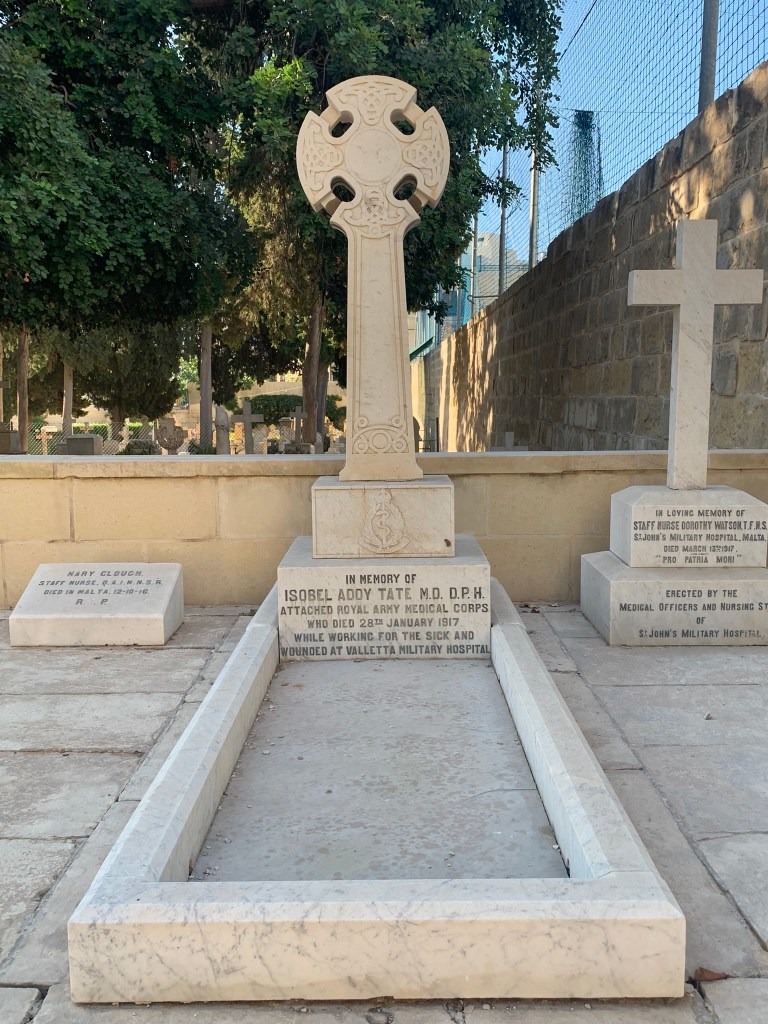
‘X’ (formerly Twitter) is not a favourite medium of mine but it can, in some circumstances, be an informative and interesting forum. In the past year the Society has set up an account and we have managed to both share and learn from this online community. For example, in a series of posts, @DanielJPhelan (Speaker, tour guide, & EOHO volunteer for @CWGC ) shared a thread about a discovery while on holiday in Malta. During his stay, Dan visited Pieta Military Cemetery and it was there that he found the grave of Dr Isobel Tate.


On his return home, Dan researched and shared his findings in a series of posts and images on X (Twitter). Thanks Dan for sharing your research!

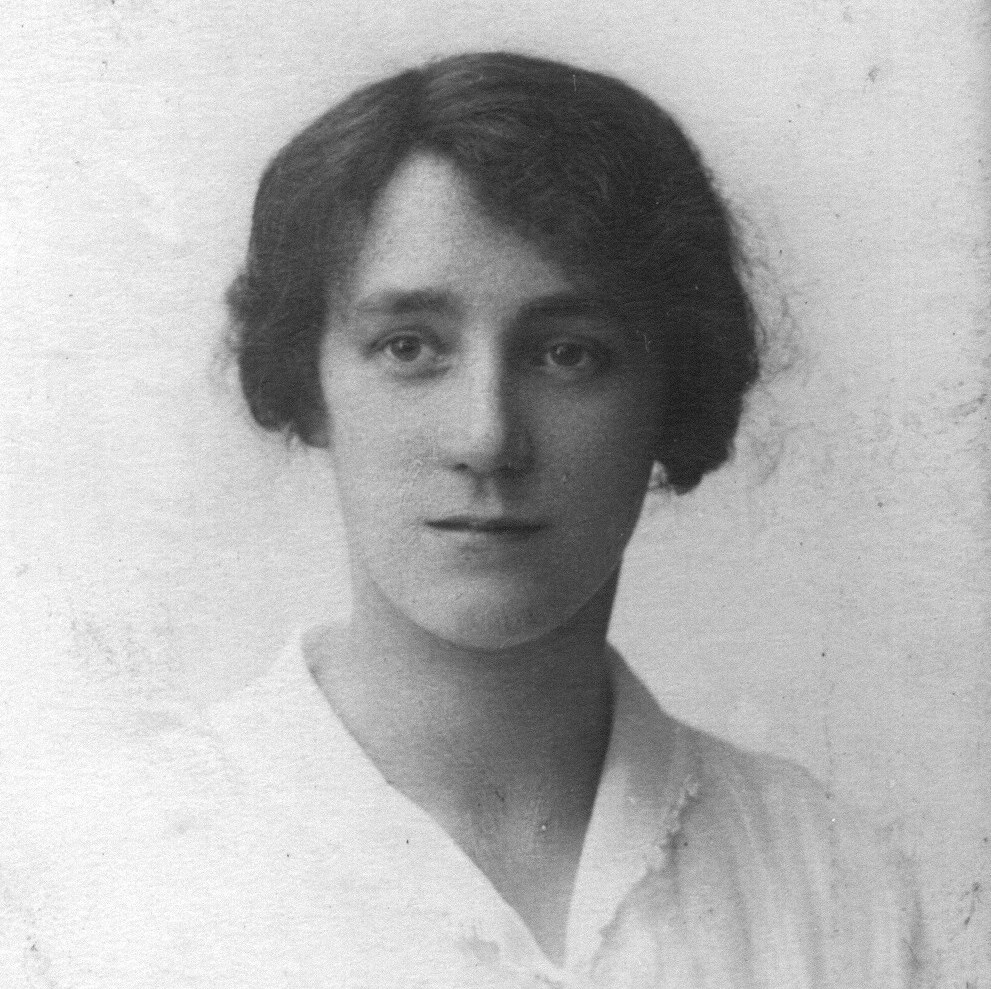
“Isobel Addey Tate was born, around 1874, in Country Armagh, Northern Ireland. At a time when female doctors were rare, she studied medicine at Queens University, Belfast graduating in 1899. Continuing her studies, she qualified as a Doctor of Medicine in 1902.

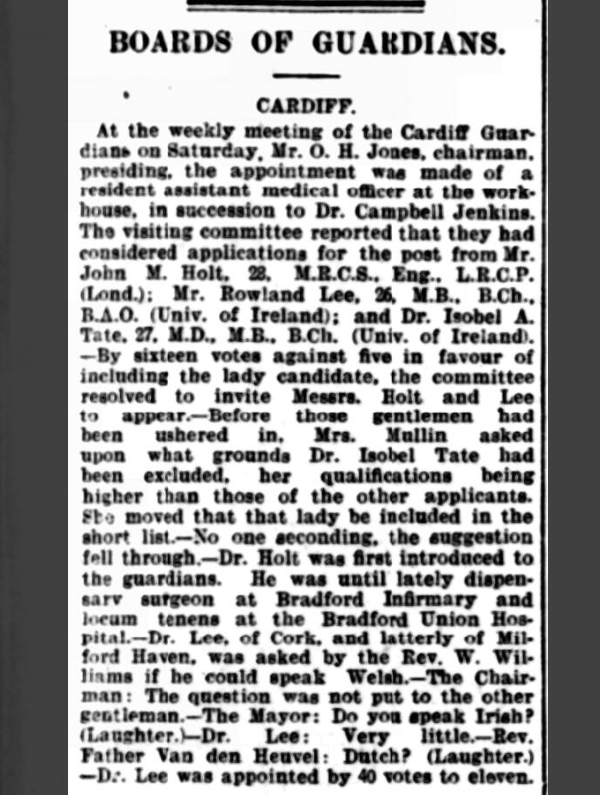
After qualifying, a huge achievement, she moved to England and held a number of positions in hospitals and medical institutions. However, it seems pursuing her career in medicine was not easy…

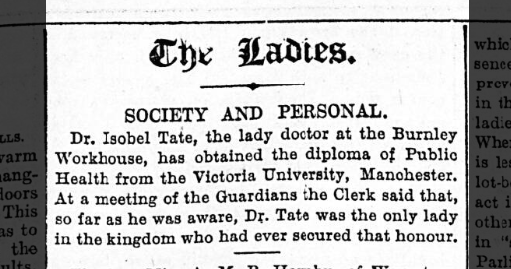
In 1904, while working at the Burnley Workhouse, Dr Tate obtained a Diploma in Public Health from Victoria University, Manchester. It was thought at the time that Dr Tate was the only lady in the kingdom who had ever secured that honour.

In 1915, with the Great War being fought, Dr Tate volunteered to serve with the Serbian Relief Fund. The relief fund was set up and commanded by Mrs Mabel St Clair Stobart. It had seven women surgeons and doctors, which included Dr Tate.

While serving with the Serbian Relief Fund, Dr Tate contracted typhoid and returned home to convalesce. Once well again she became a radiographer at Graylingwell War Hospital, near Chichester. Feeling she ‘was not doing enough’ Dr Tate offered to go abroad again.

Isobel Tate volunteered for service with RAMC and embarked for Malta in August 1916. In Malta she treated sick and wounded servicemen, including casualties from Gallipoli and Salonika. While working at Valletta Military Hospital she became ill. Sadly, on 28th January 1917, Dr Isobel Tate succumb to her illness and died of typhoid fever.

The funeral of Dr Isobel Tate took place on Tuesday 30th January 1917. Her flag-draped coffin was carried by medical officers, flanked by two lines of wreath carrying NCOs from the RAMC. The firing party contained 40 men of the Royal Garrison Artillery. A lengthy train of medical officers, officers from other units, and local members of the medical profession followed her coffin. At the graveside assembled ‘lady doctors’, principal matron, matrons, sisters, and nurses, from all hospitals and camps on the island.

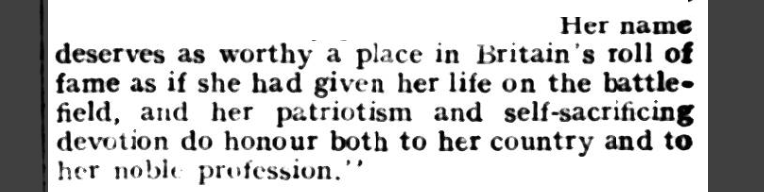
It’s incredible to think that Isobel Addey Tate lived, served, and achieved so much, in an era before women even had the vote. I think this quote from a newspaper at the time is very fitting.”

You can read the complete thread from Dan on Twitter @DanielJPhelan:

The nature of ‘social media’ does not really allow for detail and detailed discussion, so Dan’s account of Isobel Tate’s life is necessarily short. If you would like to read more about her life, and the challenges she and other women faced, there is a more in-depth examination here.

Malta – the ‘Nurse of the Mediterranean’

According to one contemporary writer, Malta “…assumed the role of nurse, and her breakwaters seem like arms stretched out to receive her burden of suffering. Once the hospital ship has passed within their shelter the rolling ceases, and the wounded feel that they have reached a haven of rest.” So wrote the Rev. Albert MacKinnon in 1916 in “Malta: The Nurse of the Mediterranean” – an early reference to the soubriquet by which the island came to be known during the First World War.

As the war in France began to grind into stalemate, other fronts opened in the Dardenelles and Gallipoli, with disastrous consequences for the allied forces. The scale of casualties was unprecedented and required an urgent response,

“That Malta should become the home of one of the British Empire’s largest systems of war hospitals was not anticipated in the early months of the war. It was not until May 1915 that the first badly wounded casualties from the Gallipoli campaign started to pour into Malta. The first convoy of 600 patients arrived on May 4, followed by a further 400 a day later, and on May 6 another 600 cases were brought ashore. Before the end of May, upward of 4,000 casualties from the Gallipoli campaign had reached Malta…The end of May saw the number of hospital beds catering for the sick and injured rise to over 6,000 in 14 hospitals spread all over the island.” Source: Times of Malta

In Salonika, a hostile climate and serious illness – mainly malaria – were the principle cause of casualties. Malta again provided an immediate solution,

“After January 1916, the number of sick and wounded fell very considerably with the scaling down of the Gallipoli campaign, only to rise again with a vengeance in the summer of 1916, as the Salonika campaign proceeded. However, the number of hospital beds remained in the region of 25,000, and reached a maximum of 25,522 housed in 27 hospitals by April 1917. The number of sick patients, suffering mainly from “dysentery and enteric group of diseases”, always exceeded the number admitted with war wounds. With the end of the Gallipoli campaign and the start of the Salonika campaign in October 1915, this trend in admissions became even more marked as a result of a rush of malaria cases from Salonika. Up until April 30, 1917, Cottonera, a mixed hospital catering for both the sick and injured, received 2,867 sick but only 308 wounded.” Source: Times of Malta

Malta’s strategic location in the Mediterranean – and its history as a British Protectorate – made it an important naval base for the British and, together with its climate, also an important place of rest and healing. But it was also hundreds of miles from Salonika and by April 1917, increasing submarine attacks on hospital ships made it unsafe to continue evacuating casualties to Malta from Salonica. Five General Hospitals, Nos 61, 62, 63, 64 and 65 were therefore mobilized at Malta for duty in Salonica, arriving on 11 July 1917. Malta’s role as the ‘nurse of the Mediterranean’ had, effectively, ended. Source: MaltaRAMC

Further Reading


Featured image: Times of Malta