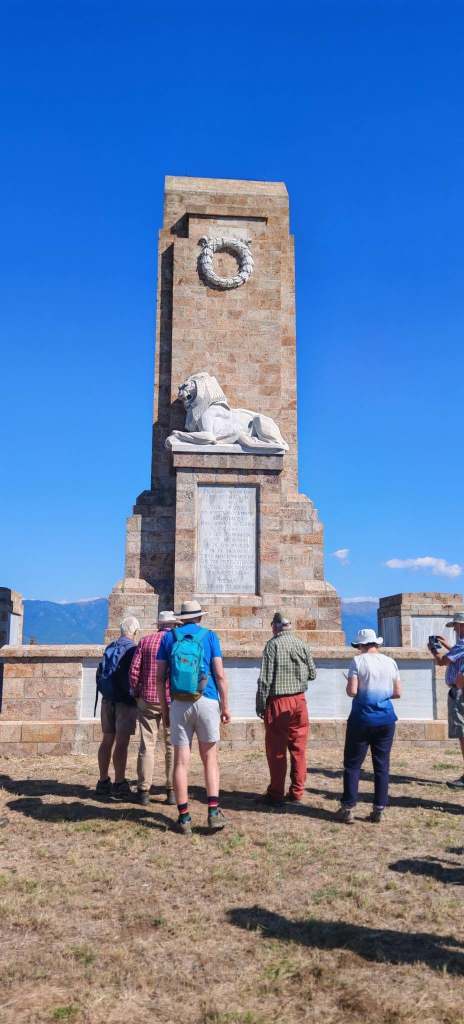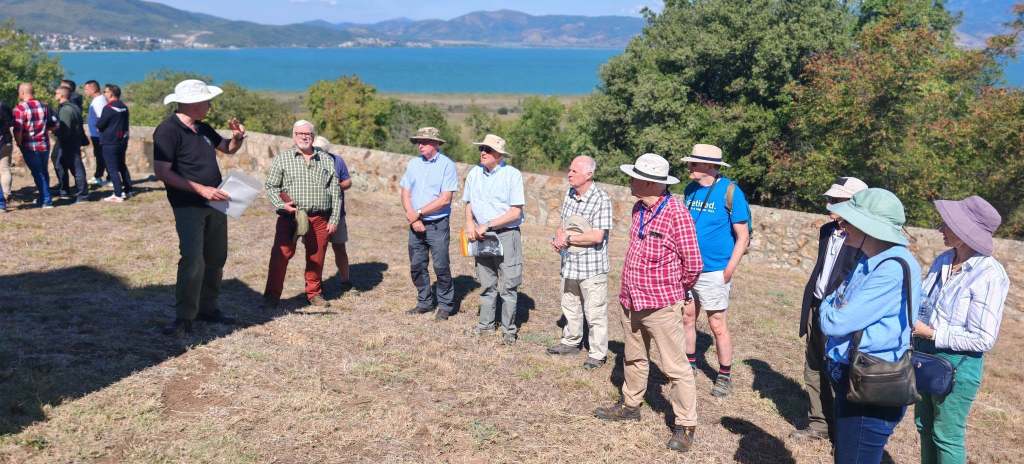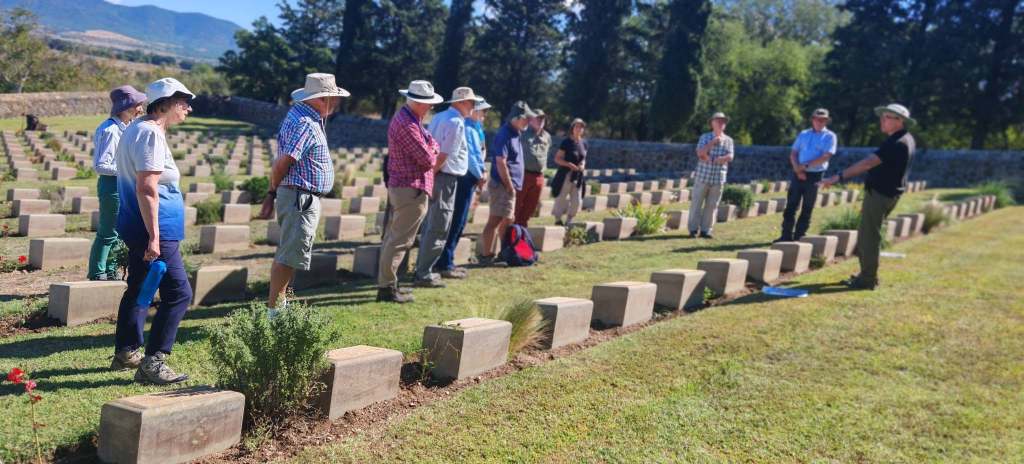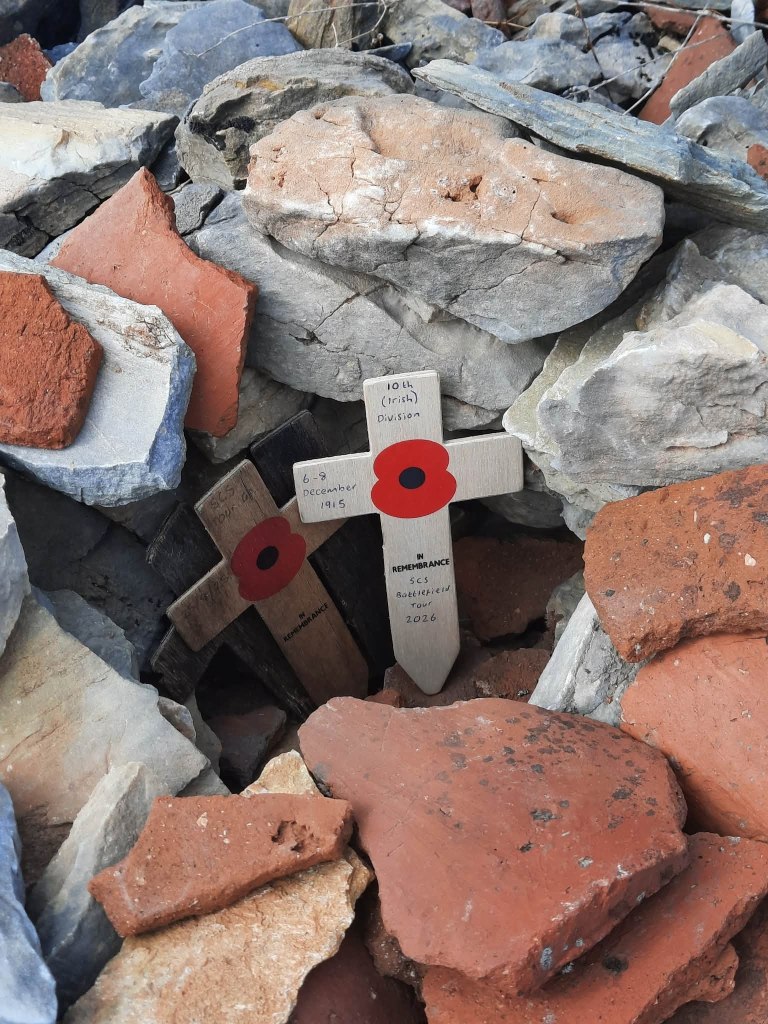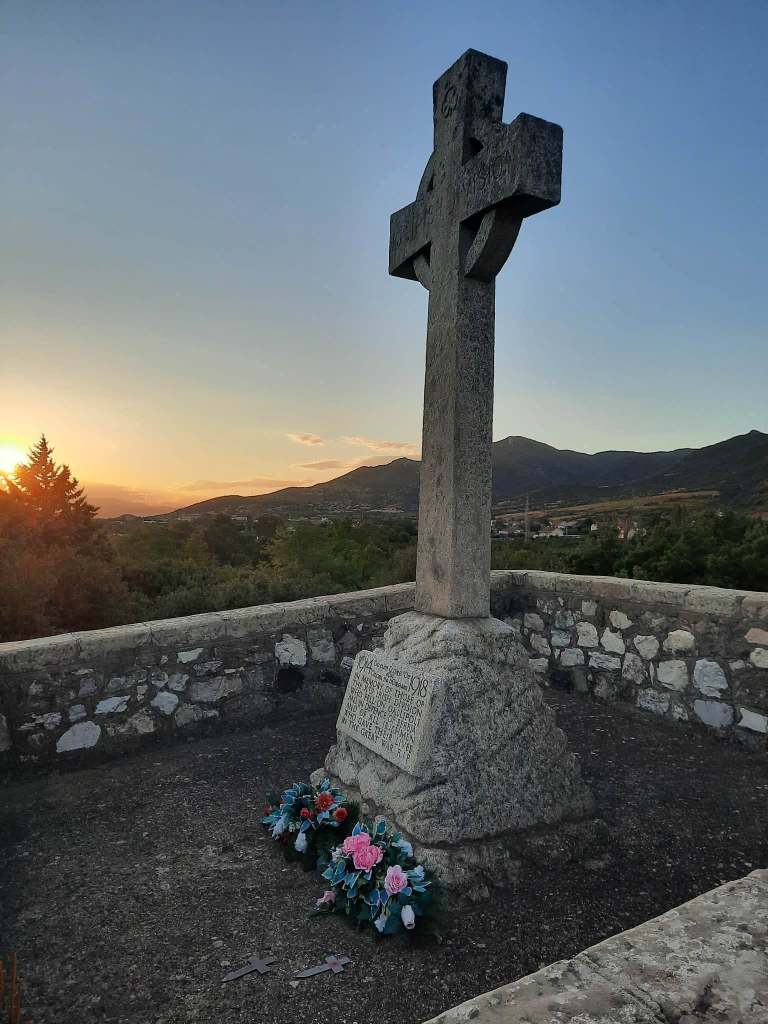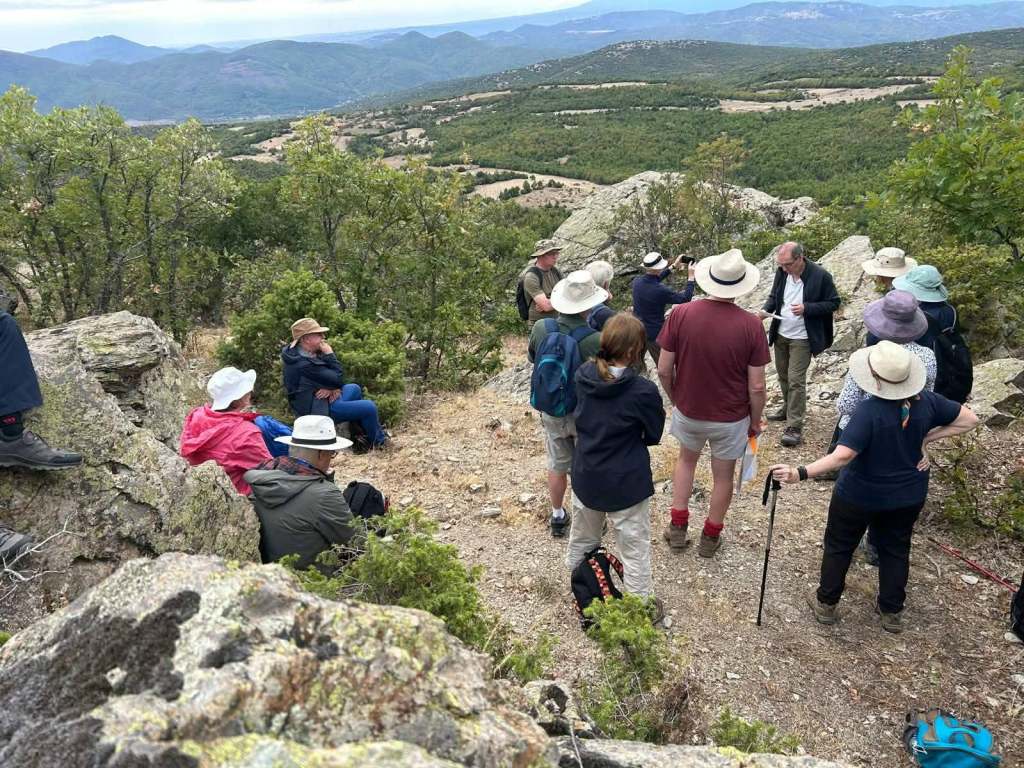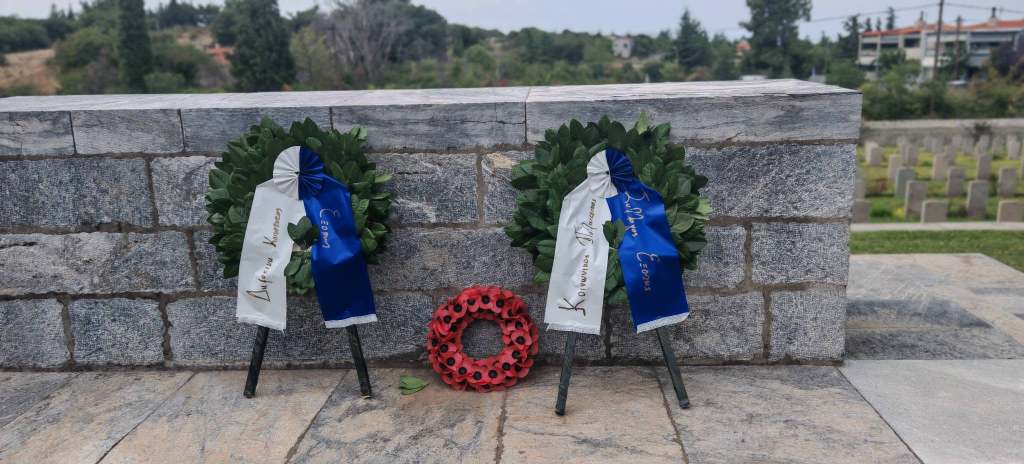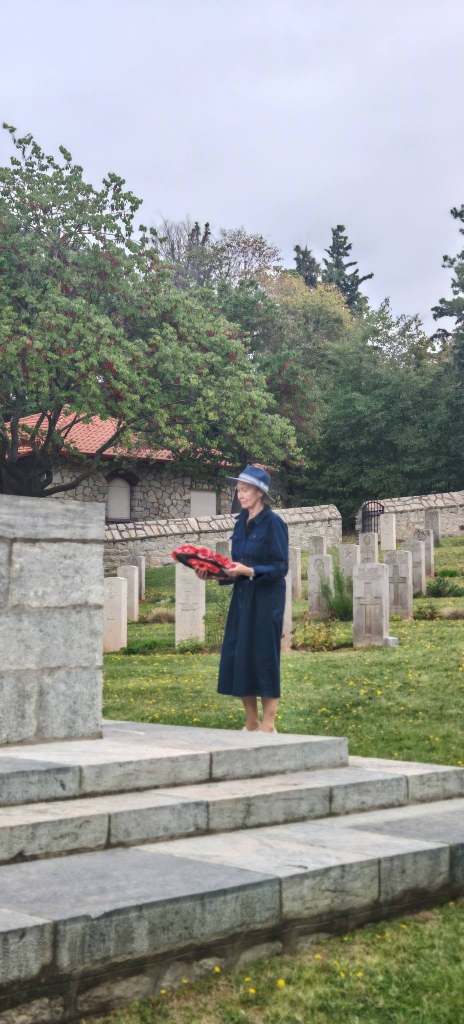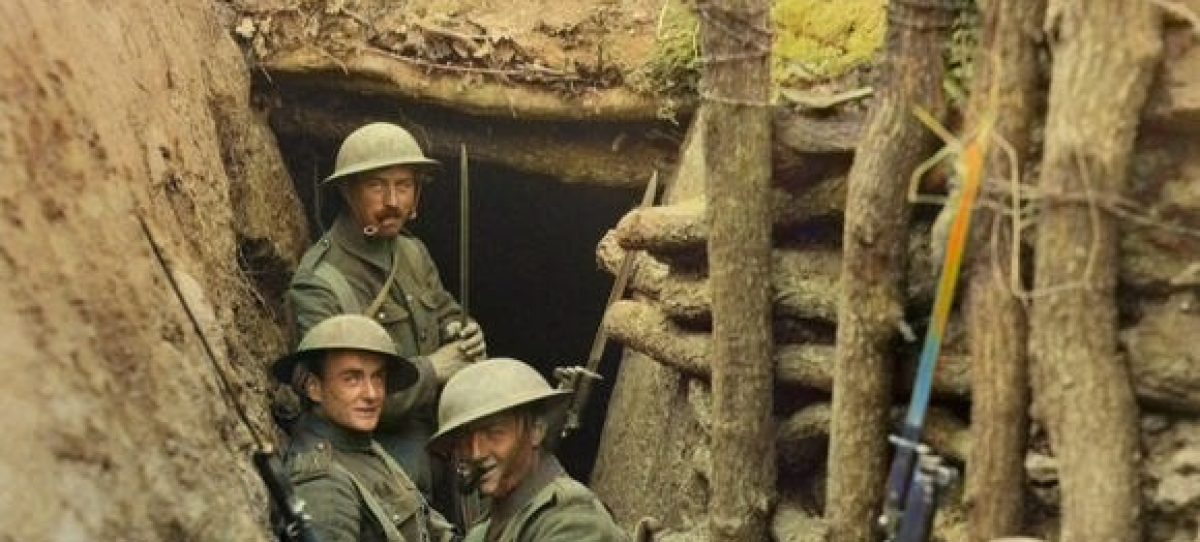
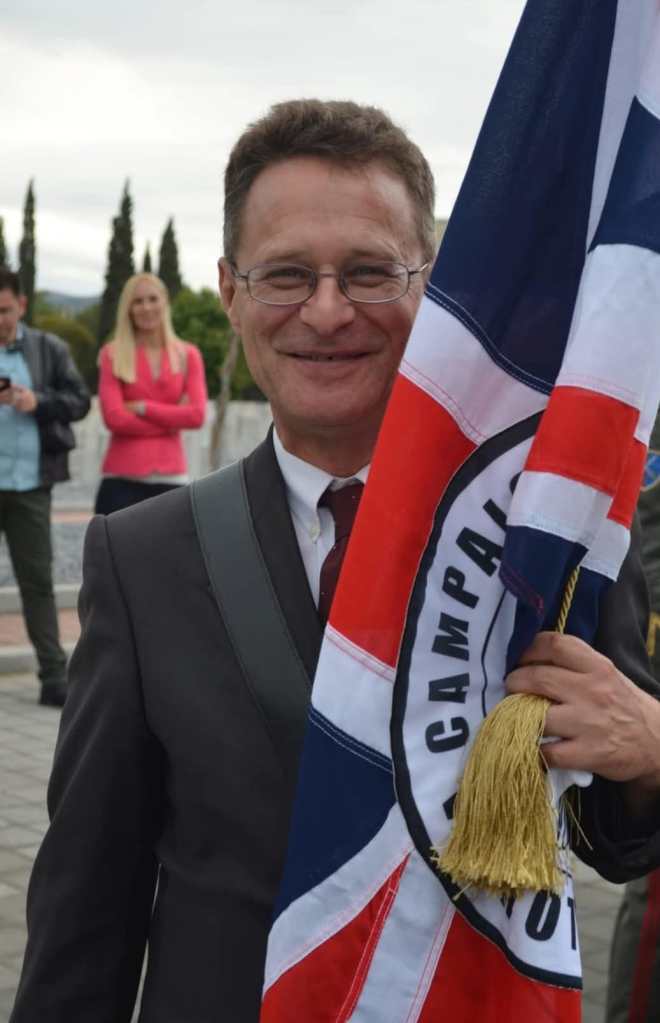
A week ago, I learnt the very sad news that friend and long-time member of the SCS, Adrian Wright, had died in Thessaloniki. Adrian will be known to many members of the Society, in particularly those who have joined one or more of our annual battlefield tours. For many years, Adrian acted as SCS standard bearer during official Remembrance ceremonies at Lembet Road Military Cemetery and the Five Nations Memorial, Polykastro. He would also often join tour parties during travels in northern Greece.
Along with Apostolos Nalmpantis and Minas Drestiliaris, Adrian has assisted the Society with location recces of new sites for the annual battlefield tours and with research into photographs and documents. Adrian’s linguistic skills opened very useful avenues of research into French, German and Greek sources relating to the Salonika Campaign. A particular memory that comes to mind is that of a day on part of the Birdcage Line with Adrian and Minas. From the sites of the vanished villages of Pirnar and Daudli, past the traces of trenches, dugouts and concrete shelters to the summit of the Matterhorn we walked. My friends sharing with me their discoveries in the landscape.
Adrian was always willing to share his wide knowledge of the campaign and wider Greek history with all those who shared his passion for the subject. I and many others have shared interesting conversations with Adrian both out in the field and over a meal or drinks. Sadly, such meetings became less frequent in recent years as Adrian’s declining health precluded him from many of our activities. Yet, whenever possible, he managed to join us in Thessaloniki to talk history. Now, it is with a sense of shock and true sadness to think that such moments and meetings will not come again.
At Adrian’s funeral the SCS was represented by Apostolos Nalmpantis and Minas Drestiliaris. I would like to thank Apostolos for organising an SCS badged poppy wreath. That Adrian’s family allowed the wreath to be buried with him was a very fitting tribute to a man who has done so much to help further knowledge of and commemorate all those who served in Macedonia between 1915 and 1918.
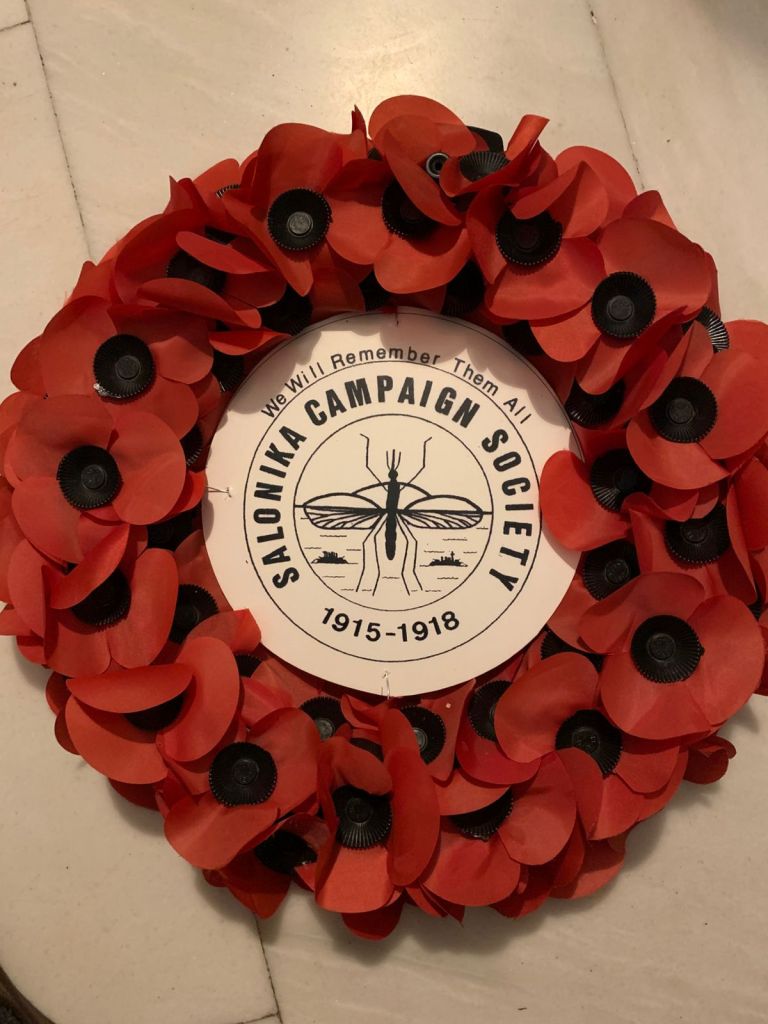
Adrian, Rest in Peace, you were a truly good man and I am proud to call you my friend.
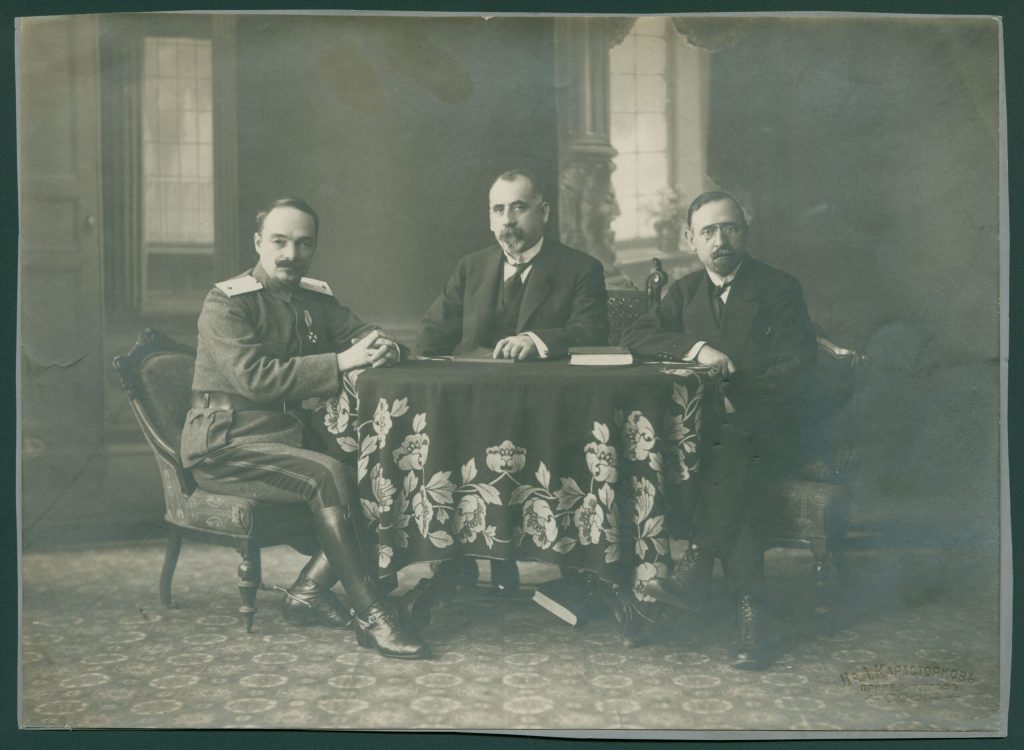
By the start of World War 1, tea was firmly entrenched as Britain’s national drink. Consumption had increased from about 1.4 pounds per person in the 1850s to about 6.5 pounds during the war and almost 9 pounds during the 1920s. At the outbreak of the war about 90 per cent of tea drunk in the UK was imported from British owned plantations in India and Ceylon (now Sri Lanka). The UK had become the world’s largest consumer of tea, with the market controlled by tea auctions at Mincing Lane, London. Imported teas would be transported in lead-lined chests marked with the tea’s origin and stored in bonded warehouses until they were inspected, and subsequently blended to satisfy the taste of consumers in the UK. While supplied in bulk to the armed forces, popular suppliers for the civilian market included Liptons, Ridgways and the Mazawattee Tea Company.
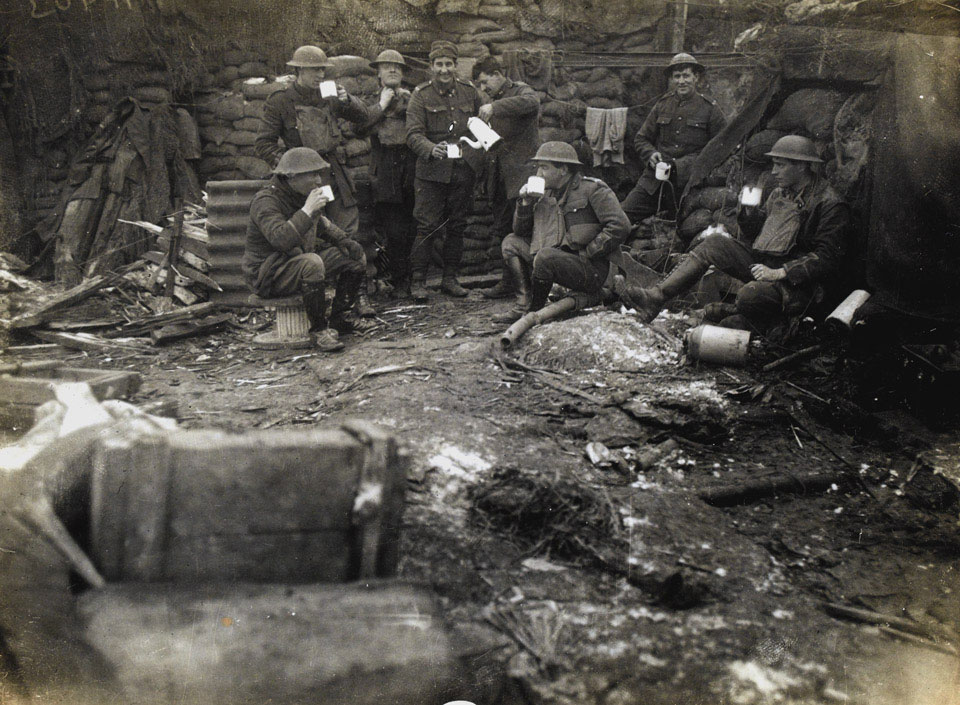
The importance of tea to British troops was recognised long before World War 1. There are numerous accounts and photographs or groups of Tommies sitting around a dixie, brewing up.
British officers and men enjoy a cup of tea in their trench, 1918 Photograph by Bayley Harrison, World War One, Western Front (1914-1918), 1918. National Army Museum, Study collection https://collection.nam.ac.uk/detail.php?acc=2004-09-3-16
We have tales of soldiers using the cooling water from Lewis Guns to brew tea once it has boiled around the gun barrel. Tea kettles were installed in tanks to ensure crews always had a ready supply. There are several accounts which point out that it often tasted of petrol since it was brewed in petrol cans not properly cleaned before use.
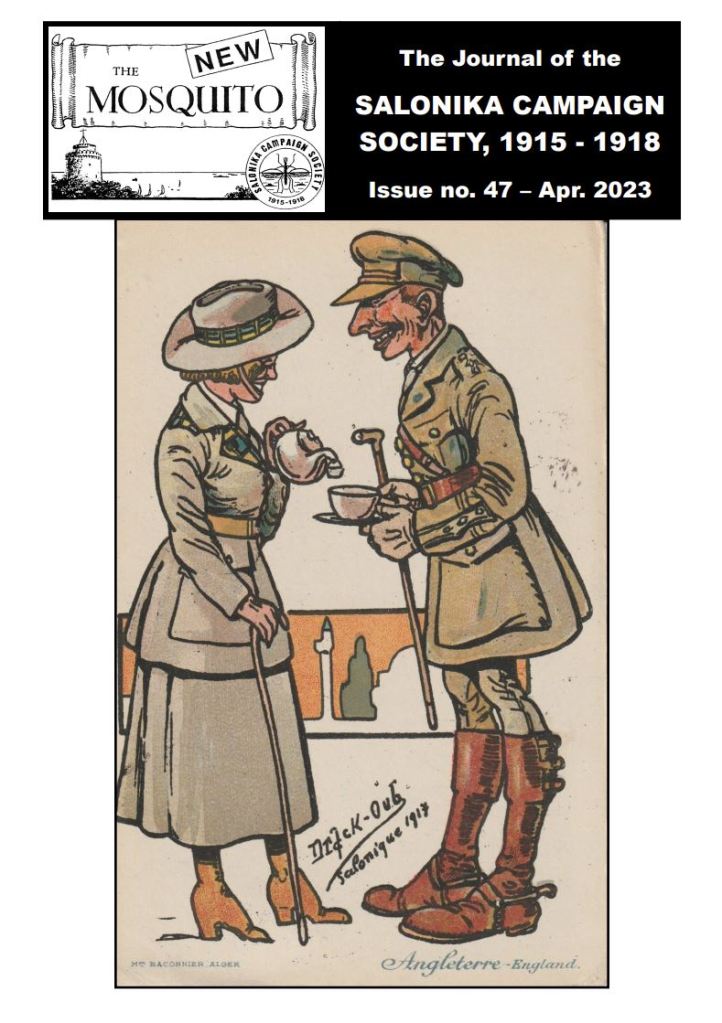
The social importance of tea was also reflected in a postcard featured on the front cover of the New Mosquito in April, 2023.
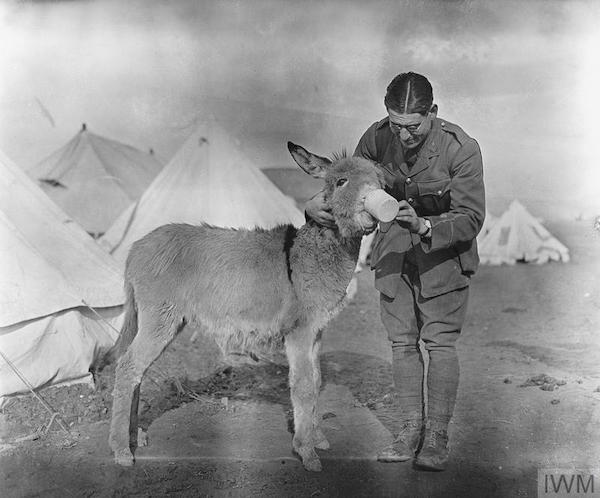
And, as we reported a couple of years ago, even donkeys enjoyed the occasional cuppa!
Image: IWM (Q 31579)
At least soldiers were able to get a ready supply, despite tea having no nutritional value. Half an ounce of tea was included in a soldier’s daily ration. But on the home front, by 1916 the cost of tea had risen to the point where price controls were introduced. Tea was subsequently rationed in 1918. Despite this, the Government recognised the value of tea for both soldiers and civilians and according to at least one source, it was protected as a weapon of war.
The importance of tea and tea-time can be measured by the frequency with which tea is mentioned in the literature. For example, the word “tea” appears almost 400 times in the pages of The Mosquito and at least 50 times in The New Mosquito. Many books, especially memoirs, are littered with references that clearly show the important the armed forces placed on tea being available at “tea time”, or any other time they could get it. My favourite reference, though, is found in the pages of H. Collinson Owen’s excellent book, “Salonika and After, The Sideshow That Won the War”. (Hodder and Stoughton, 1919, p. 64-5). He writes:
“One day we went for a long ride to Langaza and back, and I thought, as we thudded at full gallop across the plain, of crowded and smelly Salonika, wih its eternal noise and discomfort. Here, in the pure air of Spring, with not a soul in sight, it was like being uncaged and given wings. Langaza is a big Turkish village, about two miles from the large lake of the same name and set in a broad and fertile valley. The Army had just started a big potato farm there. We found the officer in charge of it away, but had an excellent tea in his rooms, an old Turkish house, all the same. How little we English change wherever we are. It was a splendid burst of freedom, but for me the whole glorious day would have been spoiled if we had not found a teapot in Langaza. And all over Macedonia at that moment, up to the confines of Serbia, Bulgaria and Albania, innumerable parties of Britons were sitting down to tea, in tents, huts or dug-outs, and asking each other to pass the marmalade.”
Searching recently through the Internet for information on the 85th Field Ambulance (famed for its pantomimes), I stumbled across an article about Sir Harold Arthur Thomas Fairbank. Today he is remembered as one of the great pioneers of British orthopaedic surgery, but his career was not confined to hospital wards and consulting rooms. For those of us studying the Salonika campaign, it is Fairbank’s Macedonian wartime service that is of interest.
Born in Windsor in 1876, Fairbank came from a family steeped in medicine. After training at Epsom College and Charing Cross Hospital, he qualified in medicine in 1898. Adventure seemed to appeal to him early on. During the Second Boer War he volunteered as a civilian surgeon, where he crossed paths with figures such as Arthur Conan Doyle.
Back in London, he quickly made a name for himself at Great Ormond Street Hospital. By the age of thirty he had become the first surgeon at a London teaching hospital to practise purely as an orthopaedic specialist — something rather unusual at the time, when most surgeons still divided their work with general surgery.
Then came 1914. Fairbank joined the Royal Army Medical Corps and was posted to the 85th Field Ambulance of the 28th Division – donating both the family car and chauffeur for ambulance work. After serving in Ypres, he was posted to Salonika in early 1916.
The Salonika setting hardly needs explaining: heat, dust, flies, endless sickness, and a constant battle against malaria that often seemed more dangerous than the enemy. Fairbank seemed to thrive in the middle of it. As well as handling surgery and casualty care, he was heavily involved in organisation and transport, and his abilities soon earned him promotion to Lieutenant Colonel and appointment as Consulting Surgeon to the Salonika Army in 1917.
In this role, he travelled widely in the Doiran and Struma areas, advising and helping younger surgeons and making a major contribution by establishing the first overseas convalescent centre for British troops. In the second world war such units became known as Rehabilitation Centres.
The world Fairbank worked in was later captured by Stanley Spencer, whose paintings of dressing stations and camp life remain some of the most vivid images of the Macedonian Front, especially those at Sandham Memorial Chapel. When looking at Spencer’s sketches and paintings, it’s not too difficult to imagine Fairbank moving through the chaos of a casualty station and helping other surgeons in their work.
Like so many in Salonika, Fairbank eventually became a casualty himself. On 20 August 1918, suffering from malaria and typhoid fever, Fairbank was admitted to the 43rd General Hospital where he stayed until his medical evacuation to Malta on 18 September. He remained in Malta until late December 1918.
Incidentally, it was while recovering in Malta that Fairbank developed a lifelong fascination with butterfly collecting — a surprisingly gentle legacy from such a harsh campaign.
His diaries from his time in Salonika are available at Cambridge University Library but not online, as far as I can tell. The library gives a synopsis of them: “Fairbank frequently remarks on the cold temperatures endured and the treatment of those sick with malaria and diarrhoea. The diary carries reports of the autumn 1916 offensive from 10 September to 18 December when Fairbank returned to England for a period of leave; of Fairbank’s involvement in a serious railway accident involving a British troop train in France on 17 January 1918 which killed ten; the bombing of the 29th General Hospital in Salonika on 1 and 5 March 1917; and of the fire which destroyed two-thirds of Salonika from 18 to 20 August 1917. After 11 March 1917 entries become less frequent with only eight entries from 1 April to 6 December… There are no entries after 6 December 1917 until 4 August 1918. .. The diary ends with Fairbank’s arrival in England on 3 January 1919. There are only five extremely brief entries from 20 August 1918 to 3 January 1919.”
Fairbank’s wartime service earned him the Distinguished Service Order, an OBE, and three Mentions in Despatches. After the war he returned to civilian medicine, specialising in orthopaedic surgery at King’s College Hospital and Great Ormond Street Hospital where Uncle Tom, as he was known, was widely considered a superb clinician with an extraordinary gift for reassuring children and their families. His later achievements in orthopaedics are reported as considerable, particularly his landmark 1950 textbook An Atlas of General Affections of the Skeleton.
Sir Harold Arthur Thomas Fairbank died February 26, 1961.
If you read a timeline of the First World War you could be forgiven for thinking that the only event of note in any theatre that day was the bringing down near Salonika of Zeppelin LZ 85. Several items on this have been published in The New Mosquito, the most recent being Andy Hutt’s account of the death of Doctor Norman Yellowlees (see Issue No 53, p 18-22). However, another event of major importance also took place on that day.
A day earlier, on 4 May, a message had been received at Salonika HQ from Egypt quoting a War Office telegram to Sir Archibald James Murray, Commander-in-Chief of the Egyptian Expeditionary Force. This telegram explained that General Bryan Mahon, then in command of British Forces in Salonika, was to be moved to command the Western Front in Egypt including the defence of the Nile Valley and the Mediterranean coast west of Alexandria. His place in Salonika was to be taken by Lieutenant-General George Milne, then in command of XVI Corps (a post he had only held since January).
While he did not take up his new post until 10 May (Mahon departed on the 9th), the “momentous day” (as Milne described it) was 5 May – it was on this day that George Milne was promoted Major-General in preparation for his new appointment. He was not happy, since he recognised that the commander of XII Corps, General H M Wilson, was senior to him. As quoted by Graham Nicol in his book “Uncle George, Field Marshall Lord Milne of Salonika”, on page 88, Milne wrote in his diary:
A bitter blow as I hate the whole thing and am only too anxious to be out of it. Wilson is the senior. I spend an unhappy evening…Can’t say I feel any too happy. The difficulties ahead are great and there are too many rocks to be rounded.
Whatever General Wilson thought of the event, to his great credit their relationship was a good one, supplemented by the appointment of Lieutenant-General Sir Charles Briggs to the command of XVI Corps in Milne’s place.
The rest, as they say, is history.
With apologies to author Rob Elliott for posting this later than he had planned Andy Hutt
warm, sunny, with a faint breeze. German guns shelled French and Canadian trenches throughout the morning but fell silent in the afternoon. The brief period of peace suddenly ended at 4:00pm when the Germans unleashed a violent bombardment, first on the salient and then gradually extending to nearby roads and Ypres, turning the town into a flaming inferno and causing its citizens to flee.
Available to attend either in person or online, SCS member—and former Army officer and UK Defence Attaché—Nick Ilić will be delivering a presentation at the National Army Museum which “will bring to life the little-known but truly heroic and inspirational story of the British contribution. Their efforts, as part of a coalition of nations, played a significant role in Serbia’s survival and liberation, and in the defeat of the Central Powers in 1918. More than a century later, their sacrifice is not forgotten within Serbia.”
Nick’s presentation is on April 17 at 12:00pm and is free to attend or watch online – full details here.
On 30 March a new series of programmes began on Radio 4, and is available on BBC Sounds. Part of the long-running The Invention of… set of programmes by Misha Glenny and Miles Warde, and made on location, this new series looks at the history of the Balkans. The first episode deals with the assassination of Archduke Franz Ferdinand and his wife. While this was not the cause of the Great War, it provided Austria-Hungary with the opportunity to suppress the rise of its southern neighbour and triggered the presentation of its 10-point ultimatum to Serbia.
The second episode (on Monday 6 April at 11.00) considers the Balkan Wars that preceded the events of 1914, including the Austro-Serbian Pig War. If you are not familiar with this interesting slice of culinary history, it was a customs war that took place between 1906 and 1908. It was an unsuccessful attempt to impose a customs blockade on Serbian Pork. It failed because Serbia was able to find other markets in Europe. The series promises to be an interesting listen.
In April 2025 I described my exploration of another possible family connection (albeit by marriage) with the Salonika campaign. This concerned Lt George Clark who was the Medical Officer of 7/Royal Munster Fusiliers. His medal index card and the Battalion war diary (WO 95/4296) conclusively place him in Gallipoli but, to see what happened next, required a visit to The National Archives at Kew to look at the next part of the war diary which, of course, has not been digitised. I can now share the next stage of my investigations and, whilst I don’t expect you to be especially interested in my family history, what I found out about 7/RMF may be of wider interest.
Led by Alan Wakefield, the Salonika Campaign Society is offering a chance to visit key sites associated with British efforts during the Salonika Campaign, 1915-1918.
The overall theme of the tour will be the role of the Royal Engineers with the British Salonika Force.
Locations will include the Doiran battlefield, where the BSF suffered 35% of its total battle casualties; the Struma Valley, where XVI Corps faced the threat of endemic malaria as well as their Bulgarian adversaries; and Kosturino Ridge, where 10th (Irish) Division made a stand in the Winter of 1915. Time will also be spent on the Birdcage Line, built to defend the city and port of Salonika from Bulgarian attack in 1915-1916. We will also attend commemorations to remember all those who served and died during the campaign.
Proposed itinerary
Sunday 20 September
Tour begins late morning with meeting at Thessaloniki airport
Ceremony of Remembrance at CWGC Kirechkoi-Hortakoi Military Cemetery
Overnight in Serres.
Monday 21 September
A study of a range of operations in the Struma Valley – final locations to be confirmed but to include RE river crossing methods
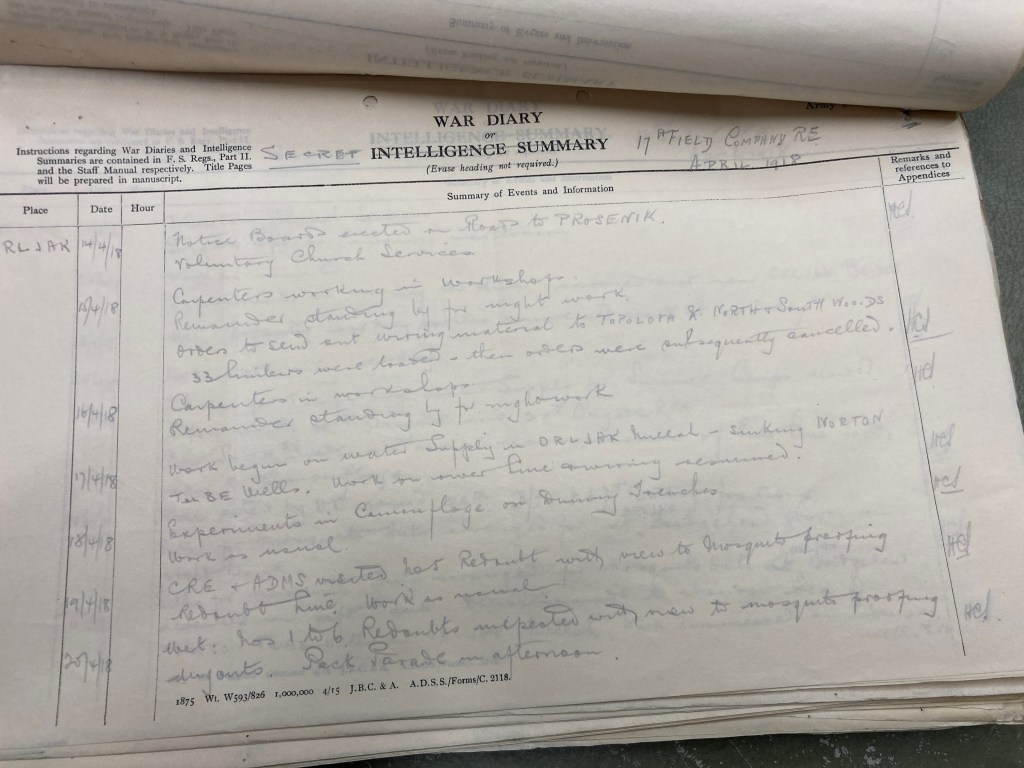
Visit to Strimoniko (formerly Orliak) to discuss RE role in signals and lines of communications
CWGC Struma Cemetery
Overnight in Serres.
Tuesday 22 September
Dova Tepe Fort in the Krusha Balkan Hills
Doiran Memorial and CWGC Cemetery
Visit to Akritas (formerly Vladaya) to view British positions
Overnight in Doiran.
Wednesday 23 September
Visits to La Tortue; Petit Couronne; Hill 340 – to include RE involvement in raids and major operations against Petit Couronne
Overnight in Doiran.
Thursday 24 September
Visit the 22nd Division Memorial
Visit to the ‘Devil’s Eye’ Observation Post on Grand Couronne
Visit to The Hilt – key position in Bulgarian second line.
Friday 25 September
A Day on Kosturino Ridge
Rocky Peak and Ormanli village
Memesli village
Site of Kajali village
Crete Rivet and Crete Simonet
Tatarli village
10th (Irish) Division Memorial
Overnight in Doiran.
Saturday 26 September
Visits to sites on the Vardar sector and in the Krusha Balkan Hills – to include some of the following:
Horseshoe Hill
Bowls Barrow
Machukovo (now Evzoni)
Site of Rattray’s Bridges (Krusha Balkan Hills)
Mavroplagia (formerly Karamudli) village – RE aerial cableway
Overnight in Kilkis.
Sunday 27 September
Attend Official Commemorations at the Five Nations Memorial, Polykastro
CWGC Karasouli Cemetery
Kilindir (now Kilindria) railway station – to discuss RE role in railway operating
Overnight in Kilkis.
Monday 28 September
Birdcage line – including 99th Field Coy. bridge position
Lembet Road Allied Military Cemetery
Thessaloniki Port
Overnight in Thessaloniki.
Tuesday 29 September
End of tour.
If you are interested in joining the tour please contact SCS Chair, Alan Wakefield, to get your name on the emailing list for further details: aj.wakefield@talktalk.net
This information is also available as a PDF file for easier downloading and printing:
I’m very grateful to SCS member, Rob Elliott for writing this very timely piece… Thanks Rob!
On 3 March each year, Bulgaria celebrates its national day of independence from Ottoman Rule in 1878. A local shop owned and run by a Bulgarian family held a small celebration on the day and were playing some folk music in the background. Prompted by this and a conversation about folk music and dance, I wondered if Bulgaria had produced any classical composers and to my surprise, there are quite a lot.
The most famous is Pancho Vladigerov (1899-1978). His mother was related to the author Boris Pasternak. Vladigerov is clearly a national treasure and his music includes Bulgarian folk idioms, one of the first composers to do so. He was admired by Dmitri Shostakovich, Richard Strauss and Aram Katchaturian but remains largely unknown outside Bulgaria.
But what is the significance of this? His most famous work is known as the Vardar Rhapsody. It was composed in 1922 for violin and piano, but it was also orchestrated shortly afterwards and exists in a few other versions. It lasts around 8 minutes and is an astonishing tour de force – well worth a listen.
I doubt that members of the Salonika Campaign Society really need International Women’s Day to remember the service and sacrifice of the women of the Scottish Women’s Hospital who served in the Balkans. The Society has remembered them in books, in talks and presentations, at events and in articles, both printed and online. Even so, it may be helpful to have a reminder of these redoubtable women and their noble enterprise, through the graves of just four of their number. I photographed these on a visit to Thessaloniki ten years ago, at the CWGC Lembet Road Military Cemetery. They are: Sister Mary de Burgh Burt, Sister Florence Missouri Caton, Masseuse Olive Smith and Alice Annie Grey.