Sir Harold Fairbank: Surgeon, Soldier and Pioneer of Orthopaedics

Searching recently through the Internet for information on the 85th Field Ambulance (famed for its pantomimes), I stumbled across an article about Sir Harold Arthur Thomas Fairbank. Today he is remembered as one of the great pioneers of British orthopaedic surgery, but his career was not confined to hospital wards and consulting rooms. For those of us studying the Salonika campaign, it is Fairbank’s Macedonian wartime service that is of interest.

Born in Windsor in 1876, Fairbank came from a family steeped in medicine. After training at Epsom College and Charing Cross Hospital, he qualified in medicine in 1898. Adventure seemed to appeal to him early on. During the Second Boer War he volunteered as a civilian surgeon, where he crossed paths with figures such as Arthur Conan Doyle.

Back in London, he quickly made a name for himself at Great Ormond Street Hospital. By the age of thirty he had become the first surgeon at a London teaching hospital to practise purely as an orthopaedic specialist — something rather unusual at the time, when most surgeons still divided their work with general surgery.

Then came 1914. Fairbank joined the Royal Army Medical Corps and was posted to the 85th Field Ambulance of the 28th Division – donating both the family car and chauffeur for ambulance work. After serving in Ypres, he was posted to Salonika in early 1916.
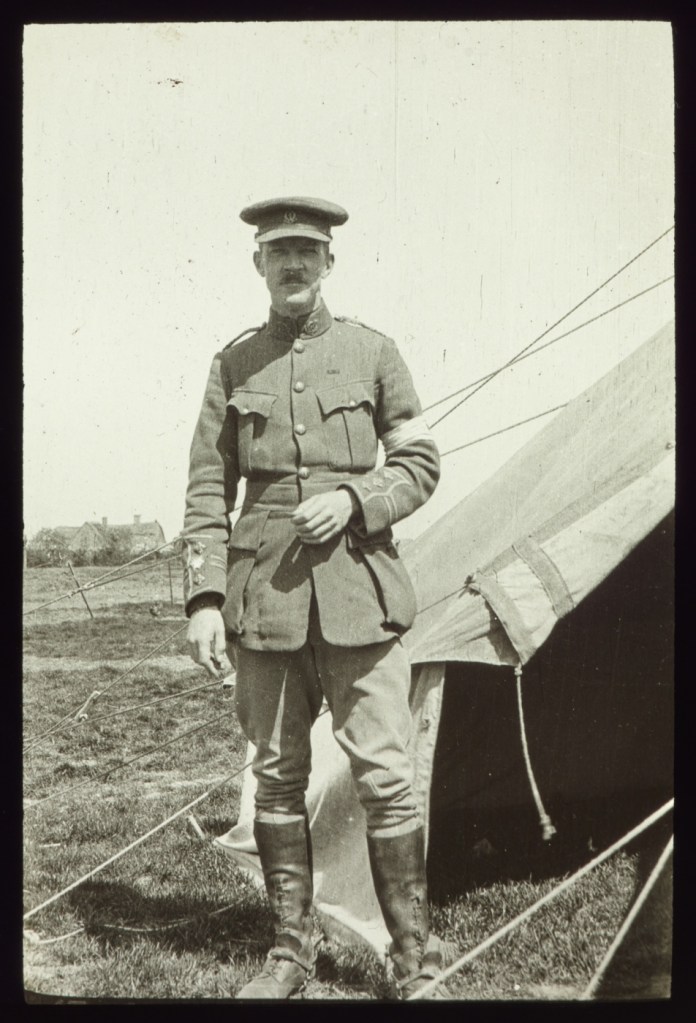
Captain Harold Fairbank
Capt. Harold Fairbank, 1915
Image source: https://specialcollections-blog.lib.cam.ac.uk/?p=12795

The Salonika setting hardly needs explaining: heat, dust, flies, endless sickness, and a constant battle against malaria that often seemed more dangerous than the enemy. Fairbank seemed to thrive in the middle of it. As well as handling surgery and casualty care, he was heavily involved in organisation and transport, and his abilities soon earned him promotion to Lieutenant Colonel and appointment as Consulting Surgeon to the Salonika Army in 1917.

In this role, he travelled widely in the Doiran and Struma areas, advising and helping younger surgeons and making a major contribution by establishing the first overseas convalescent centre for British troops. In the second world war such units became known as Rehabilitation Centres.

The world Fairbank worked in was later captured by Stanley Spencer, whose paintings of dressing stations and camp life remain some of the most vivid images of the Macedonian Front, especially those at Sandham Memorial Chapel. When looking at Spencer’s sketches and paintings, it’s not too difficult to imagine Fairbank moving through the chaos of a casualty station and helping other surgeons in their work.
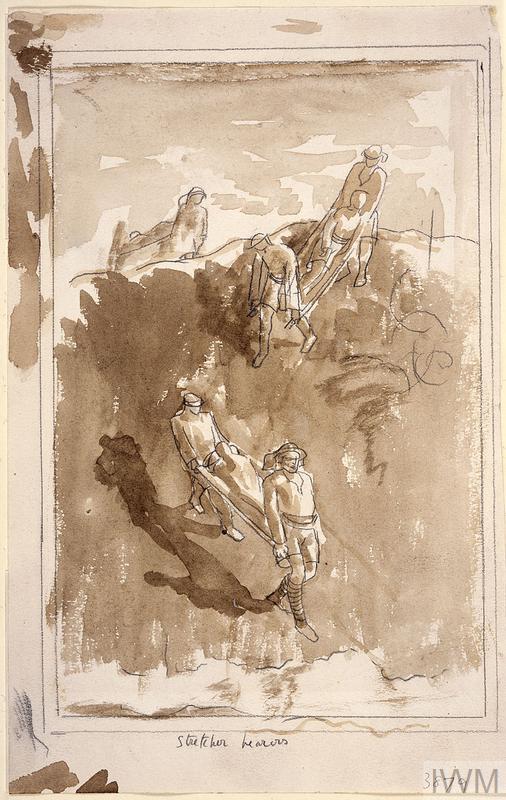
Stretcher Bearers – Stanley Spencer. Source: IWM

Like so many in Salonika, Fairbank eventually became a casualty himself. On 20 August 1918, suffering from malaria and typhoid fever, Fairbank was admitted to the 43rd General Hospital where he stayed until his medical evacuation to Malta on 18 September. He remained in Malta until late December 1918.

Incidentally, it was while recovering in Malta that Fairbank developed a lifelong fascination with butterfly collecting — a surprisingly gentle legacy from such a harsh campaign.

His diaries from his time in Salonika are available at Cambridge University Library but not online, as far as I can tell. The library gives a synopsis of them:
“Fairbank frequently remarks on the cold temperatures endured and the treatment of those sick with malaria and diarrhoea. The diary carries reports of the autumn 1916 offensive from 10 September to 18 December when Fairbank returned to England for a period of leave; of Fairbank’s involvement in a serious railway accident involving a British troop train in France on 17 January 1918 which killed ten; the bombing of the 29th General Hospital in Salonika on 1 and 5 March 1917; and of the fire which destroyed two-thirds of Salonika from 18 to 20 August 1917. After 11 March 1917 entries become less frequent with only eight entries from 1 April to 6 December… There are no entries after 6 December 1917 until 4 August 1918. .. The diary ends with Fairbank’s arrival in England on 3 January 1919. There are only five extremely brief entries from 20 August 1918 to 3 January 1919.”

Fairbank’s wartime service earned him the Distinguished Service Order, an OBE, and three Mentions in Despatches. After the war he returned to civilian medicine, specialising in orthopaedic surgery at King’s College Hospital and Great Ormond Street Hospital where Uncle Tom, as he was known, was widely considered a superb clinician with an extraordinary gift for reassuring children and their families. His later achievements in orthopaedics are reported as considerable, particularly his landmark 1950 textbook An Atlas of General Affections of the Skeleton.

Sir Harold Arthur Thomas Fairbank died February 26, 1961.
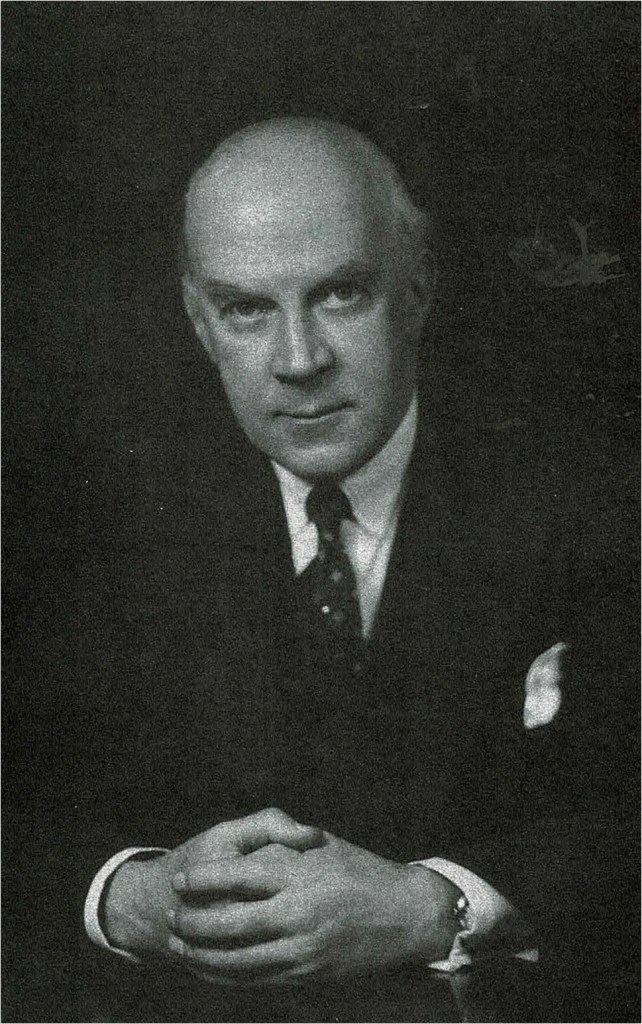
Sir Harold Fairbank
Image source: https://link.springer.com/article/10.1007/s00264-025-06696-w/figures/6

Sources


Mettle and Steel: the AANS in Salonika

Searching for information recently about nursing in Salonika, I stumbled across Mettle and Steel: the AANS in Salonika. It’s an account of the punishing nature of Australian military nursing in Salonika. From 1917, Australian nurses were sent into this difficult and unfamiliar theatre of war to relieve the British, French and Canadian nurses and to provide nursing care to British soldiers and prisoners of war. As nursing ‘our boys’ was a major motivation for overseas service, it was something of a disappointment for many that they could not nurse Australian soldiers.

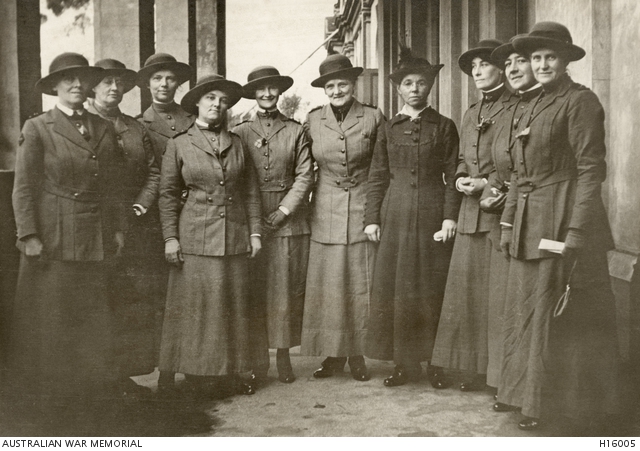
Accession Number: H16005
A group of Australian Army nurses about to depart from Adelaide for Salonica, 14 June 1917. From the left: Miss Molly Wilson, Mrs J. Tyers, Miss Edith Horton, Miss Marion Geddes, Miss Laura Begley, Mrs Jessie McHardie White (Principal Matron), Mrs Forsyth (wife of General Forsyth), Miss Violet Mills (Matron of No 5 Australian General Hospital who was on a visit to Adelaide), Miss Alice Prichard and Miss Florence G. Gregson.

I hadn’t quite appreciated the scale and complexity of the Australian nursing presence: four contingents were dispatched via Egypt, under constant U-boat threat, and then distributed across a shifting network of British hospitals in Greece and the surrounding hills. Each unit was allocated one Matron, ten AANS Sisters and eighty Staff Nurses. The nurses were led by senior matrons such as Jessie McHardie White, who oversaw not only clinical standards but the welfare and morale of hundreds of nurses. Staff Nurse Lucy May’s personal account helps convey the experience of Salonika in winter:

[12 October 1917] Water racing thru wards & reached halfway up bedsteads, haversacks, boots, socks, pants floating down road…
[21 October] Lanterns blowing out & leaving you in dark…
[23 October] Still don weather attire, only wearing men’s pyjama pants, putties, gum boots, man’s shirt also. Had dress tucked around waist all night…
[2 November] Imagine me [on night duty] over my ankles in mud, dragging one foot out then other foot & standing on one leg in grim peril or sitting down hastily…feeling the rain oozing through my mack. This is the life?”

As winter ended, the nurses then faced oppressive summers dominated by malaria. The AANS uniform was adapted in an attempt to counter the mosquito risk. A ‘mosquito proof’ nurse would be clad in her working dress, huge gloves, rubber boots and thick veil which, according to Lucy Tydvil Armstrong:

“made it quite impossible to carry out our duties, when men were rigoring and vomiting all night long, we just had to do away with the precautions, & run the risk of being bitten with mosquitos.”

Accession Number: H15761
A group of Australian Army Nursing Service nurses at the 52nd British General Hospital at Kalamaria, Greece ready for night duty wearing headdress provided for protection against mosquitoes. C 1918.

Despite the precautions, Matron McHardie White later reported that, ‘most of the nurses were affected by it [malaria] one time or another…’ By August 1918 45 nurses had been sent back to Australia from Salonika and another 14 were waiting to go, mostly on grounds of ill health. The death of Sister Gertrude Evelyn Munro in 1918 underlines the very real cost of the AANS service.

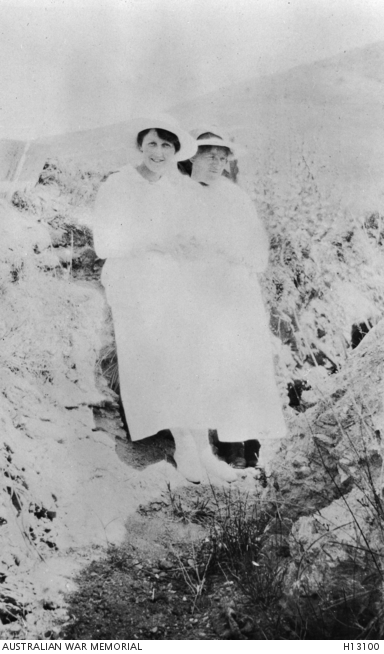
Accession Number: H13100
Sisters Gertrude Evelyn Munro and Amy Christie of the AANS. The photograph was probably taken at the 60th British General Hospital, Salonica.

Despite deteriorating health and official doubts about the value of their continued presence, the nurses remained in Salonika until after the war ended, not returning home until early in 1919. Their courage and professionalism were acknowledged through praise and decorations from British, Serbian and Greek authorities. Matron McHardie White, as just one example, was awarded the Serbian decoration of the Order of St Sava and was made a Member of the British Empire.

Nurses’ Narratives

It’s always interesting to read first-hand accounts of experience and so it was good to see that some diary and retrospective narratives written by the AANS nurses have been, and are being, transcribed. Staff Nurse Vivian A Lee Shea, for example, recalled,

We arrived in the midst of summer & the height of the Malaria & Dysentry season, & work commenced right away. We had much to learn. We were all new to each others ways & the medical Staff & personnel had only just landed as we ourselves had.

The Hospital was rather well situated at an elevation of about 2000 ft above sea level & this gave us a cooler summer, but made it impossible to live there in the winter months. During the winter months we occupied the Prisoners of War Hospital in the Base area. Here we nursed British Troops, as well as prisoners of War, the latter were representatives from practically every one of the Baltic States. Germans Bulgars, Turks, Romanians, Greeks Albanians & Serbs, in fact any one found in enemy lines.

Annie E Major-West remembered,

We remained in Salonika till February 1919, during the whole time the work was very heavy at times the hours on duty were particularly long. these conditions were occasioned by the prevalence of Sickness amongst the Sisters and Medical Officers.
Frequently the Bulgars & Germans were over in Planes endeavouring to bomb
the Town but the Vicinity of the Hospital was never damaged, during the Month
of August 1917 the town was partially destroyed by fire, Supposed to have
been the work of Spies.


Screening in London: ‘By Far Kaymakchalan’ – A Documentary by Bojan Pajic

Those in London, or able to visit, on Saturday 18 October are warmly invited to attend the screening of By Far Kaymakchalan, a newly completed documentary by Australian writer and historian Bojan Pajic. The one-hour film will be shown from 3:00 to 5:00 pm in Room KIN 204, King’s College London, King’s Building, Strand Campus, WC2R 2LS.

Bojan Pajic is the author of two books examining the experiences of Australians and New Zealanders who served with Serbian forces during the First World War. By Far Kaymakchalan builds on his previous work and combines archival material, personal testimonies, and historical analysis to illuminate the shared history of these Allied nations. The event, hosted by Dr Stephen Morgan, Lecturer in Film Studies at King’s College London, will be followed by a discussion with Bojan Pajić.

Filmed in Australia, Serbia, Greece, and North Macedonia over a period of eighteen months, By Far Kaymakchalan is based on Pajić’s research that has revealed that more than 1,500 Australian and New Zealand volunteer doctors, nurses, ambulance drivers, soldiers, sailors, and aircrew served alongside Serbian forces during the war.

Full details of the event are available via this link.

NB For security reasons, King’s College London requires a list of attendees to be submitted 24 hours in advance. If you are thinking of attending, please don’t forget to register beforehand.

This screening offers a rare opportunity to engage with a significant and often overlooked chapter of First World War history, and to hear directly from the researcher and filmmaker who has dedicated much of his work to bringing these stories to light.


I’m very grateful to Jon Lewis, author of the excellent The Forgotten Front; the Macedonian Campaign 1915 – 1918, for bringing this to the attention of the Society – thanks Jon!


See also: https://salonikacampaignsociety.org.uk/2020/09/26/australians-and-new-zealanders/


Dr Isobel Tate

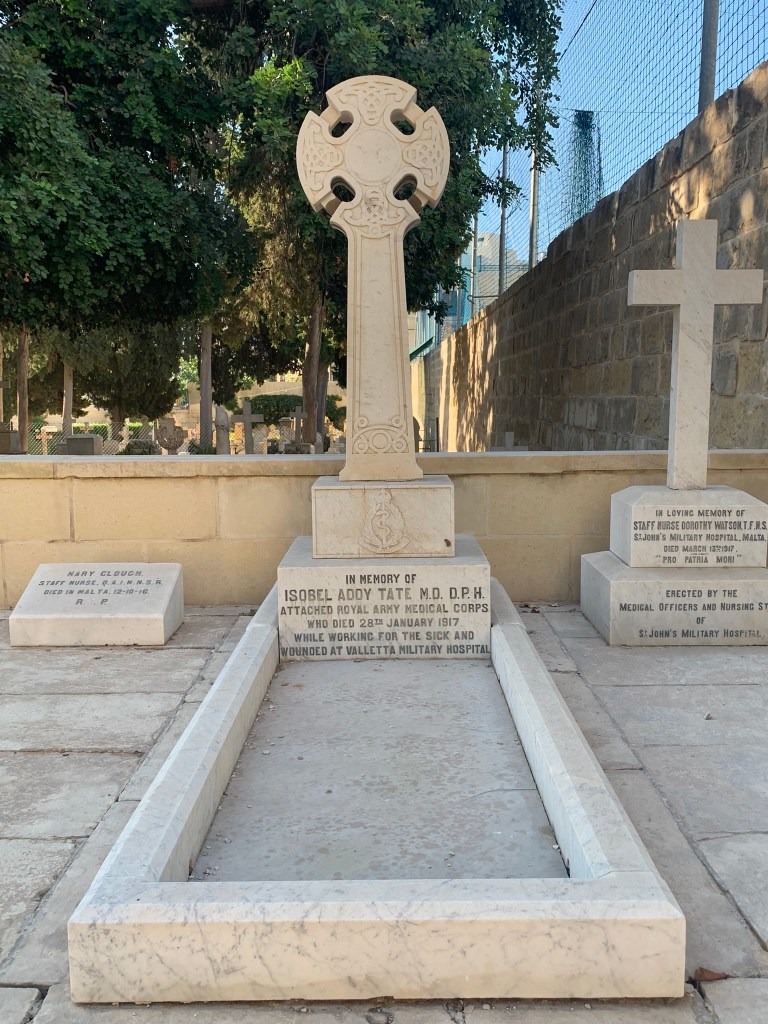
‘X’ (formerly Twitter) is not a favourite medium of mine but it can, in some circumstances, be an informative and interesting forum. In the past year the Society has set up an account and we have managed to both share and learn from this online community. For example, in a series of posts, @DanielJPhelan (Speaker, tour guide, & EOHO volunteer for @CWGC ) shared a thread about a discovery while on holiday in Malta. During his stay, Dan visited Pieta Military Cemetery and it was there that he found the grave of Dr Isobel Tate.


On his return home, Dan researched and shared his findings in a series of posts and images on X (Twitter). Thanks Dan for sharing your research!

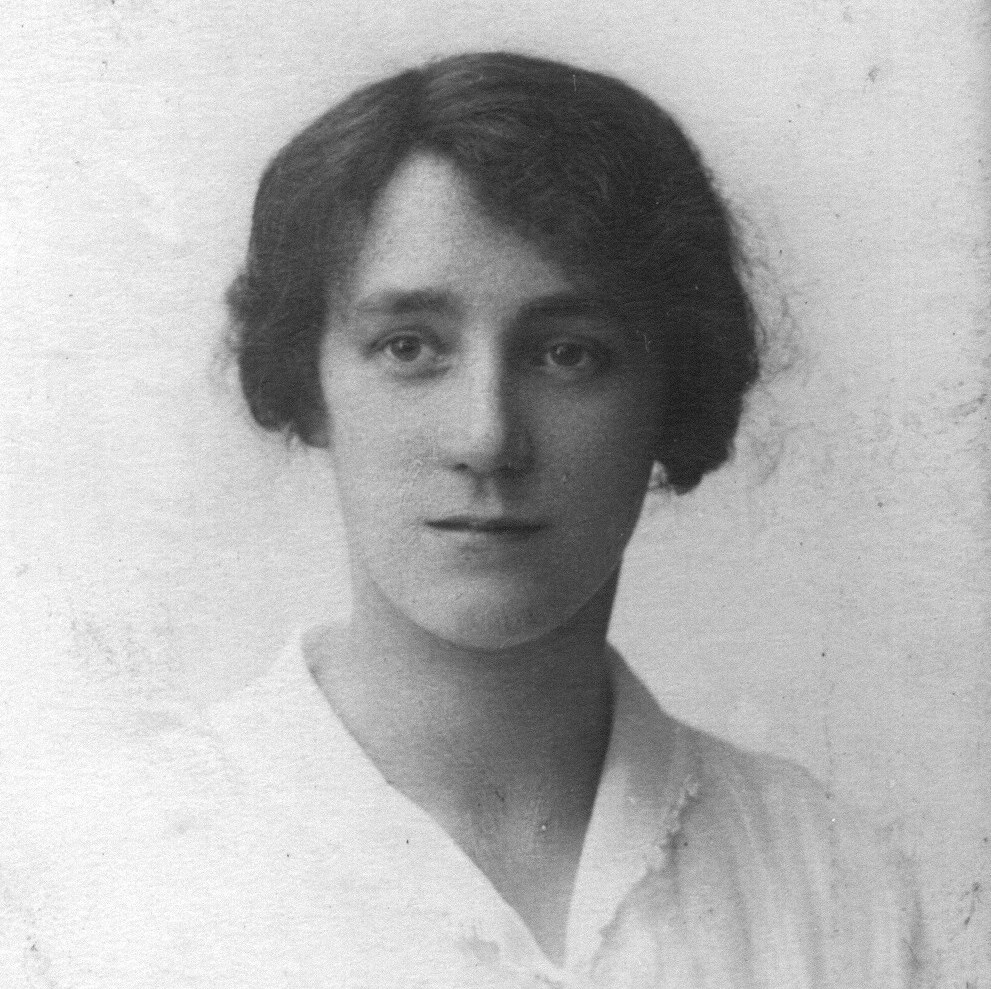
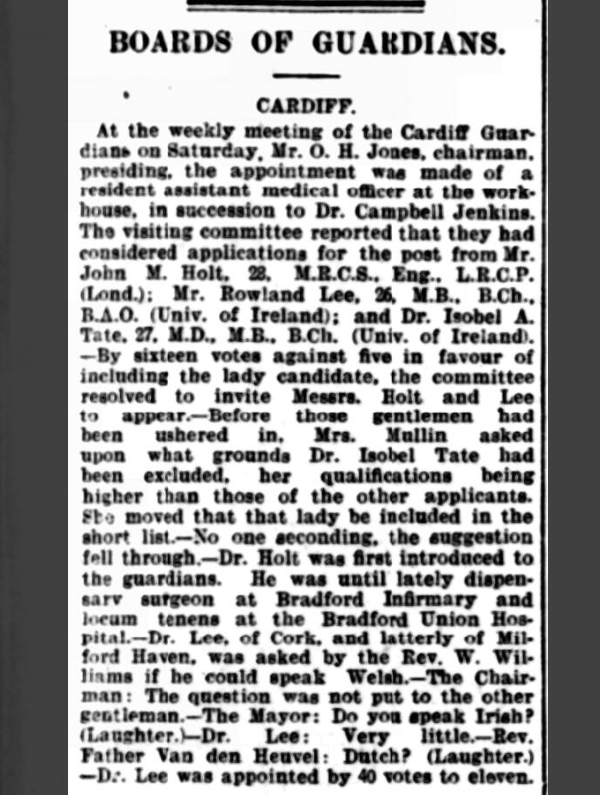
“Isobel Addey Tate was born, around 1874, in Country Armagh, Northern Ireland. At a time when female doctors were rare, she studied medicine at Queens University, Belfast graduating in 1899. Continuing her studies, she qualified as a Doctor of Medicine in 1902.

After qualifying, a huge achievement, she moved to England and held a number of positions in hospitals and medical institutions. However, it seems pursuing her career in medicine was not easy…

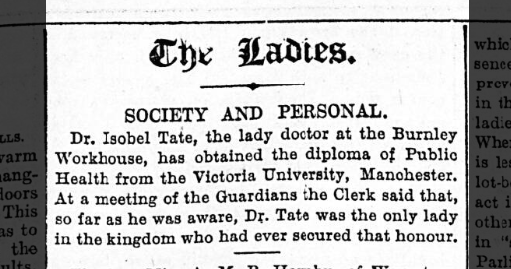
In 1904, while working at the Burnley Workhouse, Dr Tate obtained a Diploma in Public Health from Victoria University, Manchester. It was thought at the time that Dr Tate was the only lady in the kingdom who had ever secured that honour.

In 1915, with the Great War being fought, Dr Tate volunteered to serve with the Serbian Relief Fund. The relief fund was set up and commanded by Mrs Mabel St Clair Stobart. It had seven women surgeons and doctors, which included Dr Tate.

While serving with the Serbian Relief Fund, Dr Tate contracted typhoid and returned home to convalesce. Once well again she became a radiographer at Graylingwell War Hospital, near Chichester. Feeling she ‘was not doing enough’ Dr Tate offered to go abroad again.

Isobel Tate volunteered for service with RAMC and embarked for Malta in August 1916. In Malta she treated sick and wounded servicemen, including casualties from Gallipoli and Salonika. While working at Valletta Military Hospital she became ill. Sadly, on 28th January 1917, Dr Isobel Tate succumb to her illness and died of typhoid fever.

The funeral of Dr Isobel Tate took place on Tuesday 30th January 1917. Her flag-draped coffin was carried by medical officers, flanked by two lines of wreath carrying NCOs from the RAMC. The firing party contained 40 men of the Royal Garrison Artillery. A lengthy train of medical officers, officers from other units, and local members of the medical profession followed her coffin. At the graveside assembled ‘lady doctors’, principal matron, matrons, sisters, and nurses, from all hospitals and camps on the island.

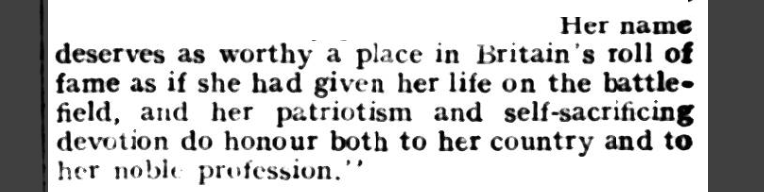
It’s incredible to think that Isobel Addey Tate lived, served, and achieved so much, in an era before women even had the vote. I think this quote from a newspaper at the time is very fitting.”

You can read the complete thread from Dan on Twitter @DanielJPhelan:

The nature of ‘social media’ does not really allow for detail and detailed discussion, so Dan’s account of Isobel Tate’s life is necessarily short. If you would like to read more about her life, and the challenges she and other women faced, there is a more in-depth examination here.