
I’ve just come across this fascinating story related to 9/Border Regiment (Pioneers), although it pre-dates their time with the BSF (22nd Division):
Continue reading “RIP Harlequin”Blog
Rick Stein in Thessaloniki, tonight at 8pm on BBC4
So, nothing about the campaign, but a reminder of what a great city it is to visit and what great food you can get there!
Continue reading “Rick Stein in Thessaloniki, tonight at 8pm on BBC4”On International Dance Day …
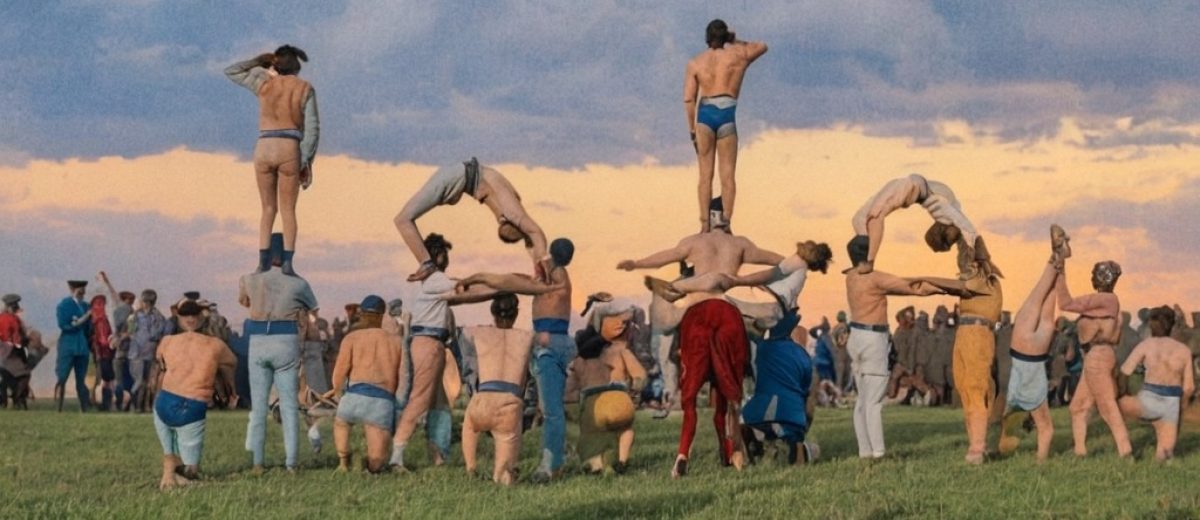
… these photos from the IWM’s incomparable online collections immediately sprang to mind to share with you:
Continue reading “On International Dance Day …”Gas! 22 April 1915
Continue reading “Gas! 22 April 1915”Thursday, 22 April, was a beautiful spring day: warm, sunny, with a faint breeze. German guns shelled French and Canadian trenches throughout the morning but fell silent in the afternoon. The brief period of peace suddenly ended at 4:00 p.m. when the Germans unleashed a violent bombardment, first on the salient and then gradually extending to nearby roads and Ypres, turning the town into a flaming inferno and causing its citizens to flee. An hour later an ominous greenish-yellow wall of fumes was seen drifting slowly across no-man’s-land toward the French line.
Cassar, G.H. (2014), Trial By Gas – The British Army at the Second Battle of Ypres; Potomac Press, University of Nebraska Press.
Happy Birthday, Muffin!
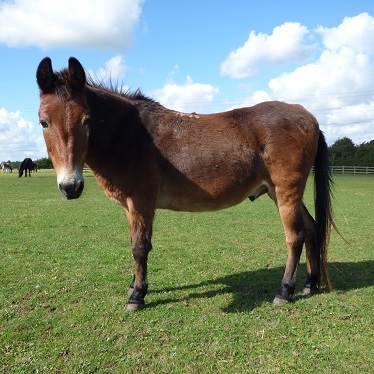
Today, Redwings Adoption Star (Ret’d) Muffin celebrates his 34th birthday. Muffin has been an Honorary member of the SCS – with the special membership number ‘Salonika 4’ – since the centenary, so we send him very best wishes for his special day.
Continue reading “Happy Birthday, Muffin!”World Piano Day
I know what you’re thinking, “how can he possibly link ‘World Piano Day’ with the Salonika campaign?”, well …
Continue reading “World Piano Day”World Poetry Day
My thanks go to Lucy London who has shared this poem by Trevor Allen from 1918, which she discovered in “The English Review” of 1920 (p199).
Continue reading “World Poetry Day”“With the Serbs in Macedonia.”
Many thanks to Society member Keith Roberts for information about this book, With the Serbs in Macedonia.

Its author, Douglas Walshe, was an officer in one of the British Army Service Corps Mechanical Transport Companies sent to drive small Ford trucks with equipment, food and ammunition to the Serbian army. The book can be found in digital format on the SCS map disk, and is also free of charge to download on the Internet Archive.
Keith recently took delivery of a printed edition complete with an intact dustjacket. Now rather ‘grubby’, the book is the original 1920 edition and amazingly, says Keith, the “book has never been read. How can I tell? The pages have not been cut.” Says Keith, “it is easy reading, and surely worth an hour or two of anybody’s time.”
I agree with that, having just started it myself. Something of the tone of the writing can be heard in the opening pages, “Here, as far as our men are concerned, there are no records of days and nights in waterlogged trenches under concentrated shell-fire, and no pulse-stirring descriptions of hand-to-hand encounters and bayonet charges. We never fired a shot at anything more exciting than a petrol tin for revolver practice, or a wild goose or duck for a dinner that usually remained in the air. But we did our job, and we saw a little of the Balkans. Mainly married and mostly of inferior physique, we ‘carried on’ – when there was any carrying on to be done.”
The online version of With the Serbs in Macedonia can be found here.
We Will Remember Them All!
War memorials from the Great War come in all manner of shapes and designs. I recently came across one that struck me as being particularly unusual and moving. Not surprisingly, memorials are usually dedicated to ‘The Glorious Dead’, but this one, in the Lancashire town of Rawtenstall, has a much wider dedication. Entitled Tribute of Honour, it reads as follows:
Continue reading “We Will Remember Them All!”Air Raid!
Continue reading “Air Raid!”All was peaceful on Tuesday, February 27th, 1917, until shortly after 4 o’clock in the afternoon, there suddenly appeared what looked like a flock of geese coming from the north. Within seconds, it was realised that they were enemy planes – 15 of them flying in echelon formation. They made straight for Summer Hill camp and the town, dropping one or two bombs on the way on remount depôts.

