
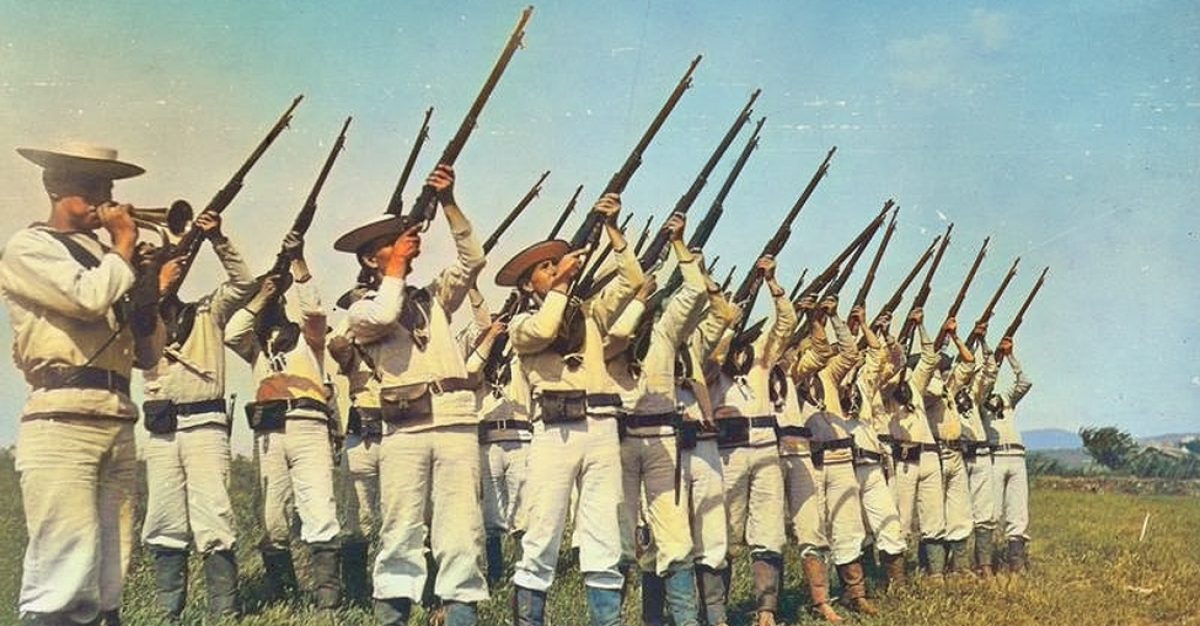
As is customary on the first Saturday after the anniversary of the Bulgarian armistice (30 September 1918), SCS members and friends gathered at the Cenotaph in Whitehall on Saturday 5 October to lay a wreath and remember the dead of the British Salonika Force.
Continue reading “Remembering the BSF”Blog
Once Through The Alphabet
Whilst the BSF did not produce a poet of the stature of Wilfred Owen, it did have Rifleman T. B. Clark of the King’s Royal Rifle Corps whose poetry was published in a small volume – Rhymes of A Rifleman – by William Nicholson & Sons Ltd of London. Whilst this has not been perpetuated through exam syllabuses, from it we get an interesting view of the campaign from a thoughtful, pre-war private soldier. So, for National Poetry Day, here is Rifleman Clark’s poem, Once Through The Alphabet – Tommy’s Version, composed in the trenches in Macedonia, October 1917.
Continue reading “Once Through The Alphabet”Battling ‘General Malaria’ on the Macedonian front, 1915–1919
I’m grateful to SCS member Nick Palmer for bringing this online article (Battling ‘General Malaria’ on the Macedonian front, 1915–1919) to my attention. It’s a very recent publication from Dr Laura Robson-Mainwaring at the National Archives.
The article takes a look at some of the medical case sheets from the 28th General Hospital, Salonika to reveal the impact of malaria and the efforts to counteract it; from quinine and mosquito nets, to importing fish to eat mosquito larvae!
The impact of the disease is considered at the macro level – and, poignantly, at the individual level through the sad record of Isaac Jones of the South Wales Borderers who caught malaria in May 1918 with recurring attacks over the next few months before his death on 14 September 1918.

Remembering…
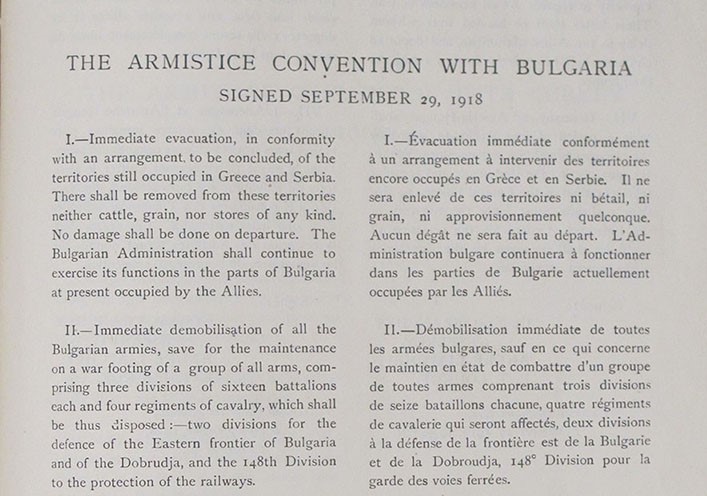
It is a very appropriate day and time (this is posted at noon), to be thinking about the contribution and ordeal of those working and fighting in Salonika – as it was at midday on this day, 106 years ago, that the Armistice of Salonica came into force, having been signed the day before.
V5 Bibliography released
Listing 430 titles, Version 5 of the Salonika Campaign bibliography is now published and freely available here. As in the past, the bibliography has been compiled for the Salonika Campaign Society by SCS member Keith Roberts.
If you haven’t taken a look at the bibliography in the past, why not do so now? Keith helpfully lists links to texts that can be viewed online. For example, one item listed is Salonika Again, which Keith describes as an “interesting pamphlet telling of a return visit paid by two veterans of the campaign, and their visits to a school funded by the SCS and a village adopted by them. According to the Mosquito, the two veterans were Billy Reeves and G E Willis.”
Our thanks to Keith for his continued patience and persistence in this Herculean task.
Salonika recommended!
My thanks go to David Gallon for sharing a letter from today’s Daily Telegraph, alerting readers to the delights of visiting northern Greece and – in particular- sites associated with the Macedonian campaign.
Continue reading “Salonika recommended!”Salonika Study Day – A Resounding Success!
Both new and old visitors to Great War Huts enjoyed an inspirational day of presentations, chat and site tours on Saturday 31 August. The venue, at Brook Farm Camp, Bury St Edmunds is a unique site in which to learn about the personal, military and social history of the First World War – and it was ideal for a study day focusing on the Salonika Campaign.
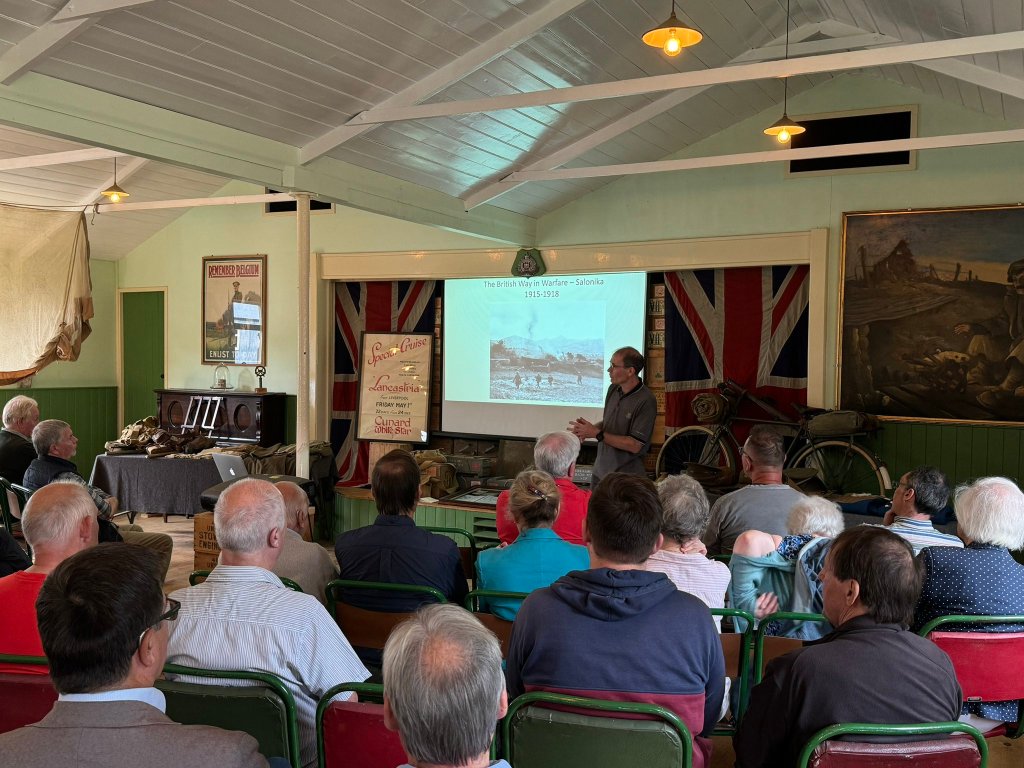
Ably chaired by SCS member, Keith Roberts, the day began with a welcome from military historian and Great War Huts founder, Taff Gillingham. SCS Chair, Alan Wakefield then spoke of ‘The British Way in Warfare – How the BSF Conducted Military Operations in Macedonia 1915-1918’. Alan focused on different geographical areas in Salonika and how the British army adapted to the terrain of each area, whether in the Struma valley or on the Dorain front.
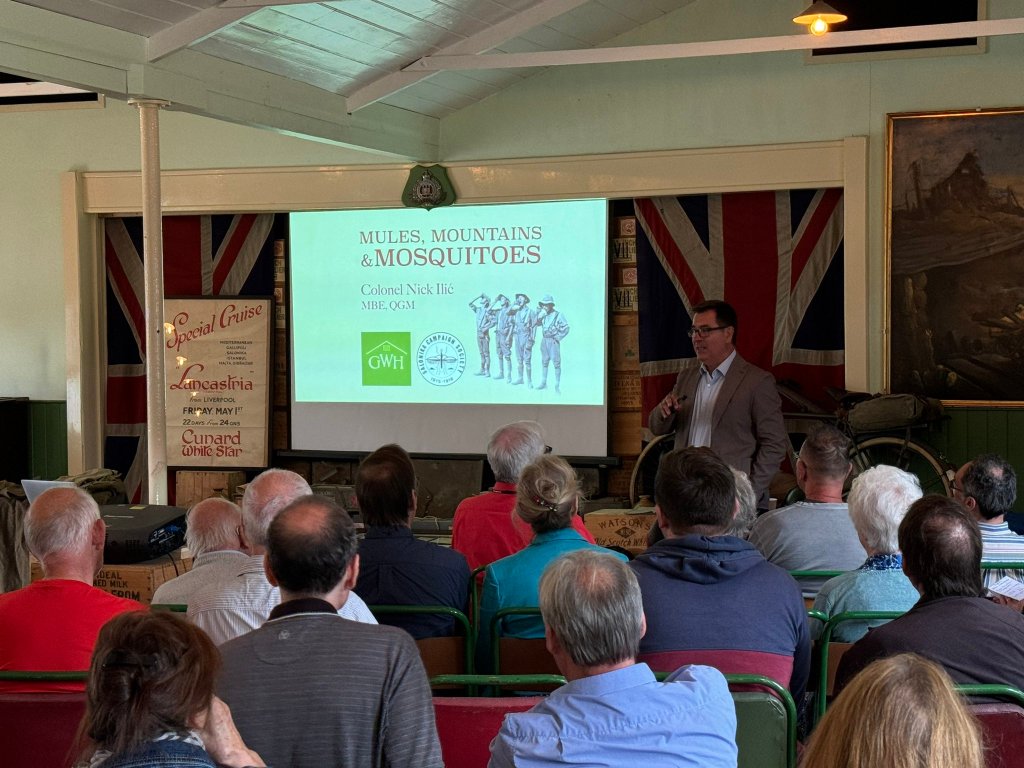
Second speaker of the day was Colonel Nick Ilić MBE QGM on ‘The British who defended Serbia during the Great War 1915-18 – The story of Admiral Ernest Troubridge and the wider British contribution to the Second Serbian Campaign through to the end of the War’. I had no previous knowledge of who Troubridge was or his role in the campaign but Nick’s fascinating presentation brought to life Troubridge’s enormous contribution in a story that we shall surely return to on this site.
Lunch, provided as part of the day, gave visitors the opportunity to view exhibitions, to tour the site and appreciate the truly ground-breaking nature of the Great War Huts project.
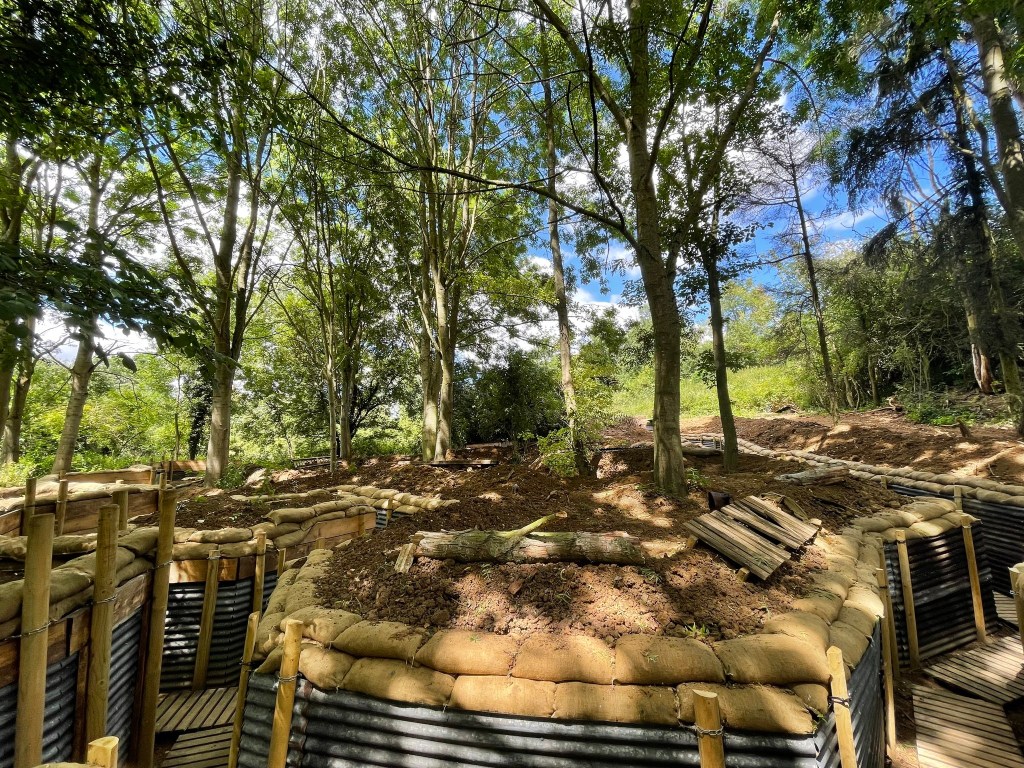
Trench reconstruction at Brook Farm Camp. Image source Great War Huts
Refreshed, we returned to hear Taff Gillingham’s engaging and expert talk on ‘Uniforms and Equipment of the British Salonika Force’. Taff based his session on photographs from the time, pointing out features of uniform and illustrating these with real items of clothing to highlight the practical uses and implications for the men of the campaign.

Wendy Moore then gave us a moving and uplifting talk: ‘With the Scottish Women’s Hospitals in Serbia, Russia and Romania: the story of Vera ‘Jack’ Holme and Evelina Haverfield in love and at war’. This provided a shift in focus from the campaign and the activities of men, to the contribution of women in the Scottish Women’s Hospitals and, in particular, the personal lives of the remarkable Jack and Eve.
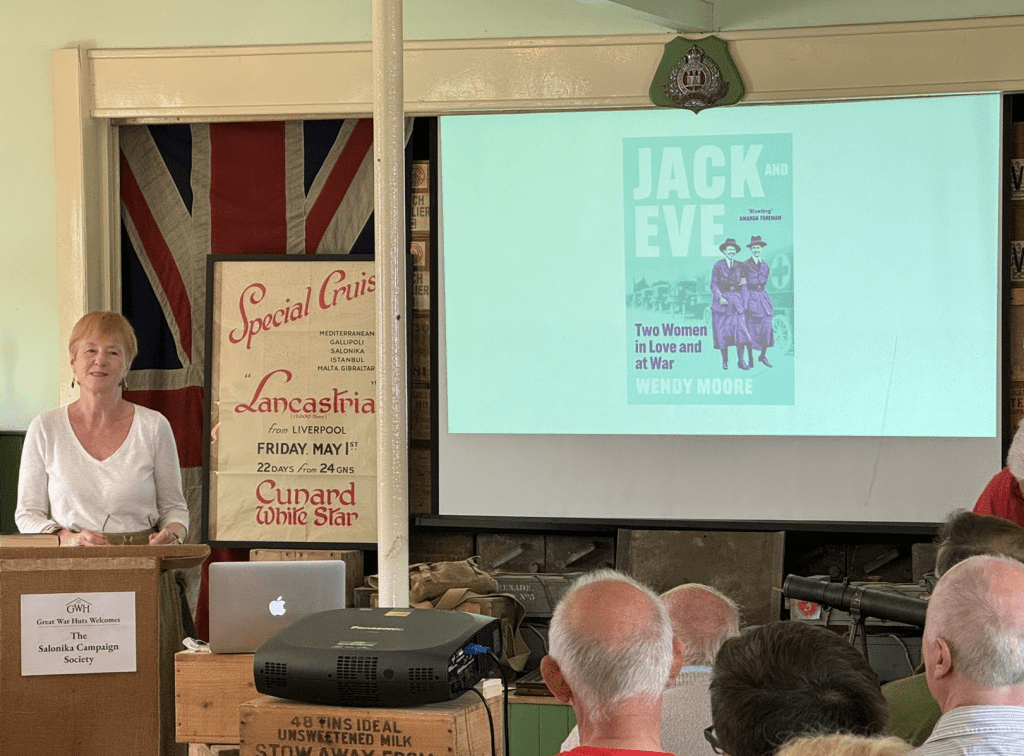
There was time for some scrumptiouus cake and tea before the final presentation of the day from none other than fellow author of these blog posts, Robin Braysher. Inspired by his grandfather Fred Braysher’s service, Robin gave a fascinating talk: ‘On Patrol with the Pneumatic Cavalry: innovation and adaptability in the Army Cyclist Corps in northern Greece, 1915-18.’ Who knew that a Lewis Gun could be carried on a bicycle, ready for instant use through its quick release clips!

The day concluded with a Q&A session, chaired by Keith, where all the speakers of the day faced questions from the audience. My key memory of this was an impassioned answer from Taff Gillingham on what had inspired his interest in the Great War. I only wish that I had recorded it as my notes and memory can in no way do justice to his reponse!
This was a truly special day and a great collaboration between the Society and Great War Huts. My personal thanks go to all those organising, speaking and contributing to the success of the day – not least to the GWH hospitality heroes Jane and Alan for delicious lunches, cakes and refreshments, and to GWH volunteer Mark for guiding us through the trenches at lunchtime.

Links
- Great War Huts
- Wendy Moore author of ‘Jack and Eve, Two Women In Love and At War’
- Colonel Nick Ilić MBE QGM
South Asian troops in the BSF
South Asian Heritage Month seems as good a time as any to consider the, often overlooked, South Asian contribution to the Macedonian campaign. Indeed, had the campaign continued into 1919, this contribution would have been even greater as plans were well underway to “Indianize” the BSF as had already happened in Palestine, but on an even greater scale.
Continue reading “South Asian troops in the BSF”“The League of Death” and the BSF
On this, the 110th anniversary of the Britain’s entry into the Great War, it seems appropriate to look at a connection between the British Salonika Force and the assassination of Archduke Ferdinand in Sarajevo. This is to be found in issue 45 of The Mosquito – ‘The Official Journal of the Salonika Re-Union Association’ – published in March 1939, not very long before Britain’s entry into the next world war!
Continue reading ““The League of Death” and the BSF”Salonika Study Day – Book Now!
We are very pleased to announce a special day focusing on the the Salonika Campaign, at the Great War Huts site near Bury St Edmunds, Suffolk. The date for your diary is Saturday 31 August.
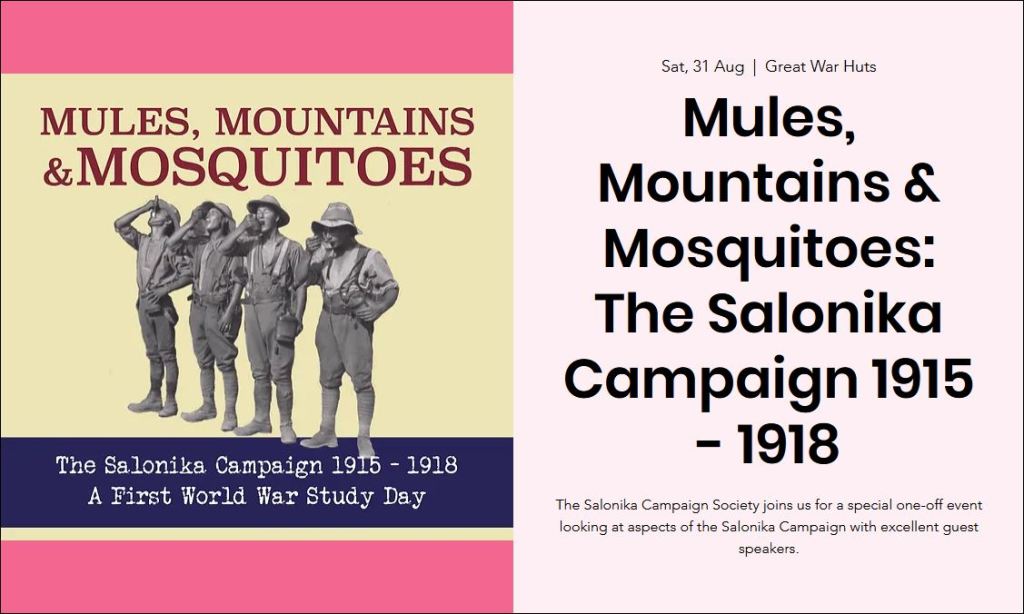
Together with our friends at Great War Huts, we have planned a special study day featuring five talks on aspects of the Salonika Campaign with expert speakers – including our own Alan Wakefield and Robin Braysher. The day also gives the chance to learn more about the work of Great War Huts and to visit the reconstructed First World War huts and trench network on site.
All this for just £25 – and that even includes lunch! Tickets MUST be booked in advance.
Full details of the day, the location, and how to buy tickets can be found here.
The Salonika campaign’s so boring!
No, this isn’t a sudden cri de couer after twenty years of reading about and studying the Salonika campaign, but rather an acknowledgment of the tedium experienced by many of those who served in Macedonia between 1915 and 1919. This was the subject of a fascinating podcast I recently came across.
Continue reading “The Salonika campaign’s so boring!”
