
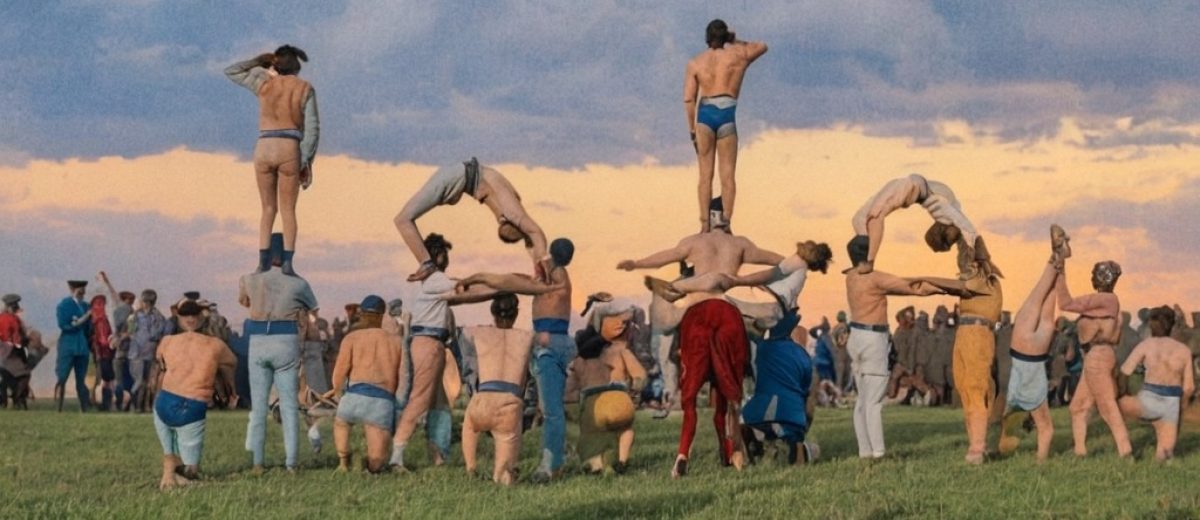
This was the longest battle of WW1, from February 1916 through to December 1916. The British were not directly involved, and the battle is not so well understood in UK, compared to the Somme.
Continue reading “Expert talk on the Battle of Verdun by Tim Cockitt on Friday 8th October at 6.00pm via Zoom”Blog
Salonika campaign bibliography – Updated!
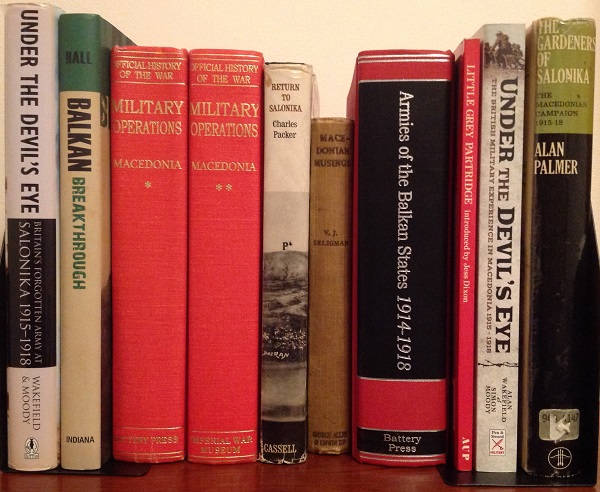
In keeping with our intention to publish occasional updates to the bibliography, as close as possible to the anniversary of the Bulgarian Armistice in late September 1918, we are very pleased to announce the arrival of a new and updated version of the comprehensive bibliography for the Salonika campaign.
You can find out more and download, free of charge, the updated bibliography here.
SCS Annual Meeting and Wreath Laying, 2021
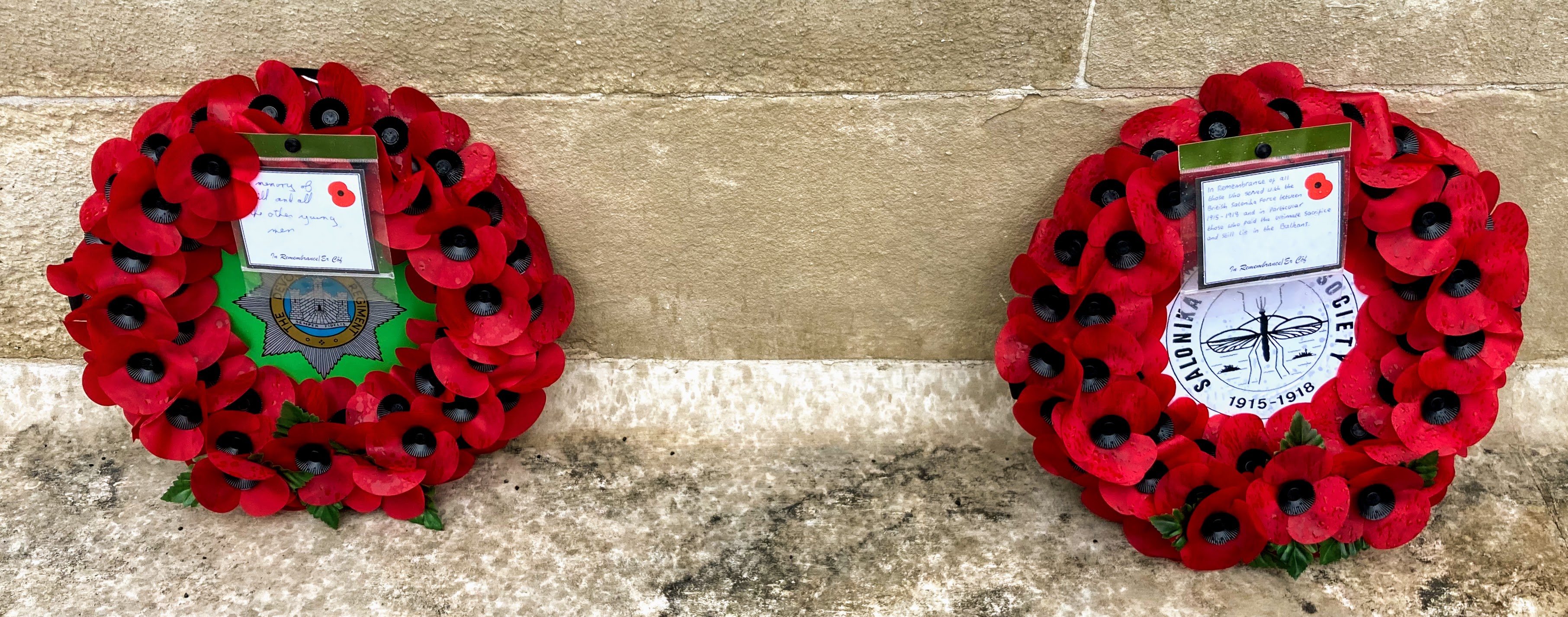
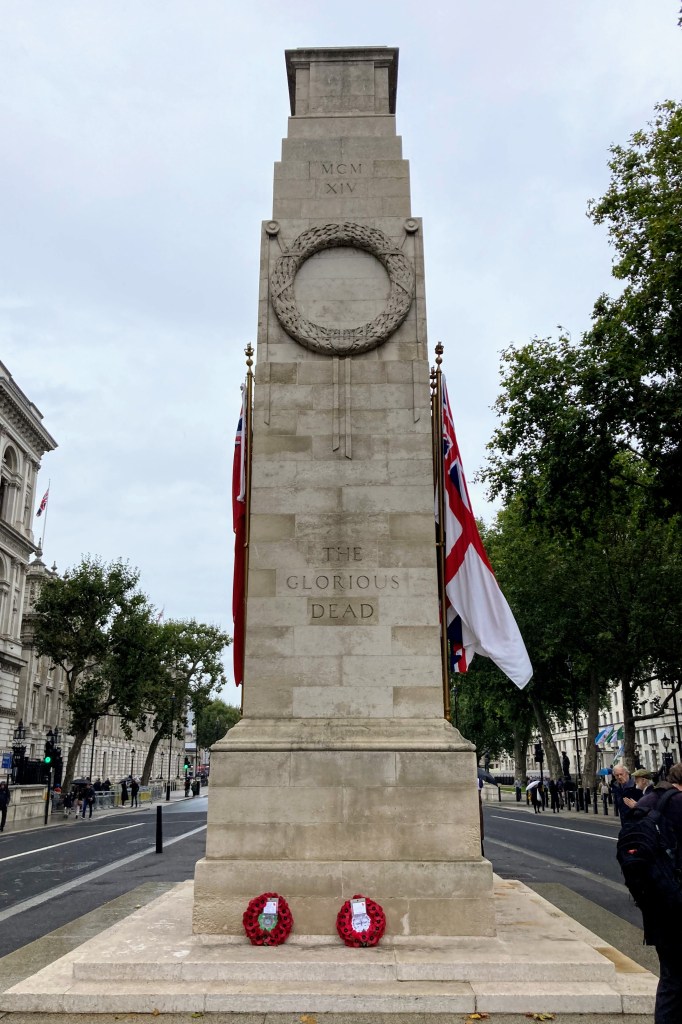
On Saturday 2nd October, society members gathered in the drizzle at the Cenotaph, London for the annual short ceremony of words and wreath-laying to remember the men and women of the BSF who served in Salonika. In particular, to remember those who died during the campaign or from the results of injury or disease.
Afterwards it was but a short walk to the Civil Service Club for lunch, followed by the society’s annual general meeting. This year, an actual meeting and not one via Zoom! Before the business of the meeting though, there was an excellent talk from Julie Adams of the British Museum. Her talk, Birdman of Salonika: The Life and Afterlives of Paul Montagu, was an interesting and moving account of Lt Paul Denys Montagu – a multi-talented anthropologist, naturalist and musician, killed in action when his plane crashed behind enemy lines on 29th October 1917. Julie’s book, Museum, Magic, Memory – Curating Paul Denys Montagu is, no doubt, available from all good book sellers.
The 4th best church in the UK …
… is Sandham Memorial Chapel! That’s the opinion of Rachel Morley, Director of Friends of Friendless Churches. She was a guest of the podcast series, The Rest Is History, presented by historians Tom Holland and Dominic Sandbrook on 13 September. Rachel’s task was to list her top ten British churches, which is quite a task given that there are more than 16,000 in England alone!
Continue reading “The 4th best church in the UK …”Two sisters of the Scottish Women’s Hospitals
The Society has received an enquiry about two sisters who served with the Scottish Women’s Hospitals in the Balkans. If you can help with this, please either add a comment to this post or use the ‘Contact Us’ form.
Continue reading “Two sisters of the Scottish Women’s Hospitals”Stretcher-bearers
I was listening a while ago to an oral history on the Imperial War Museum’s site from an unnamed British stretcher bearer on the Struma Front. He may have been forgotten but he lives alongside more remembered company in the form of composer Ralph Vaughan Williams and artist Stanley Spencer, both of whom served as stretcher-bearers in the campaign.
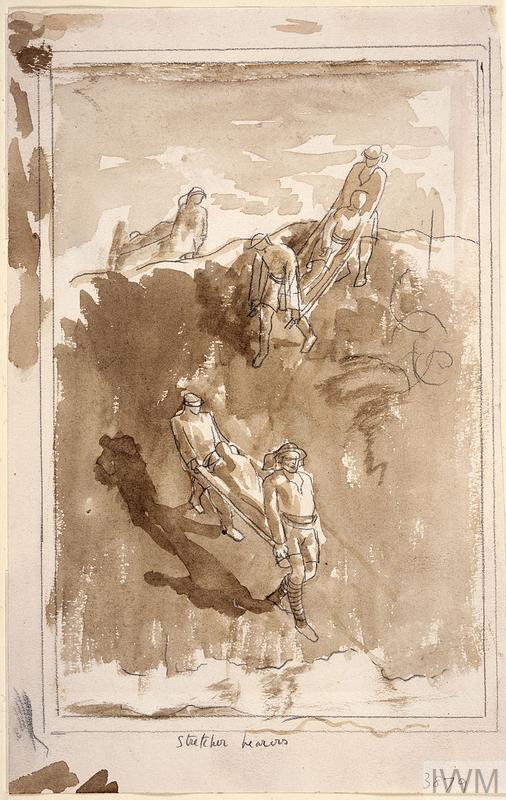
The Great War Stories: Luton’s Greatest has an account by Private Robinson who in Gallipoli, faced challenges that stretcher-bearers in Salonika would have found very similar,
“People have no idea what difficulties and dangers have to be overcome in evacuating wounded. The hilly nature of the country does away with the idea of mechanical transport, and every case has to be carried to other hospitals on the beach on stretchers.”
Perhaps it’s because many conscientious objectors signed up for medical, rather than military service, that many accounts of the lives and work of stretcher-bearers have not survived. Maybe, but that’s just speculation on my part… However, one set of diaries has not only survived but been re-discovered by author Sara Woodall, great-niece of the author of the diaries.
Sara discovered her great-uncle’s diaries while at home in Cambridge and was astounded to find both written accounts and accomplished illustrations. The author of these diaries was Bernard Eyre Walker, a stretcher-bearer for the British Expeditionary Force and later one of Cumbria’s leading painters.
The existence of the diaries is something of a miracle in itself. Forced to retreat by a German attack, Bernard had to abandon the diaries in a field hospital. The diaries were later picked up by a German soldier and taken to Belgium, before eventually making their way home to Bernard in Keswick.
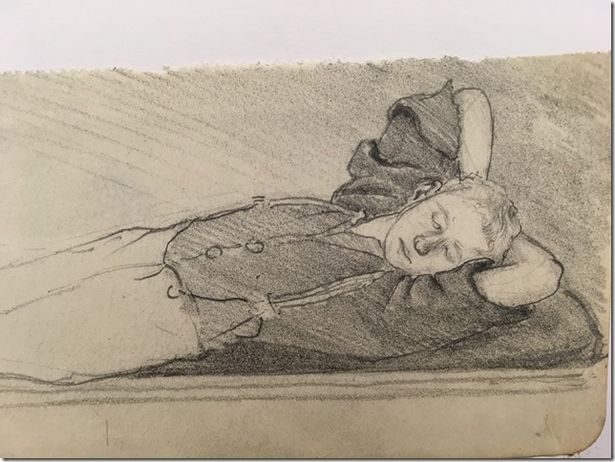
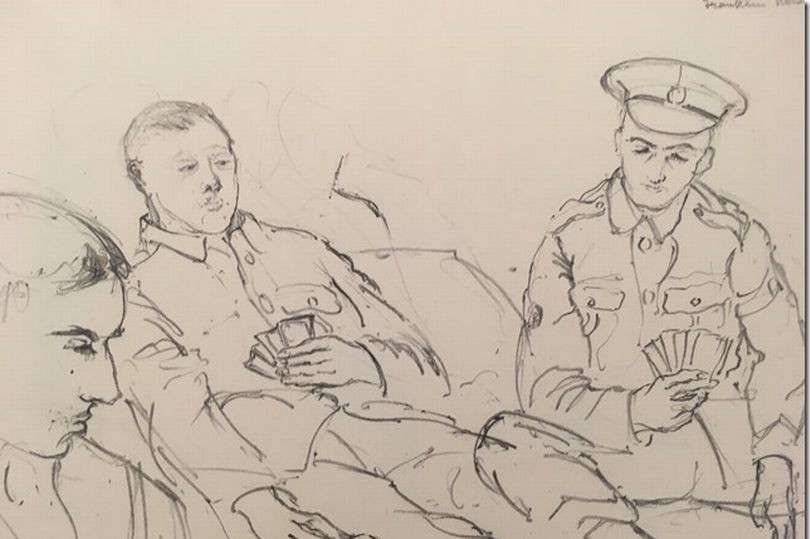
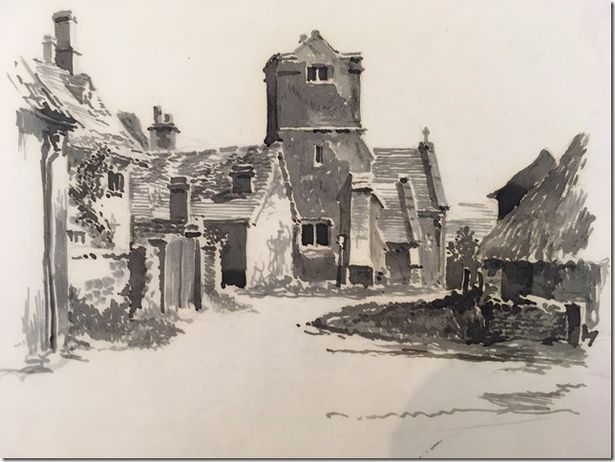
Illustrations by Bernard Eyre Walker from his war-time diaries.
Sara has edited and published the diaries, complete with 140 of Bernard’s illustrations from the trenches. I haven’t read the diaries myself, and it’s not an account of stretcher- bearers in Salonika, but it’s a primary source of a largely unrecorded aspect of the time and likely to have a wide appeal. There’s more about the book here.
The book is available on amazon.co.uk or you can order it directly from Sara at jdt.woodall@btopenworld.com or from the address below.
A Voice From the Trenches 1914-1918 From the Diaries and Sketchbooks of Bernard Eyre Walker. Edited by Sara Woodall. Price £19.95 (+ £3.10 p&p) from Sara Woodall, 17 High Street, Great Eversden, Cambridge, CB23 1HN
Now Online! ‘Military Operations Macedonia’
Readers will be very grateful to SCS member Keith Roberts, and Great War Forum member ‘maureenE’, for pointing out the online availability of two major texts related to the Salonika Campaign.
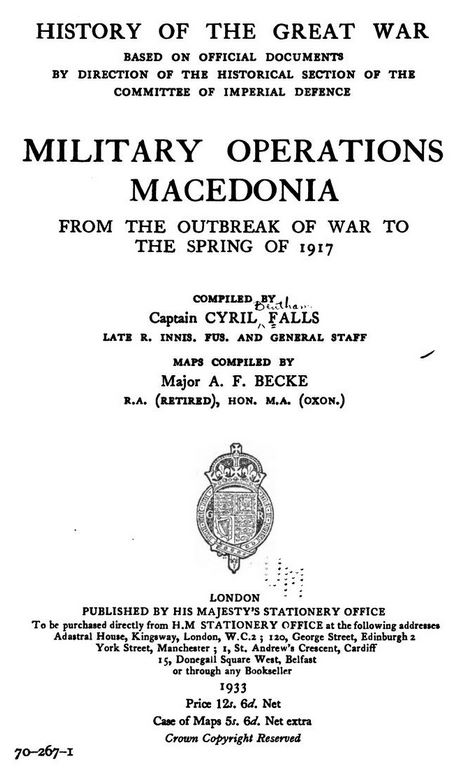
Military Operations Macedonia Volumes One and Two, by Captain Cyril Falls* were part of the series History of the Great War and based on official documents. Free, immediate, and online access to these texts is a wonderful benefit to anyone interested in the Salonika Campaign.
The digital versions of Volume 1 (1933) From the Outbreak of War to the Spring of 1917, and Volume 2 (1935) From the Spring of 1917 to the End of the War both contain the full text. However, both volumes are missing the maps which were originally in separate cases. Many of these maps are, however, available from the society here, albeit for a relatively small charge.
Both volumes are available on two sites: Internet Archive and Google Books. My preference is to use Google Books, I find the search tool a little easier to use, but that’s a personal choice. Either way, it’s a great that we now have these texts online for all.
Archive.org
- Military Operations Macedonia. From the Outbreak of War to the Spring of 1917 [Volume 1] compiled by Captain Cyril Falls 1933 HMSO.
- Military Operations Macedonia. From the Spring of 1917 to the End of the War [Volume 2] compiled by Captain Cyril Falls 1935 HMSO.
Google Books
- Military Operations Macedonia. From the Outbreak of War to the Spring of 1917 [Volume 1] compiled by Captain Cyril Falls 1933 HMSO.
- Military Operations Macedonia. From the Spring of 1917 to the End of the War [Volume 2] compiled by Captain Cyril Falls 1935 HMSO.
*Author Cyril Bentham Falls CBE was a British army officer turned military historian and journalist. After completing his military service, he began writing military histories. From 1923 to the outbreak of war in 1939 he researched and wrote several volumes of the British Government’s ‘Official History of the War’, including the two-volume history of the Macedonian campaign.
https://en.wikipedia.org/wiki/Cyril_Falls
The Burma Mule
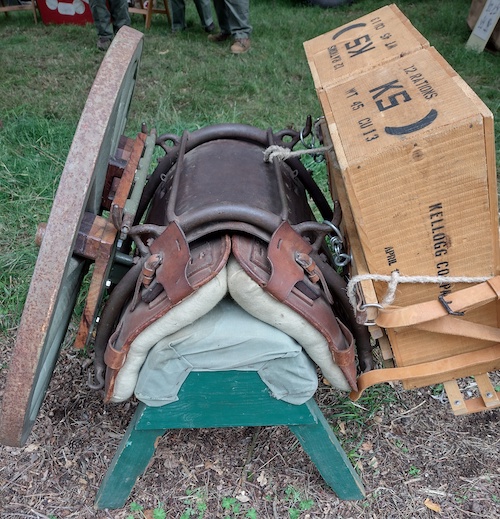
Having recently read two books about the second Chindit expedition in Burma (March-August 1944) I was delighted – if a little surprised – to come across a living history group, The Burma Mule, at a ‘Desert Rats’ commemorative event in Thetford Forest.
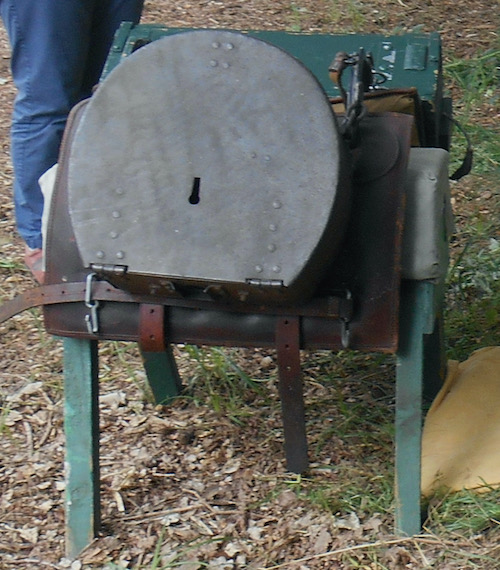
Unfortunately there were no mules present as their two 16 year old mules are now largely retired, but there was still much of interest. I was especially pleased to see mule saddles up close. Of relevance to the Salonika campaign is the one shown below, which is very similar to those used in the First World War. This could carry a variety of loads and you can see, here, a portable forge. Although date stamped ‘1940’ it is likely that similar kit – including a small anvil – was in use by earlier generations of mule transport units. Keeping the feet of mules and ponies in tip-top condition is, of course, vital for their well-being and efficiency.


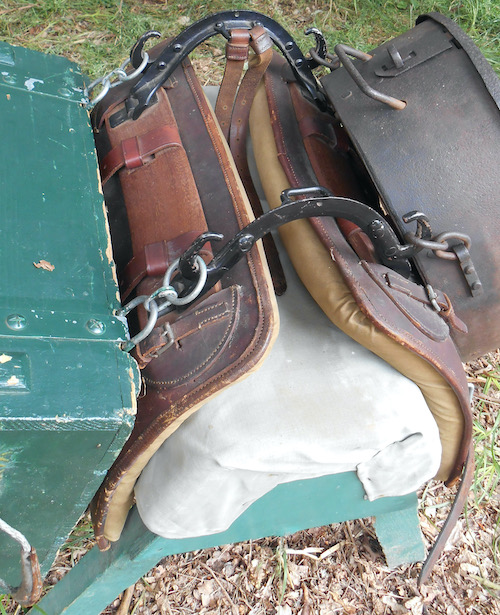
Their other saddle was of a later pattern with a rigid metal frame and was, apparently, less popular than the previous one. Whether this was with the mules or muleteers wasn’t clear! The load shown is illustrative only and, in reality, would have been more balanced, i.e. a pair of howitzer wheels or two loads of ‘K ration’ boxes.

You can find out more about The Burma Mule on their Facebook page.
To read more about the use of mules by the British (and Indian) Army, from the Peninsular War to 1975 – including detailed chapters on both world wars – I heartily recommend The Mule in Military Service, a slim paperback by distinguished military historian and SCS member, Anthony Clayton (The Book Guild Ltd, 2017). It looks like it is out of stock, so you may have to hunt for a secondhand copy.
If you’re interested, the books on the Chindit expedition that I read were:
- Chindit by Richard Rhodes James (1980)
- The Road Past Mandalay by John Masters (1961)
Well, it can’t all be about Salonika can it?
September 2021 Battlefield Tour
Unfortunately, the continuing uncertainty surrounding foreign travel has made the planning and potential running of a battlefield tour this year too complicated an undertaking for the Society. Therefore, we have decided to push the tour back to September next year, with provisional tour dates being 19 – 26 September 2022. We are proposing to keep the same itinerary, which means that, alongside visits to the Doiran and Kosturino battlefields, the Struma Valley and parts of the ‘Birdcage’ defence line, the tour will look to cover the Kajmakcalan battlefield and a visit to the area around the village of Krastali (now Korona) just to the west of Pip Ridge. As always, the tour dates aim to overlap with the ceremonies of commemoration at the Lembet Road Military Cemetery in Thessaloniki, at the Five-Nations Memorial, Polykastro, and Doiran Memorial and nearby Greek Military Cemetery. Anyone interested in potentially joining the tour in 2022 should contact the Chairman, Alan Wakefield.
Great War Huts – Hospital Blues
The latest video offering from the excellent Great War Huts seems particularly relevant to the Salonika campaign – Hospital Blues: The British Hospital Uniforms of the First World War. Given the high sickness rates in the BSF, not to mention wounds and accidents, many men would have found themselves in hospital blues.
Continue reading “Great War Huts – Hospital Blues”
