Blog

New Book: ‘Iant’ – a novel based on the life of a man who served in the Salonika Campaign

Author Steve Blandford got in touch with the society recently to share news of his new novel, Iant. Much of the novel is set in Salonika and is based on his grandfather’s experiences. As I haven’t read it (yet), it’s best to leave the introduction to Steve himself:
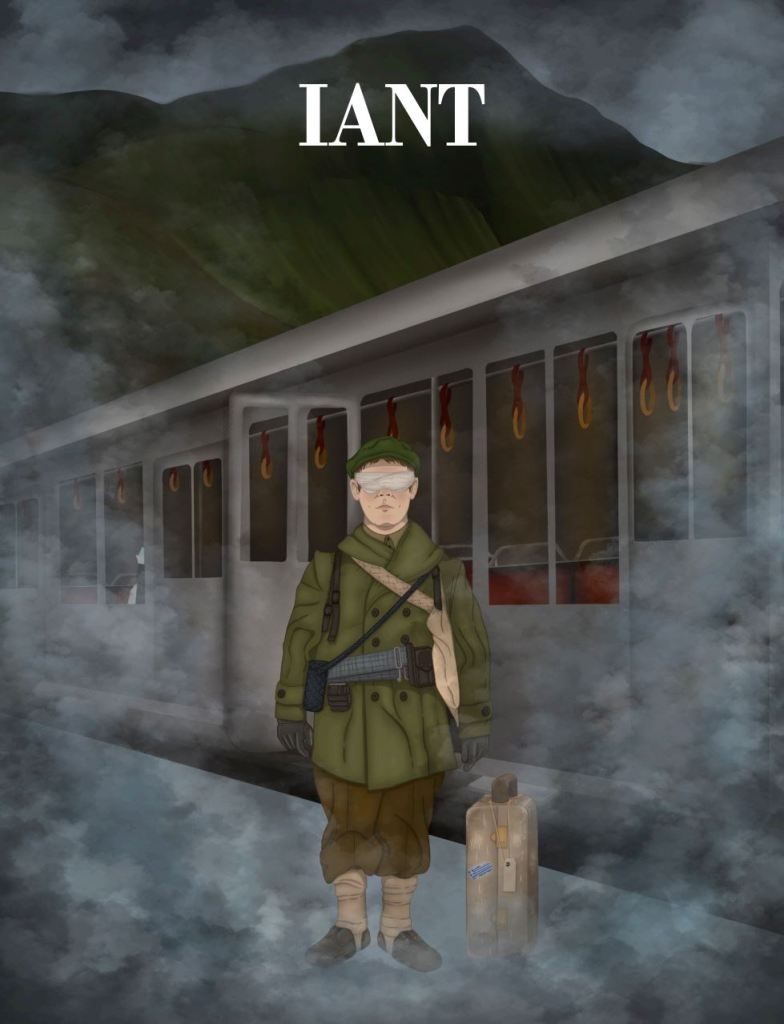
Iant – a novel by Steve Blandford

“My recently published novel Iant was inspired by my grandfather, David Owen, who died in 1956, aged 59. I knew little about him as I was two when he died, but the few stories I was told stayed with me and I finally got around to weaving some of these into a novel.

Some of what I was told concerned his service in and around Salonika during the later part of the First World War.

I am not a historian of course, though I have tried to base what I have written on some credible writing about the Salonika Campaign. If I have made errors then I apologise, though it is important to reiterate that Iant is a work of fiction.

What became clear to me as I began to write this section of the book was how little is known about this part of the war, at least by the wider public. I was finishing a new draft of Iant during the celebrations of 2018 and little was made of the Salonika Campaign in the wider media. I felt pleased therefore that I had perhaps made a very small contribution at least to a wider sense of a fascinating time and place where so many died and suffered.

The story of Iant Evans is only partly a story of a young man sent to fight of course. I was also very interested in the impact of such experiences on men and women who returned to the small places from which they came. How did they try and remake their lives and relationships?

In the case of my grandfather, one thing he coped with was the terror of temporary blindness, though in the novel this leads him to a very different set of experiences. His blindness became the inspiration for the cover of the book which was produced by my daughter, Beth Blandford, an illustrator whose work can be found via @blandoodles. The book therefore provides a thread across three generations.”


I’ve often wondered about the emotional and physical impact of the campaign on my own grandfather, a 16 year-old enlistee from rural Gloucestershire, who returned home in December 1918 seriously ill with malaria , so I very much look forward to reading Steve’s exploration of Iant’s war service and post-war life.

The book can be purchased from Cambria Books or as a paperback or e-book from Amazon.

A final thought from Steve: “I am so glad to have been put in touch with the Salonika Campaign Society. The scope of what it seems to have achieved looks remarkable. If anyone would like to contact me about Iant please do get in touch.”

More talks…

Following on from our last post about an online talk, and listed in chronological order, here are some more opportunities to hear from experts on different areas of the Great War.

From ‘Soldiers of Oxfordshire Museum’

(i) On Wednesday 20th October Patrick Crowley presents on online talk and live Q&A on the Catastrophe at Kut.

Just a simple town in Mesopotamia (now Iraq), between Basra and Baghdad, Kut al Amara was the site of a Great War conflict that is less widely known than others of 1916, such as the battles of the Somme and Verdun, but one which would have a similarly catastrophic human cost.

Though initially successful on campaign in Mesopotamia, as Allied forces pressed towards Baghdad, poor logistic support, training, equipment and command left them isolated and besieged by Turkish forces.
Numerous attempts to relieve those under siege at Kut would fail, and on 29 April 1916 the British Army suffered one of the worst defeats in its history.

Over 13,000 troops, British and Indian, were taken into captivity; many would not survive their incarceration, while others would undertake elaborate schemes to escape.

In this online talk, Patrick Crowley recounts the dramatic tale of the Siege of Kut and its terrible aftermath, while shedding some light on the personal experiences of the men of the Oxfordshire and Buckinghamshire Light Infantry’s 1st Battalion. Hear stories of both the besieged themselves, and those involved in attempts to relieve them.

Patrick Crowley is a historian and battlefield tour guide, now retired from the Army after thirty-four years’ service in the Queen’s Regiment and Princess of Wales’s Royal Regiment. He was awarded the American Meritorious Service Medal for his service in Iraq.

Details on how to register to watch this are available on this link: Catastrophe at Kut.

From ‘Western Front Association’

(ii) On Monday 25 October 2021, at 8.00pm (UK time) Fraser Skirrow will give a talk ‘Ill met by moonlight – British and German raiders clash in the outpost war’.

This talk is the story of a couple of raids, one British (by the 2/6th Battalion, West Yorkshire Regiment), one German. These took place in the area of ‘The Apex’ near Bullecourt on the nights of 11 and 13 Seotember 1917. What is unusual is that we have the story from the contemporary British account, the results of prisoner interviews and detailed accounts from the German raiders and defenders. Comparing and contrasting these stories gives us a vivid and personal insight into two violent nights in the outpost war, and the circumstances surrounding the deaths of individual soldiers on both sides.

Fuller details and how to register to watch this are available on this link: ‘Ill Met By Moonlight’: British and German raiders clash in the outpost war.

(iii) On Monday 1 November 2021, Dr Emily Mayhew will give a talk entitled ‘Walking quietly away into a hail of lead to carry away a wounded man: Stretcher bearers of the Western Front’.

During the Great War, the battalion and regimental stretcher bearers transformed the medical landscape of the western front battlefield and beyond.  In this presentation, Emily Mayhew will detail how bearers developed extraordinary skills at both the point of wounding and during the casualty evacuation phase that ensured casualties were able to survive complex injuries that would otherwise have been deemed fatal. 

Fuller details and how to register to watch this are available on this link: ‘Walking quietly into a hail of lead to carry away a wounded man’: Stretcher Bearers of the Western Front

Expert talk on the Battle of Verdun by Tim Cockitt on Friday 8th October at 6.00pm via Zoom

This was the longest battle of WW1, from February 1916 through to December 1916.  The British were not directly involved, and the battle is not so well understood in UK, compared to the Somme. 

Continue reading “Expert talk on the Battle of Verdun by Tim Cockitt on Friday 8th October at 6.00pm via Zoom”

Salonika campaign bibliography – Updated!

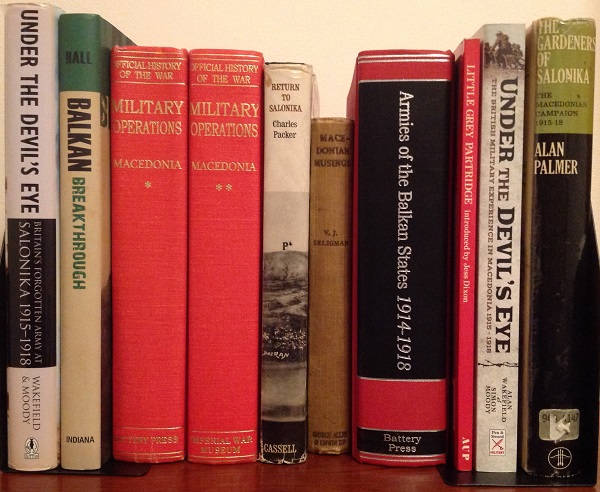
A photograph of a selection of books about the Salonika campaign

In keeping with our intention to publish occasional updates to the bibliography, as close as possible to the anniversary of the Bulgarian Armistice in late September 1918, we are very pleased to announce the arrival of a new and updated version of the comprehensive bibliography for the Salonika campaign.

You can find out more and download, free of charge, the updated bibliography here.

SCS Annual Meeting and Wreath Laying, 2021

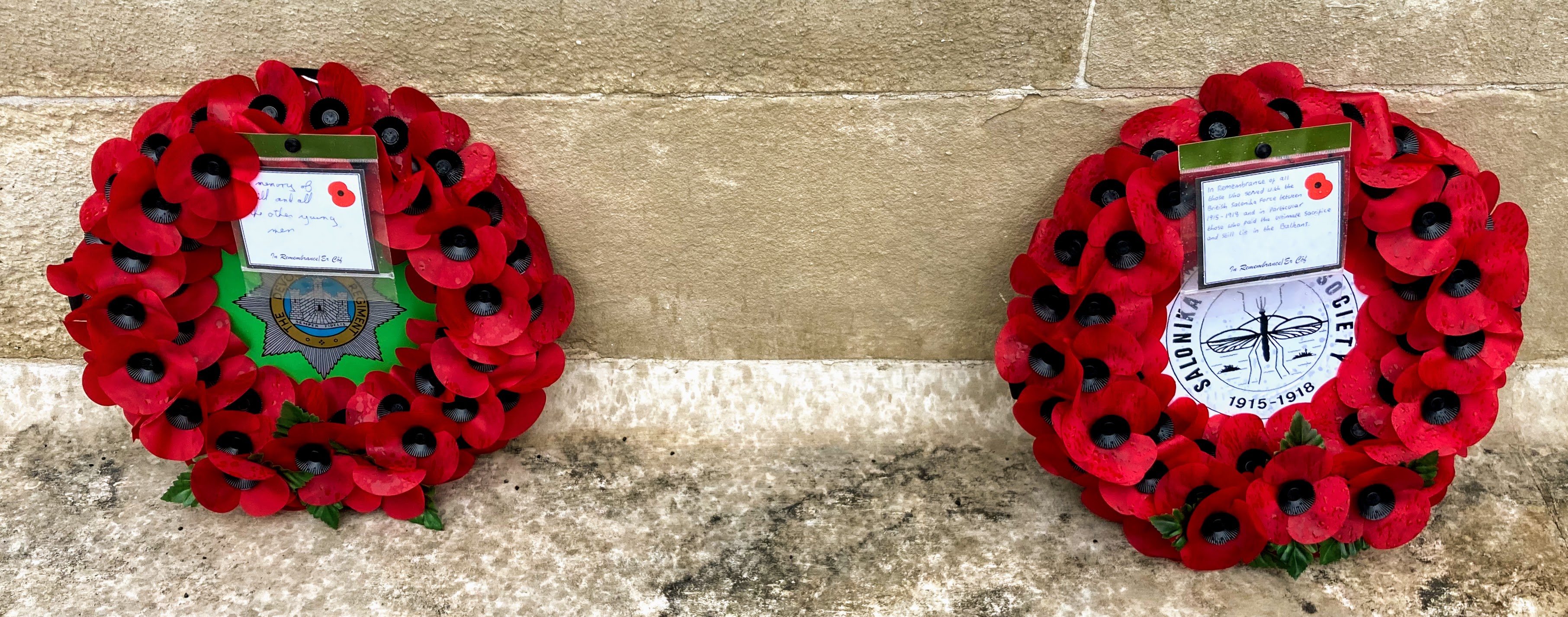
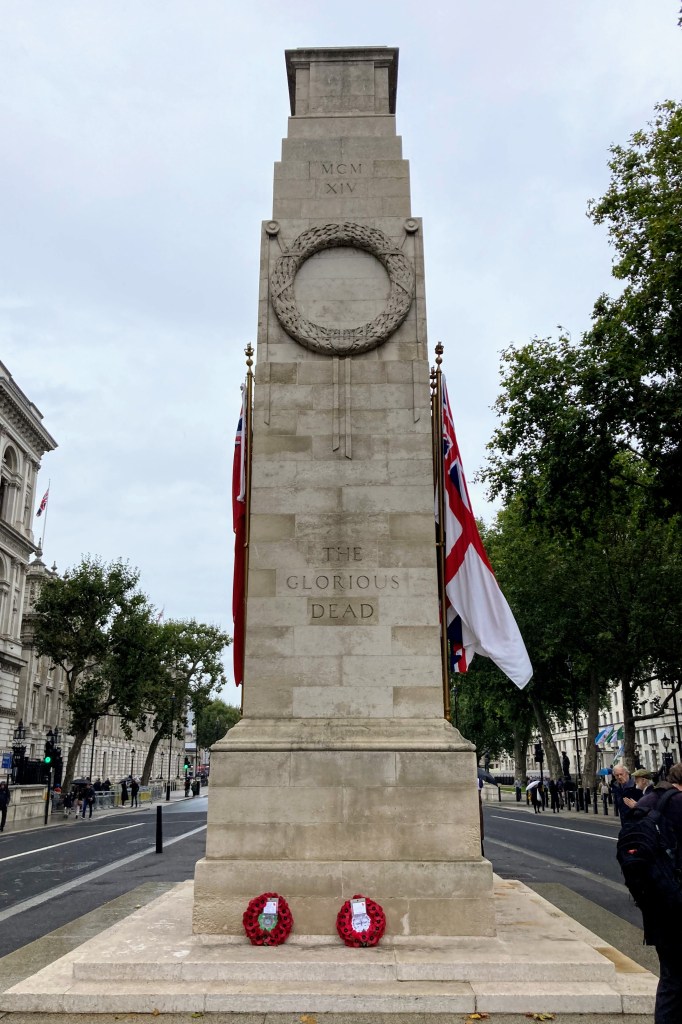
On Saturday 2nd October, society members gathered in the drizzle at the Cenotaph, London for the annual short ceremony of words and wreath-laying to remember the men and women of the BSF who served in Salonika. In particular, to remember those who died during the campaign or from the results of injury or disease.

Wreaths laid by members of the SCS at the Cenotaph, Whitehall, on Saturday, 2nd October 2021.
A grey day for the annual ceremony at The Cenotaph, London

Afterwards it was but a short walk to the Civil Service Club for lunch, followed by the society’s annual general meeting. This year, an actual meeting and not one via Zoom! Before the business of the meeting though, there was an excellent talk from Julie Adams of the British Museum. Her talk, Birdman of Salonika: The Life and Afterlives of Paul Montagu, was an interesting and moving account of Lt Paul Denys Montagu – a multi-talented anthropologist, naturalist and musician, killed in action when his plane crashed behind enemy lines on 29th October 1917. Julie’s book, Museum, Magic, Memory – Curating Paul Denys Montagu is, no doubt, available from all good book sellers.

The 4th best church in the UK …

… is Sandham Memorial Chapel! That’s the opinion of Rachel Morley, Director of Friends of Friendless Churches. She was a guest of the podcast series, The Rest Is History, presented by historians Tom Holland and Dominic Sandbrook on 13 September. Rachel’s task was to list her top ten British churches, which is quite a task given that there are more than 16,000 in England alone!

Continue reading “The 4th best church in the UK …”

Two sisters of the Scottish Women’s Hospitals

The Society has received an enquiry about two sisters who served with the Scottish Women’s Hospitals in the Balkans. If you can help with this, please either add a comment to this post or use the ‘Contact Us’ form.

Continue reading “Two sisters of the Scottish Women’s Hospitals”

Stretcher-bearers

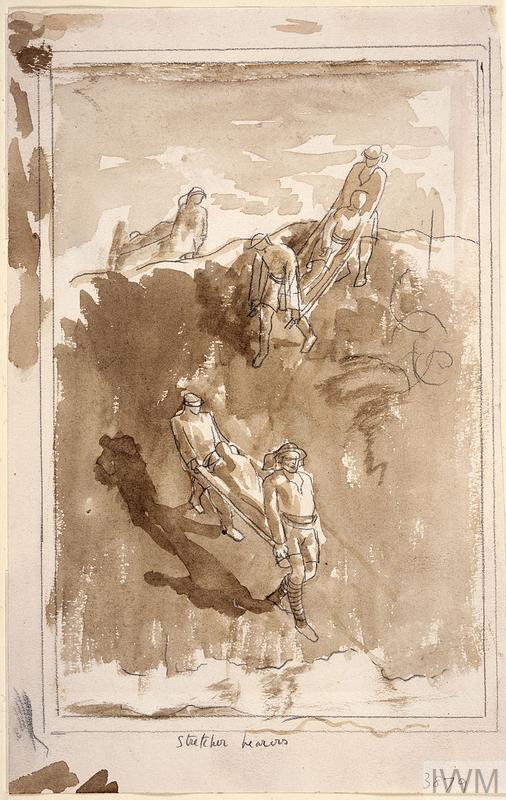
I was listening a while ago to an oral history on the Imperial War Museum’s site from an unnamed British stretcher bearer on the Struma Front. He may have been forgotten but he lives alongside more remembered company in the form of composer Ralph Vaughan Williams and artist Stanley Spencer, both of whom served as stretcher-bearers in the campaign.

Stretcher Bearers – Stanley Spencer. Source: IWM

The Great War Stories: Luton’s Greatest has an account by Private Robinson who in Gallipoli, faced challenges that stretcher-bearers in Salonika would have found very similar,
“People have no idea what difficulties and dangers have to be overcome in evacuating wounded. The hilly nature of the country does away with the idea of mechanical transport, and every case has to be carried to other hospitals on the beach on stretchers.”

Perhaps it’s because many conscientious objectors signed up for medical, rather than military service, that many accounts of the lives and work of stretcher-bearers have not survived. Maybe, but that’s just speculation on my part… However, one set of diaries has not only survived but been re-discovered by author Sara Woodall, great-niece of the author of the diaries.

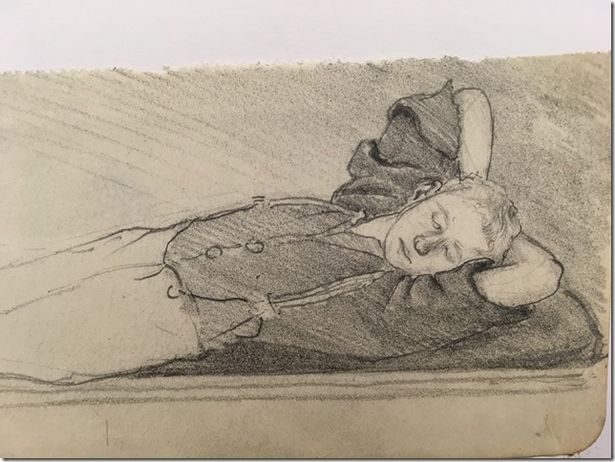
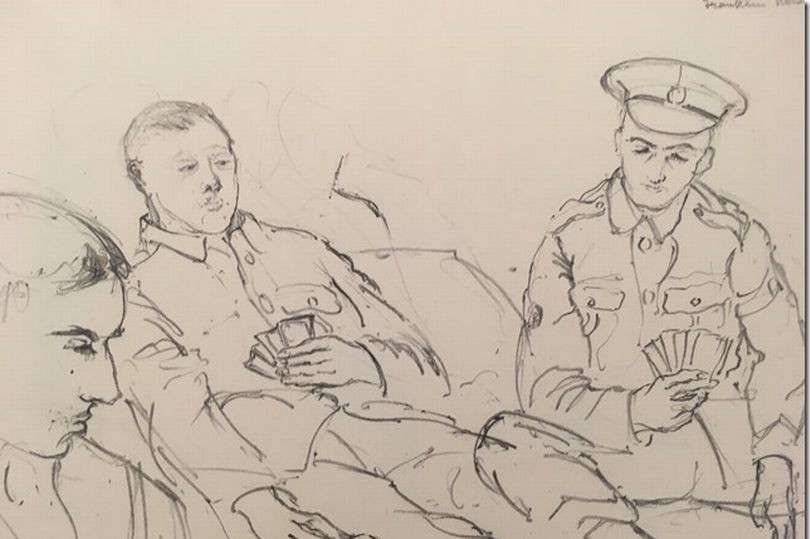
Sara discovered her great-uncle’s diaries while at home in Cambridge and was astounded to find both written accounts and accomplished illustrations. The author of these diaries was Bernard Eyre Walker, a stretcher-bearer for the British Expeditionary Force and later one of Cumbria’s leading painters.

The existence of the diaries is something of a miracle in itself. Forced to retreat by a German attack, Bernard had to abandon the diaries in a field hospital. The diaries were later picked up by a German soldier and taken to Belgium, before eventually making their way home to Bernard in Keswick.

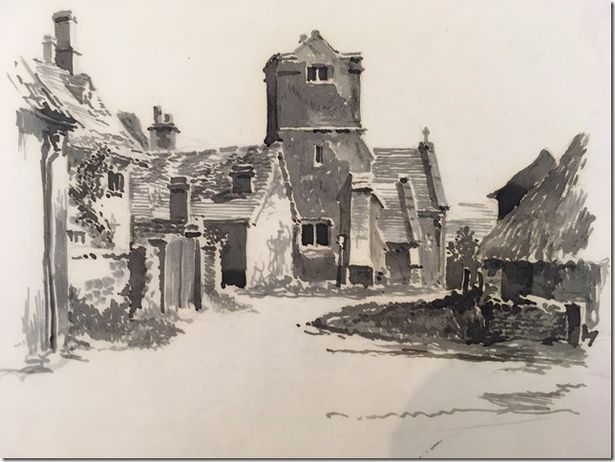
Illustrations by Bernard Eyre Walker from his war-time diaries.

Sara has edited and published the diaries, complete with 140 of Bernard’s illustrations from the trenches. I haven’t read the diaries myself, and it’s not an account of stretcher- bearers in Salonika, but it’s a primary source of a largely unrecorded aspect of the time and likely to have a wide appeal. There’s more about the book here.

The book is available on amazon.co.uk or you can order it directly from Sara at jdt.woodall@btopenworld.com or from the address below.

A Voice From the Trenches 1914-1918   From the Diaries and Sketchbooks of Bernard Eyre Walker. Edited by Sara Woodall. Price £19.95 (+ £3.10 p&p) from Sara Woodall, 17 High Street, Great Eversden, Cambridge, CB23 1HN

Now Online! ‘Military Operations Macedonia’

Readers will be very grateful to SCS member Keith Roberts, and Great War Forum member ‘maureenE’, for pointing out the online availability of two major texts related to the Salonika Campaign.

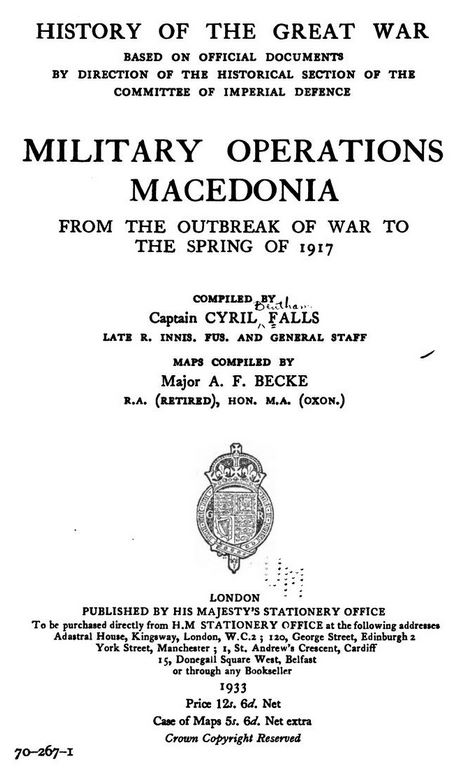
Military Operations Macedonia Volumes One and Two, by Captain Cyril Falls* were part of the series History of the Great War and based on official documents. Free, immediate, and online access to these texts is a wonderful benefit to anyone interested in the Salonika Campaign.

The digital versions of Volume 1 (1933) From the Outbreak of War to the Spring of 1917, and Volume 2 (1935) From the Spring of 1917 to the End of the War both contain the full text. However, both volumes are missing the maps which were originally in separate cases.  Many of these maps are, however, available from the society here, albeit for a relatively small charge.

Both volumes are available on two sites: Internet Archive and Google Books. My preference is to use Google Books, I find the search tool a little easier to use, but that’s a personal choice.  Either way, it’s a great that we now have these texts online for all.

Archive.org

Google Books


*Author Cyril Bentham Falls CBE was a British army officer turned military historian and journalist. After completing his military service, he began writing military histories. From 1923 to the outbreak of war in 1939 he researched and wrote several volumes of the British Government’s ‘Official History of the War’, including the two-volume history of the Macedonian campaign.
https://en.wikipedia.org/wiki/Cyril_Falls

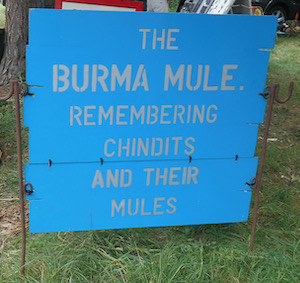
The Burma Mule

Having recently read two books about the second Chindit expedition in Burma (March-August 1944) I was delighted – if a little surprised – to come across a living history group, The Burma Mule, at a ‘Desert Rats’ commemorative event in Thetford Forest.

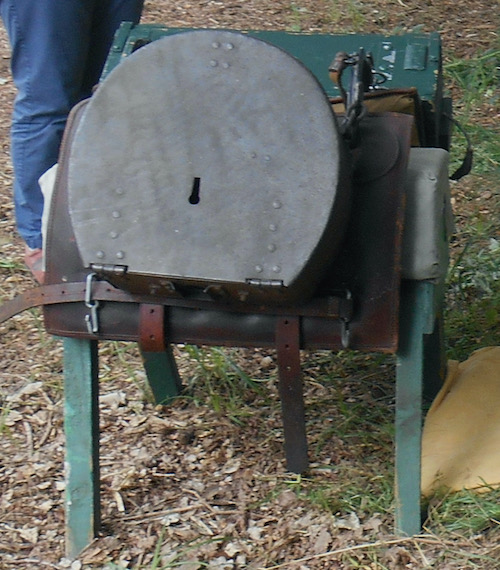
Unfortunately there were no mules present as their two 16 year old mules are now largely retired, but there was still much of interest. I was especially pleased to see mule saddles up close. Of relevance to the Salonika campaign is the one shown below, which is very similar to those used in the First World War. This could carry a variety of loads and you can see, here, a portable forge. Although date stamped ‘1940’ it is likely that similar kit – including a small anvil – was in use by earlier generations of mule transport units. Keeping the feet of mules and ponies in tip-top condition is, of course, vital for their well-being and efficiency.

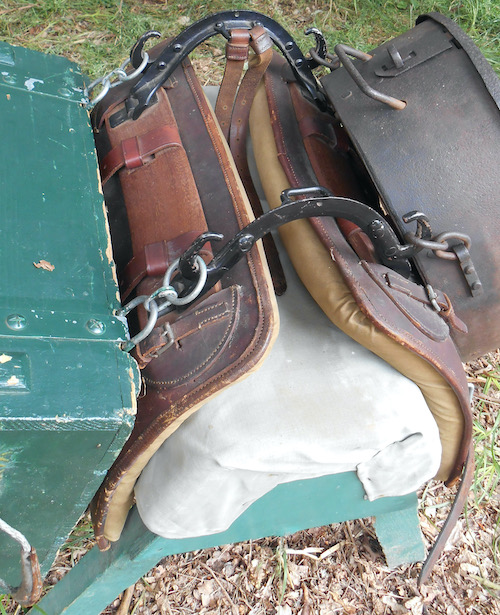
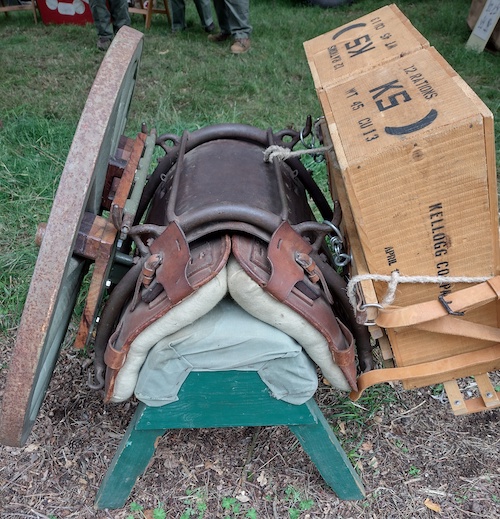
Their other saddle was of a later pattern with a rigid metal frame and was, apparently, less popular than the previous one. Whether this was with the mules or muleteers wasn’t clear! The load shown is illustrative only and, in reality, would have been more balanced, i.e. a pair of howitzer wheels or two loads of ‘K ration’ boxes.

You can find out more about The Burma Mule on their Facebook page.

To read more about the use of mules by the British (and Indian) Army, from the Peninsular War to 1975 – including detailed chapters on both world wars – I heartily recommend The Mule in Military Service, a slim paperback by distinguished military historian and SCS member, Anthony Clayton (The Book Guild Ltd, 2017). It looks like it is out of stock, so you may have to hunt for a secondhand copy.

If you’re interested, the books on the Chindit expedition that I read were:

  • Chindit by Richard Rhodes James (1980)
  • The Road Past Mandalay by John Masters (1961)

Well, it can’t all be about Salonika can it?