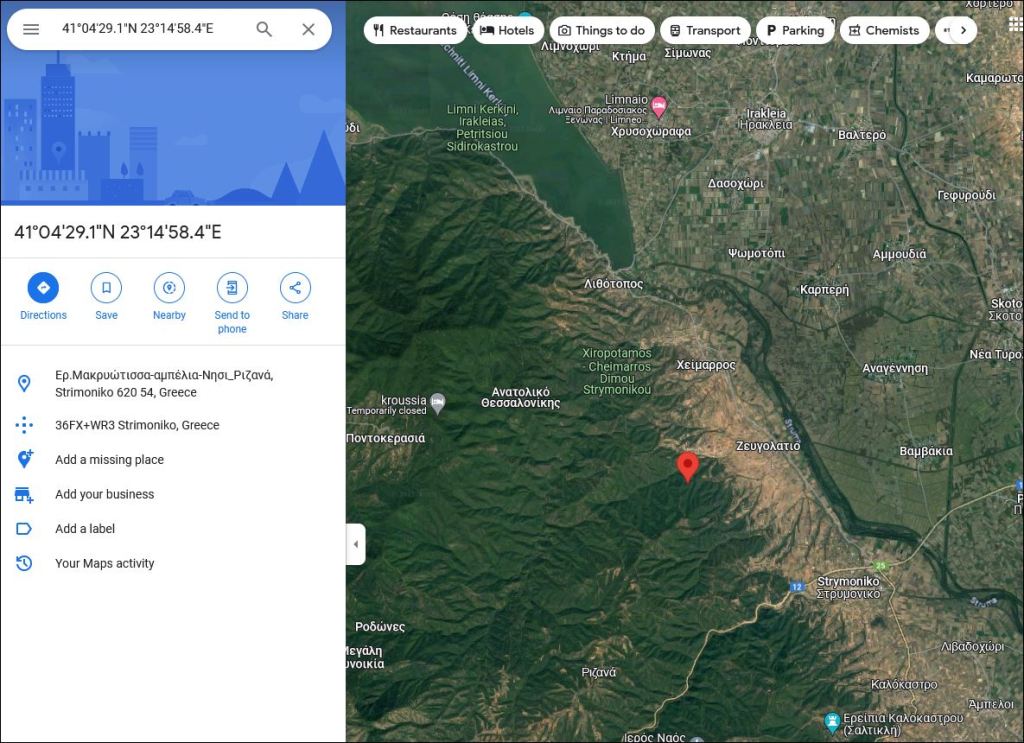
I imagine BBC Radio Three’s long-running programme ‘Composer of the Week’ has looked at English composer, Ralph Vaughan Williams and his career, many times. I remember listening to a previous episode some time ago and being irritated as his First World War army service was glossed over and no mention made of his time with the BSF. I am pleased to say, though, that last week’s series – A Vaughan Williams Christmas – mentions Christmas 1916 which he spent beneath Mount Olympus with his 60th Division Field Ambulance unit. You can listen to the programme for a while longer online here:
Although Vaughan Williams apparently noted down Greek tunes, none is played in the programme, but you do get performances of his lovely seasonal music and symphonies, plus a full performance of his much-loved The Lark Ascending.
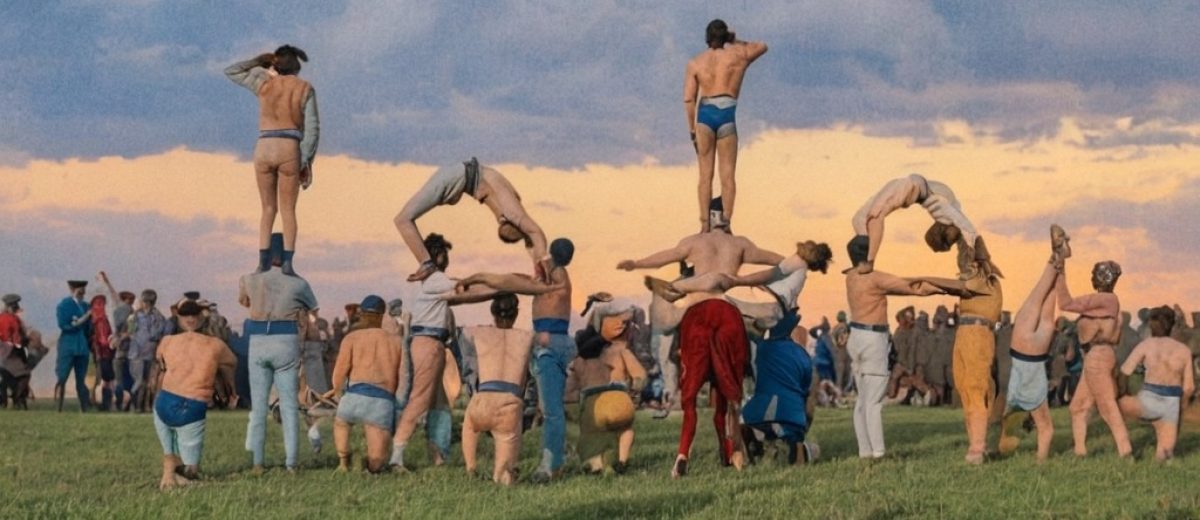
I can only think of one way to finish this post and that is with this Greek Christmas tune, which has featured in previous Christmas posts and featured in Aladdin in Macedonia – the first of the 85th Field Ambulance pantomimes:
… to all our members, friends and visitors. We thank you for your support over the year and look forward to you joining us for more online Salonika stories, faces and news.
Well, he is the Salonika Campaign Society’s new mule – an ‘Adoption Star’ at Redwings Horse (and mule and donkey) Sanctuary in Norfolk. In September we said farewell to Muffin, the mule we had adopted in 2015 in recognition of the part played by mules and other animals in the Macedonian campaign. We were sorry to lose SCS Honorary Member Muffin but, at 36, he had had a long and happy life at Redwings; something that looked most unlikely when sent for slaughter with his mother as a foal.
Much as happens with royal succession, the transition from Muffin to Noah has been seamless and we look forward to him enjoying many years as an Honorary member of the Society. We will introduce him properly in the new year but, in the meantime, it is a pleasure to share with you the Christmas card he has sent to all his friends at the SCS.
Having marked the national days of England, Wales and Ireland over the past year, I could hardly ignore Scotland. Having done one of those family history DNA tests, I was very disappointed to find no trace of Scottish ancestry – 16% Welsh was something of a surprise – so my only claim to Scottish heritage is my great-grandfather from East London who served for 12 years with the Cameronians (Scottish Rifles) in India and South Africa at the end of the 19th century. Was it the allure of the tartan trews? Anyway, I wish all our Scottish members, friends and visitors a very happy Saint Andrews day.
‘X’ (formerly Twitter) is not a favourite medium of mine but it can, in some circumstances, be an informative and interesting forum. In the past year the Society has set up an account and we have managed to both share and learn from this online community. For example, in a series of posts, @DanielJPhelan (Speaker, tour guide, & EOHO volunteer for @CWGC) shared a thread about a discovery while on holiday in Malta. During his stay, Dan visited Pieta Military Cemetery and it was there that he found the grave of Dr Isobel Tate.
On his return home, Dan researched and shared his findings in a series of posts and images on X (Twitter). Thanks Dan for sharing your research!
“Isobel Addey Tate was born, around 1874, in Country Armagh, Northern Ireland. At a time when female doctors were rare, she studied medicine at Queens University, Belfast graduating in 1899. Continuing her studies, she qualified as a Doctor of Medicine in 1902.
After qualifying, a huge achievement, she moved to England and held a number of positions in hospitals and medical institutions. However, it seems pursuing her career in medicine was not easy…
In 1904, while working at the Burnley Workhouse, Dr Tate obtained a Diploma in Public Health from Victoria University, Manchester. It was thought at the time that Dr Tate was the only lady in the kingdom who had ever secured that honour.
In 1915, with the Great War being fought, Dr Tate volunteered to serve with the Serbian Relief Fund. The relief fund was set up and commanded by Mrs Mabel St Clair Stobart. It had seven women surgeons and doctors, which included Dr Tate.
While serving with the Serbian Relief Fund, Dr Tate contracted typhoid and returned home to convalesce. Once well again she became a radiographer at Graylingwell War Hospital, near Chichester. Feeling she ‘was not doing enough’ Dr Tate offered to go abroad again.
Isobel Tate volunteered for service with RAMC and embarked for Malta in August 1916. In Malta she treated sick and wounded servicemen, including casualties from Gallipoli and Salonika. While working at Valletta Military Hospital she became ill. Sadly, on 28th January 1917, Dr Isobel Tate succumb to her illness and died of typhoid fever.
The funeral of Dr Isobel Tate took place on Tuesday 30th January 1917. Her flag-draped coffin was carried by medical officers, flanked by two lines of wreath carrying NCOs from the RAMC. The firing party contained 40 men of the Royal Garrison Artillery. A lengthy train of medical officers, officers from other units, and local members of the medical profession followed her coffin. At the graveside assembled ‘lady doctors’, principal matron, matrons, sisters, and nurses, from all hospitals and camps on the island.
It’s incredible to think that Isobel Addey Tate lived, served, and achieved so much, in an era before women even had the vote. I think this quote from a newspaper at the time is very fitting.”
You can read the complete thread from Dan on Twitter @DanielJPhelan:
While on holiday in Malta I came across an interesting war grave at the @CWGC's Pieta Military Cemetery. The grave belongs to a trailblazing #WW1 female doctor. Below is a short thread on the remarkable and life service of Dr Isobel Tate… 1/🧵 pic.twitter.com/P8MjB4OEI7
The nature of ‘social media’ does not really allow for detail and detailed discussion, so Dan’s account of Isobel Tate’s life is necessarily short. If you would like to read more about her life, and the challenges she and other women faced, there is a more in-depth examination here.
On Saturday 11th November, members of the SCS, including the Society’s Patron, The Hon. Ann Straker, SCS Chair, Alan Wakefield, Secretary, John Taylor and Treasurer, Ray Brownson, gathered with National Trust staff and volunteers and representatives from the Soldiers of Oxfordshire Museum, including Trustee, Brigadier David Innes to remember those who have died for their country in war and conflict, particularly the men and women of the British Salonika Force. Thanks to Alison Lazarus of the National Trust for organising the service, The Reverend Mark Christian for officiating and Darren Rolfe for the photographs.
SCS Patron, The Hon. Ann Straker after laying the wreath on behalf of the SCS.SCS Secretary, John Taylor, planting crosses in remembrance of 38218 Acting Bombardier James Thornley and 38368 Bombardier John Edwards.The Sandham Memorial Chapel with the well dressed and ready for the Remembrance service.
On the morning of Thursday 8 November, SCS Chair, Alan Wakefield, represented the Society at the Opening of the 95th Field of Remembrance outside Westminster Abbey. SCS members Jonathan Saunders and Darren Rolfe were also in attendance. The Field is organised by the Royal British Legion’s Poppy Factory and the SCS is very lucky to have its plot in a prime location opposite the west door of St Margaret’s Church, which stands alongside the Abbey. This year the Field was opened by Her Majesty Queen Camilla who is Patron of the Poppy Factory.
SCS Chair, Alan Wakefield, Her Majesty Queen Camilla about those who served with the BSF during the Salonika Campaign.The British Salonika Army plot, a tradition started by BSF veterans of the Salonika Reunion Association and continued today by the SCS.Crosses of Remembrance in the Salonika plot commemorating those who still lie beneath Balkan soil.
It is with great grief that I wish to tell you your son has died of wounds received in the recent attack. Our company was ordered to take up a position on the left flank of a brigade which was taking a village a mile to our front. We know the Bulgars were entrenched there. It was successfully carried out and the trenches taken and held. Your son was hit in the charge gallantly leading his men. I saw him at once and had him taken back. He was hit in the side but was not in great pain. We had great hopes of his recovery but last Saturday he had a relapse and died on Sunday morning. We buried him in a small cemetery where other are laid who in like manner have given their lives for their Country
The Salonika Campaign Bibliography (with thanks as ever to Keith Roberts) is a valuable resource for anyone interested in the campaign or researching an aspect of it. It’s freely available for members and non-members alike.
Each year we aim to publish an update to the bibliography, as close as possible to the anniversary of the Bulgarian Armistice in late September 1918. And so, we are very pleased to announce the arrival of Version 4! You can find it here.
… What do we want with eggs and ham, when we’ve got plum and apple jam? Form fours! Right turn! How shall we spend the money we earn? Oh! Oh! Oh! it’s a lovely war.