

In recent weeks I’ve been listening to a series of podcasts about the Kokoda Trail (or Track) campaign, which was a series of battles fought between July and November 1942 in the Australian Territory of Papua. It was a grim campaign, in isolated and mountainous jungle, in which Australian troops fought to stop an overland attack by the Japanese on Port Moresby. It’s a part of the Second World War I know little about and it was interesting in its own right, but my ears pricked up at a mention of Macedonia.
This was in connection with Major General Edmund Herring who, as a corps commander, commanded the land forces in the campaign. But what is the connection with Macedonia?
Edmund Francis Herring was born in Australia on 2 September 1892 in the town of Maryborough, Victoria. In 1912 he won a Rhodes Scholarship to the University of Oxford where, in 1913, he joined the University’s Officer Training Corps (having been a sergeant in the cadet corps at his grammar school) and then joined King Edward’s Horse (The King’s Overseas Dominions Regiment) as a private. Created for colonial volunteers in London, this was a yeomanry regiment of the Territorial Force, but became part of the Special Reserve in 1913. Mobilised on the outbreak of war, it remained in London until spring 1915 when individual squadrons went to the Western Front as divisional cavalry.
Young Herring, though, was not to serve overseas with his squadron as, in December 1914, he was commissioned into the Royal Field Artillery. Second Lieutenant Herring was posted to ‘B’ Battery, 99th Field Artillery Brigade with 22nd Division. This Division was established in September 1914 as part of Kitchener’s Third New Army and began assembling on the south coast, with the artillery at Lewes. In September 1915 the Division crossed to France, but in the following month began sailing to Salonika, landing in November, although it took until December for the final artillery units to arrive.
In the spring of 1917, during the first battle of Doiran, Herring was an artillery observer in a front line observation post on Pip Ridge. Twenty minutes after Herring’s place was taken by Captain Thomas Winwood, the OP took a direct hit, killing Winwood. Herring was subsequently promoted to acting Captain, replacing Winwood and, for his courage under shellfire, was awarded the Military Cross:
For conspicuous gallantry and devotion to duty. As F[orward].O[bservation].O[fficer]. throughout the operations he carried on in very exposed positions under heavy shell fire. His information proved of the utmost value.
In October 1917 Herring was granted leave in Australia, returning to Salonika in March 1918. In October 1918 he was promoted to acting Major commanding ‘B’ Battery, for which he was awarded the Distinguished Service Order. He reverted to his substantive rank of lieutenant in January 1919. Although he had been awarded a wartime BA in 1915, he resumed his scholarship at Oxford, gaining a Bachelor of Civil Law and MA and returned to Australia in late 1920.
For more about Major General Herring’s life and military service, 22nd Division and the Kokoda campaign, please follow these links:
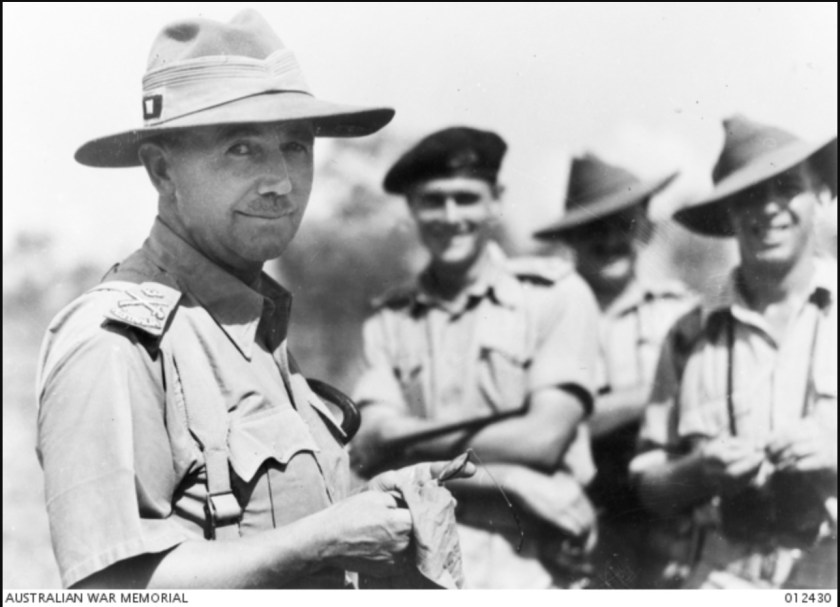
Australian War Memorial Collection
Discover more from Salonika Campaign Society, 1915-1918
Subscribe to get the latest posts sent to your email.

