
Last month I was in London with an evening to spare, so I bought myself a ticket to an event on Horse Guards Parade, something I hadn’t done for many years. The last time I went to one of these, I’m sure it was just billed as ‘Beating Retreat’ by the Household Division, but this was a ‘Military Musical Spectacular’! And the name wasn’t the only change – a large digital screen, electric guitars and fireworks were also innovations, but, at least, the bands of the Brigade of Guards hadn’t changed.
The Salonika campaign was, of course, far too unfashionable for the ‘Gentlemen’s Sons’ of the Guards to take part in – so it was left to ‘The Feet’ (i.e. the line infantry) to do the job – but I did find a Salonika connection during the evening.
The event always has a pipes and drums segment which, in spite of my only having 11% Scottish DNA, is something I enjoy. This year, with no pipes and drums from the Guards on parade, the skirl of the pipes was provided by the London Scottish.
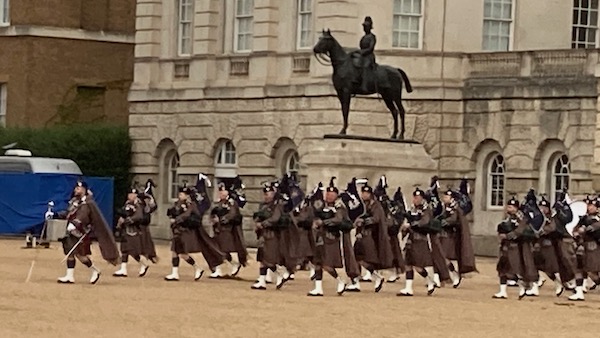
A battalion of the London Scottish, which was part of the Territorial Force London Regiment – 2/14th (County of London) Battalion TF (London Scottish) – served for a short while with the BSF, as part of 179th Infantry Brigade of 60th (2/2nd London) Division, which arrived in theatre in late 1916.
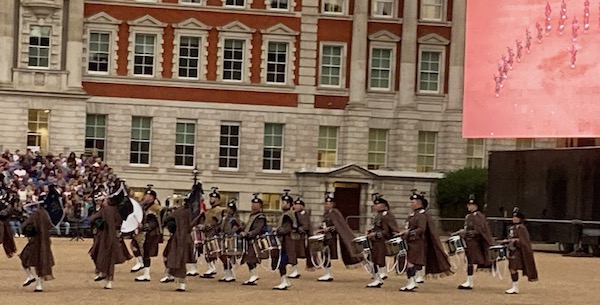
After participating in the Battle of Doiran in spring 1917, the Division left Macedonia in the summer for Egypt, ready for operations in Palestine.
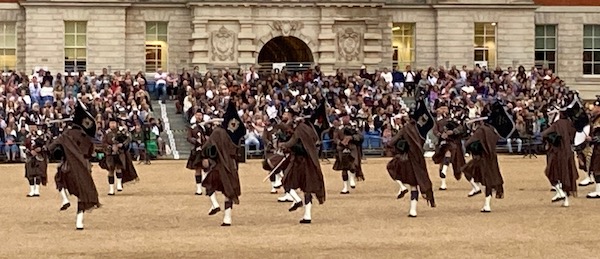
In mid-1918 the 60th Division was ‘Indianised’, with its infantry battalions – including the London Scottish – returning to the Western Front for the final months of the war. The 2/14th joined the 30th Division.
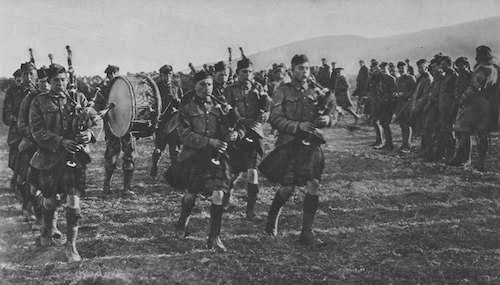
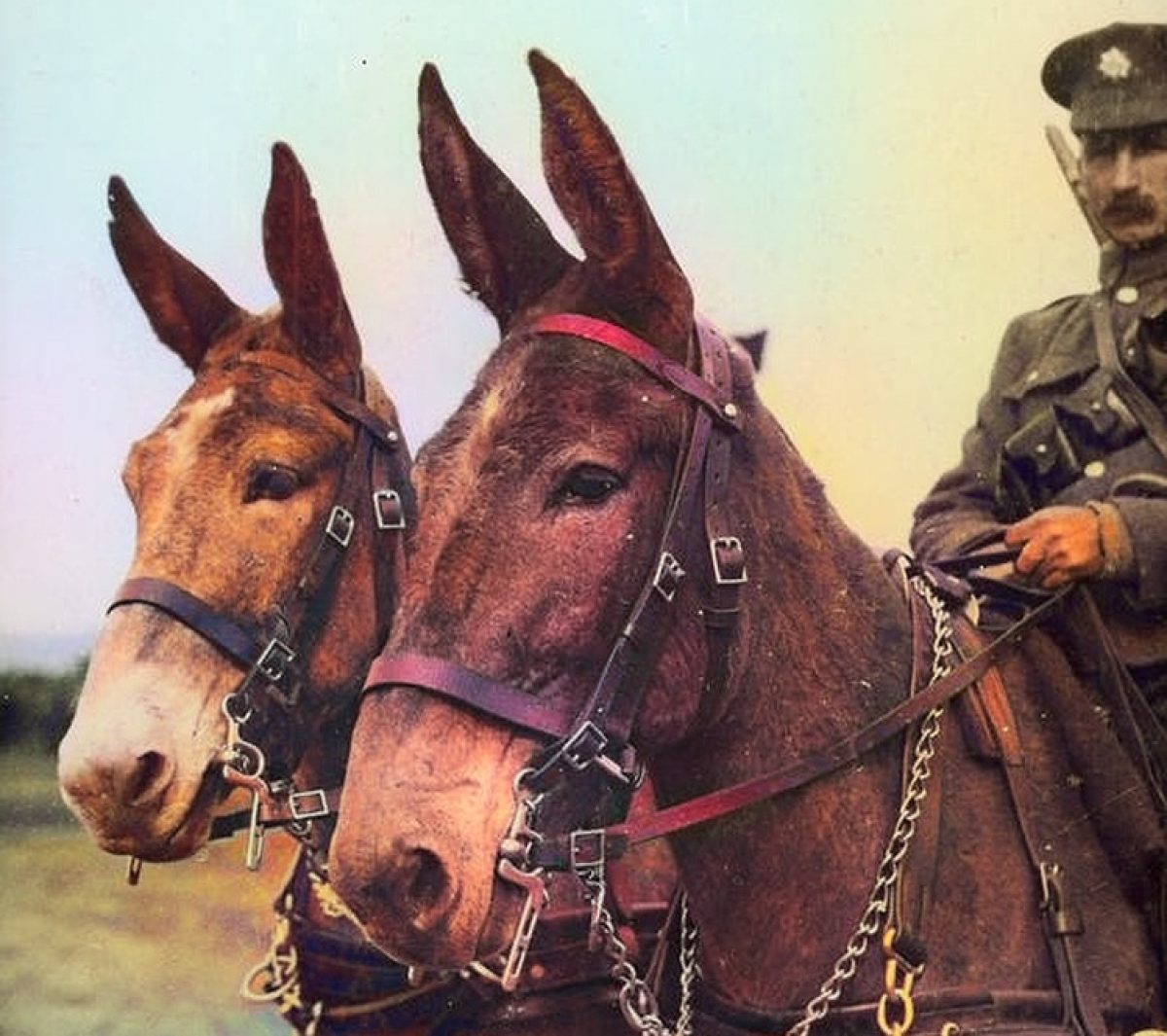
This is the only photo in my collection showing pipes and drums in Salonika, but sadly not the London Scottish. It’s from The Illustrated London News in February 1916, so it pre-dates their arrival and anyway, there is a clear tartan pattern, whereas – as you can see from my recent photos, above – the London Scottish wear distinctive plain kilts in ‘Hodden Grey’.
You can read more about this fascinating and distinguished regiment online:
- The London Scottish, London Scottish House
- Museum of the London Scottish
- The London Regiment, 1914-1918
- 60th (2/2nd London) Division
Discover more from Salonika Campaign Society, 1915-1918
Subscribe to get the latest posts sent to your email.


I have never been attracted to the music of bagpipes. Nevertheless it was very interesting to read about Pipes in Salonika, especially since I had just read “Macedonian Musings” by V J Seligman (available on the SCS DVD). On page 79 he describes the division leaving Katerini on 10 March 1917, observing that “The London Scottish Battalion, as they marched past headed by the pipers (bagpipes by the way, are also the national instrument of Greece), evoked terrific enthusiasm.”
I have long thought that the national instrument of Greece, if it had one, was the bouzouki, so I had to look this up to confirm his assertion. He might have been better claiming that bagpipes were a traditional instrument of Greece. There are four main types with delightful names like Tsabouna and Gaida. It may have been the latter he was referring to since they are played in northern Greece and the Balkans.
Information on the Tsabouna can be found here: http://www.symposiumsantorini.com. More detail on the Gaida can be seen here: organology.net.
Rob Elliott
Thanks for this, Rob. I didn’t doubt that the London Scottish had pipers with them in Salonika, but it’s good to have it confirmed by Mr Seligman. I see from that page that there was other music played on the day as the Brigade left Katerini for the Vardar front. There was a Venezelist Greek, a French and a British band, each playing a tune in turn, with a French guard of honour gamely presenting arms for hours as the Brigade marched past. Seligman describes how “Our own band was to go on ahead by train each day, to greet the Brigade, as they marched in, with melodious strains of rag-time”!
I heartily recommend Seligman’s book.
Robin Braysher