
Maybe it’s my Fenland heritage, but I have long found wetlands fascinating environments. With the Broads in the east, the Fens in the west and lots of swampy bits in between, Norfolk is an ideal place to live, although on this World Wetlands Day my thoughts go to the Struma Valley. The Struma front, where XVI Corps operated, is the aspect of the Macedonian campaign that interests me most – primarily because it’s where my grandfather, Fred, served – but I don’t often think of it in terms of being a wetland environment.
This watercolour by William T. Wood RWS, reproduced in ‘The Salonika Front’ (A.J. Mann, 1920), gives a magnificent view of the valley from an observation balloon, looking at the bottom end of the valley towards the sea, with the river and multiple other water courses and Lake Tahinos.
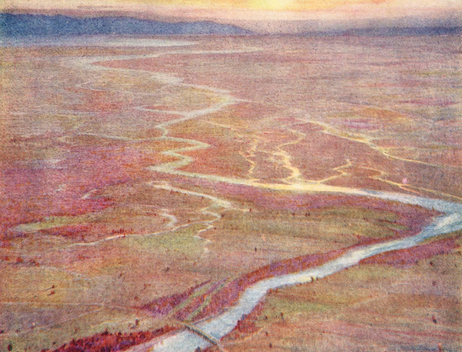
The bridge crossing the Struma at the bottom is Gudeli Bridge – an important crossing for the BSF – with the Bulgarian lines just beyond the dark patch of woods on the left. The British lines extend down the right hand side of the picture towards the horizon and the sea. The Bulgarian side of the river here was the site of much patrolling in 1917 and 1918 by XVI Corps Mounted Troops, including Fred on his bike.
The picture captures the wide-open and waterlogged landscape, teeming with malarial mosquitoes and other wildlife. With villages and farms abandoned, patrolling troops must have found it a wild, lonely and forbidding place, especially at night – even without the possibility of a Bulgarian ambush. Fred recalled a patrol startling a flock of wildfowl, which brought the fear of being spotted by Bulgarian artillery observers on the surrounding hills. I sometimes wonder whether Fred ever contemplated the similarities of the Struma Valley with the Fenland landscape in which he had grown up. If he did I don’t suppose it was very fondly, as he joined the army to escape a miserable life as a farm labourer as soon as he were able, and the Struma gave him malaria and dysentery!
Now, of course, the Struma Valley has changed. You still get the sense of the wide expanse of the valley, overlooked by hills and mountains, but the Struma has been straightened and ‘engineered’ and Lake Tahinos drained. A glance at Google Maps shows a vast patchwork of fields. This, not surprisingly, has been the fate of many wetlands, with the aim of removing the threat of disease and providing fertile agricultural land for growing populations. Now, though, there is a better understanding of the value of wetlands, as places that store large quantities of water and carbon and are rich in biodiversity.
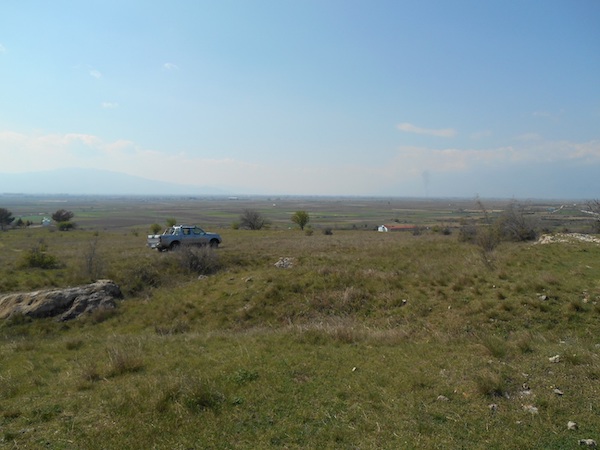
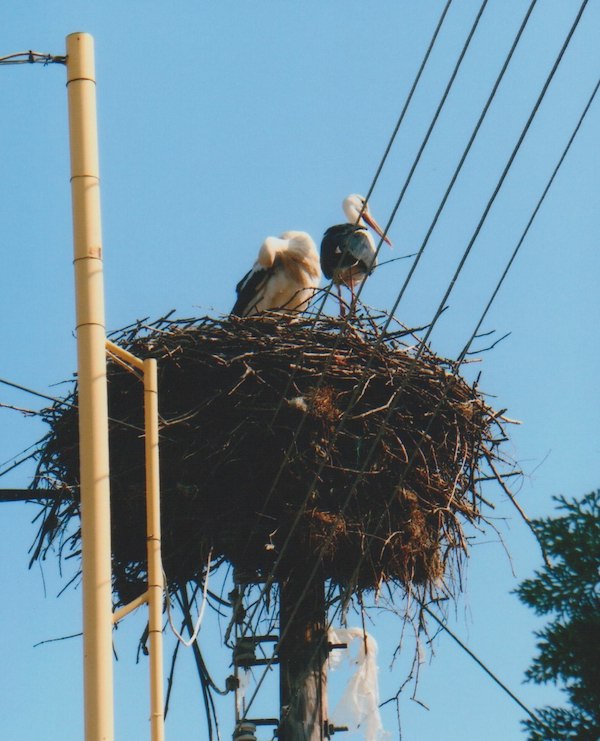
The photo, above (taken in March 2016), shows the view across the valley from a Bulgarian artillery position at Paleokastro to the British lines in the distance. When I visited in 2016 I didn’t give much thought to the flora and fauna of the valley, but I was delighted to see some nesting storks , whose ancestors must have been nesting and fishing in the Struma Valley for generations.
You can find out more about World Wetlands Day 2025 at:
Discover more from Salonika Campaign Society, 1915-1918
Subscribe to get the latest posts sent to your email.

