The aim of the Society is to perpetuate the memory of those of all nations who served, whether they were members of the armed forces, medical services or civilian staff. The Society does not seek to glorify war and is neither politically nor commercially motivated.
The Society’s 2025 tour (Sunday 21st to Tuesday 30th September) of the British Salonika Force battlefields is now well underway – with battlefield studies, cemetery visits and acts of commemoration. This year the tour has a special focus on artillery and small-scale operations.
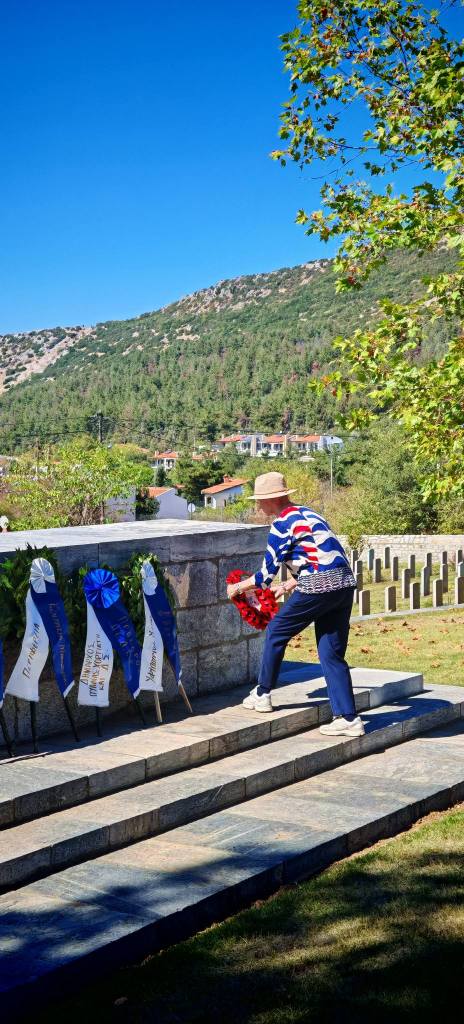
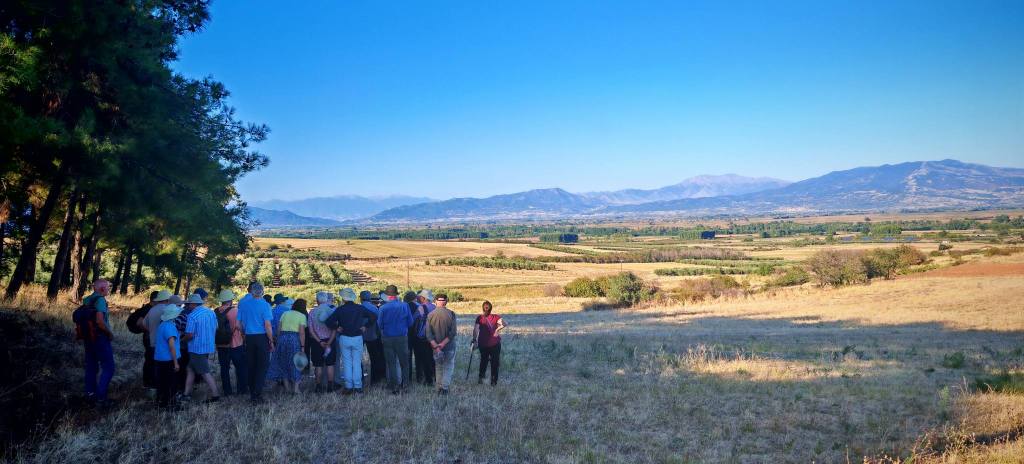
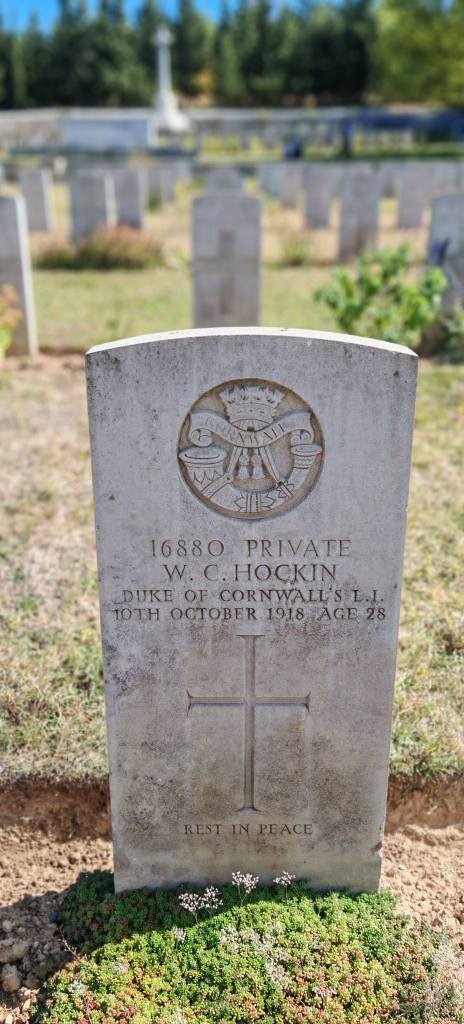
The tour began with a Ceremony of Remembrance at Kirechkoi-Hortkoi cemetery, with a wreath laid by Patron of the Society, the Honourable Ann Straker, before moving on to Triada village for an introduction on the BSF in the Struma Valley and the role of artillery on that part of the front.
You can follow the progress of the tour on Facebook here.
Patron of the Society, the Honourable Ann Straker, lays a wreath at the Ceremony of Remembrance at Kirechkoi-Hortkoi cemetery
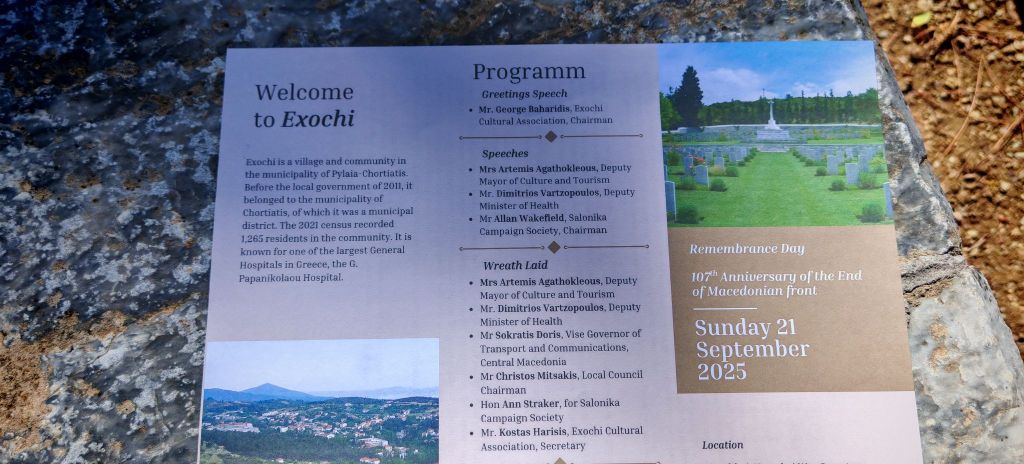
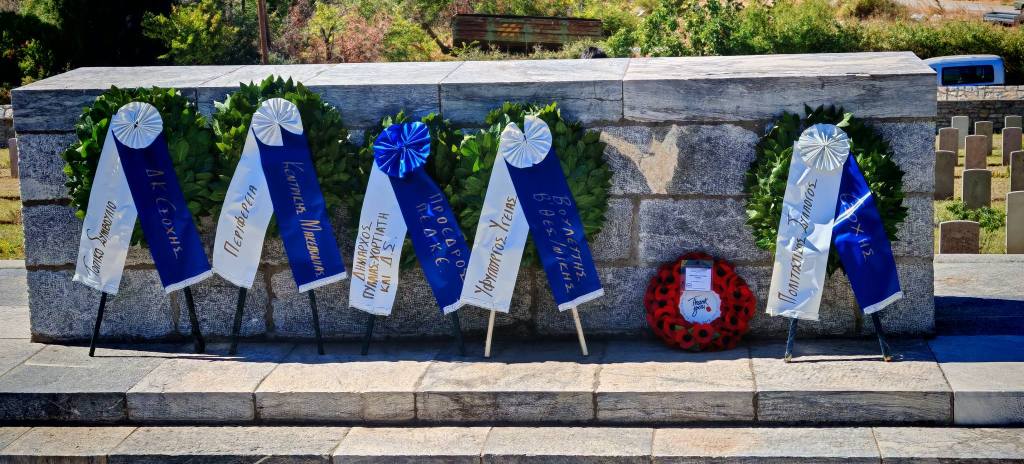
Programme for the Ceremony of Remembrance at Kirechkoi-Hortkoi cemeteryMemorial Wreaths at Kirechkoi-Hortkoi cemeteryTour members begin their site visits
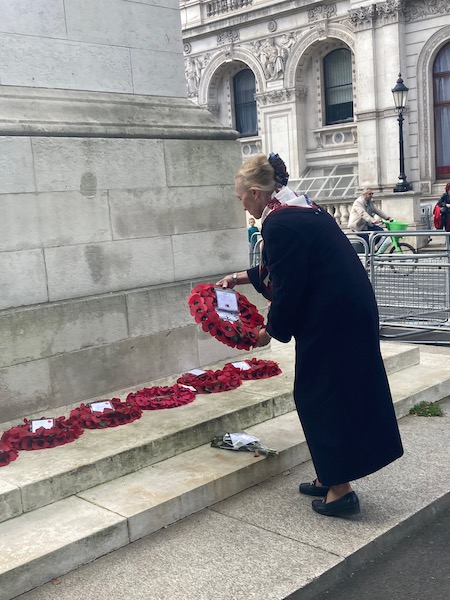
Just a quick reminder that the SCS Annual Meeting takes place at the Civil Service Club, London on Saturday, 11th October 2025. Prior to the meeting, we will be gathering at The Cenotaph, Whitehall at 11:30 for a short commemorative ceremony.
October 2024: Patron of the Society, the Hon. Ann Straker, lays the poppy wreath at the Cenotaph (photo by Vernon Creek).
There then follows the opportunity for lunch at the club before the meeting starts at 12:30 with a series of talks:
Dr. Jake Gasson, Salonika: The Battle Against Boredom.
Chris Loader, 10th Battalion The Hampshire Regiment: The OG Salonika Battalion.
Alan Wakefield, Balkan Gunners: Some Aspects of the Artillery War in the Salonika Campaign.
The cost of the annual meeting is £10.00 per person, excluding lunch. Please note, advance booking is required (by September 20th 2025) as availability of seats is strictly limited.
Full details of the meeting and how you can reserve your place can be found here.
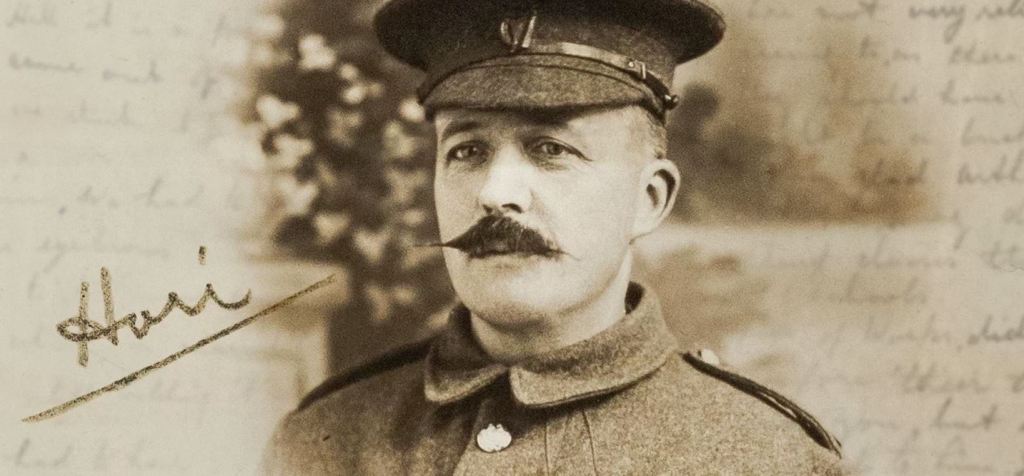
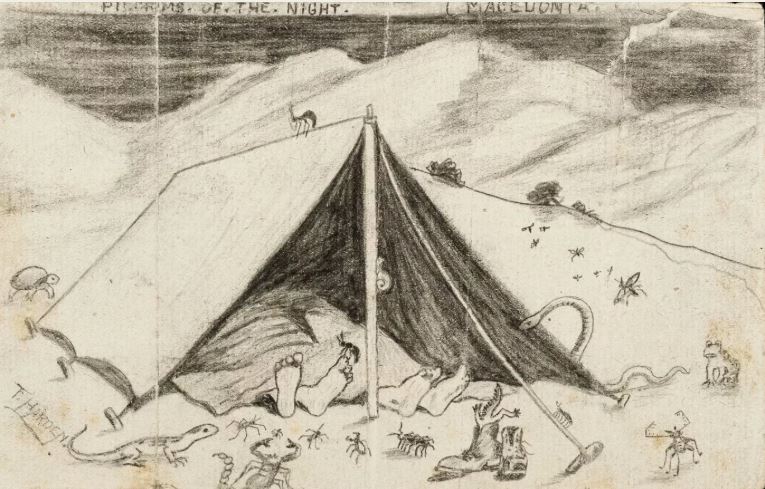
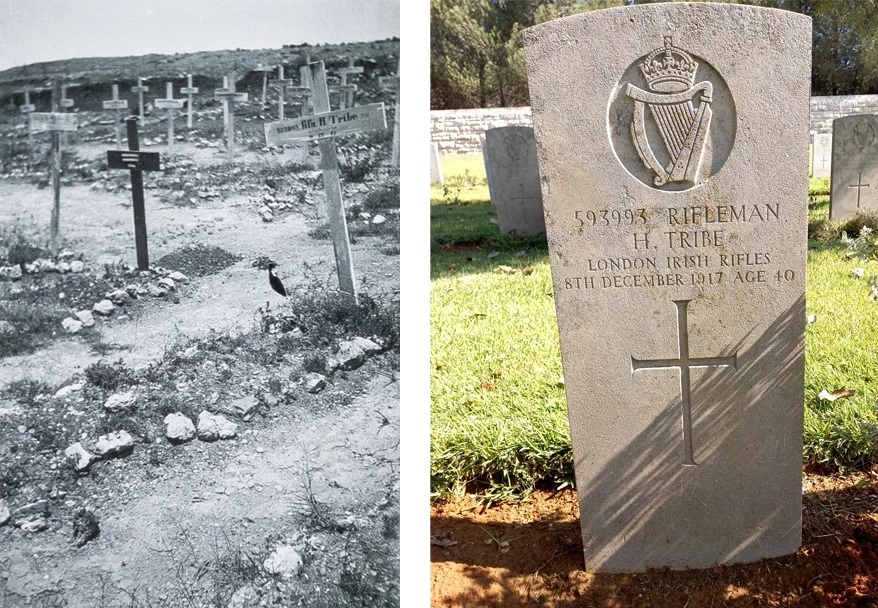
I’ve only recently discovered a fascinating and beautifully presented online exhibition commemorating the life of Hori Tribe (1877-1917), an employee of The Royal Parks who served in Salonika before transferring to the Egyptian Expeditionary Force (EEF) in June 1917.
The exhibition, co-curated by the Royal Parks and Hori’s great-granddaughter, Sarah Gooch, has a wonderful and moving collection of photos, drawings and extracts from Hori’s letters.
I certainly won’t attempt to retell Hori’s story here, instead I recommend a visit to the digital exhibition. It is definitely worth a visit and a few moments of your time.
With the EEF since June and now, at the start of December 1917, Hori had two days’ rest at a monastery just outside of Jerusalem. In the final letter he sent home, Hori included some rosemary – associated with remembrance:
‘The pieces of rosemary included I picked from a hedge in the grounds of the monastery.’
Hori spent two days at the monastery just before his last battle.
Hori was killed in action on 8 December 1917. He is laid to rest at the Jerusalem War Cemetery.
Remembering Hori Tribe – A digital exhibiton celebrating the life of Hori Tribe (1877-1917), an employee of The Royal Parks who was killed in action during the First World War.
Have you been to Zeitenlik? Even if the name doesn’t ring any bells, if you’ve been to the CWGC Lembet Road Cemetery – and the neighbouring allied cemeteries – then you have been to Zeitenlik. Don’t laugh, but I’ve often wondered why this part of Salonika has such a Germanic-sounding name – even allowing for the cultural and ethnic mix of the Balkans. It hasn’t kept me awake at night, nor have I been so bothered that I’ve asked Google, but it has crossed my mind more than once. I suppose this shows that a smidgin of half-remembered O’ Level German is – if not actually dangerous – at least unhelpful!
On a recent trip to London I took a stroll through Hyde Park and, for the first time ever, came across the dramatic Cavalry Memorial, unveiled in May 1924. A little under a year later, the first wreath laying ceremony was held at the memorial and, in 1927, the Combined Cavalry Old Comrades Association was formed. The Association has organised an annual parade and memorial service on the second Sunday in May, ever since.
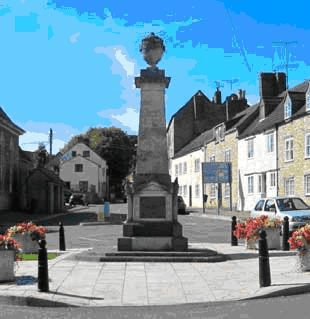
One of the things I enjoy most about living in the county of Gloucestershire is its beautiful countryside and many wonderful walks. After a recent hike involving some strenous Cotswold climbs, I stopped for refreshments and recovery in Wotton-under-Edge. Of course, I had to take in the Wotton war memorial where I later discovered a Salonika connection…
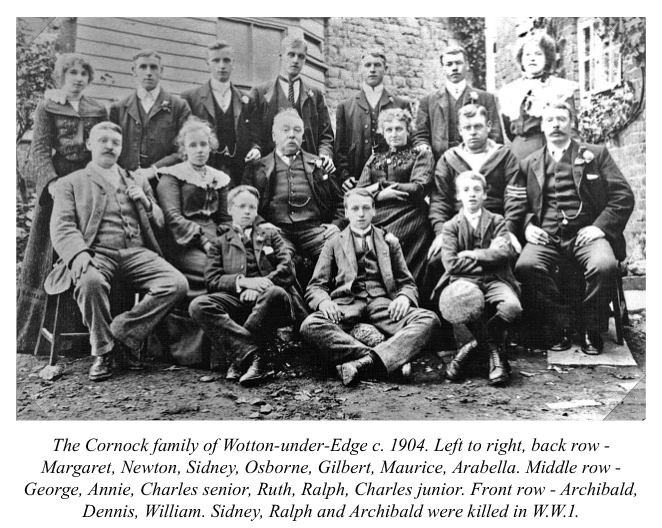
According to the town’s heritage centre, the memorial was erected in 1920 and unveiled by a Mrs Cornock. Apparently, and tragically, eight of her sons served in WWI – three did not return*. Among the names on the memorial is that of George Edward Excell.
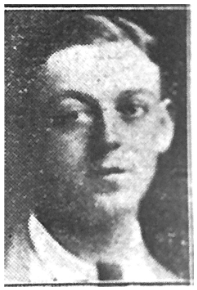
A photograph of George was published in the Gazette on 2nd November 1918.
George Edward Excell was born in 1896 in Wotton-under-Edge, one of six children of Edwin and Elizabeth Excell, who lived in the Sinwell area of the town. His father, Edwin, worked as a rural postman, while his mother, Elizabeth served as matron at the Perry & Dawes Almshouses on Church Street, Wotton. Edwin died while George was still young.
After finishing school, George began working for Mr. G. W. Palmer, a boot maker based on Long Street in Wotton. Mr. Palmer later served in the Royal Naval Division as an Able Seaman during the Great War.
At the outbreak of the war, George enlisted in Wotton, joining the 11th Battalion of the Worcestershire Regiment with the service number 18644. The battalion was formed on 14 September 1914 as part of the 78th Brigade in the 26th Division. They trained in Wiltshire, including at Sherrington and on Salisbury Plain, before landing in Boulogne on 21 September 1915. Over the next two years, George saw extensive action on the front lines and was wounded twice.
George Excell recovered from his wounds and resumed service with the Worcestershire Regiment. In September 1918, the 11th Battalion of the Worcesters, including George, was deployed to the Salonika front.
On 16th October 1918, George’s mother, Elizabeth Excell, received a telegram stating that her son was dangerously ill in a hospital in Salonika. Tragically, George had already died of pneumonia four days earlier. It wasn’t until Saturday, 19th October, that she received confirmation of his death. George Excell was 22 years old.
Source: ‘First World War Heroes of Wotton-under-Edge’ by Bill Griffiths available online here. *Bill Griffiths’ book also includes this picture of the Cornock family and the three sons that never returned to Wotton-under-Edge.
And earlier in the year, Jake also explained the background to the Salonika Campaign for Redcoat History.
*Dr Jake Gasson is a National Army Museum Fellow based at King’s College London, where he is a postdoctoral researcher. He obtained a DPhil from Pembroke College, Oxford, specialising in the Macedonian front of the First World War.
The ‘Artillery & Small Operations’ Tour – Sunday 21 to Tuesday 30 September 2025
Explore the key locations of the British Salonika Force during the 2025 battlefield tour, with a special focus on artillery and the small-scale but intense operations that defined the campaign—raids, ambushes, and offensive patrols.
At Doiran, we’ll examine the crucial role of both British and Bulgarian artillery during the First and Second Battles of Doiran. On the Kosturino battlefield, we’ll revisit the desperate December 1915 fighting of the 10th (Irish) Division. In the Struma Valley, we’ll explore the sites of XVI Corps’ limited offensives between 1916 and 1918, as well as the defensive positions held by British forces.
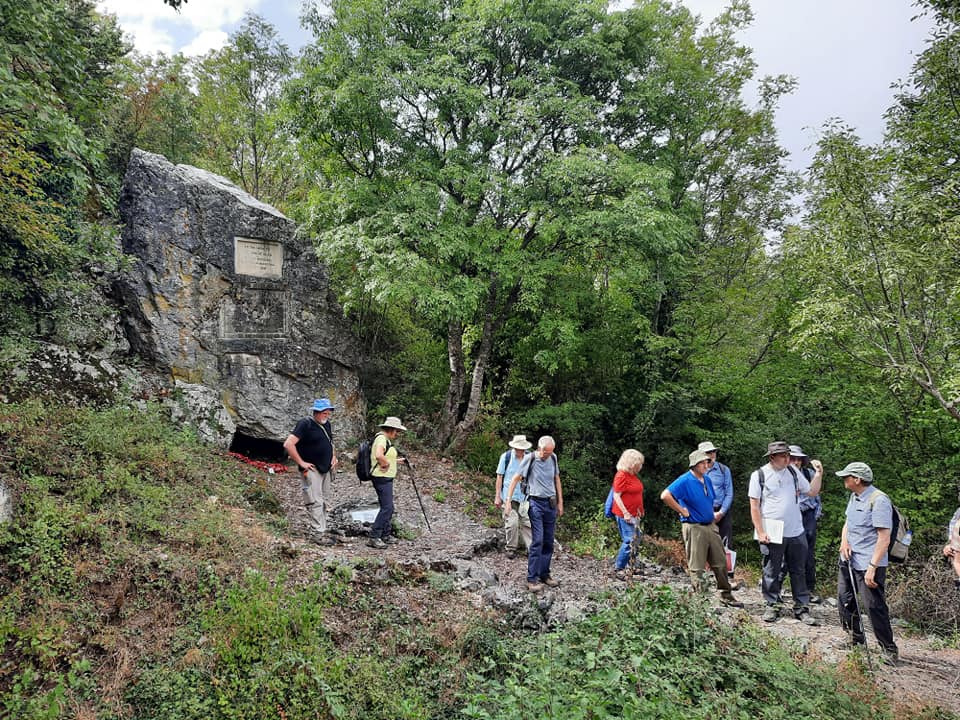
Exploring sites during the 2024 tour
Our journey continues to Bowls Barrow and Smol (now Micro Dassos) in the Vardar sector, where we’ll see firsthand how operations were often designed to divert Bulgarian attention from Doiran. We’ll also visit sections of the Birdcage Line defences and the village of Mavroplagia (formerly Karamudli) in the Krusha Balkan Hills.
The tour will include visits to several Commonwealth War Graves Commission cemeteries, including Doiran (with the Memorial to the Missing), Karasouli, Kirechkoi-Hortakoi, Lembet Road, and Struma.
Running from Sunday 21 to Tuesday 30 September 2025, the tour is timed to coincide with the official commemorations marking the end of the Salonika Campaign, held over the last full weekend of September.
Led by SCS Chair, Alan Wakefield, this is a great opportunity to walk in the footsteps of BSF history.
To register your interest and receive further details, contact Alan Wakefield via email.
Amongst the souvenirs of the campaign collected by Private Herbert Price of the ASC Supply Department is a rather fragile flyer for Salonika’s Palace Cinema for the week beginning Monday 30 October 1916. Two films were on offer, the first a French silent film from the previous year, Strass & Compagnie, described as ‘a grand patriotic and poignant drama … in four long parts’, which doesn’t seem a great choice for men seeking escapism from war. In which case, maybe Herbert’s preference was for the 1912 American short, A Millionaire for A Day. Described by one US paper as ‘a screaming comedy’, this 1912 American silent short – based on a true story – is about a mechanic who goes to New York City and squanders his inheritance in a single day, returning home broke but wiser (Wikipedia). On the coming Friday, the film Pont du Diable (Devil’s Bridge) was promised, although this sounds uncomfortably like a location in the Struma valley!
SCS Secretary, Chris Loader, has just released a new episode of his podcast Salonika Secrets (mentioned here in April, 2024).
In Episode 4 of the podcast, Chris begins a new series dedicated to sharing the stories of the fallen officers of the 10th Hampshire Regiment during the Salonika Campaign.
The series begins with the story of Lieutenant John Howard Tanner, who was killed on September 15, 1916, and is buried in the Struma Military Cemetery in Greece.