Well, he is the Salonika Campaign Society’s new mule – an ‘Adoption Star’ at Redwings Horse (and mule and donkey) Sanctuary in Norfolk. In September we said farewell to Muffin, the mule we had adopted in 2015 in recognition of the part played by mules and other animals in the Macedonian campaign. We were sorry to lose SCS Honorary Member Muffin but, at 36, he had had a long and happy life at Redwings; something that looked most unlikely when sent for slaughter with his mother as a foal.
Much as happens with royal succession, the transition from Muffin to Noah has been seamless and we look forward to him enjoying many years as an Honorary member of the Society. We will introduce him properly in the new year but, in the meantime, it is a pleasure to share with you the Christmas card he has sent to all his friends at the SCS.
Having marked the national days of England, Wales and Ireland over the past year, I could hardly ignore Scotland. Having done one of those family history DNA tests, I was very disappointed to find no trace of Scottish ancestry – 16% Welsh was something of a surprise – so my only claim to Scottish heritage is my great-grandfather from East London who served for 12 years with the Cameronians (Scottish Rifles) in India and South Africa at the end of the 19th century. Was it the allure of the tartan trews? Anyway, I wish all our Scottish members, friends and visitors a very happy Saint Andrews day.
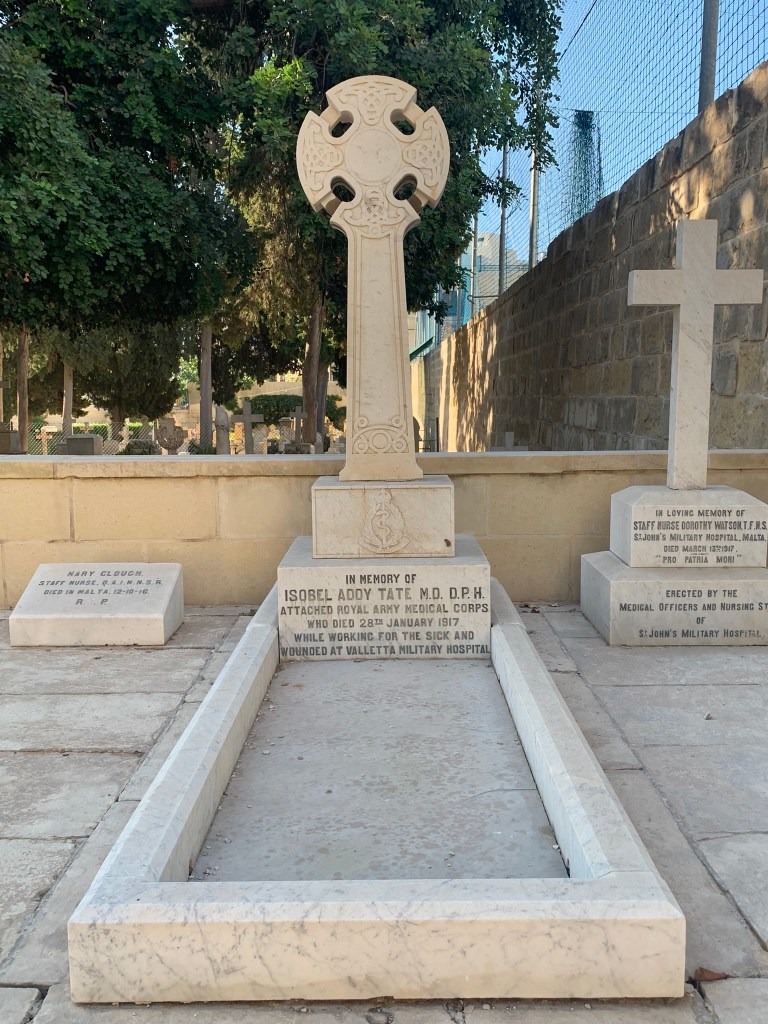
‘X’ (formerly Twitter) is not a favourite medium of mine but it can, in some circumstances, be an informative and interesting forum. In the past year the Society has set up an account and we have managed to both share and learn from this online community. For example, in a series of posts, @DanielJPhelan (Speaker, tour guide, & EOHO volunteer for @CWGC) shared a thread about a discovery while on holiday in Malta. During his stay, Dan visited Pieta Military Cemetery and it was there that he found the grave of Dr Isobel Tate.
On his return home, Dan researched and shared his findings in a series of posts and images on X (Twitter). Thanks Dan for sharing your research!
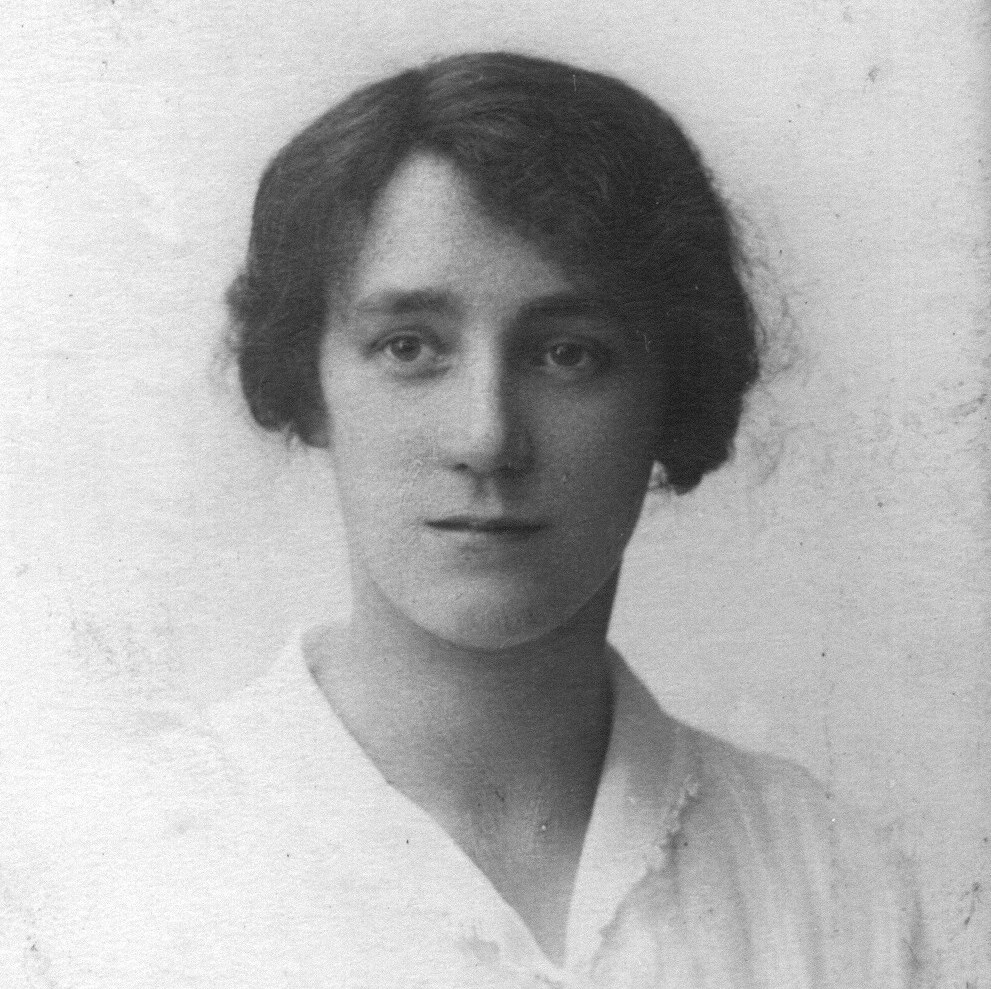
“Isobel Addey Tate was born, around 1874, in Country Armagh, Northern Ireland. At a time when female doctors were rare, she studied medicine at Queens University, Belfast graduating in 1899. Continuing her studies, she qualified as a Doctor of Medicine in 1902.
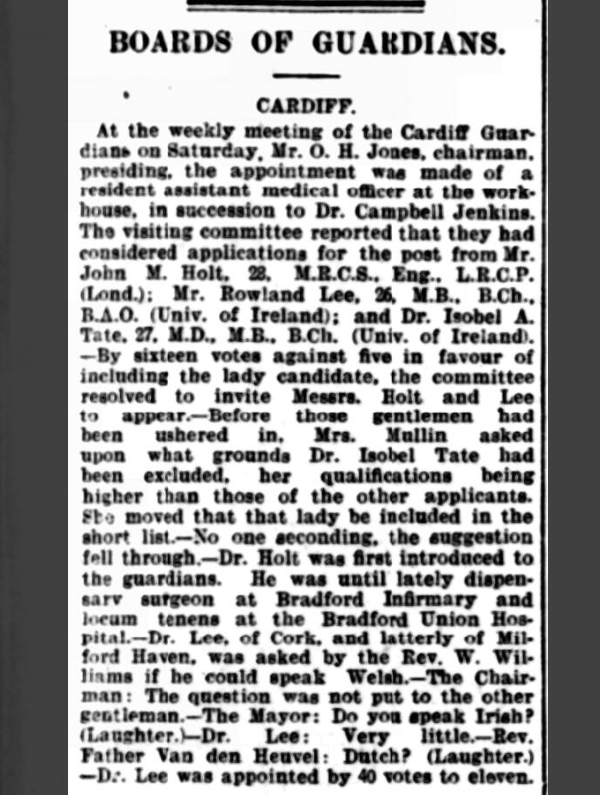
After qualifying, a huge achievement, she moved to England and held a number of positions in hospitals and medical institutions. However, it seems pursuing her career in medicine was not easy…
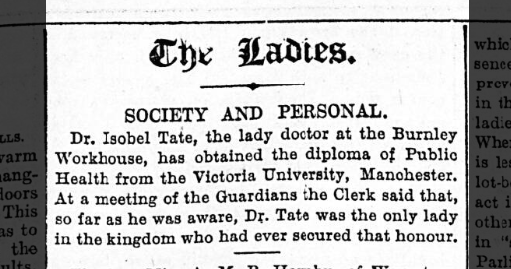
In 1904, while working at the Burnley Workhouse, Dr Tate obtained a Diploma in Public Health from Victoria University, Manchester. It was thought at the time that Dr Tate was the only lady in the kingdom who had ever secured that honour.
In 1915, with the Great War being fought, Dr Tate volunteered to serve with the Serbian Relief Fund. The relief fund was set up and commanded by Mrs Mabel St Clair Stobart. It had seven women surgeons and doctors, which included Dr Tate.
While serving with the Serbian Relief Fund, Dr Tate contracted typhoid and returned home to convalesce. Once well again she became a radiographer at Graylingwell War Hospital, near Chichester. Feeling she ‘was not doing enough’ Dr Tate offered to go abroad again.
Isobel Tate volunteered for service with RAMC and embarked for Malta in August 1916. In Malta she treated sick and wounded servicemen, including casualties from Gallipoli and Salonika. While working at Valletta Military Hospital she became ill. Sadly, on 28th January 1917, Dr Isobel Tate succumb to her illness and died of typhoid fever.
The funeral of Dr Isobel Tate took place on Tuesday 30th January 1917. Her flag-draped coffin was carried by medical officers, flanked by two lines of wreath carrying NCOs from the RAMC. The firing party contained 40 men of the Royal Garrison Artillery. A lengthy train of medical officers, officers from other units, and local members of the medical profession followed her coffin. At the graveside assembled ‘lady doctors’, principal matron, matrons, sisters, and nurses, from all hospitals and camps on the island.
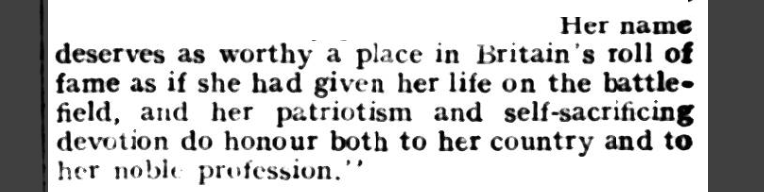
It’s incredible to think that Isobel Addey Tate lived, served, and achieved so much, in an era before women even had the vote. I think this quote from a newspaper at the time is very fitting.”
You can read the complete thread from Dan on Twitter @DanielJPhelan:
While on holiday in Malta I came across an interesting war grave at the @CWGC's Pieta Military Cemetery. The grave belongs to a trailblazing #WW1 female doctor. Below is a short thread on the remarkable and life service of Dr Isobel Tate… 1/🧵 pic.twitter.com/P8MjB4OEI7
The nature of ‘social media’ does not really allow for detail and detailed discussion, so Dan’s account of Isobel Tate’s life is necessarily short. If you would like to read more about her life, and the challenges she and other women faced, there is a more in-depth examination here.
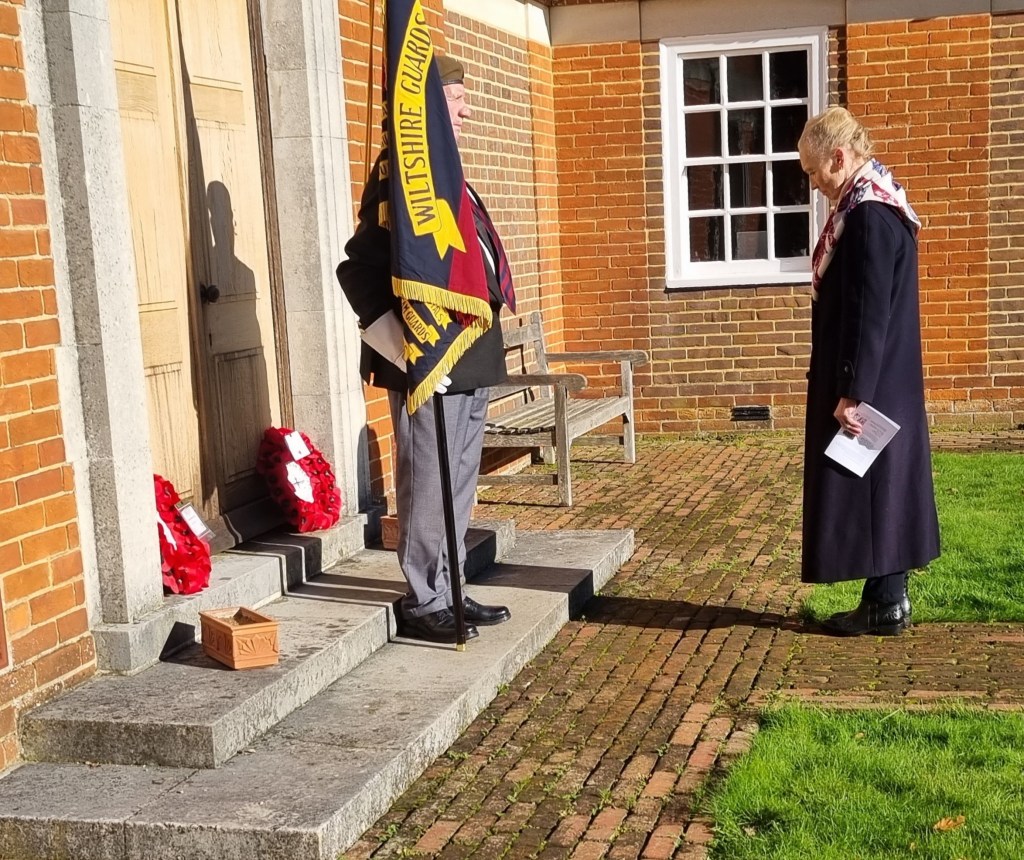
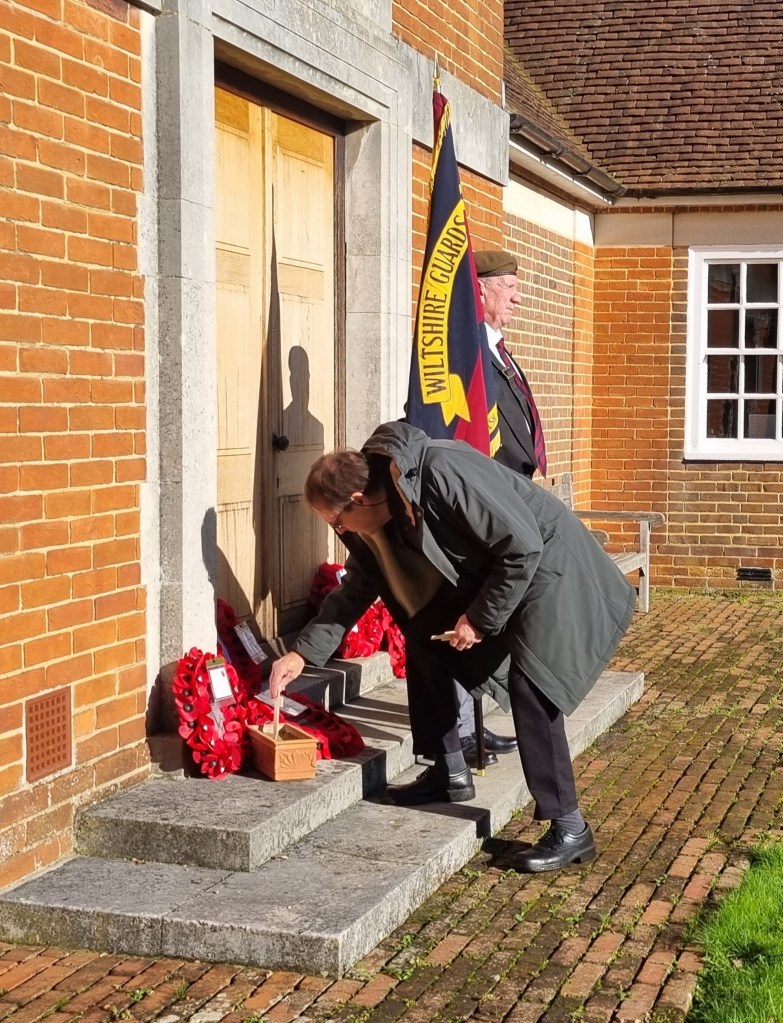
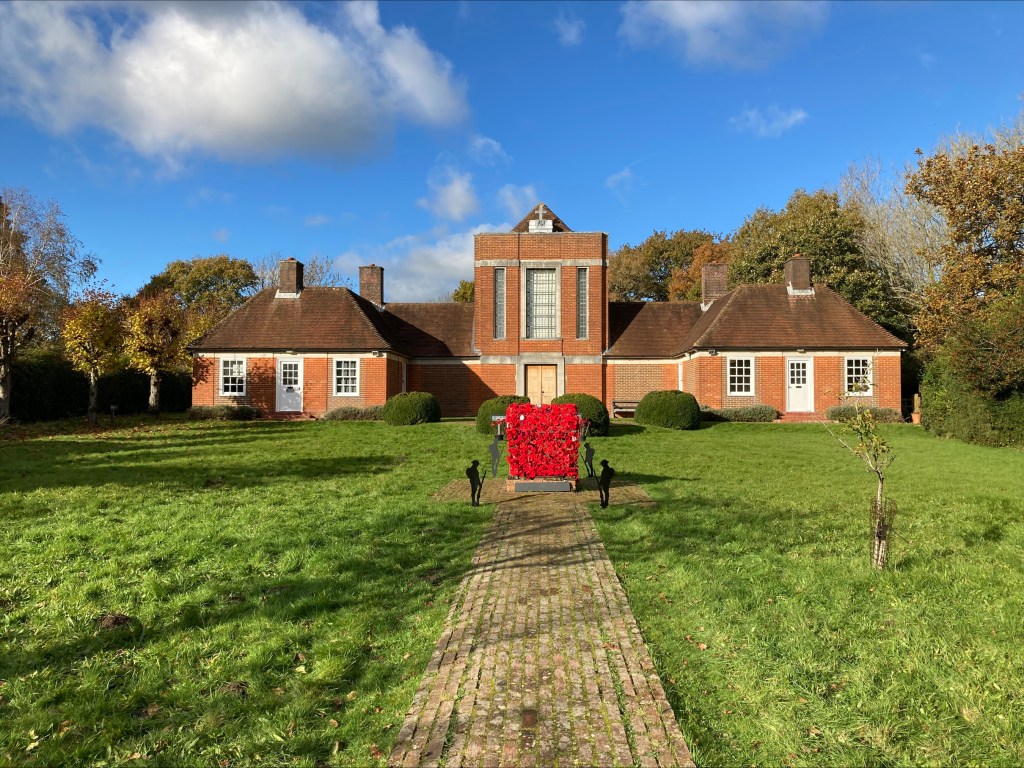
On Saturday 11th November, members of the SCS, including the Society’s Patron, The Hon. Ann Straker, SCS Chair, Alan Wakefield, Secretary, John Taylor and Treasurer, Ray Brownson, gathered with National Trust staff and volunteers and representatives from the Soldiers of Oxfordshire Museum, including Trustee, Brigadier David Innes to remember those who have died for their country in war and conflict, particularly the men and women of the British Salonika Force. Thanks to Alison Lazarus of the National Trust for organising the service, The Reverend Mark Christian for officiating and Darren Rolfe for the photographs.
SCS Patron, The Hon. Ann Straker after laying the wreath on behalf of the SCS.SCS Secretary, John Taylor, planting crosses in remembrance of 38218 Acting Bombardier James Thornley and 38368 Bombardier John Edwards.The Sandham Memorial Chapel with the well dressed and ready for the Remembrance service.
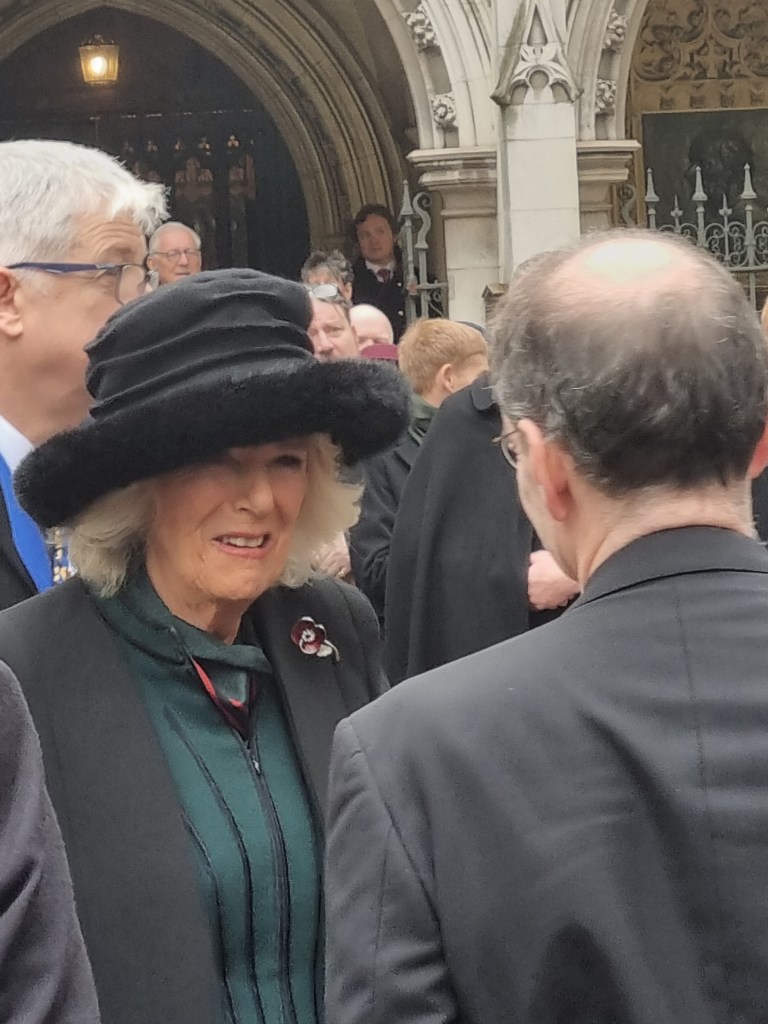
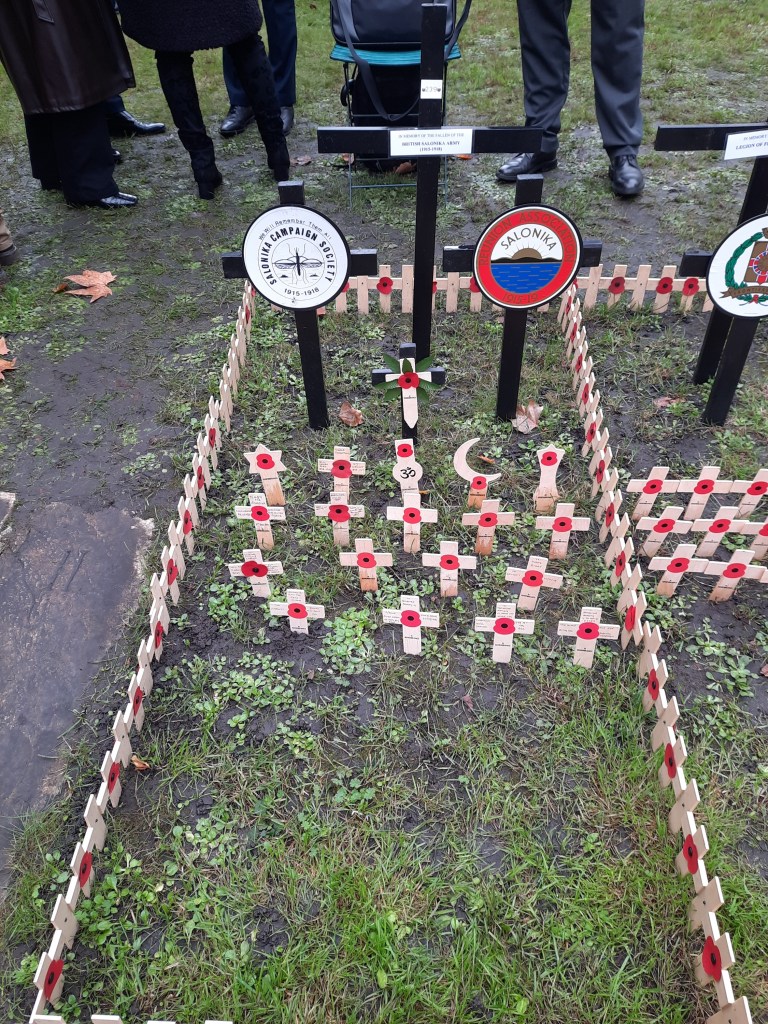
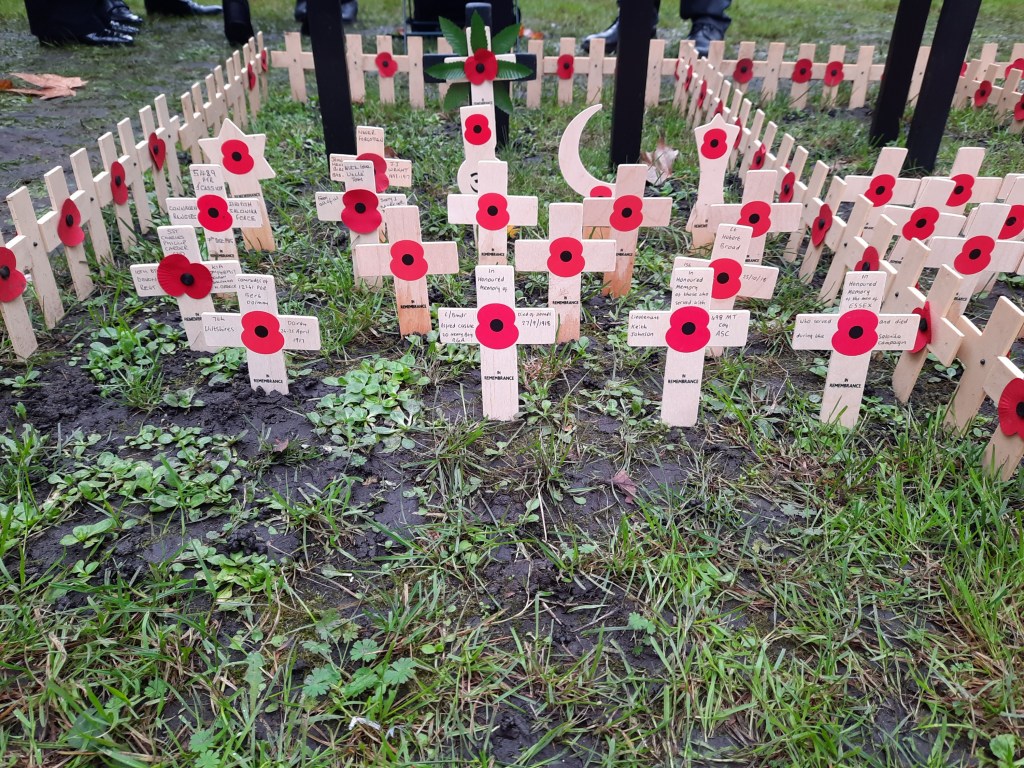
On the morning of Thursday 8 November, SCS Chair, Alan Wakefield, represented the Society at the Opening of the 95th Field of Remembrance outside Westminster Abbey. SCS members Jonathan Saunders and Darren Rolfe were also in attendance. The Field is organised by the Royal British Legion’s Poppy Factory and the SCS is very lucky to have its plot in a prime location opposite the west door of St Margaret’s Church, which stands alongside the Abbey. This year the Field was opened by Her Majesty Queen Camilla who is Patron of the Poppy Factory.
SCS Chair, Alan Wakefield, Her Majesty Queen Camilla about those who served with the BSF during the Salonika Campaign.The British Salonika Army plot, a tradition started by BSF veterans of the Salonika Reunion Association and continued today by the SCS.Crosses of Remembrance in the Salonika plot commemorating those who still lie beneath Balkan soil.
It is with great grief that I wish to tell you your son has died of wounds received in the recent attack. Our company was ordered to take up a position on the left flank of a brigade which was taking a village a mile to our front. We know the Bulgars were entrenched there. It was successfully carried out and the trenches taken and held. Your son was hit in the charge gallantly leading his men. I saw him at once and had him taken back. He was hit in the side but was not in great pain. We had great hopes of his recovery but last Saturday he had a relapse and died on Sunday morning. We buried him in a small cemetery where other are laid who in like manner have given their lives for their Country
The Salonika Campaign Bibliography (with thanks as ever to Keith Roberts) is a valuable resource for anyone interested in the campaign or researching an aspect of it. It’s freely available for members and non-members alike.
Each year we aim to publish an update to the bibliography, as close as possible to the anniversary of the Bulgarian Armistice in late September 1918. And so, we are very pleased to announce the arrival of Version 4! You can find it here.
… What do we want with eggs and ham, when we’ve got plum and apple jam? Form fours! Right turn! How shall we spend the money we earn? Oh! Oh! Oh! it’s a lovely war.
Issue 48 of The New Mosquito was mailed to Society members by our printers this week. This issue features a fascinating in-depth piece about the 26th Divisional Company Theatre Company and has articles ranging from the Italian Regia Marina to the Society’s innovative ‘Trench Maps Place Names Project’. Not to be missed!
UK members should receive their copy by September 25th, overseas members a little later. If you haven’t received yours, do please let us know and we’ll get a copy to you asap.
Eight years ago, at the start of the centenary of the Macedonian campaign, the Society ‘adopted’ Muffin, a mule at the Redwings Horse Sanctuary at Caldecott in Norfolk. This was to acknowledge the huge contribution made by animals – especially mules – in the campaign. Through his column in ‘The New Mosquito’ we have learned more about mules in general and Muffin in particular. It has been clear from recent updates, though, (the last is in the forthcoming NM48) that Muffin has been feeling his age and experiencing declining health. So it was sad, but not altogether surprising, to receive this from Redwings:
Staff at Redwings Horse Sanctuary are heartbroken to announce the death of Muffin the mule, its much-loved and longest serving Adoption Star.
The beloved boy was 36 years old and had been at Redwings since he was rescued from slaughter in 1987 along with his mum, a pony called Doris, when he was just a tiny foal.
Tragically, Doris passed away shortly after their arrival at the Sanctuary when it was discovered she had a stomach ulcer. Baby Muffin had become friends with another youngster – April – and, with the support of the Redwings staff who cared for him, went on to become one of the charity’s most famous Adoption Stars for 30 years.
The Redwings Adoption Scheme allows people to support the charity through sponsoring one of their residents, who in turn receive updates on their lives as well as the chance to visit them. The funds raised go towards the care of their friend and that of the other horses, ponies, donkeys and mules at Redwings.
Lynn Cutress, Redwings Chief Executive, said: “We know so many people will be upset to hear this news. It’s left a huge hole in the hearts of all the staff here at Redwings and we know our supporters will feel that too.
“When people discover you work here, they always tell you that they remember Muffin and ask if he’s still with us. They tell you that their grandparents or parents sponsored him for them as gifts, and they grew up with his pictures on their childhood bedroom walls.
“Some families sponsored him for generations, and our priority was to write to them all personally before announcing this publicly as we wanted them to be the first to know.
“Visitors to Redwings Caldecott, where he lived, were delighted by Muffin’s friendly nature and mischievous ways for over three decades, as of course were the staff who cared for him day in and day out. We all loved him dearly.”
In his later years Muffin was diagnosed with Cushing’s disease (PPID) which made him prone to a painful hoof condition called laminitis. As a result of his specialist needs, which increased with his age, Redwings retired him from the Adoption Scheme in 2017 so he could enjoy a quieter life with his friends.
As such an elderly boy, it was becoming increasingly challenging to care for him without him needing to have extended periods of time away from his herd. The recent addition of front shoes helped him feel more comfortable, and happily he had recently been living on a more-gentle woodchip paddock at his Caldecott home with a friend. Unfortunately, he had become very reluctant to take his medication and despite his carers trying various foods and methods of feeding and providing him with enrichment activities to improve his emotional health whilst in vet care, these measures were not working as well as was hoped. Sadly, on 11th September, it was decided that the kindest thing to do was to put Muffin to sleep to prevent his health and comfort deteriorating.
Laura Starkey, Redwings Caldecott Equine Centre Manager, said: “Our staff and the vet team cared for Muffin with such love and dedication.
“Muffin was one in a million, such a patient, calm boy. He loved his feed, and would often stand waiting by his bowl, 30 minutes before time, with a face that said: ‘What’s been keeping you?’. He took life at his own pace and you certainly couldn’t rush him. He has been here since the beginning of Redwings Caldecott and we will miss him terribly.”
Muffin receiving his SCS membership certificate and badge from Robin Braysher on his birthday in April 2016 – ginger biscuits may also have changed hands! (Photo by Robin Braysher).
Young Muffin and mum, Doris, in 1987 (thanks to Redwings for the photo).
The birthday boy, April 2023 (thanks to Redwings for the photo).
Muffin at sunset, summer 2023 (thanks to Redwings for the photo).



 Salonika Campaign Society, 1915-1918