Andy's interest in the campaign comes from his grandfather, Arthur, who served in Salonika as a sapper with the Royal Engineers from 1916-1918.
Opinions expressed in these posts are personal and do not necessarily reflect the views of the Society.
Here’s a date for your diary: Thursday 14th November at 8:00pm, when the Society’s very own Secretary, Chris Loader, will be giving an online talk revealing, ‘Secrets of Salonika – Insights from the battlefields of Greece & North Macedonia.’
Hosted by the Great War Group, the talk is free to attend and with no need to register – simply visithttps://t.co/BI41SvR2Zz at 8:00pm on Thursday 14th November.
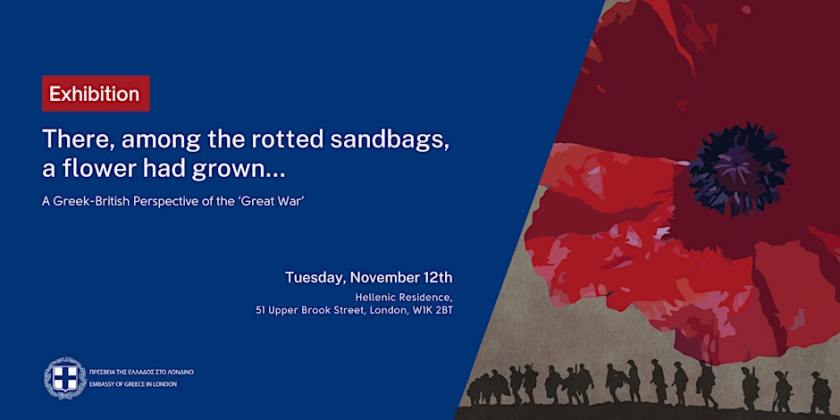
To mark Remembrance Day, the Embassy of Greece in London is hosting a special (free) exhibition on November 12th at the Hellenic Residence, 51 Upper Brook Street, London .
“There, among the rotted sandbags, a flower had grown…” is an exhibition to remember those who served in Greece during WWI. It is also a tribute to the enduring friendship and long-standing alliance between Greece and the UK.
Theexhibition will present a compelling narrative of the shared histories and sacrifice between Greek, British and Commonwealth personnel in WWI Greece. The exhibition takes its title from a line in “Life in the Tomb” by Stratis Myrivilis -a landmark war novel, and by far the most famous work written in Greece on the First World War.
Visitors will have the opportunity to explore an array of artifacts and objects, some never seen before in the UK such as parts from the wreckage of Zeppelin LZ.85 which was shot down over Thessaloniki by the British battleship HMS Agamemnon on 5 May 1916.
Other artefacts on display include:
Personal items and military paraphernalia from British troops stationed in Greece during WWI shedding light into everyday life and daily routines at the war front, but also speaking of the resilience and spirit of those who served.
Photographs and Maps: Visual documentation that captures the landscapes and faces of the era.
Medals and Decorations: Honours awarded to servicemen who fought at the Macedonian Front during WWI.
Visiting hours and Additional Information
The exhibition will be open to the public with free admission on November 12th from 12pm.-3pm. and from 5pm.-8pm., with guided tours available to provide further context and insight into the displayed items. Slots are bookable on the hour. Last entry is at 7.30 p.m. Click here for details and tickets.
The article takes a look at some of the medical case sheets from the 28th General Hospital, Salonika to reveal the impact of malaria and the efforts to counteract it; from quinine and mosquito nets, to importing fish to eat mosquito larvae!
The impact of the disease is considered at the macro level – and, poignantly, at the individual level through the sad record of Isaac Jones of the South Wales Borderers who caught malaria in May 1918 with recurring attacks over the next few months before his death on 14 September 1918.
Isaac Jones’ medical case sheet. Catalogue reference: MH 106/2381/22 (image from the NA)
Remembering…
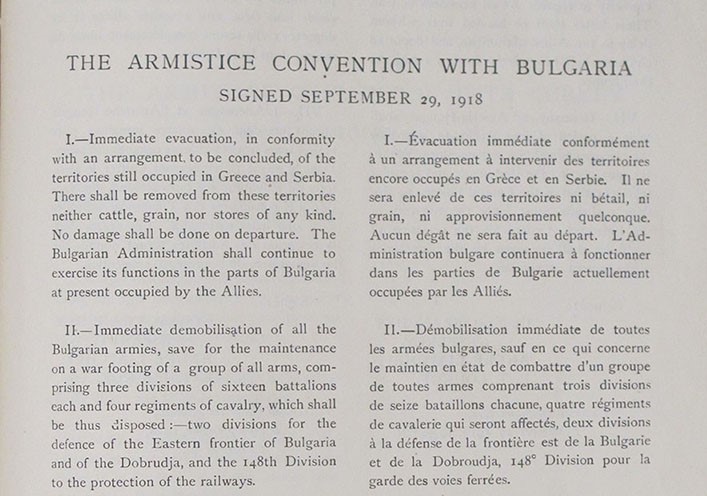
It is a very appropriate day and time (this is posted at noon), to be thinking about the contribution and ordeal of those working and fighting in Salonika – as it was at midday on this day, 106 years ago, that the Armistice of Salonica came into force, having been signed the day before.
Terms of armistice with Bulgaria. Catalogue reference ADM 116/1931 (From National Archives)
Listing 430 titles, Version 5 of the Salonika Campaign bibliography is now published and freely available here. As in the past, the bibliography has been compiled for the Salonika Campaign Society by SCS member Keith Roberts.
If you haven’t taken a look at the bibliography in the past, why not do so now? Keith helpfully lists links to texts that can be viewed online. For example, one item listed is Salonika Again, which Keith describes as an “interesting pamphlet telling of a return visit paid by two veterans of the campaign, and their visits to a school funded by the SCS and a village adopted by them. According to the Mosquito, the two veterans were Billy Reeves and G E Willis.”
Our thanks to Keith for his continued patience and persistence in this Herculean task.
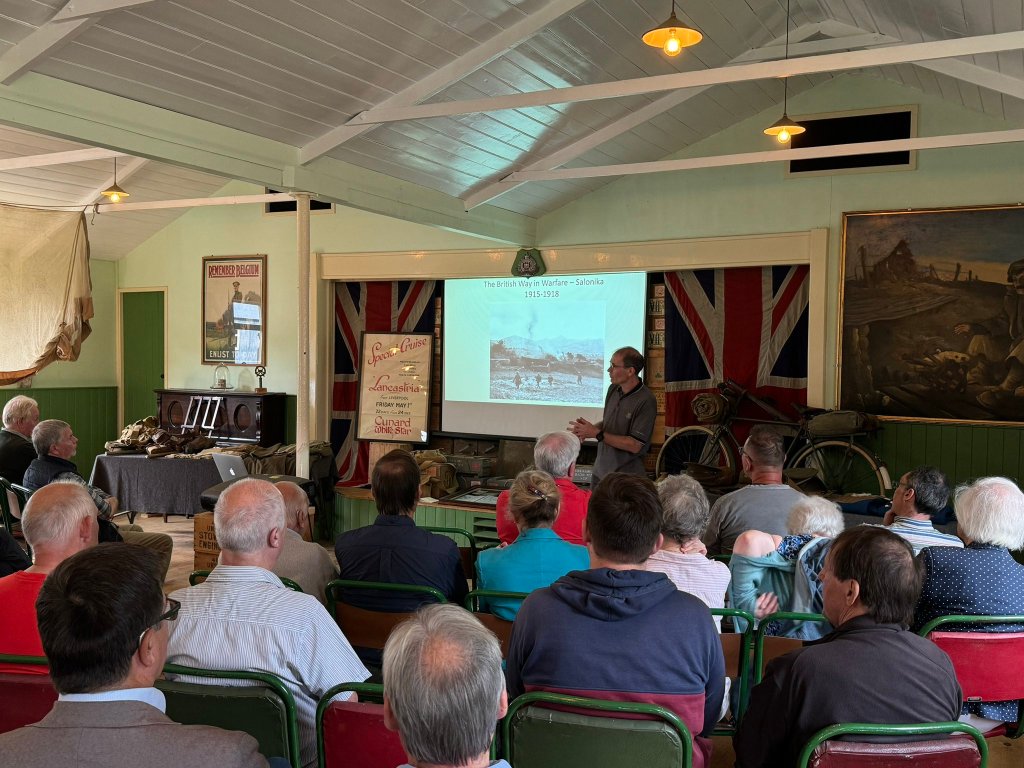
Both new and old visitors to Great War Huts enjoyed an inspirational day of presentations, chat and site tours on Saturday 31 August. The venue, at Brook Farm Camp, Bury St Edmunds is a unique site in which to learn about the personal, military and social history of the First World War – and it was ideal for a study day focusing on the Salonika Campaign.
Ably chaired by SCS member, Keith Roberts, the day began with a welcome from military historian and Great War Huts founder, Taff Gillingham. SCS Chair, Alan Wakefield then spoke of ‘The British Way in Warfare – How the BSF Conducted Military Operations in Macedonia 1915-1918’. Alan focused on different geographical areas in Salonika and how the British army adapted to the terrain of each area, whether in the Struma valley or on the Dorain front.
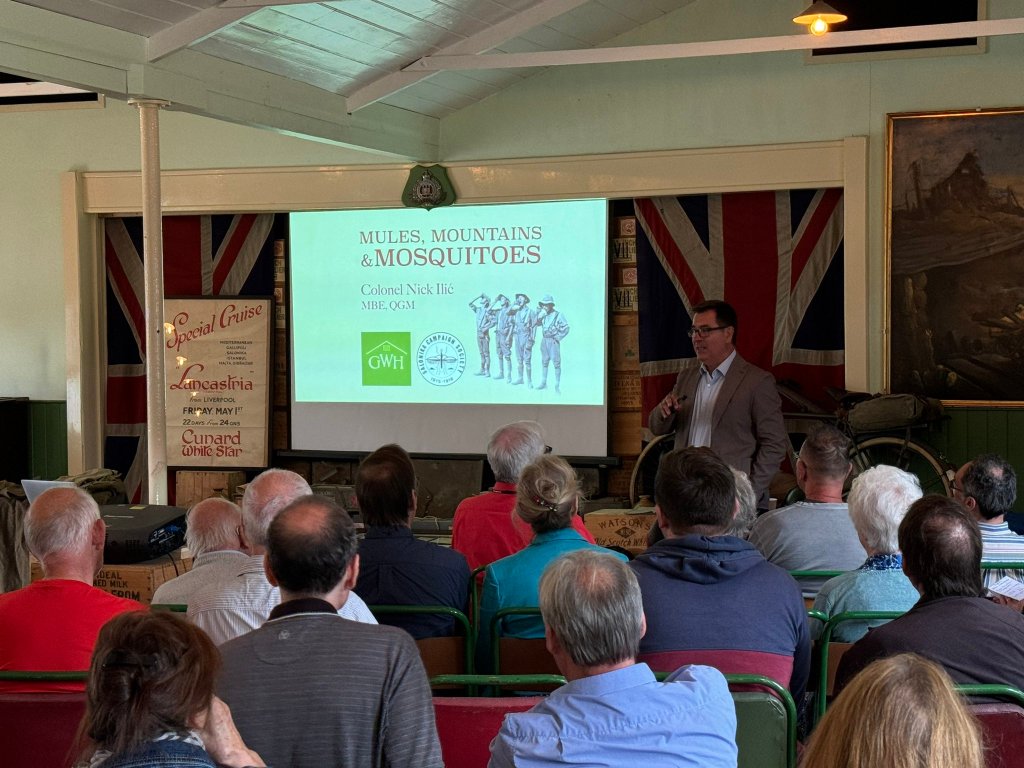
Second speaker of the day was Colonel Nick Ilić MBE QGM on ‘The British who defended Serbia during the Great War 1915-18 – The story of Admiral Ernest Troubridge and the wider British contribution to the Second Serbian Campaign through to the end of the War’. I had no previous knowledge of who Troubridge was or his role in the campaign but Nick’s fascinating presentation brought to life Troubridge’s enormous contribution in a story that we shall surely return to on this site.
Lunch, provided as part of the day, gave visitors the opportunity to view exhibitions, to tour the site and appreciate the truly ground-breaking nature of the Great War Huts project.
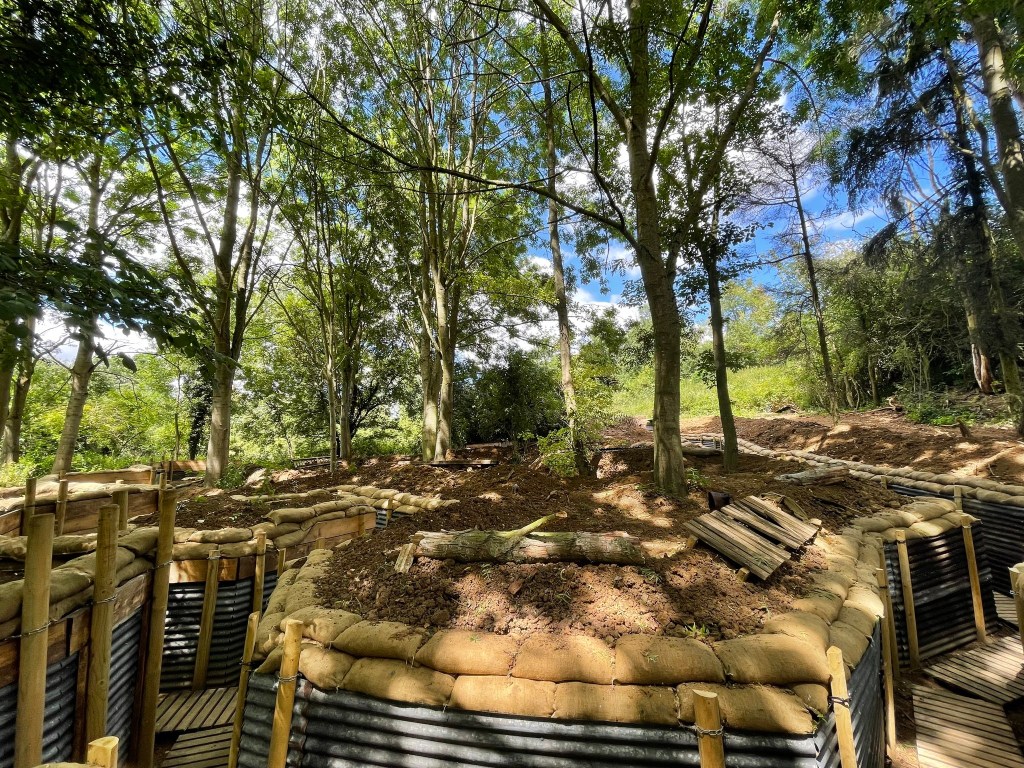
Trench reconstruction at Brook Farm Camp. Image source Great War Huts
Refreshed, we returned to hear Taff Gillingham’s engaging and expert talk on ‘Uniforms and Equipment of the British Salonika Force’. Taff based his session on photographs from the time, pointing out features of uniform and illustrating these with real items of clothing to highlight the practical uses and implications for the men of the campaign.
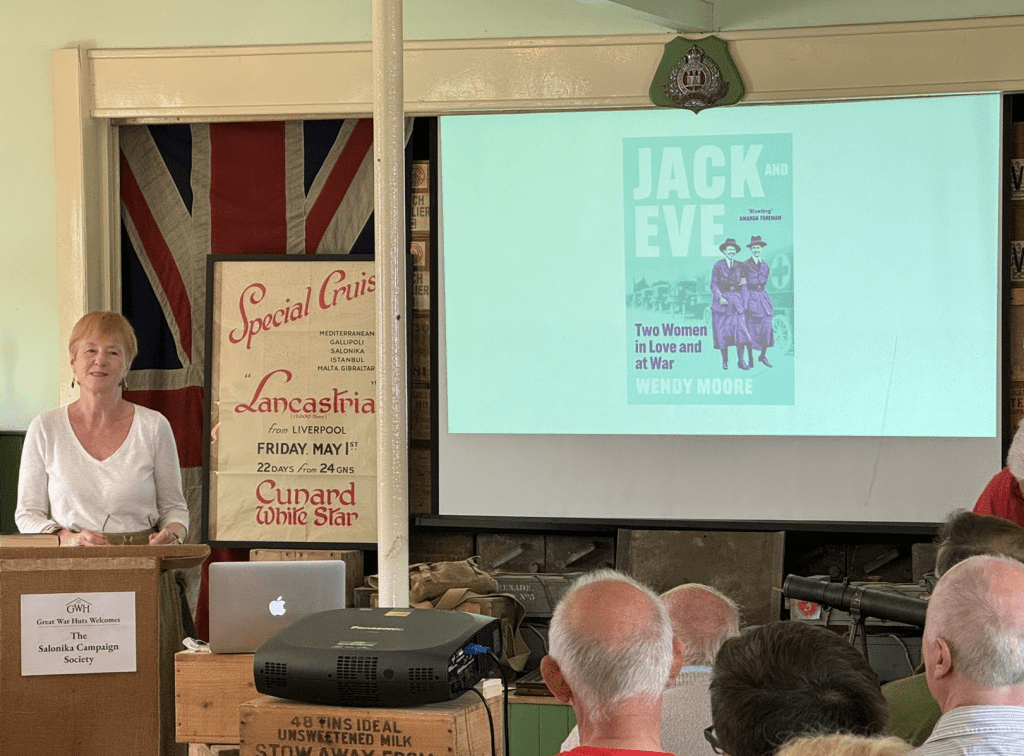
Wendy Moore then gave us a moving and uplifting talk: ‘With the Scottish Women’s Hospitals in Serbia, Russia and Romania: the story of Vera ‘Jack’ Holme and Evelina Haverfield in love and at war’. This provided a shift in focus from the campaign and the activities of men, to the contribution of women in the Scottish Women’s Hospitals and, in particular, the personal lives of the remarkable Jack and Eve.
There was time for some scrumptiouus cake and tea before the final presentation of the day from none other than fellow author of these blog posts, Robin Braysher. Inspired by his grandfather Fred Braysher’s service, Robin gave a fascinating talk: ‘On Patrol with the Pneumatic Cavalry: innovation and adaptability in the Army Cyclist Corps in northern Greece, 1915-18.’ Who knew that a Lewis Gun could be carried on a bicycle, ready for instant use through its quick release clips!
The day concluded with a Q&A session, chaired by Keith, where all the speakers of the day faced questions from the audience. My key memory of this was an impassioned answer from Taff Gillingham on what had inspired his interest in the Great War. I only wish that I had recorded it as my notes and memory can in no way do justice to his reponse!
This was a truly special day and a great collaboration between the Society and Great War Huts. My personal thanks go to all those organising, speaking and contributing to the success of the day – not least to the GWH hospitality heroes Jane and Alan for delicious lunches, cakes and refreshments, and to GWH volunteer Mark for guiding us through the trenches at lunchtime.
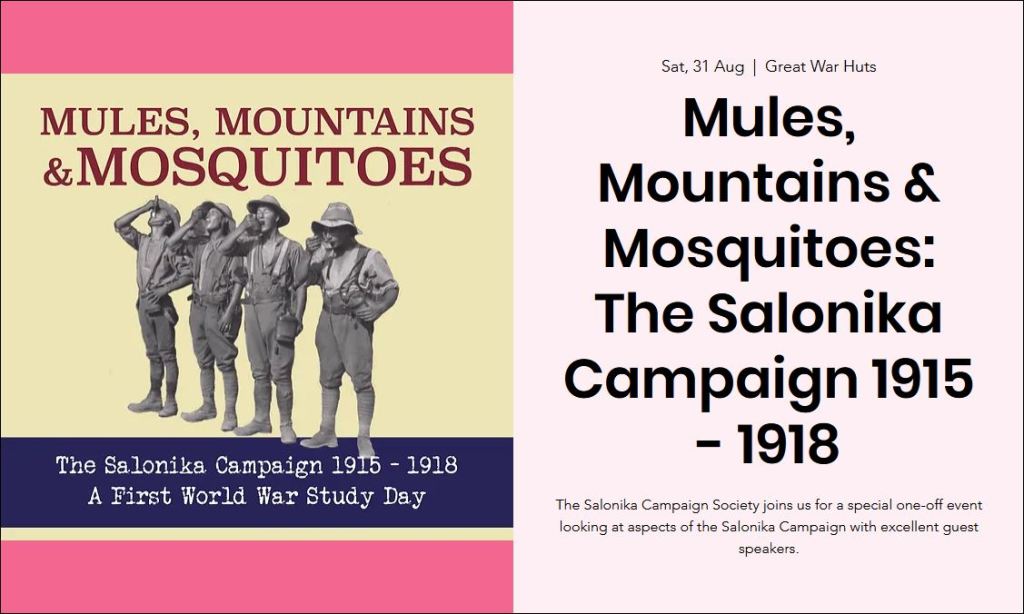
We are very pleased to announce a special day focusing on the the Salonika Campaign, at the Great War Huts site near Bury St Edmunds, Suffolk. The date for your diary is Saturday 31 August.
Together with our friends at Great War Huts, we have planned a special study day featuring five talks on aspects of the Salonika Campaign with expert speakers – including our own Alan Wakefield and Robin Braysher. The day also gives the chance to learn more about the work of Great War Huts and to visit the reconstructed First World War huts and trench network on site.
All this for just £25 – and that even includes lunch! Tickets MUST be booked in advance.
Full details of the day, the location, and how to buy tickets can be foundhere.
In December of last year, we posted about a podcast series that featured an interview with Society member Chris Loader who had travelled with the Society on the September 2023 SCS Battlefield Tour to visit the grave of his great-great-grandfather, Henry Albert Obadiah Loader.
Inspired by a visit to Doiran Military Cemetery during the tour, Chris has now branched out to record his own podcast series: Salonika Secrets.
‘Salonika Secrets’ – a new podcast from Society member Chris Loader
The podcast tells of Chris’s search to identify an unknown British officer commemorated at Doiran. Without giving too much away, Chris has so far managed to narrow down the identity to an officer who served in the 12th Hampshire Regiment. You can listen to the podcast free on Spotify, Amazon and Apple and, no doubt, other podcast providers. Chris also posts updates and extra information on ‘X’ (formerly Twitter) here.
We are very grateful to SCS Member, Rob Elliott for leading this project that attempts to compile asingle record of the awards and honours given to those serving in the Macedonian Campaign. Full details of the aims of the project can be found here.
Rob, with some help from Society Chairman Alan Wakefield, and Members Harry Fecitt and Andy Siddall, has made remarkable progress in compiling this database of honours. A first release was made on 12th January, containing 1067 entries with 276 citations, and Rob has just published the second update , comprising 1960 names of which 283 have full citations. The database is available on the SCS Members’ Area here.
For a full explanation of the work and progress made so far, please read Rob’s report here.
If you are able to spare some time in helping Rob, please send him a message via the form below.
The Salonika Campaign Society is delighted to announce The Philip Barnes Bursary. This new initiative is offered to postgraduate students and postdoctoral researchers undertaking research that will contribute to knowledge of the Salonika Campaign fought across Greece, Serbia and Bulgaria between 1915 and 1918.
The successful candidate will be awarded a subsidised place on the Society’s 2024 battlefield tour. The tour of 9 days (8 nights) will run from Sunday 22 until Monday 30 September and will start and finish in Thessaloniki.
The bursary, named after Philip Barnes, SCS founder and pioneer traveller to the First World War battlefields across Macedonia, will cover accommodation, food and travel within Greece and North Macedonia for the duration of the tour. Travel to and from Greece will be at the candidate’s own expense.
Members and visitors to this site, please forward to anyone you think might be interested or who could promote the Bursary to others. Thank you.
Further details of the Bursary and how to apply are here.
As a result of a remarkable piece of work researched and initiated by SCS Membership Secretary, Keith Edmonds, we are pleased to provide a new file to aid research and understanding of the Salonika Campaign.
The Trench Maps Indexis a .pdf file which lists approximately 8,500 place names from the Salonika theatre, in alphabetic sequence, together with their corresponding coordinates. The names, and their respective Easting/Northing, have been determined from the collection of maps available from the Society and show:
Place Name
The map from where the location reference (Easting/Northing) was taken
The map scale
The Easting and Northing and
The calculated, corresponding Latitude and Longitude.
Where a location reference has been provided on the respective map, the place’s location is shown in italicised blue text in the index, as in the following example.
An entry from the Trench Maps Place Names Index.
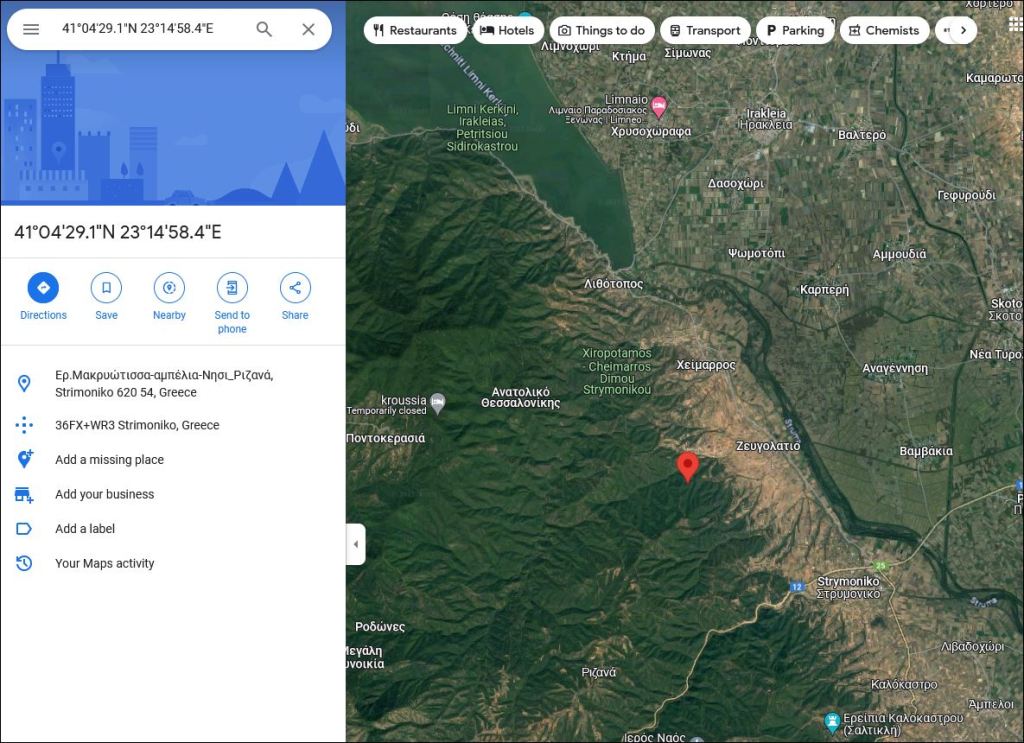
But here’s the thing… clicking on any name shown in blue text will load Google Maps at that locationas indicated by a red ‘pin’!
The location of Arthur´s Seat in Google Maps
This ability to locate campaign locations in Google Maps is a remarkable innovation made possible by the research begun by Keith leading to collaboration with Professors Clifford J Mugnier and Gábor Timár. As a result, Professor Timár presented a paper on the subject, Georeference of the Allied Trench Maps of the WW1 Salonika Front at the 16th ICA Conference, Digital Approaches to Cartographic Heritage at the Faculty of Geography, Babeş–Bolyai University, Cluj-Napoca, Romania on 22nd-24th September 2022. The co-authors of the paper are listed as Gábor Timár, Keith Edmonds, Clifford J. Mugnier.