
I doubt that members of the Salonika Campaign Society really need International Women’s Day to remember the service and sacrifice of the women of the Scottish Women’s Hospital who served in the Balkans. The Society has remembered them in books, in talks and presentations, at events and in articles, both printed and online. Even so, it may be helpful to have a reminder of these redoubtable women and their noble enterprise, through the graves of just four of their number. I photographed these on a visit to Thessaloniki ten years ago, at the CWGC Lembet Road Military Cemetery. They are: Sister Mary de Burgh Burt, Sister Florence Missouri Caton, Masseuse Olive Smith and Alice Annie Grey.
Continue reading “Remembering …”Tag: Remembrance
The aim of the Society is to perpetuate the memory of those of all nations who served, whether they were members of the armed forces, medical services or civilian staff. The Society does not seek to glorify war and is neither politically nor commercially motivated.
Remembrance in Wartime
The following account of the 1944 Annual Muster of the Salonika Reunion Association is taken from The Mosquito, issue 68, December 1944.
Lord Milne talking to his ‘old comrades’ on the occasion of the 20th Annual Muster in London, on Sunday, October 1st, told them this story: One of your members went to the wrong place this morning and asked a sentry where the Salonika Reunion Association was meeting. The sentry replied “I don’t know; I don’t think there is any meeting. There are none left alive.” This caused a lot of laughter.
“Well we are very much alive!” commented “Uncle George,” ” and this is the best parade we have had since the commencement of the war.” He said he thought it a wonderful turn-out after five years of war, and it was typical of the high state of morale of the nation. It was a great pleasure for him to see them again, and if they did not think him rude, he congratulated them on their personal appearance.
… Stating that he hoped this would be our last meeting in war-time, at least during the European war, he looked forward to a real Victory Reunion next year. “Au revoir! Good luck to you! …”
… With the S.R.A. standard and escort in the lead, we marched – a long line of threes, twisting amongst the held-up traffic – until we arrived at the Cenotaph in Whitehall. When we had halted and turned towards the national war memorial we were standing six deep. In the centre, facing the south side of the Cenotaph, stood Lord Milne with our head officials, and they were flanked on their right by a single line of women – our nursing sisters, V.A.D.s, etc..
Then, receiving from our hon. secretary and hon. treasurer, the large wreath of gilded laurels, inscribed “To the Honoured Memory of Our Fallen Comrades. From the Members of the Salonika Reunion Association,” Lord Milne, bareheaded, advanced with Colonel W.R.D. Robertson (president of the S.R.A.) and placed our tribute on the base of the Cenotaph. Colonel Robertson, who was in army uniform, saluted, they turned and resumed their positions. The parade, closely scrutinised by onlookers on the pavement, then did a smart left-turn and marched away. We had paid tribute to those whom we left on the rugged hillsides and the open plains of Macedonia, in city cemetery or in lonely unidentified graves – heroes all! For twenty years we have kept faith with them in this simple ceremony at the Cenotaph. “they shall grow not old . . . . we will remember them” – always!
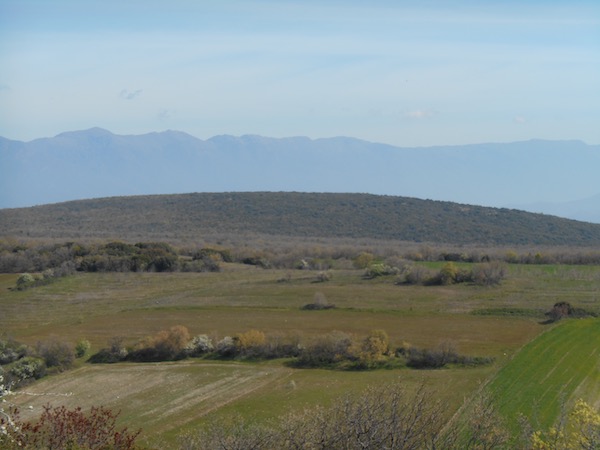
“… the rugged hillsides …
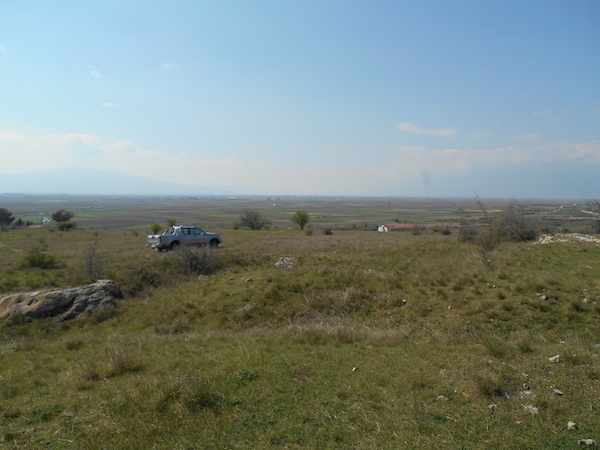
… and the open plains of Macedonia.”
Photographs taken by the author in March 2016: a view from Castle Hill to La Tortue on the Doiran front (top) and across the Struma valley from the Bulgarian lines (bottom).
We will remember them
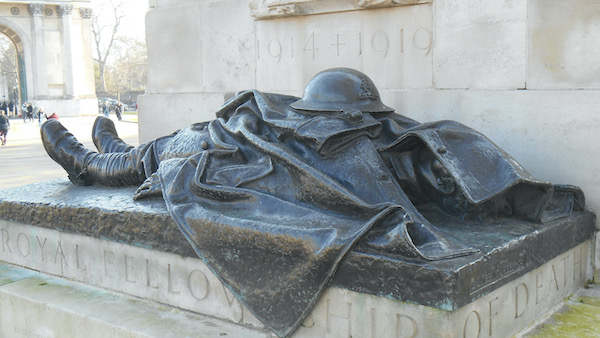
They shall grow not old, as we that are left grow old:
Age shall not weary them, nor the years condemn.
At the going down of the sun and in the morning
We will remember them.
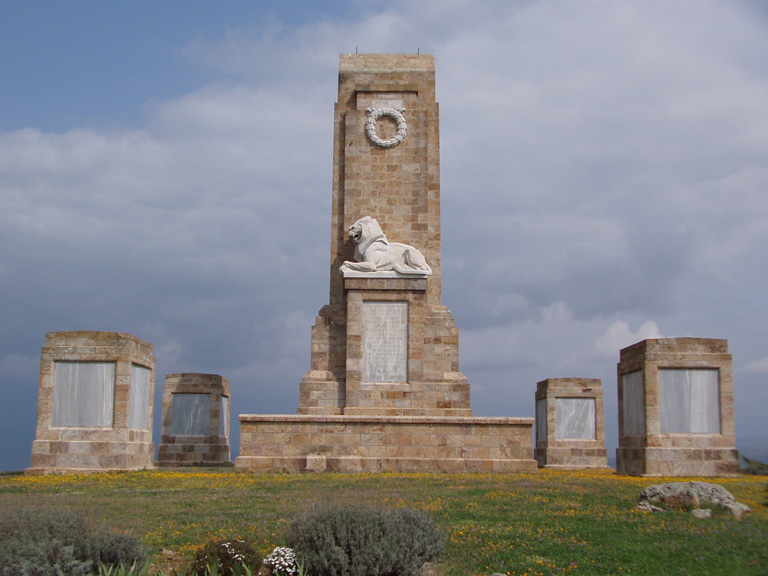
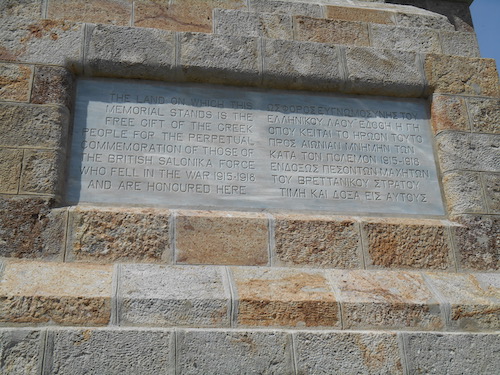
The Sinking of the Marquette, 1915
A little over 110 years ago, on Saturday 23 October 1915, the British transport ship Marquette was torpedoed by the German submarine U-35 as it entered the Gulf of Salonika. The ship sank within ten minutes. Of the 741 people on board, 167 died, including 32 New Zealanders – ten of whom were nurses.
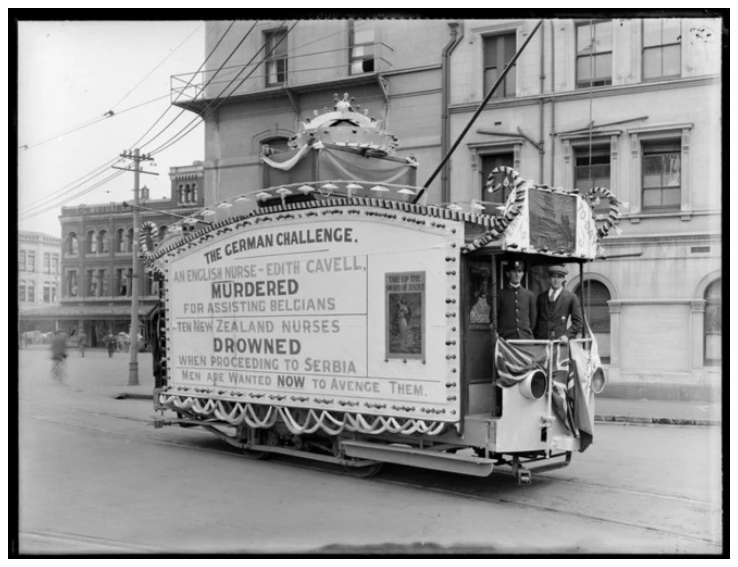
The New Zealand Nurses
Most of the New Zealanders aboard were members of the 1st New Zealand Stationary Hospital. They had been serving in Egypt, treating casualties from Gallipoli, and were being transferred to support Allied operations in the Balkans. Among them was Staff Nurse Margaret Rogers, who had enlisted only months earlier in July. Indeed, The New Zealand Army Nursing Service was itself new and only established early in 1915.
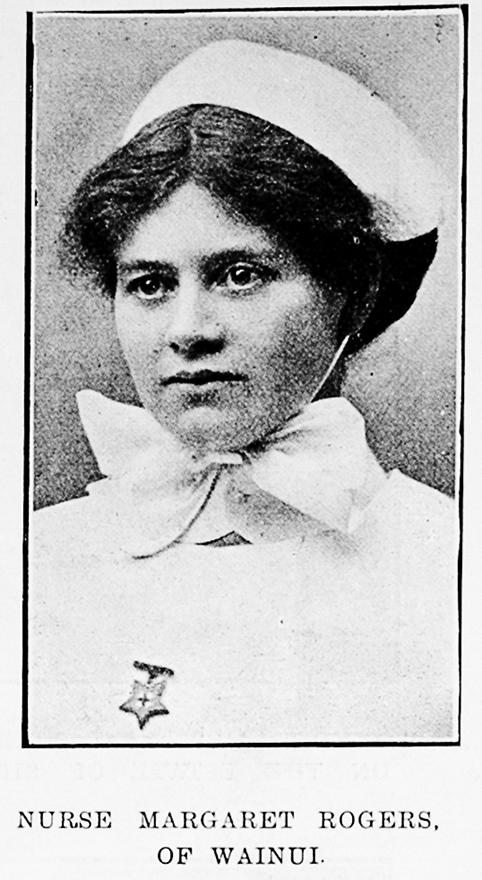
Image source: Nurse Margaret Rogers, URL: https://nzhistory.govt.nz/media/photo/nurse-margaret-rogers, (Manatū Taonga — Ministry for Culture and Heritage), updated 28-May-2024
The Marquette, originally a cargo vessel, had been adapted for wartime transport.
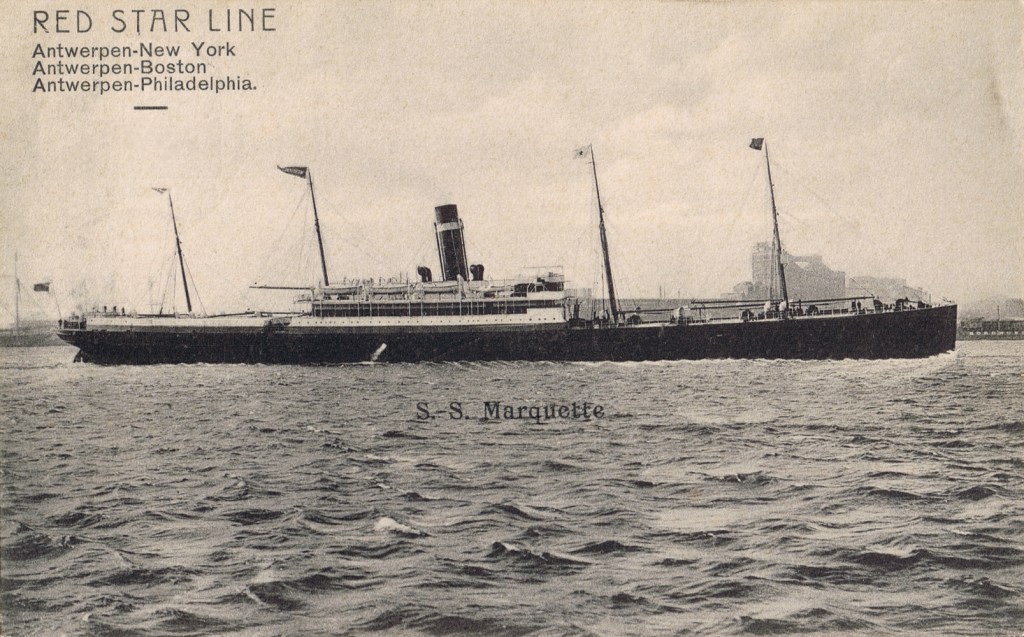
Image source: https://ww100.govt.nz/no-ordinary-transport-the-sinking-of-the-marquette
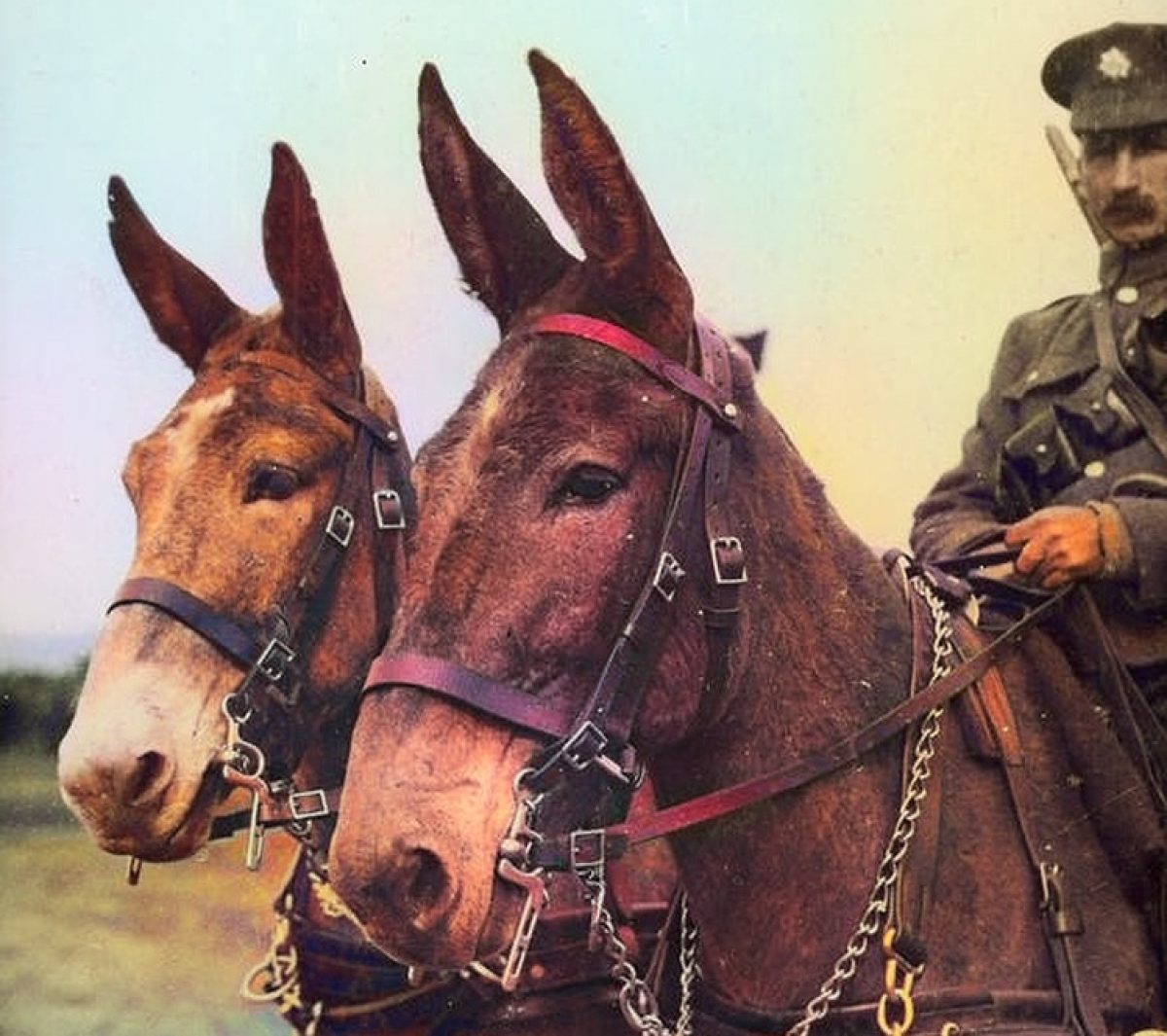
When it departed from Alexandria on 19 October, it carried medical personnel, British troops, over 500 mules, and ammunition. Although accompanied by a French destroyer during part of the journey, the escort departed the day before the attack.
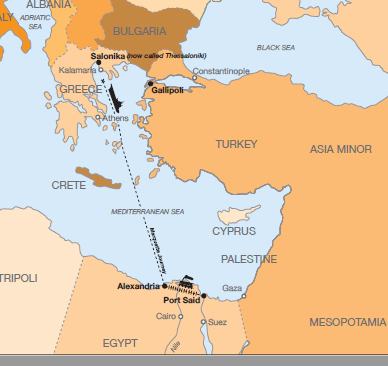
At approximately 9:15 a.m., witnesses reported sighting a torpedo shortly before it struck the starboard side of the ship. The impact caused the vessel to list sharply. Despite the suddenness of the event, many accounts describe those on board as remaining orderly.
Efforts to launch lifeboats were largely unsuccessful. Inexperienced personnel, the angle of the sinking ship, and mechanical difficulties led to lifeboats capsizing or being damaged. Several nurses and soldiers were killed during these attempts. It is believed that Margaret Rogers lost her life in this phase of the evacuation.
Ten New Zealand nurses and 22 men from the New Zealand Medical Corps and No. 1 Stationary Hospital died.
Survivors spent several hours in the water, exposed to cold conditions and exhaustion. Some clung to wreckage; others assisted colleagues unable to swim. Rescue vessels, including British and French destroyers, arrived later in the day. Six days later,on the 29th October, all surviving nurses and some medical officers returned to Alexandria on the hospital ship, the Grantully Castle.
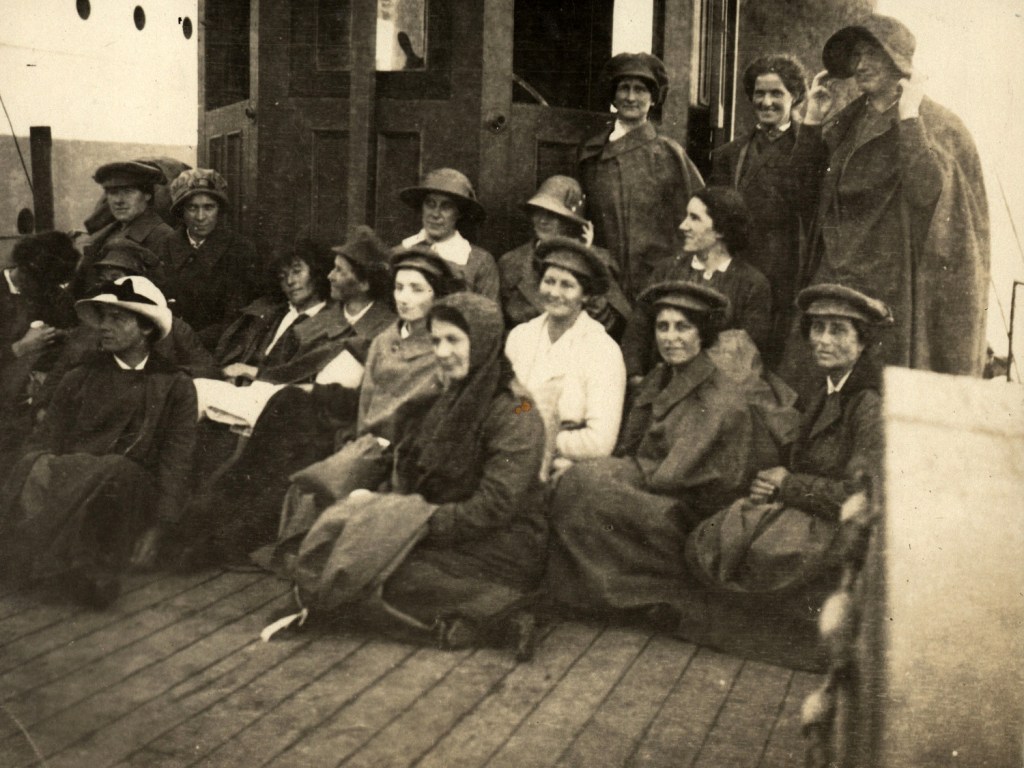
Image source: https://ww100.govt.nz/no-ordinary-transport-the-sinking-of-the-marquette
Aftermath
The sinking of the Marquette led to outrage about the decision to transport medical personnel on a vessel carrying ammunition and troops rather than on a hospital ship. Marked with a red cross, hospital ships could sail with a much greater degree of safety with the protection of the Geneva Convention. The troopship was, for German submarines, a valid target.
One can only imagine the emotions of the survivors as they undertook the journey to Salonika again later in the year in order to establish a tented hospital at Lembet Camp. The hospital was in operation until March 1916, when it left for France.
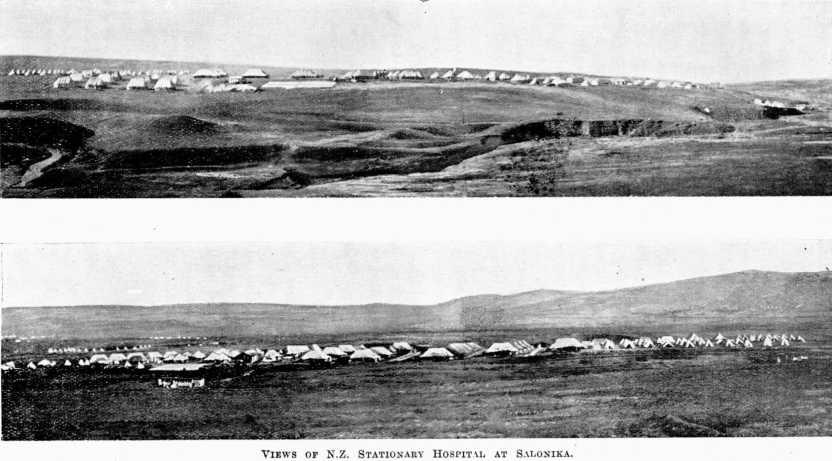
Image source: https://nzhistory.govt.nz/media/photo/1st-new-zealand-stationary-hospital
In Memory
Margaret Rogers is buried at the Mikra British Cemetery at Kalamaria where there is a memorial to the loss of the Marquette.
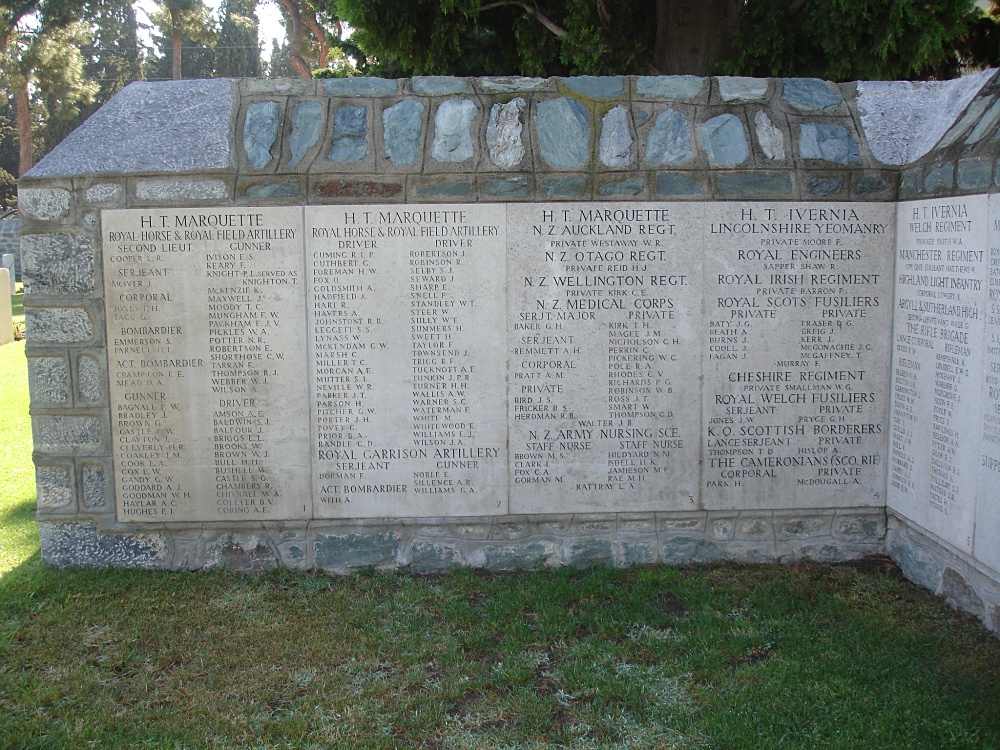
Margaret is also listed on the war memorial at Akaroa where her father lived.
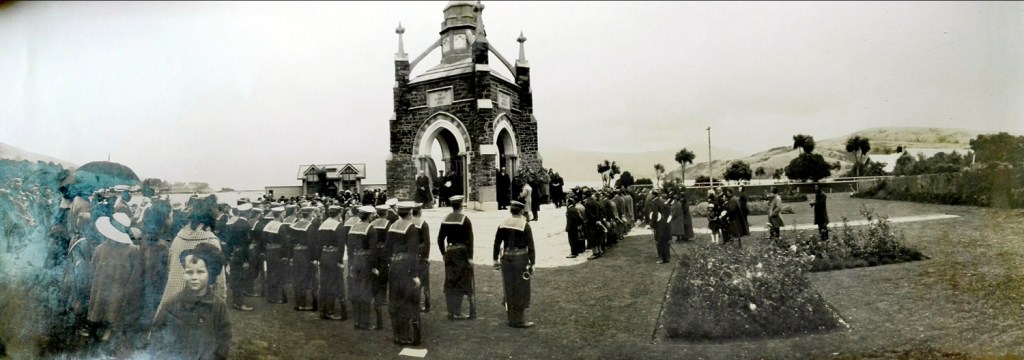
Image source: https://nzhistory.govt.nz/memorial/akaroa-war-memorial
Margaret and the other nine nurses lost in the Marquette sinking are remembered at the Nurses’ Memorial Chapel at Christchurch Hospital and at the Marquette Nurses’ Memorial at Waimate.
The events of 23 October 1915 are also dramatised in the Australian TV series, ANZAC Girls, which until December 31st, 2025 is freely available to view here.
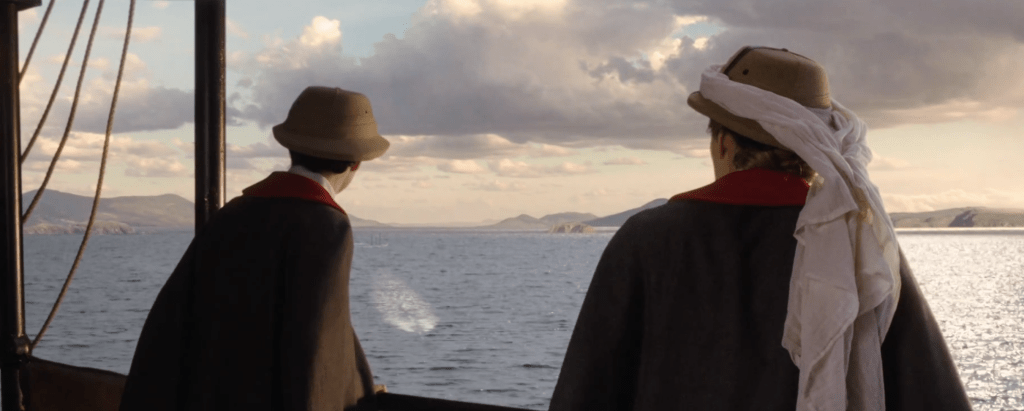
Image Source: Episode 3, https://player.stv.tv/summary/all3-anzac
Footnote
Wreckage of the Marquette was found in May 2009 by a Greek dive team. It rests in 87 metres of water of the Thermaikos Gulf in the North Aegean Sea. A protection order for the wreck has been sought by The British Embassy in Greece.
Reference Links
- https://www.armymuseum.co.nz/2023-today-in-history-marquette-sinking/
- https://ww100.govt.nz/no-ordinary-transport-the-sinking-of-the-marquette
- https://nzhistory.govt.nz/media/video/marquette-great-war-story
- https://ww100.govt.nz/no-ordinary-transport-the-sinking-of-the-marquette
- https://www.cnmc.org.nz/the-marquette/
- https://www.rnz.co.nz/news/national/287792/%27all-of-a-sudden-there-was-this-bang%27
- https://www.cnmc.org.nz/resources/museum/prentice-papers/
2025 Salonika Tour now underway
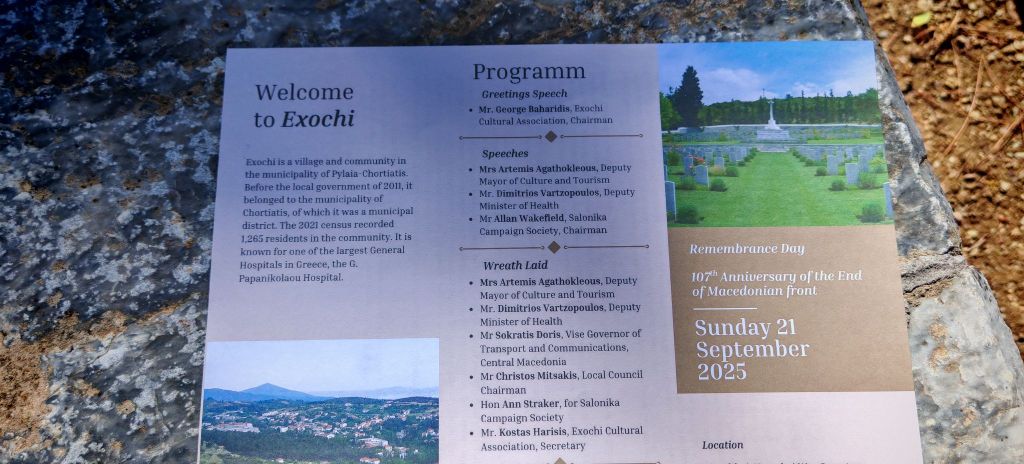
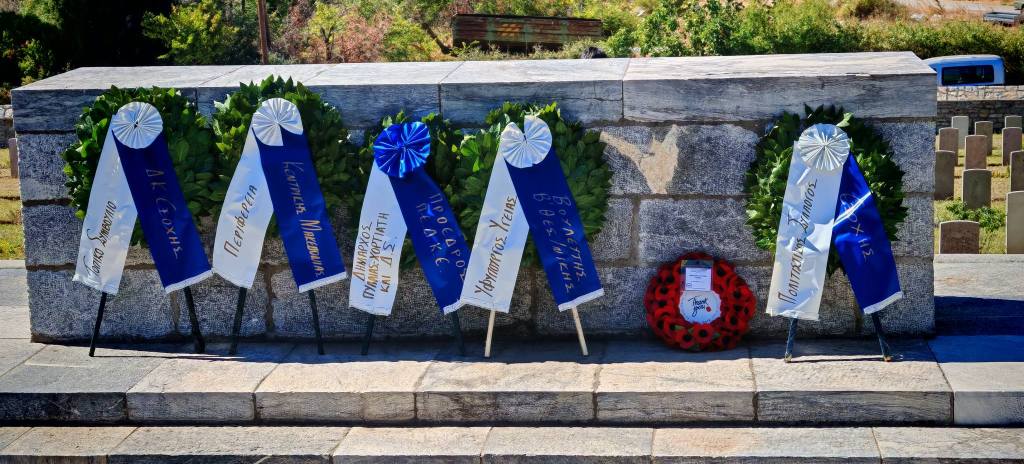
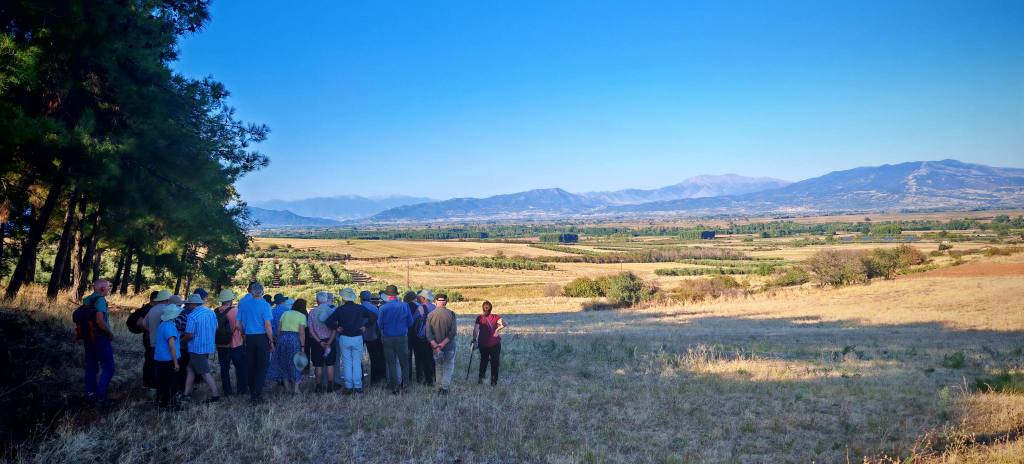
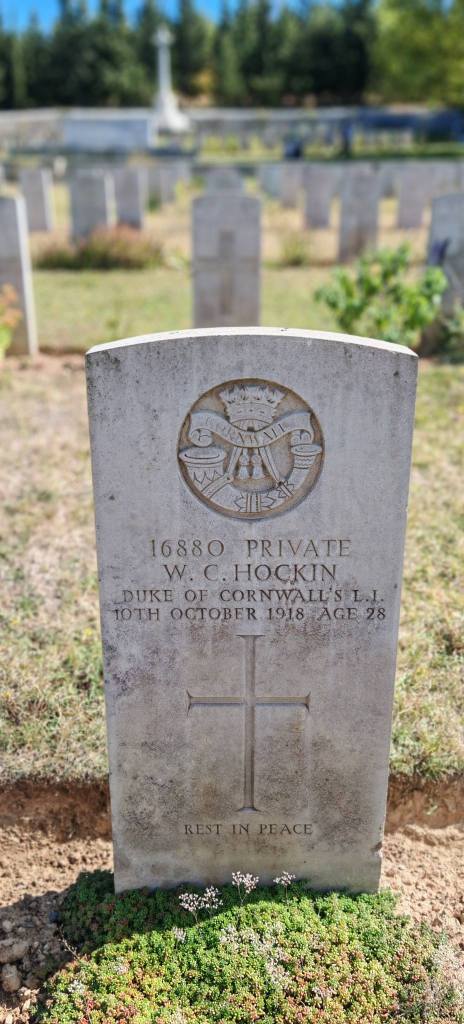
The Society’s 2025 tour (Sunday 21st to Tuesday 30th September) of the British Salonika Force battlefields is now well underway – with battlefield studies, cemetery visits and acts of commemoration. This year the tour has a special focus on artillery and small-scale operations.
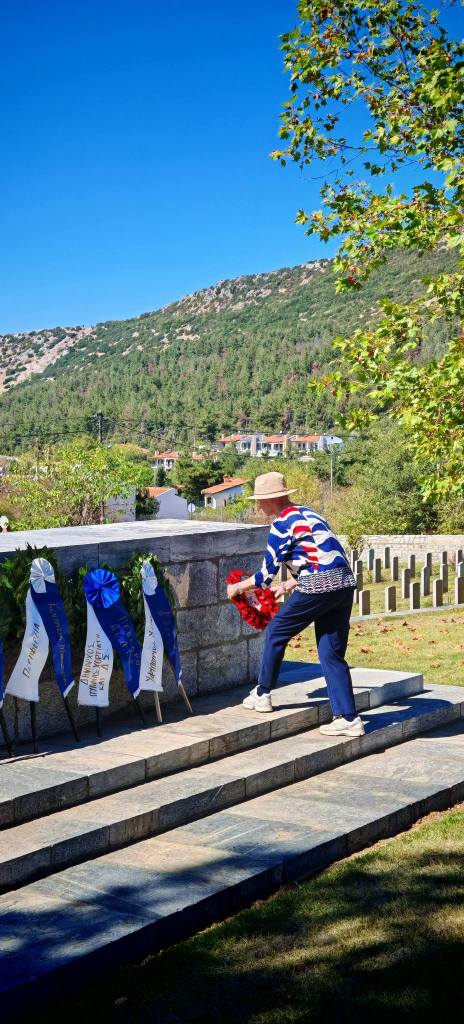
The tour began with a Ceremony of Remembrance at Kirechkoi-Hortkoi cemetery, with a wreath laid by Patron of the Society, the Honourable Ann Straker, before moving on to Triada village for an introduction on the BSF in the Struma Valley and the role of artillery on that part of the front.
You can follow the progress of the tour on Facebook here.
SCS Annual Meeting 2025 – a reminder
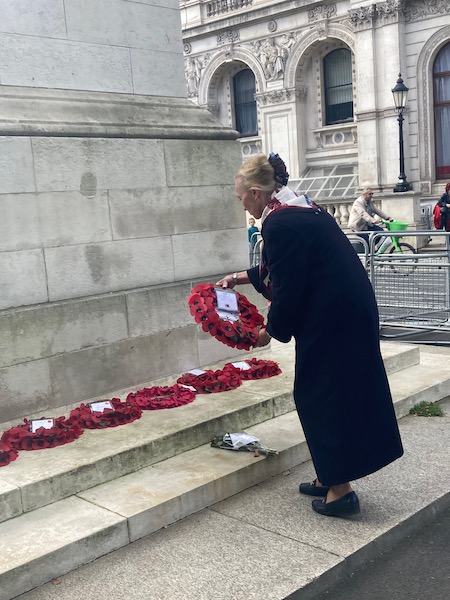
Just a quick reminder that the SCS Annual Meeting takes place at the Civil Service Club, London on Saturday, 11th October 2025. Prior to the meeting, we will be gathering at The Cenotaph, Whitehall at 11:30 for a short commemorative ceremony.
There then follows the opportunity for lunch at the club before the meeting starts at 12:30 with a series of talks:
- Dr. Jake Gasson, Salonika: The Battle Against Boredom.
- Chris Loader, 10th Battalion The Hampshire Regiment: The OG Salonika Battalion.
- Alan Wakefield, Balkan Gunners: Some Aspects of the Artillery War in the Salonika Campaign.
The cost of the annual meeting is £10.00 per person, excluding lunch. Please note, advance booking is required (by September 20th 2025) as availability of seats is strictly limited.
Full details of the meeting and how you can reserve your place can be found here.
Remembering Hori Tribe (1877-1917)
I’ve only recently discovered a fascinating and beautifully presented online exhibition commemorating the life of Hori Tribe (1877-1917), an employee of The Royal Parks who served in Salonika before transferring to the Egyptian Expeditionary Force (EEF) in June 1917.
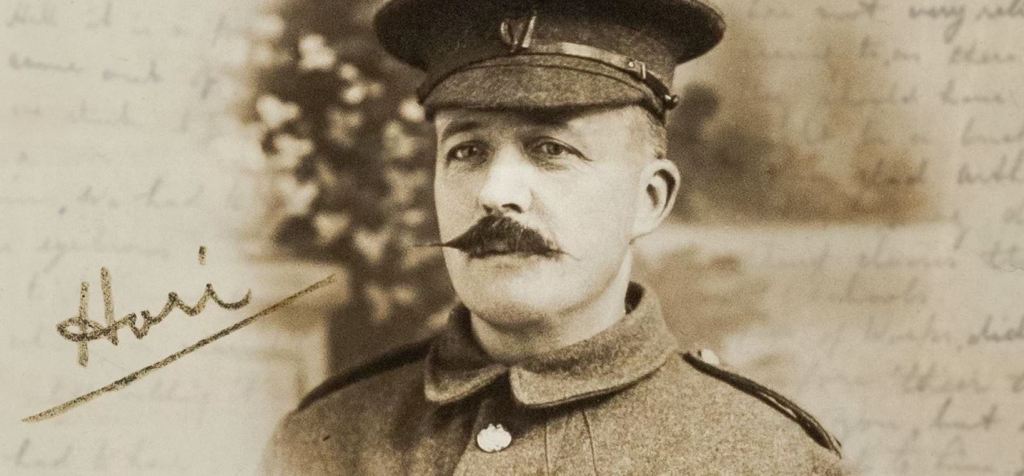
The exhibition, co-curated by the Royal Parks and Hori’s great-granddaughter, Sarah Gooch, has a wonderful and moving collection of photos, drawings and extracts from Hori’s letters.
I certainly won’t attempt to retell Hori’s story here, instead I recommend a visit to the digital exhibition. It is definitely worth a visit and a few moments of your time.
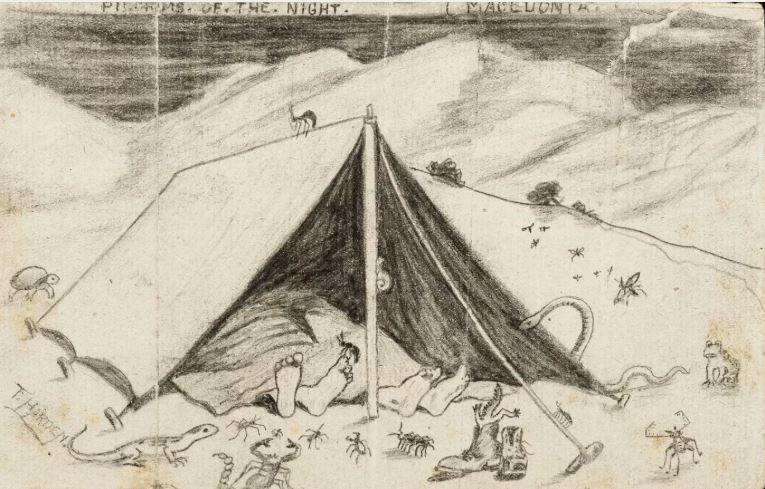
With the EEF since June and now, at the start of December 1917, Hori had two days’ rest at a monastery just outside of Jerusalem. In the final letter he sent home, Hori included some rosemary – associated with remembrance:
‘The pieces of rosemary included I picked from a hedge in the grounds of the monastery.’
Hori spent two days at the monastery just before his last battle.
Hori was killed in action on 8 December 1917. He is laid to rest at the Jerusalem War Cemetery.
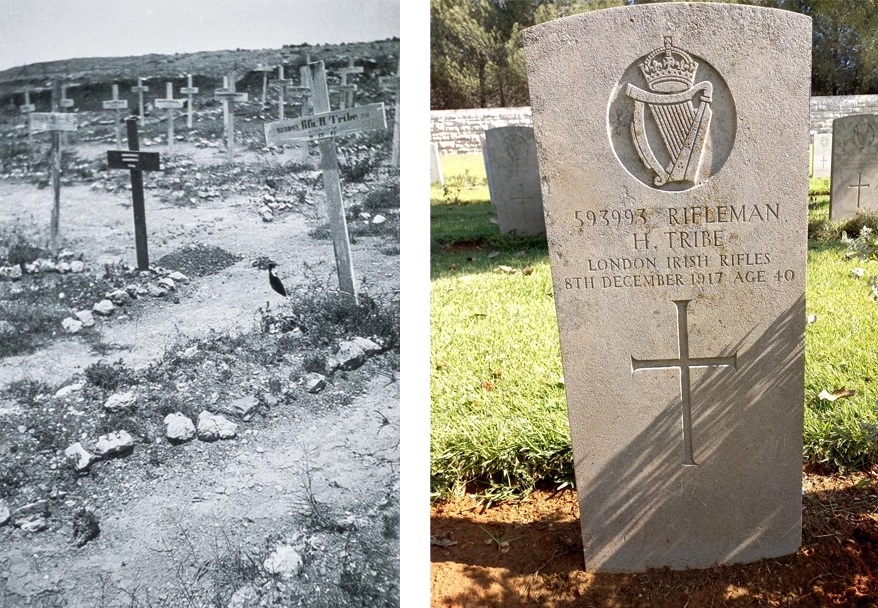
Remembering Hori Tribe – A digital exhibiton celebrating the life of Hori Tribe (1877-1917), an employee of The Royal Parks who was killed in action during the First World War.
Alles Klar!
Have you been to Zeitenlik? Even if the name doesn’t ring any bells, if you’ve been to the CWGC Lembet Road Cemetery – and the neighbouring allied cemeteries – then you have been to Zeitenlik. Don’t laugh, but I’ve often wondered why this part of Salonika has such a Germanic-sounding name – even allowing for the cultural and ethnic mix of the Balkans. It hasn’t kept me awake at night, nor have I been so bothered that I’ve asked Google, but it has crossed my mind more than once. I suppose this shows that a smidgin of half-remembered O’ Level German is – if not actually dangerous – at least unhelpful!
Continue reading “Alles Klar!”Remembering Harry Tate’s Cavalry
On a recent trip to London I took a stroll through Hyde Park and, for the first time ever, came across the dramatic Cavalry Memorial, unveiled in May 1924. A little under a year later, the first wreath laying ceremony was held at the memorial and, in 1927, the Combined Cavalry Old Comrades Association was formed. The Association has organised an annual parade and memorial service on the second Sunday in May, ever since.
Continue reading “Remembering Harry Tate’s Cavalry”Pte George Excell of Wotton-under-Edge
One of the things I enjoy most about living in the county of Gloucestershire is its beautiful countryside and many wonderful walks. After a recent hike involving some strenous Cotswold climbs, I stopped for refreshments and recovery in Wotton-under-Edge. Of course, I had to take in the Wotton war memorial where I later discovered a Salonika connection…
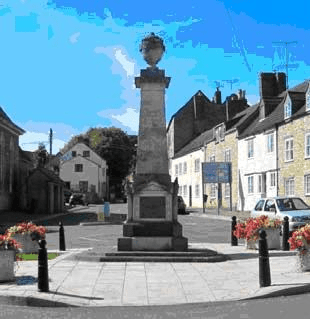
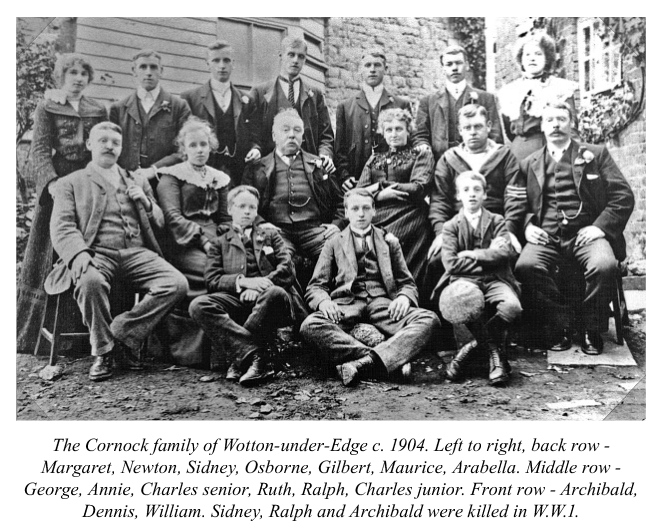
According to the town’s heritage centre, the memorial was erected in 1920 and unveiled by a Mrs Cornock. Apparently, and tragically, eight of her sons served in WWI – three did not return*. Among the names on the memorial is that of George Edward Excell.
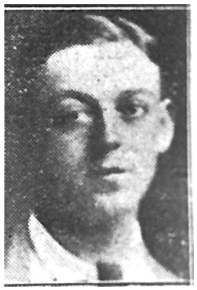
George Edward Excell was born in 1896 in Wotton-under-Edge, one of six children of Edwin and Elizabeth Excell, who lived in the Sinwell area of the town. His father, Edwin, worked as a rural postman, while his mother, Elizabeth served as matron at the Perry & Dawes Almshouses on Church Street, Wotton. Edwin died while George was still young.
After finishing school, George began working for Mr. G. W. Palmer, a boot maker based on Long Street in Wotton. Mr. Palmer later served in the Royal Naval Division as an Able Seaman during the Great War.
At the outbreak of the war, George enlisted in Wotton, joining the 11th Battalion of the Worcestershire Regiment with the service number 18644. The battalion was formed on 14 September 1914 as part of the 78th Brigade in the 26th Division. They trained in Wiltshire, including at Sherrington and on Salisbury Plain, before landing in Boulogne on 21 September 1915. Over the next two years, George saw extensive action on the front lines and was wounded twice.
George Excell recovered from his wounds and resumed service with the Worcestershire Regiment. In September 1918, the 11th Battalion of the Worcesters, including George, was deployed to the Salonika front.
On 16th October 1918, George’s mother, Elizabeth Excell, received a telegram stating that her son was dangerously ill in a hospital in Salonika. Tragically, George had already died of pneumonia four days earlier. It wasn’t until Saturday, 19th October, that she received confirmation of his death. George Excell was 22 years old.
George is buried at Doiran Military Cemetery, in Plot 5, Row H, Grave 28.
Source: ‘First World War Heroes of Wotton-under-Edge’ by Bill Griffiths available online here.
*Bill Griffiths’ book also includes this picture of the Cornock family and the three sons that never returned to Wotton-under-Edge.
 Salonika Campaign Society, 1915-1918