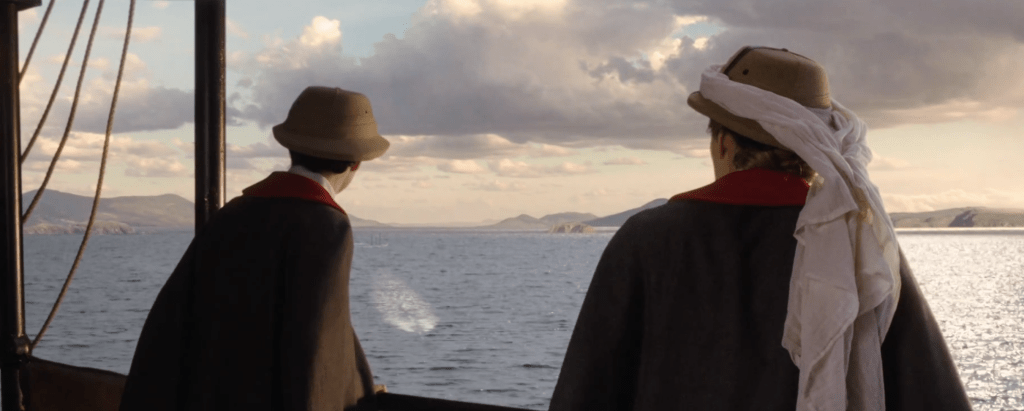
Mettle and Steel: the AANS in Salonika

Searching for information recently about nursing in Salonika, I stumbled across Mettle and Steel: the AANS in Salonika. It’s an account of the punishing nature of Australian military nursing in Salonika. From 1917, Australian nurses were sent into this difficult and unfamiliar theatre of war to relieve the British, French and Canadian nurses and to provide nursing care to British soldiers and prisoners of war. As nursing ‘our boys’ was a major motivation for overseas service, it was something of a disappointment for many that they could not nurse Australian soldiers.
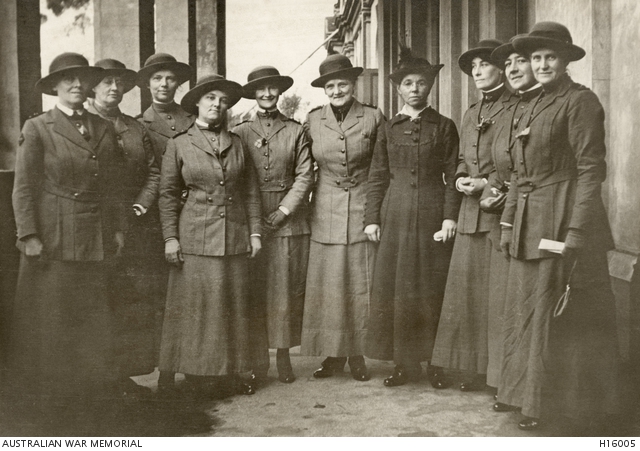
Accession Number: H16005
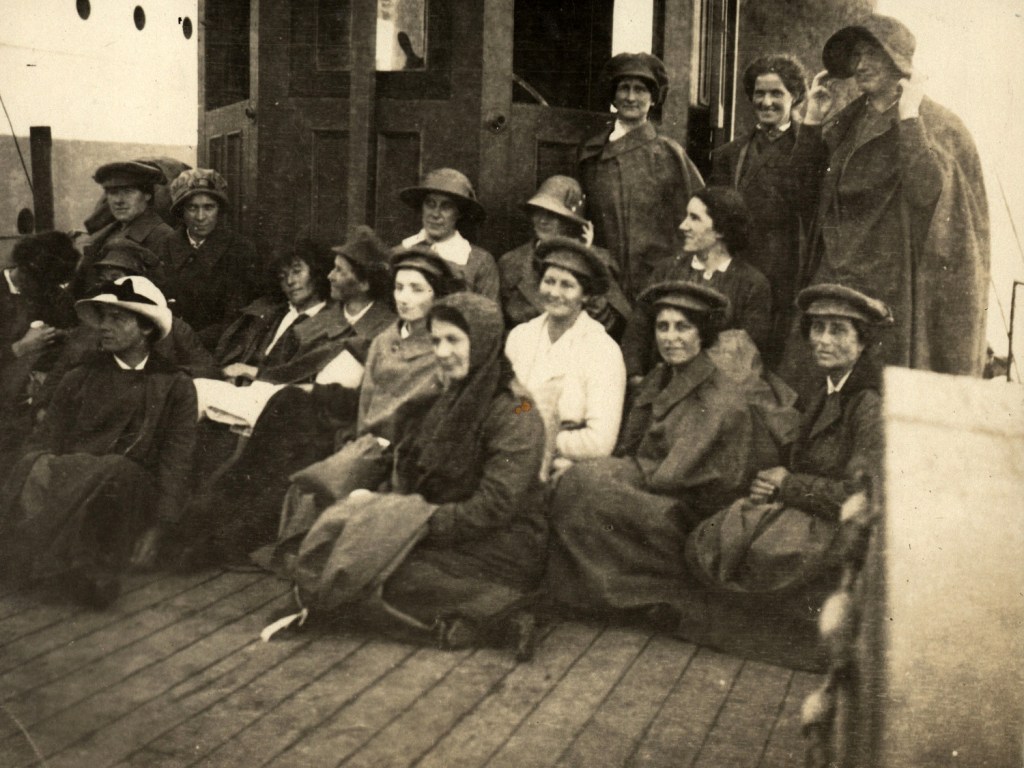
A group of Australian Army nurses about to depart from Adelaide for Salonica, 14 June 1917. From the left: Miss Molly Wilson, Mrs J. Tyers, Miss Edith Horton, Miss Marion Geddes, Miss Laura Begley, Mrs Jessie McHardie White (Principal Matron), Mrs Forsyth (wife of General Forsyth), Miss Violet Mills (Matron of No 5 Australian General Hospital who was on a visit to Adelaide), Miss Alice Prichard and Miss Florence G. Gregson.

I hadn’t quite appreciated the scale and complexity of the Australian nursing presence: four contingents were dispatched via Egypt, under constant U-boat threat, and then distributed across a shifting network of British hospitals in Greece and the surrounding hills. Each unit was allocated one Matron, ten AANS Sisters and eighty Staff Nurses. The nurses were led by senior matrons such as Jessie McHardie White, who oversaw not only clinical standards but the welfare and morale of hundreds of nurses. Staff Nurse Lucy May’s personal account helps convey the experience of Salonika in winter.

[12 October 1917] Water racing thru wards & reached halfway up bedsteads, haversacks, boots, socks, pants floating down road…
[21 October] Lanterns blowing out & leaving you in dark…
[23 October] Still don weather attire, only wearing men’s pyjama pants, putties, gum boots, man’s shirt also. Had dress tucked around waist all night…
[2 November] Imagine me [on night duty] over my ankles in mud, dragging one foot out then other foot & standing on one leg in grim peril or sitting down hastily…feeling the rain oozing through my mack. This is the life?”

As winter ended, the nurses then faced oppressive summers dominated by malaria. The AANS uniform was adapted in an attempt to counter the mosquito risk. A ‘mosquito proof’ nurse would be clad in her working dress, huge gloves, rubber boots and thick veil which, according to Lucy Tydvil Armstrong,

“made it quite impossible to carry out our duties, when men were rigoring and vomiting all night long, we just had to do away with the precautions, & run the risk of being bitten with mosquitos.”

Accession Number: H15761
A group of Australian Army Nursing Service nurses at the 52nd British General Hospital at Kalamaria, Greece ready for night duty wearing headdress provided for protection against mosquitoes. C 1918.

Despite the precautions, Matron McHardie White later reported that ‘most of the nurses were affected by it [malaria] one time or another…’ By August 1918 45 nurses had been sent back to Australia from Salonika and another 14 were waiting to go, mostly on grounds of ill health. The death of Sister Gertrude Evelyn Munro in 1918 underlines the very real cost of the AANS service.
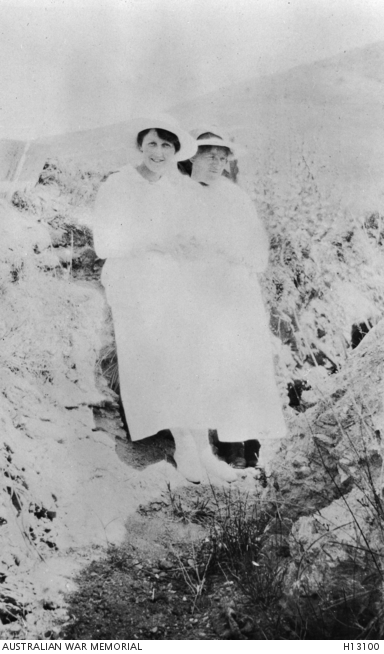
Accession Number: H13100
Sisters Gertrude Evelyn Munro and Amy Christie of the AANS. The photograph was probably taken at the 60th British General Hospital, Salonica.

Despite deteriorating health and official doubts about the value of their continued presence, the nurses remained in Salonika until after the war ended, not returning home until early in 1919. Their courage and professionalism were acknowledged through praise and decorations from British, Serbian and Greek authorities. Matron McHardie White, as just one example, was awarded the Serbian decoration of the Order of St Sava and was made a Member of the British Empire.

Nurses Narratives

It’s always interesting to read first-hand accounts of experience and so it was good to see that some diary and retrospective narratives written by the AANS nurses have been, and are being, transcribed. Staff Nurse Vivian A Lee Shea, for example, recalled,

We arrived in the midst of summer & the height of the Malaria & Dysentry season, & work commenced right away. We had much to learn. We were all new to each others ways & the medical Staff & personnel had only just landed as we ourselves had.

The Hospital was rather well situated at an elevation of about 2000 ft above sea level & this gave us a cooler summer, but made it impossible to live there in the winter months. During the winter months we occupied the Prisoners of War Hospital in the Base area. Here we nursed British Troops, as well as prisoners of War, the latter were representatives from practically every one of the Baltic States. Germans Bulgars, Turks, Romanians, Greeks Albanians & Serbs, in fact any one found in enemy lines.

Annie E Major-West remembered,

We remained in Salonika till February 1919, during the whole time the work was very heavy at times the hours on duty were particularly long. these conditions were occasioned by the prevalence of Sickness amongst the Sisters and Medical Officers.
Frequently the Bulgars & Germans were over in Planes endeavouring to bomb
the Town but the Vicinity of the Hospital was never damaged, during the Month
of August 1917 the town was partially destroyed by fire, Supposed to have
been the work of Spies.


The Sinking of the Marquette, 1915

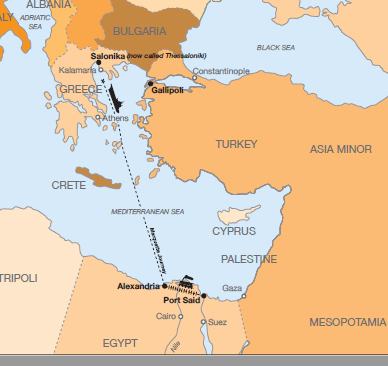
A little over 110 years ago, on Saturday 23 October 1915, the British transport ship Marquette was torpedoed by the German submarine U-35 as it entered the Gulf of Salonika. The ship sank within ten minutes. Of the 741 people on board, 167 died, including 32 New Zealanders – ten of whom were nurses.

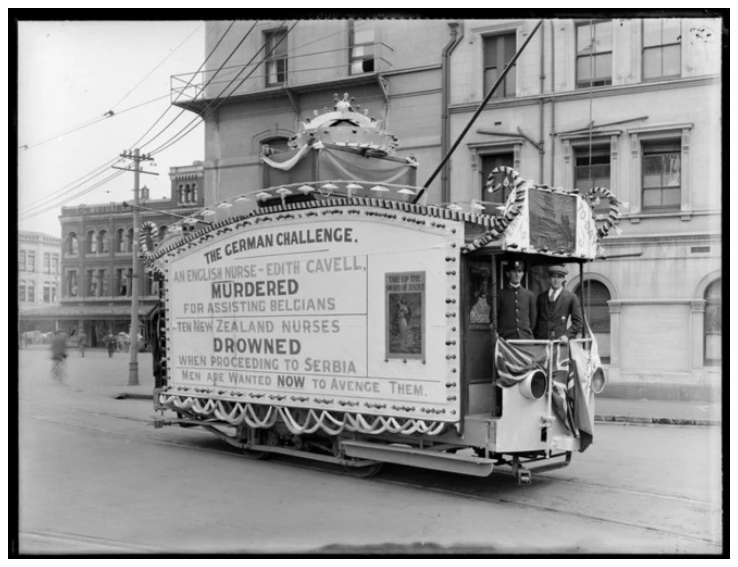
Tram decorated with World War 1 propaganda, including unidentified tram conductor and passenger, Temperance and General Life Assurance Society building in background, Cathedral Square, Christchurch
A call to arms in response to deaths of nurses. Image source: https://natlib.govt.nz/records/29941985

The New Zealand Nurses

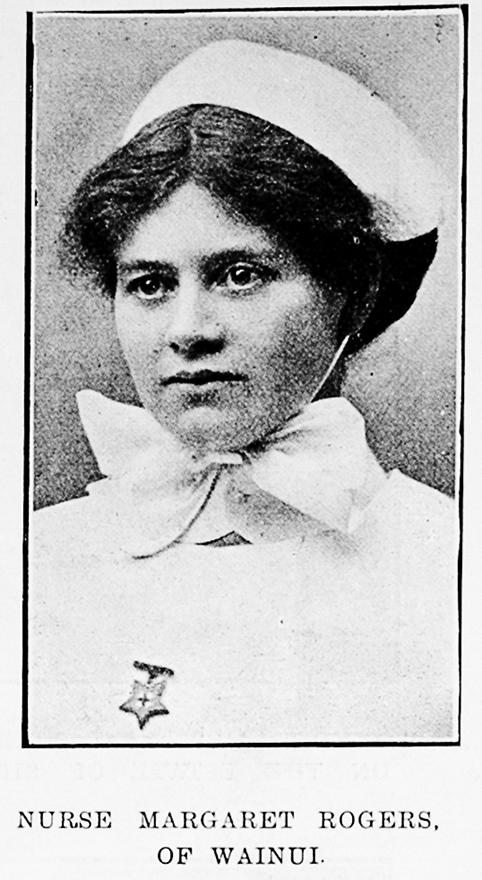
Most of the New Zealanders aboard were members of the 1st New Zealand Stationary Hospital. They had been serving in Egypt, treating casualties from Gallipoli, and were being transferred to support Allied operations in the Balkans. Among them was Staff Nurse Margaret Rogers, who had enlisted only months earlier in July. Indeed, The New Zealand Army Nursing Service was itself new and only established early in 1915.

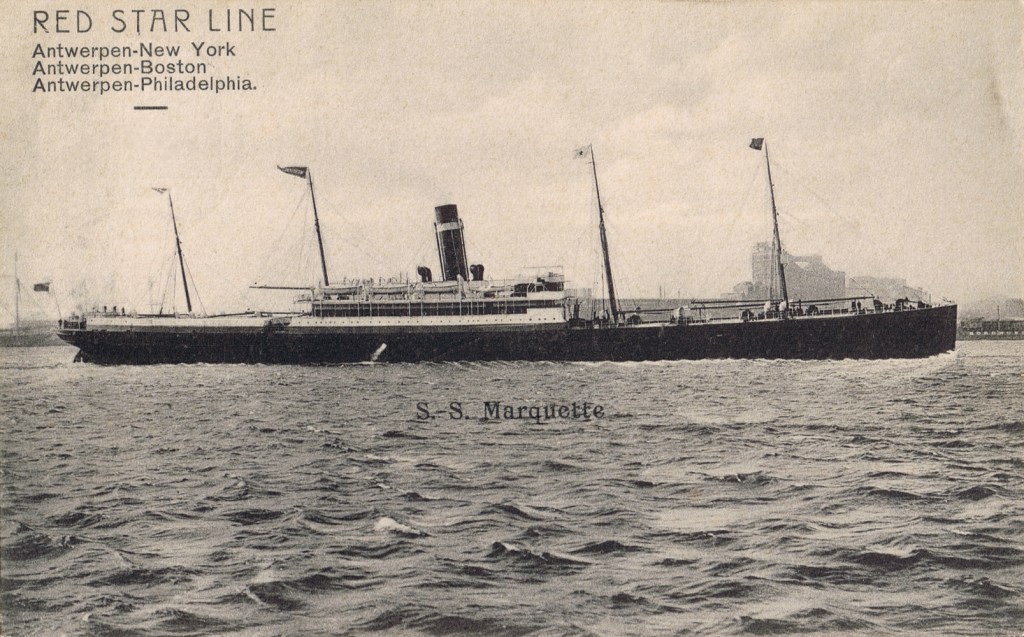
The Marquette, originally a cargo vessel, had been adapted for wartime transport.

SS Marquette of the Red Star Shipping Line, 1910
Image source: https://ww100.govt.nz/no-ordinary-transport-the-sinking-of-the-marquette

When it departed from Alexandria on 19 October, it carried medical personnel, British troops, over 500 mules, and ammunition. Although accompanied by a French destroyer during part of the journey, the escort departed the day before the attack.

At approximately 9:15 a.m., witnesses reported sighting a torpedo shortly before it struck the starboard side of the ship. The impact caused the vessel to list sharply. Despite the suddenness of the event, many accounts describe those on board as remaining orderly.

Efforts to launch lifeboats were largely unsuccessful. Inexperienced personnel, the angle of the sinking ship, and mechanical difficulties led to lifeboats capsizing or being damaged. Several nurses and soldiers were killed during these attempts. It is believed that Margaret Rogers lost her life in this phase of the evacuation.

Ten New Zealand nurses and 22 men from the New Zealand Medical Corps and No. 1 Stationary Hospital died.

Survivors spent several hours in the water, exposed to cold conditions and exhaustion. Some clung to wreckage; others assisted colleagues unable to swim. Rescue vessels, including British and French destroyers, arrived later in the day. Six days later,on the 29th October, all surviving nurses and some medical officers returned to Alexandria on the hospital ship, the Grantully Castle.

Aftermath

The sinking of the Marquette led to outrage about the decision to transport medical personnel on a vessel carrying ammunition and troops rather than on a hospital ship. Marked with a red cross, hospital ships could sail with a much greater degree of safety with the protection of the Geneva Convention. The troopship was, for German submarines, a valid target.

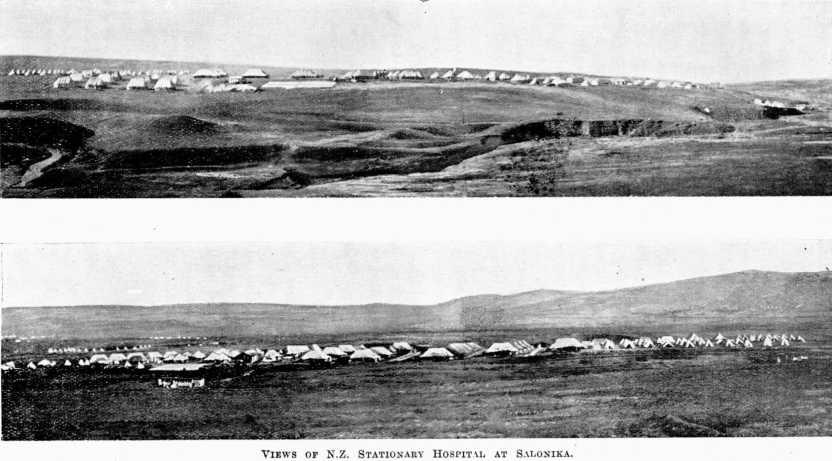
One can only imagine the emotions of the survivors as they undertook the journey to Salonika again later in the year in order to establish a tented hospital at Lembet Camp. The hospital was in operation until March 1916, when it left for France.

1st New Zealand Stationary Hospital at Salonika
Image source: https://nzhistory.govt.nz/media/photo/1st-new-zealand-stationary-hospital

In Memory

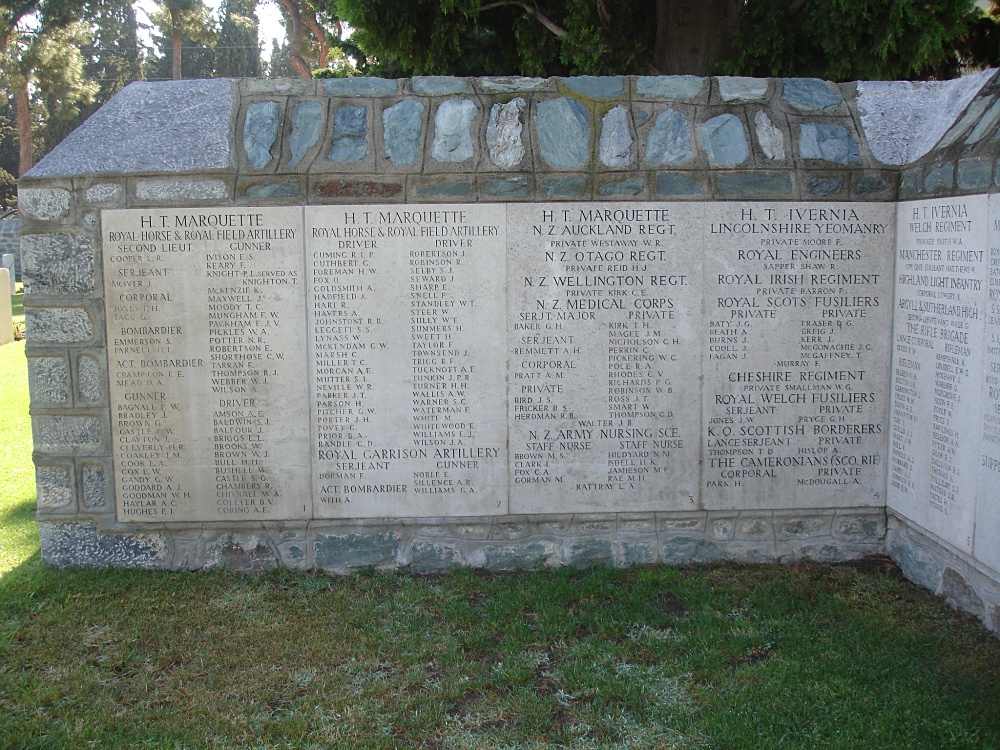
Margaret Rogers is buried at the Mikra British Cemetery at Kalamaria where there is a memorial to the loss of the Marquette.

Image source: https://www.ww1cemeteries.com/gre-mikra-memorial.html

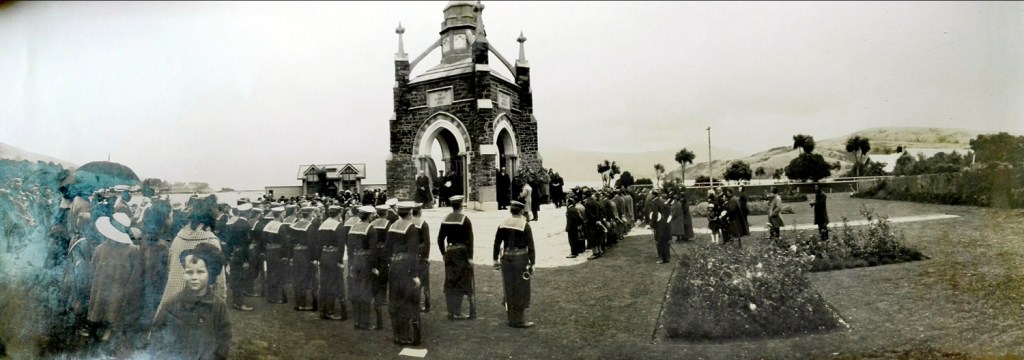
Margaret is also listed on the war memorial at Akaroa where her father lived.

The unveiling of the Akaroa War Memorial, 1923
Image source: https://nzhistory.govt.nz/memorial/akaroa-war-memorial

Margaret and the other nine nurses lost in the Marquette sinking are remembered at the Nurses’ Memorial Chapel at Christchurch Hospital and at the Marquette Nurses’ Memorial at Waimate.

The events of 23 October 1915 are also dramatised in the Australian TV series, ANZAC Girls, which until December 31st, 2025 is freely available to view here.

The moment the Marquette is torpedoed, as depicted in ANZAC Girls.
Image Source: Episode 3, https://player.stv.tv/summary/all3-anzac

Footnote

Wreckage of the Marquette was found in May 2009 by a Greek dive team. It rests in 87 metres of water of the Thermaikos Gulf in the North Aegean Sea. A protection order for the wreck has been sought by The British Embassy in Greece.


Reference Links


Screening in London: ‘By Far Kaymakchalan’ – A Documentary by Bojan Pajic

Those in London, or able to visit, on Saturday 18 October are warmly invited to attend the screening of By Far Kaymakchalan, a newly completed documentary by Australian writer and historian Bojan Pajic. The one-hour film will be shown from 3:00 to 5:00 pm in Room KIN 204, King’s College London, King’s Building, Strand Campus, WC2R 2LS.

Bojan Pajic is the author of two books examining the experiences of Australians and New Zealanders who served with Serbian forces during the First World War. By Far Kaymakchalan builds on his previous work and combines archival material, personal testimonies, and historical analysis to illuminate the shared history of these Allied nations. The event, hosted by Dr Stephen Morgan, Lecturer in Film Studies at King’s College London, will be followed by a discussion with Bojan Pajić.

Filmed in Australia, Serbia, Greece, and North Macedonia over a period of eighteen months, By Far Kaymakchalan is based on Pajić’s research that has revealed that more than 1,500 Australian and New Zealand volunteer doctors, nurses, ambulance drivers, soldiers, sailors, and aircrew served alongside Serbian forces during the war.

Full details of the event are available via this link.

NB For security reasons, King’s College London requires a list of attendees to be submitted 24 hours in advance. If you are thinking of attending, please don’t forget to register beforehand.

This screening offers a rare opportunity to engage with a significant and often overlooked chapter of First World War history, and to hear directly from the researcher and filmmaker who has dedicated much of his work to bringing these stories to light.


I’m very grateful to Jon Lewis, author of the excellent The Forgotten Front; the Macedonian Campaign 1915 – 1918, for bringing this to the attention of the Society – thanks Jon!


See also: https://salonikacampaignsociety.org.uk/2020/09/26/australians-and-new-zealanders/