Blog

Pte George Excell of Wotton-under-Edge

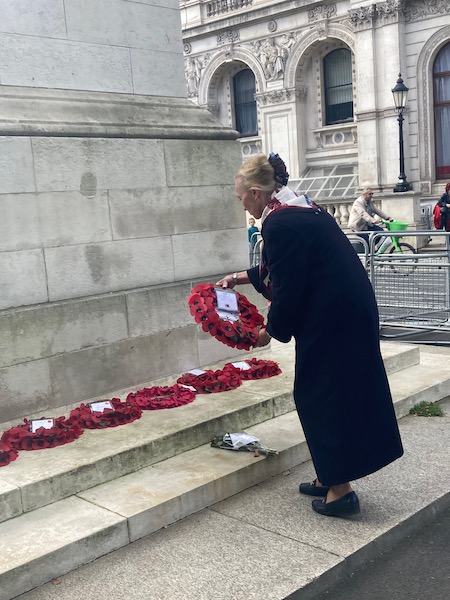
One of the things I enjoy most about living in the county of Gloucestershire is its beautiful countryside and many wonderful walks. After a recent hike involving some strenous Cotswold climbs, I stopped for refreshments and recovery in Wotton-under-Edge. Of course, I had to take in the Wotton war memorial where I later discovered a Salonika connection…

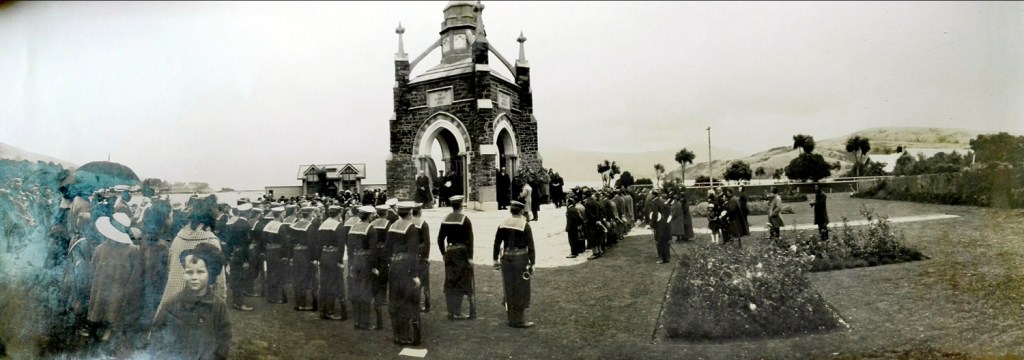
According to the town’s heritage centre, the memorial was erected in 1920 and unveiled by a Mrs Cornock. Apparently, and tragically, eight of her sons served in WWI – three did not return*. Among the names on the memorial is that of George Edward Excell.

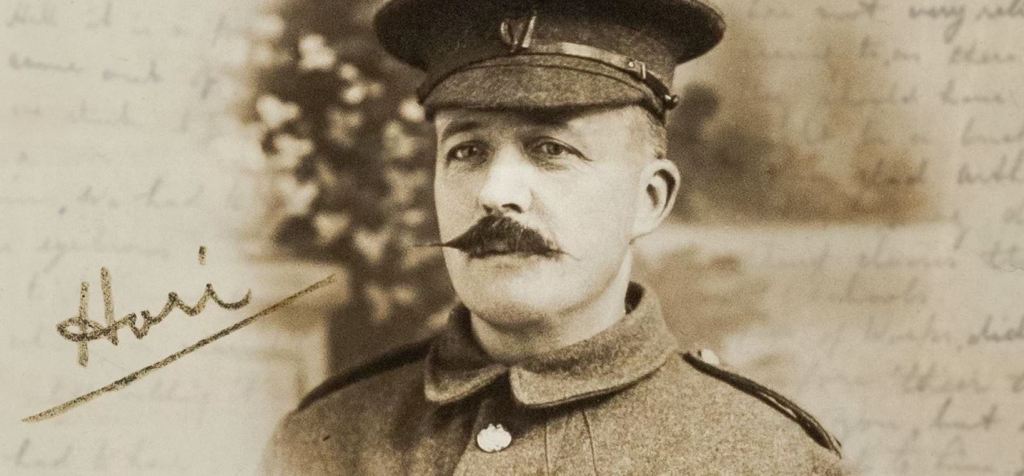
A photograph of George was published in the Gazette on 2nd November 1918.

George Edward Excell was born in 1896 in Wotton-under-Edge, one of six children of Edwin and Elizabeth Excell, who lived in the Sinwell area of the town. His father, Edwin, worked as a rural postman, while his mother, Elizabeth served as matron at the Perry & Dawes Almshouses on Church Street, Wotton. Edwin died while George was still young.

After finishing school, George began working for Mr. G. W. Palmer, a boot maker based on Long Street in Wotton. Mr. Palmer later served in the Royal Naval Division as an Able Seaman during the Great War.

At the outbreak of the war, George enlisted in Wotton, joining the 11th Battalion of the Worcestershire Regiment with the service number 18644. The battalion was formed on 14 September 1914 as part of the 78th Brigade in the 26th Division. They trained in Wiltshire, including at Sherrington and on Salisbury Plain, before landing in Boulogne on 21 September 1915. Over the next two years, George saw extensive action on the front lines and was wounded twice.

George Excell recovered from his wounds and resumed service with the Worcestershire Regiment. In September 1918, the 11th Battalion of the Worcesters, including George, was deployed to the Salonika front.

On 16th October 1918, George’s mother, Elizabeth Excell, received a telegram stating that her son was dangerously ill in a hospital in Salonika. Tragically, George had already died of pneumonia four days earlier. It wasn’t until Saturday, 19th October, that she received confirmation of his death. George Excell was 22 years old.

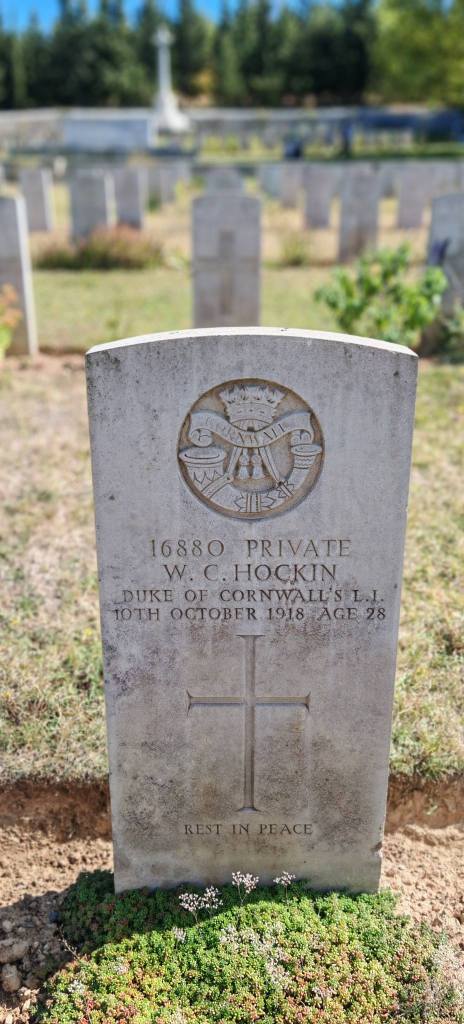
George is buried at Doiran Military Cemetery, in Plot 5, Row H, Grave 28.


Source: ‘First World War Heroes of Wotton-under-Edge’ by Bill Griffiths available online here.
*Bill Griffiths’ book also includes this picture of the Cornock family and the three sons that never returned to Wotton-under-Edge.


Another Salonika connection … ?

I don’t think I have ever written here on Gallipoli, except in passing about those troops who went on to Salonika. I mean no disrespect to those of all nations who fought and died in the Gallipoli campaign but, with no family connections to the campaign, as with so many other areas of the First World War, I have had no more than a passing interest. I will admit, too, to a little irritation that with the landings in Gallipoli coming so hard on the heels of the start of the Second Battle of Ypres, this latter battle is so often overlooked (see Tuesday’s post). However, I have now had to revise my opinion.

Continue reading “Another Salonika connection … ?”

One hundred and ten years ago …

Recently, I had the good fortune to find a reasonably priced copy of Bruce Bairnsfather’s memoir, Bullets & Billets (Grant Richards Ltd, December 1916). This covers his time as a junior officer in the Royal Warwickshire Regiment on the Western Front from November 1914. To my knowledge neither he, nor his famous creation ‘Old Bill’, had any connections with the BSF. So why do I mention him here?

Continue reading “One hundred and ten years ago …”

Now online – Nick Ilic’s lecture on Sir Thomas Lipton and Serbia during WW1

On 9th February Colonel (Retd) Nick Ilic gave an online talk about Sir Thomas Lipton (1848–1931), the Scottish businessman and philanthropist best known for founding the Lipton tea company. I wrote an introduction to the talk here.

I’ve just spotted, rather belatedly, that Nic’s talk is now available on YouTube.

‘Topical Budget’ – newsreels

Topical Budget was one of the biggest British newsreels during the silent film era, competing with Gaumont Graphic and Pathé Gazette. It was produced by William Jeapes’ Topical Film Company and first released in 1911. Although several newsreels existed at the time, only Topical, Gaumont, and Pathé remained by the middle of World War I.

Topical had fewer resources than its competitors, and it might not have survived if not for a deal with the War Office, which needed an outlet for its official war films. In 1917, the War Office Official Topical Budget was launched, giving the newsreel exclusive footage from the front lines. Later that year, the War Office Cinematograph Committee (WOCC) bought the Topical Film Company, turning the newsreel into a useful propaganda tool.

After the war, the newsreel once again became the Topical Budget under the ownership of newspaper magnate Edward Hulton. Finally, never having adopted sound, the newsreel ceased production in March 1931.

A significant portion of Topical Budget’s wartime footage is preserved at the Imperial War Museum (IWM), where, after a little searching, you can discover many fascinating films from the Salonika Front.

Object description (IWM)

British troops, mainly 22nd Division, on the Salonika Front, 1917-1918 (?).

Full description (IWM)

(Reel 1) Wounded soldiers with mule transport, snow-covered mountains filmed from an aircraft (Mount Olympus ?). A 13-pounder anti-aircraft gun showing the rangefinder in use. A British Army camp, with a bakery and soldiers washing and eating. Three soldiers in a trench fusing Mills grenades. A Royal Engineers wagon laying a line. A view from the rear gunner’s position of a two-seater aircraft taking off, flying over Salonika harbour, the nearby mountains, and a military camp. (Reel 2) Brigadier-General F S Montague-Bates (66th Brigade, 22nd Division) in a posed position. A return shot of the three soldiers fusing Mills grenades. They change to fitting magazines on Lewis machine guns and using a trench periscope. General Guillaumat inspects a British battalion. General scenes of the British Army camp. A Red Cross wagon on the move. A heavily camouflaged gun (possibly a 60-pounder) and a 6-inch howitzer. More soldiers in trenches. Major-General J Duncan, commanding 22nd Division, and Lieutenant-General H F M Wilson posed together. British soldiers at bayonet practice. (Reel 3) A Highland battalion, probably Black Watch, with its pipe band, and a single piper playing. A French general decorates British troops, who march past.

Video source, all rights acknowledged

https://www.iwm.org.uk/collections/item/object/1060022622

Two videos that might be of interest…

Awarded the first SCS Philip Barnes Bursary in 2024, Dr Jake Gasson* recently spoke on ‘The Battle Against Boredom‘ at the National Army Museum. The topic was explored in August this year in this YouTube video for Redcoat History.

And earlier in the year, Jake also explained the background to the Salonika Campaign for Redcoat History.


*Dr Jake Gasson is a National Army Museum Fellow based at King’s College London, where he is a postdoctoral researcher. He obtained a DPhil from Pembroke College, Oxford, specialising in the Macedonian front of the First World War.

Join the 2025 Tour of the British Salonika Force Battlefields

The ‘Artillery & Small Operations’ Tour – Sunday 21 to Tuesday 30 September 2025

Explore the key locations of the British Salonika Force during the 2025 battlefield tour, with a special focus on artillery and the small-scale but intense operations that defined the campaign—raids, ambushes, and offensive patrols.

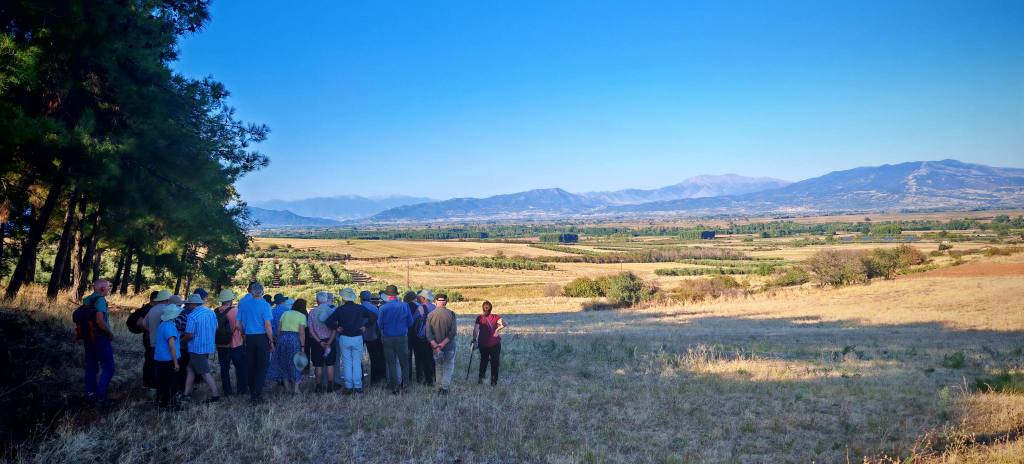
At Doiran, we’ll examine the crucial role of both British and Bulgarian artillery during the First and Second Battles of Doiran. On the Kosturino battlefield, we’ll revisit the desperate December 1915 fighting of the 10th (Irish) Division. In the Struma Valley, we’ll explore the sites of XVI Corps’ limited offensives between 1916 and 1918, as well as the defensive positions held by British forces.

Exploring sites during the 2024 tour

Our journey continues to Bowls Barrow and Smol (now Micro Dassos) in the Vardar sector, where we’ll see firsthand how operations were often designed to divert Bulgarian attention from Doiran. We’ll also visit sections of the Birdcage Line defences and the village of Mavroplagia (formerly Karamudli) in the Krusha Balkan Hills.

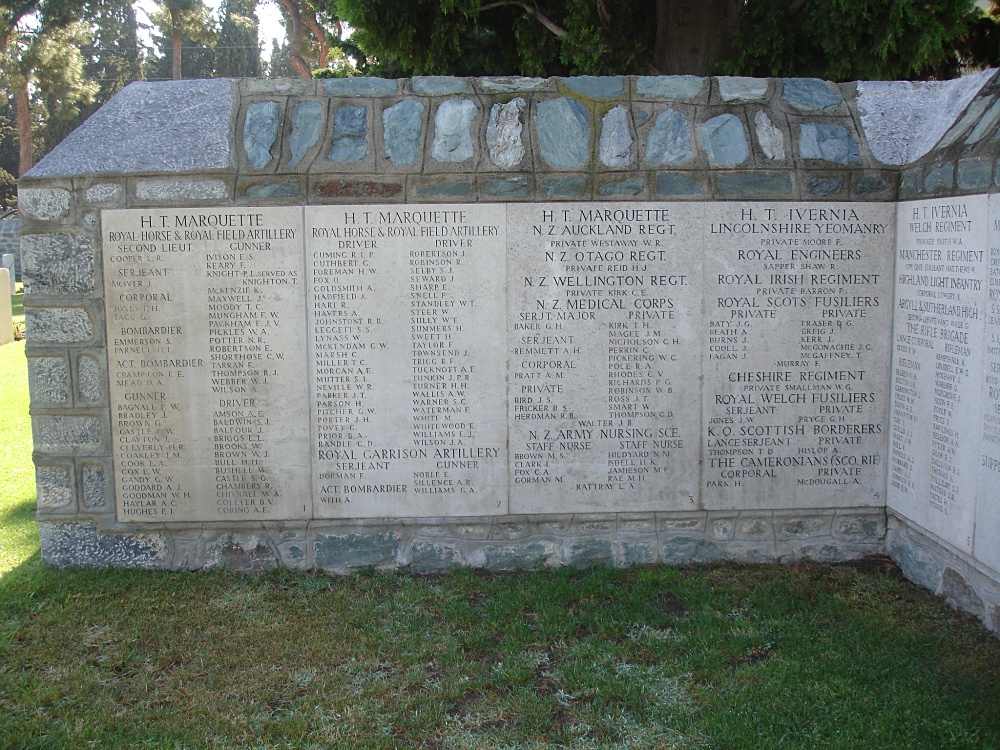
The tour will include visits to several Commonwealth War Graves Commission cemeteries, including Doiran (with the Memorial to the Missing), Karasouli, Kirechkoi-Hortakoi, Lembet Road, and Struma.

Running from Sunday 21 to Tuesday 30 September 2025, the tour is timed to coincide with the official commemorations marking the end of the Salonika Campaign, held over the last full weekend of September.

Led by SCS Chair, Alan Wakefield, this is a great opportunity to walk in the footsteps of BSF history.

To register your interest and receive further details, contact Alan Wakefield via email.


Nick Ilic lecture on Sir Thomas Lipton and Serbia during WW1

Image source: https://www.bbc.co.uk/news/uk-scotland-glasgow-west-45548495

Sir Thomas Lipton (1848–1931) was a Scottish businessman and philanthropist best known for founding the Lipton tea company, which became one of the largest tea brands in the world. He was also a noted sportsman, famously competing in the America’s Cup yacht races several times, and made significant contributions to charity and education throughout his life.

During World War I, Lipton visited Serbia to offer humanitarian aid, moved by the suffering caused by the conflict. Recognizing the dire need for medical support, he donated substantial funds and medical supplies to assist Serbian soldiers and civilians, especially during the devastating 1915 retreat. His efforts helped establish field hospitals and provided relief to those affected by both the war and the widespread disease in the region.

This remarkable, and to me at least, largely forgotten story will be told with much more skill and knowledge by Colonel (Retd) Nick Ilic in a free online talk this week. As Nick explains, “It is a fascinating story and I’ve assembled a large number of photographs to try and bring it to life.”

The talk is on 11 February at 7pm and should last about an hour. You can join via this link:


Update !

Nick’s talk is now available on YouTube

World Wetlands Day

Maybe it’s my Fenland heritage, but I have long found wetlands fascinating environments. With the Broads in the east, the Fens in the west and lots of swampy bits in between, Norfolk is an ideal place to live, although on this World Wetlands Day my thoughts go to the Struma Valley. The Struma front, where XVI Corps operated, is the aspect of the Macedonian campaign that interests me most – primarily because it’s where my grandfather, Fred, served – but I don’t often think of it in terms of being a wetland environment.

Continue reading “World Wetlands Day”