Blog

‘The New Mosquito’ #47 – on its way!

Members can expect a bumper issue of this Spring’s edition of ‘The New Mosquito’ to arrive on doormats within the next few days. Skillfully put together by former editor of this site, Robin Braysher, issue #47 has a focus on what the soldiers of the campaign wore in a climate infamous for its range of extreme conditions. If you haven’t received your copy by the end of April, do let us know and we’ll get your copy to you asap.

And, on the subject of ‘The New Mosquito’, here’s a reminder that, although Robin has stepped into the breach for this edition, we still have a vacancy for an editor. We look forward to hearing from you!


SCS Battlefield Tour 2023: September 24 – October 2

After the success of the 2022 Salonika Battlefield Tour, the SCS offers another chance to visit a number of key sites linked to the history of the British Salonika Force.

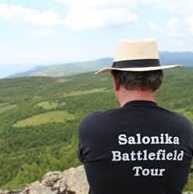
SCS tour photo - a participant surveys one of the battlefields.

If you have not visited the ground once trodden by the BSF, we encourage you to come along as there is nothing like walking the ground to help get a better understanding of the campaign and the experiences of the men and women who served in the Balkans during the First World War.

The tour, starting on Sunday 24th September and finishing on Monday 2nd October, will be led by SCS Chair and co-author of Under the Devil’s Eye, Alan Wakefield. The plan is for the tour to cover Thessaloniki, The Birdcage Line, The Struma Valley, the Doiran battlefield, the Krusha Balkan Hills and the Roche Noire Salient. The tour group will also attend official ceremonies of Remembrance connected to the Salonika Campaign and visit a number of the CWGC cemeteries.

For further information, please contact SCS Chair, Alan Wakefield by email here.


Proposed Itinerary

Sunday 24th September
Tour group meets at the airport in Thessaloniki at 11.10am
Visit to Birdcage Line defences
Overnight in Doiran
Monday 25th September
Visit to the Doiran Battlefield – Grand Couronne, The Hilt, Hill 340
Overnight in Doiran
Tuesday 26th September
Visit to Doiran Battlefield – La Tortue, Petit Couronne, Pip Ridge
Overnight in Doiran
Wednesday 27th September
Visit to the Doiran Memorial & CWGC Cemetery
A trip into the Krusha Balkan (‘Cushy Balkan’) Hills
Overnight in Kilkis
Thursday 28th September
A drive through the Krusha Balkan Hills to the Struma Valley
Visit to the village of Mavroplagia (formerly Karamudli) once sponsored by the Salonika Reunion Association.
Paleokastro Bulgarian trench network
Skotoussa (Prosenik) village – site of 4th Rifle Brigade ambush in 1918
Overnight in Serres
Friday 29th September
Visits to various locations in the Struma Valley including:
Monokklisia and Provatas (The Karajakois and Yenikoi)
BSF Outpost line river defence line positions
CWGC Struma Cemetery
CWGC Kirechkoi-Hortakoi Cemetery
Overnight in Thessaloniki
Saturday 30th September
Visit to Lembet Road Allied Military Cemetery
Visit to Monastir Road Indian Cemetery
Visit to the site of the former BSF GHQ
Overnight in Thessaloniki
Sunday 1st October
Attend ceremony of commemoration at the Allied Five Nations Memorial near Polykastro
Visit to CWGC Karasouli Cemetery
Visit to the Roche Noire Salient
Overnight in Thessaloniki
Monday 2nd October
End of tour and return home


Heavy Metal History

By SCS member Nick Palmer

Q: What does a Swedish heavy metal group have in common with the Salonika Campaign Society ?
A: A mission to increase awareness of the lesser known events in military history.

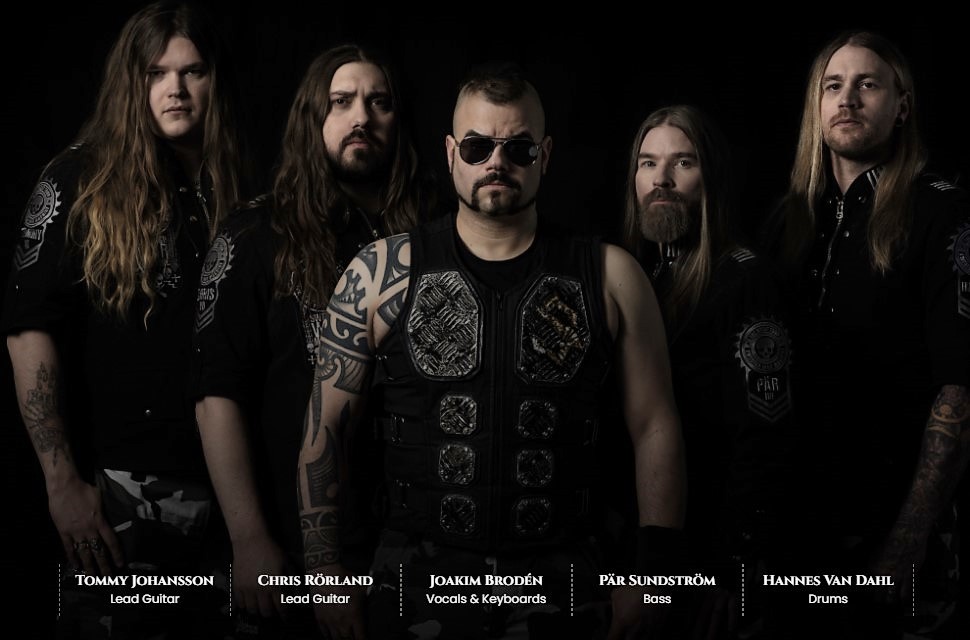
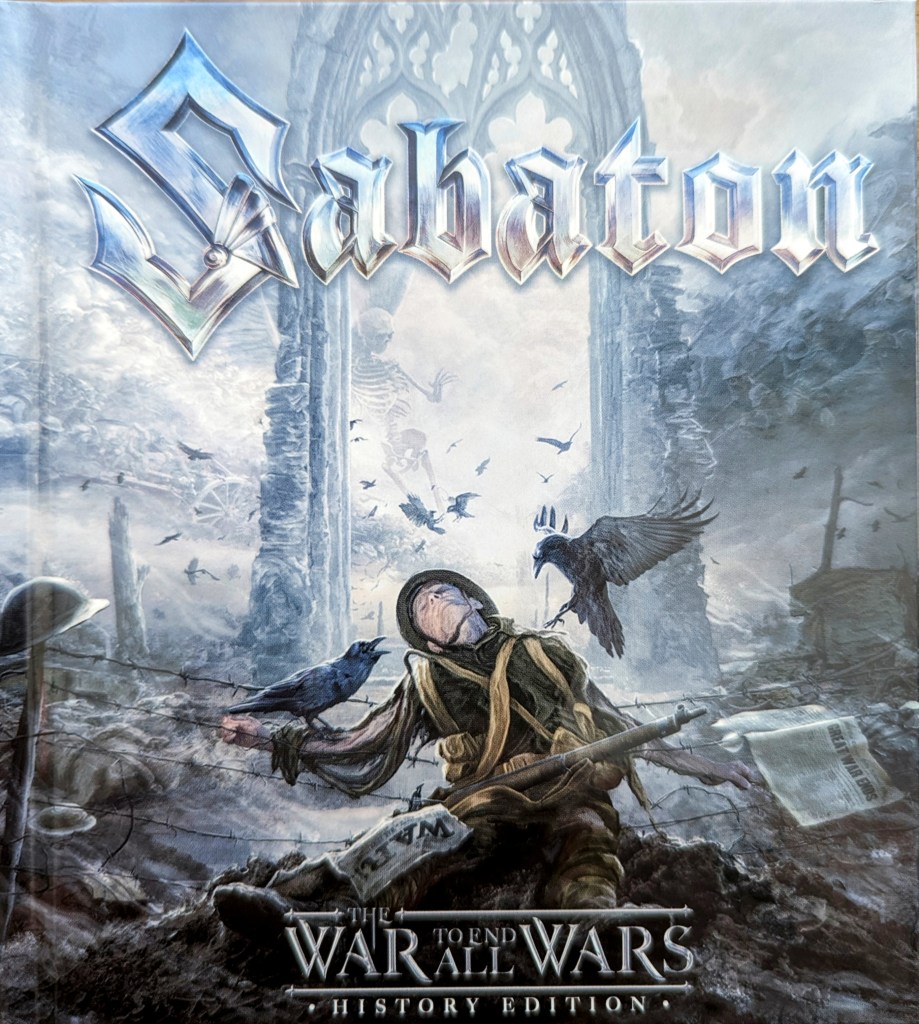
Sabaton, a five-piece heavy metal band from Sweden, has been playing its brand of very loud, fast, intense, military-style rock for nearly 20 years. They have built a sizable following of dedicated fans world-wide and have headlined rock festivals throughout Europe. They have released over a dozen albums and their most recent releases, ‘The War to End All Wars’, and ‘The Great War’, have concentrated entirely on recounting specific events and features of the world wars, on a mission to inform as well as entertain. Indeed, the band has its own YouTube channel (Sabaton History) that presents documentary-style shows using their music as the context.

I recently agreed to accompany my teenage son, a keen heavy metal fan, to an upcoming concert by Sabaton, in Cardiff. In addition to securing a good pair of ear plugs, I decided to read up on the band and subsequently ended up being thoroughly immersed in their website. Of particular interest from the SCS perspective is track no.9 on ‘The War to End All Wars’ album which is entitled ‘The Valley Of Death’. As I discovered, it is based on the Battles of Doiran and, interestingly, the story-through-song is told mainly from the perspective of the Bulgarian defenders. In particular it highlights their great skill, resourcefulness and bravery in what are considered great victories in Bulgarian military history against a stronger Allied force.

The detailed information on the Sabaton website is supplemented by a link to, and transcription of, a special edition of the Sabaton History Channel which focuses on the ‘The Valley of Death’ , and the events that it refers to. The fifteen-minute show is presented by an actor/historian called Indy Neidell who has an extensive repertoire in this field. His account seems to be well researched and he presents very enthusiastically with a number of interesting graphics and photos. Towards the end, he is joined by Sabaton’s bass guitarist, Par Sundstrom, and he explains that the song was written partly in response to the demands of their Bulgaria-based fans. Subsequently, the band performed the song live for the first time ever when they headlined the ‘Hills of Rock Festival’ in Plovdiv, Bulgaria on 23 July 2022.

YouTube clips show that the song went down a storm with the partisan crowd, unsurprisingly. The closing lines of “The Valley of Death” summarise what is regarded as a triumph of defence:

For white, green and red,
For the nation they’re fighting for,
The British are done,
Three times the defence of Doiran has been won.

In addition, the Sabaton website and the YouTube video make an appropriate reference to the poetry of Owen Rutter, “Tiadatha, which was partly based on his experiences at Doiran. The extract used is as follows:

Had you been there when the dawn broke,
Had you looked out from the trenches,
You’d have seen that Serbian hillside,
Seen the aftermath of battle,
Seen the scattered picks and shovels,
Seen the scraps of stray equipment,
Here and there a lonely rifle,
Or a Lewis gun all twisted.
Seen the little heaps of khaki,
Lying huddled on the hillside,
Huddled by the Bulgar trenches,
Very still and very silent.

Nick Palmer


Our thanks go to SCS member Nick Palmer for researching and writing this article. Thanks Nick!

References

  • Page on Sabaton web-site.
  • YouTube video: ‘The Valley of Death – The Battles of Doiran – Sabaton History 115 [Official]’
  • The blurb accompanying the video: “The Bulgarian defences in the Lake Doiran region were pretty much the best defences any country had anywhere in the Great War, which the Entente forces discovered as they tried time and again and failed time and again – to break the front. “
  • Hills of Rock Festival, Plovdiv, 23 July 2022, with introduction from the singer about the song:

A narrow squeak …

Today is my grandfather’s birthday. Were he still alive, Fred would be 133 years old! Back in 1982 I was working abroad, but took the opportunity of a short trip home to spend some time with Fred and we talked about his army service and I made notes. I am so glad I did as he died a few months later. Whilst there is so much more that I could have found out, I am pleased that I do have some first-hand accounts and it’s one of these I want to share with you today.

Continue reading “A narrow squeak …”

Another church …

… another memorial. On a recent jaunt to London I found myself in St Mary’s Church, Battersea, for a jazz gig. It’s a fine Georgian Church right by the Thames and is the burial place of Benedict Arnold, general of the American Revolutionary War who had the ‘distinction’ of serving on both sides!

Continue reading “Another church …”

Memorial Service and Talk

The ‘Ninth Annual Memorial Service for Women in Foreign Medical Missions in the Great War’ takes place on Saturday 18th February 2023.

The event takes from 11:00 -14:30 at the Serbian Orthodox Church of St Sava
89 Lancaster Rd, London W11 1QQ with speakers Colonel Nick Ilic, the former British Defence Attaché in the Embassy in Belgrade, and Zvezdana Popovic.

  • 11.00 – Memorial Service in The Serbian Orthodox Church of St Sava
  • 13.00 -14.30 – Refreshments and Talk in the Bishop Nikolaj Community Centre

The occasion will also feature a talk about the legacy of Dr Elsie Inglis, Scottish Women’s Hospitals and women in other foreign medical missions in Serbia, Corfu, Vido and the Salonika Front after the death of Dr Inglis.

If you would like to attend, RSVP via: info@serbiancouncil.org.uk

You can download the event poster below:


Featured image source: Wikipedia

A Tale of Two Hard-to-Find Salonika Titles

Many thanks to Society member Keith Roberts for the following reviews:

As a result of working on the SCS bibliography I have arguably parted with too much money purchasing books about  the campaign for myself. Some, in fact most, of the books published in the aftermath of the Great War are now both rare and expensive. Only a limited number  have been reprinted but quite a few  are available to download free of charge from  the ‘Internet Archive‘, and a few at modest cost, as Kindle ebooks, but I’m still happier with a real book in my hands. Not long ago I came upon a couple of closely related privately-published items…

1914-1919 Memoirs of the 32nd Field Ambulance, 10th Irish Division

The first item was  1914-1919 Memoirs of the 32nd Field Ambulance, 10th Irish Division by C,  (Charles), Midwinter who was a sergeant in that unit.  The booklet was published in 1933 and described his time in the unit from the outbreak of war to November 1918 by which time the unit was in Palestine. The only copies that I have been able to trace are in the libraries of The Imperial War Museum, and Leeds University. 

The content is a well-written narrative describing the unit’s experiences, from formation, via Gallipoli and Macedonia to Palestine. After the introductory pages and the unit’s experience of the Gallipoli campaign, the author describes their part in the Salonika Campaign in pages 40-56.The text names some members of the unit, and draws frequently upon the recollections of Sgt Midwinter. 32 FA, a Territorial unit, landed in Salonika on 10 October 1915 and, after a short interval, deployed behind  the positions held by part of the 10th Irish Division at  Kosturino. Subsequently they occupied a number of locations during the remainder of their time in Salonika, before moving to Egypt and Palestine in late 1917. Written by a soldier rather than a medically qualified individual the narrative has little to say about the medical part of the unit’s work, describing rather their movements, and locations.

An extract from Memoirs of the 32nd Field Ambulance, 10th Irish Division
December 1915/January 1916

The Badge of Honour

The second booklet, which I stumbled upon more recently, is The Badge of Honour edited by Godfrey A Gill, who published three other booklets on Cornish subjects. This is another  privately published work, printed in 2015. It is well presented with a small number of photographs. This book is very different, and is built entirely around a transcription of the diary kept by a Plymouth man,  Private Tom Wherly describing his personal experience  of service in 32nd. Field Ambulance. 

The style is quite different, being a record of his diary entries (with some gaps), from his enlistment  until 11 September 1918.  It records some of his experience at various locations, the weather,  his ailments and his food, the things that he thought his family might like to know about as it is made clear that he wrote these comments for the benefit of his family. They were identified in this new century by a family member and after some time this volume emerged in 2015. There are few comments about military events as a result of which the editor inserted several appendices in which he addressed the background and current events of the time. The editor is not a military historian, but his comments are generally well founded, apart from referring to the ‘Field Ambulance Corps’ rather than to the Royal Army Medical Corps.

The descriptions of Tom Wherly’s life, especially while  serving in the Salonika theatre of war  give  an interesting perspective of the thoughts and experience of a man serving in a non-combat role in a very human way, describing the aspects of his military life that he thought would give the best  description of his experience. As such it is a very human document, and enables the reader to get a sense of the daily life of one of the many members of the BSF whose service was essential, but entirely behind the front lines.

An extract from Badge of Honour
also December 1915-January 1916

The Badge of Honour is nicely printed with stiff card boards and glossy paper and a small number of photographs. There are 106 pages but the editor is responsible for a number with his explanatory appendices and notes. I have discovered that  just 18 original  copies of The Badge of Honour are still available at the original price of £7.95 plus postage.  I plan to purchase a small number for friends I will be meeting either during our next tour in September, or at the AGM October 2023. The remainder can be purchased from The Mayflower Studio, Fore Street, East Looe PL13 1AE, email at mayflower.looe@btconnect.com

Two tales of two men

Both men received the 1915 Star, in addition to the Victory and the British War Medal. Beyond his medal record almost all we know about Charles Midwinter is that he started the war as a private, and ended a sergeant.

We know quite a lot more about Samuel Thomas Pawley Wherly, because this diary was in the hands of his descendants, and some of his army records survived the 1940 bombing of Arnside Street. Like Charles Midwinter, he joined up at the beginning of the war, and his service was continuous from 28 October 1914  until 13 May 1919 when he was discharged as no longer fit for war service. His attestation form states that he has four years previous experience as a volunteer with the Devon Royal Garrison Artillery. Like many others he was issued with the (Silver) War Badge  and the few  surviving pages of his service record show that he served for four years and 198 days before his discharge in 1919, and that he was discharged with a 50% degree of disability on the grounds of Melancholia with a pension of 13s 9d weekly to be reviewed  after 52 weeks. His role in the RAMC is described as “Nursing Duty Orderly”.

Keith Roberts