Remembrance Service – Sandham Memorial Chapel

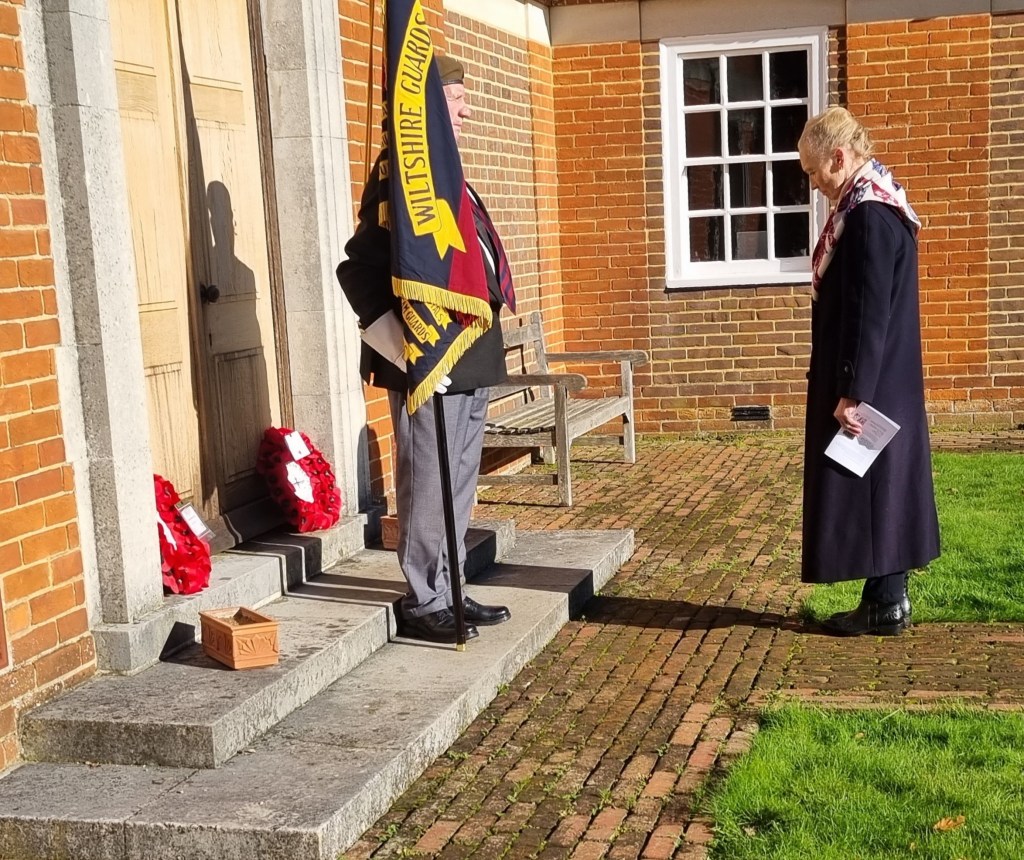
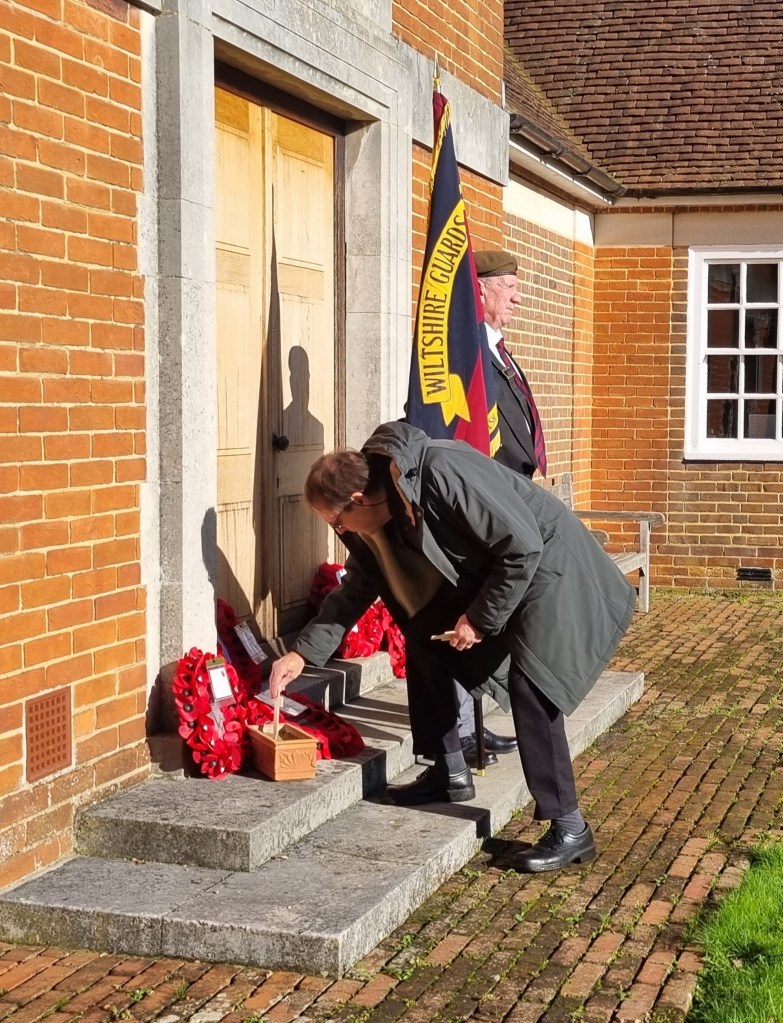
On Saturday 11th November, members of the SCS, including the Society’s Patron, The Hon. Ann Straker, SCS Chair, Alan Wakefield, Secretary, John Taylor and Treasurer, Ray Brownson, gathered with National Trust staff and volunteers and representatives from the Soldiers of Oxfordshire Museum, including Trustee, Brigadier David Innes to remember those who have died for their country in war and conflict, particularly the men and women of the British Salonika Force. Thanks to Alison Lazarus of the National Trust for organising the service, The Reverend Mark Christian for officiating and Darren Rolfe for the photographs.

SCS Patron, The Hon. Ann Straker after laying the wreath on behalf of the SCS.
SCS Secretary, John Taylor, planting crosses in remembrance of 38218 Acting Bombardier James Thornley and 38368 Bombardier John Edwards.
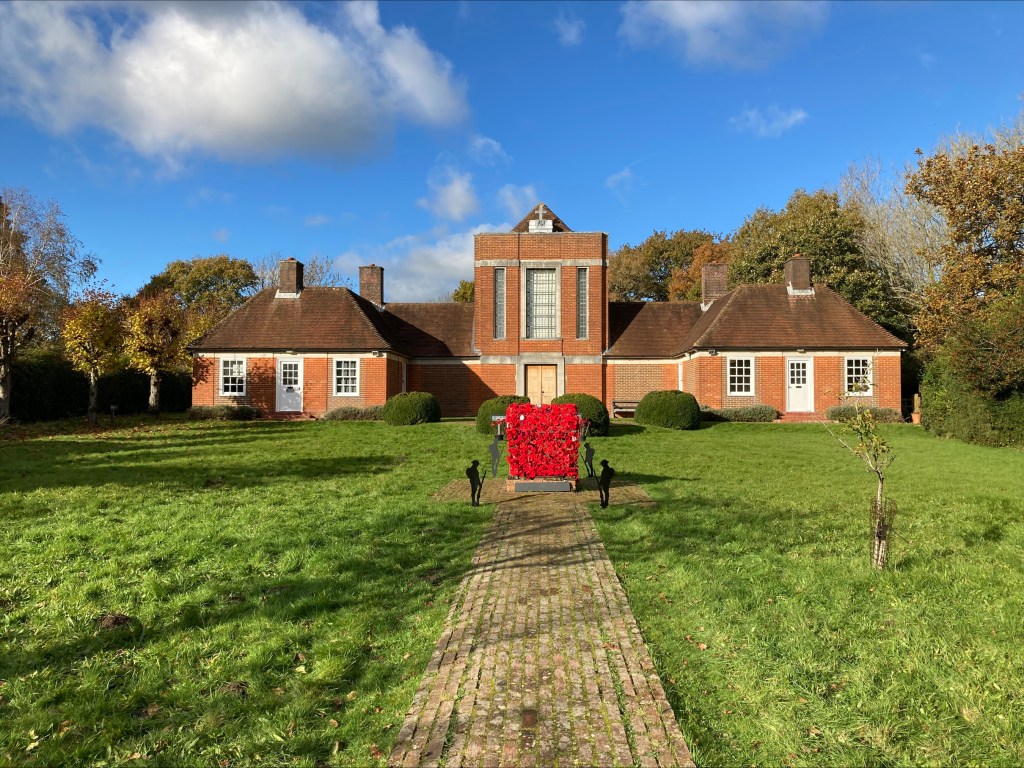
The Sandham Memorial Chapel with the well dressed and ready for the Remembrance service.

Field of Remembrance – Westminster Abbey

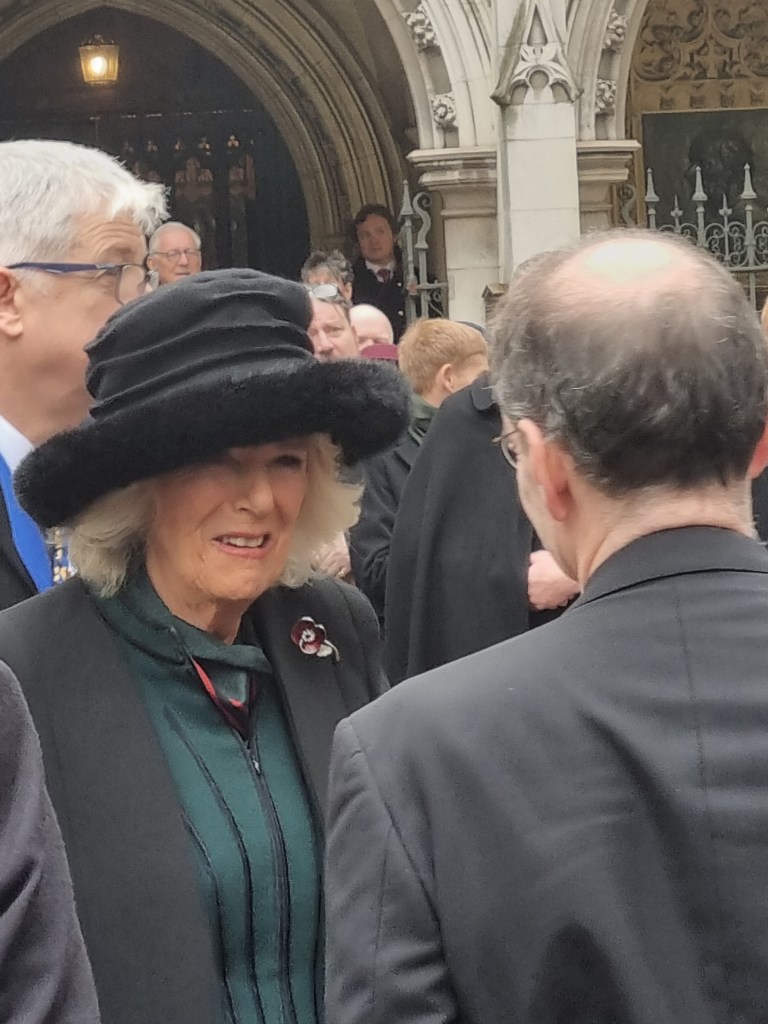
On the morning of Thursday 8 November, SCS Chair, Alan Wakefield, represented the Society at the Opening of the 95th Field of Remembrance outside Westminster Abbey. SCS members Jonathan Saunders and Darren Rolfe were also in attendance. The Field is organised by the Royal British Legion’s Poppy Factory and the SCS is very lucky to have its plot in a prime location opposite the west door of St Margaret’s Church, which stands alongside the Abbey. This year the Field was opened by Her Majesty Queen Camilla who is Patron of the Poppy Factory.

SCS Chair, Alan Wakefield, Her Majesty Queen Camilla about those who served with the BSF during the Salonika Campaign.
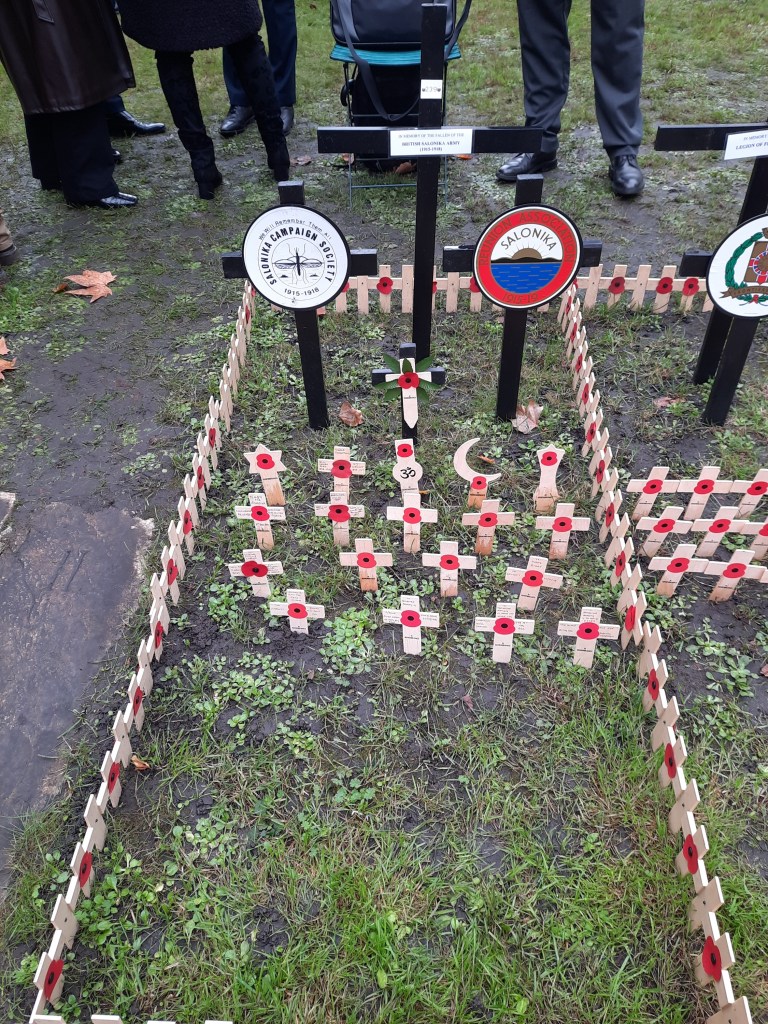
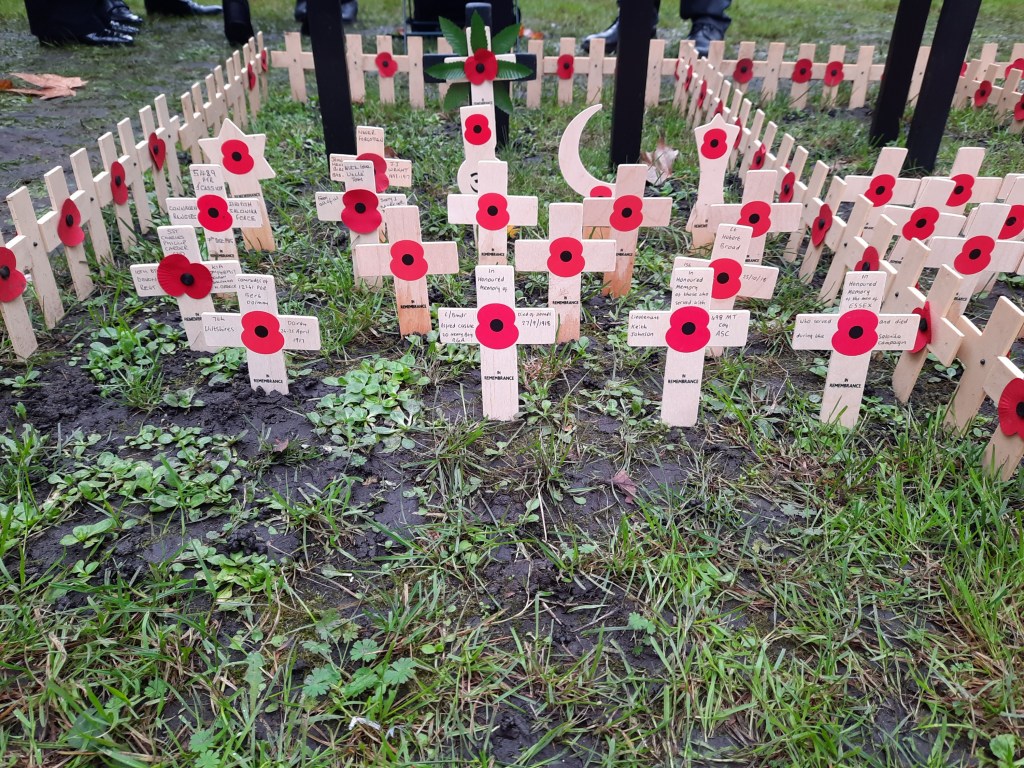
The British Salonika Army plot, a tradition started by BSF veterans of the Salonika Reunion Association and continued today by the SCS.
Crosses of Remembrance in the Salonika plot commemorating those who still lie beneath Balkan soil.

New! Version 4 of the SCS Bibliography

The Salonika Campaign Bibliography (with thanks as ever to Keith Roberts) is a valuable resource for anyone interested in the campaign or researching an aspect of it. It’s freely available for members and non-members alike.

Each year we aim to publish an update to the bibliography, as close as possible to the anniversary of the Bulgarian Armistice in late September 1918. And so, we are very pleased to announce the arrival of Version 4! You can find it here.

New Mosquito #48 is here!

Issue 48 of The New Mosquito was mailed to Society members by our printers this week. This issue features a fascinating in-depth piece about the 26th Divisional Company Theatre Company and has articles ranging from the Italian Regia Marina to the Society’s innovative ‘Trench Maps Place Names Project’. Not to be missed!


UK members should receive their copy by September 25th, overseas members a little later. If you haven’t received yours, do please let us know and we’ll get a copy to you asap. 

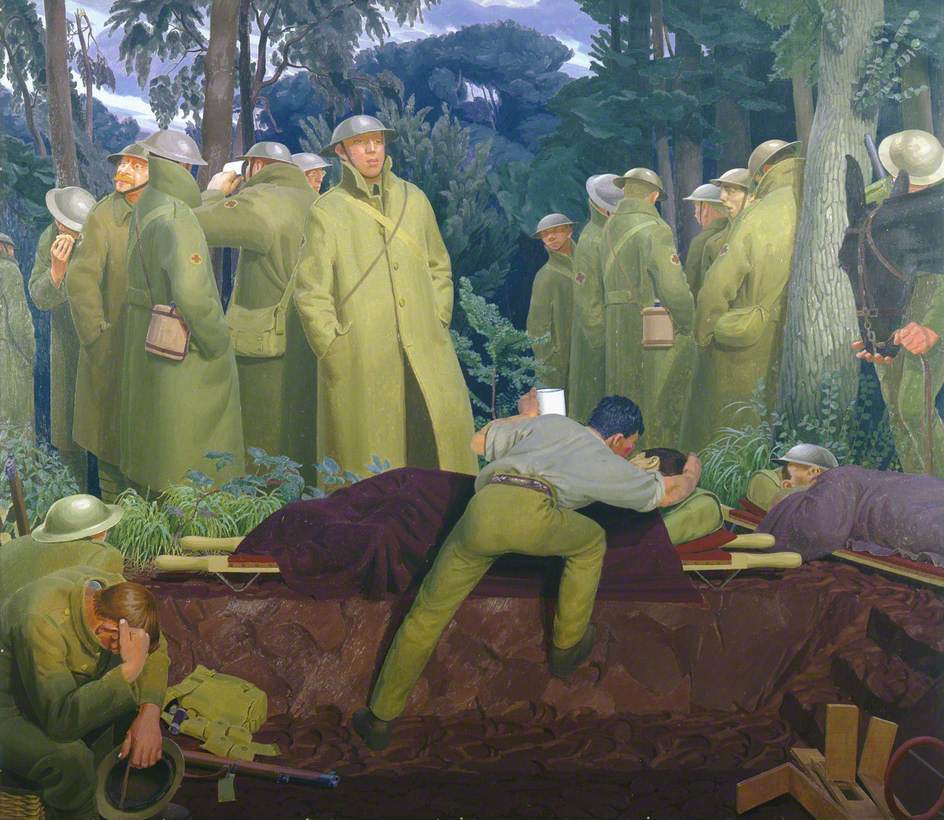
Advanced Dressing Station on the Struma 1916 (Henry Lamb)

I’m grateful to a recent correspondent with the Society for bringing to attention (to me at least!) the work of artist Henry Lamb. In 2014, the Whitworth Art Gallery in Manchester had an exhibition, The Sensory War, to mark the 100th anniversary of WW1. One of the works exhibited was by Lamb: Advanced Dressing Station on the Struma 1916

Ana Carden-Coyne, who co-curated the exhbition Visions of the Front 1916-18, for the Somme centenary also featured the painting and describes it in this way:

“The scene of a dressing station focuses on the relationship between a wounded man and a stretcher-bearer, who attends him with a cup of water, a great relief that many soldiers wrote about as the comfort given between men. Thirst and cold were understood much later in the war as signs of hemorrhage and shock. The bearer’s hand gently touches the wounded man’s head, providing comfort symbolic of the pietà (Christian iconography of Mary cradling Jesus’ corpse). Indeed, the pietà was often used in war-time humanitarian images of nurses caring for wounded men. But Lamb transforms the theme into an effigy of masculine care and the intimate brotherhood of shared suffering. Placed on the ledge of a shallow trench, the stretcher resembles an altar. In the right hand corner is a Thomas splint used for compound fractures, from which soldiers could die. Pathos is also created by the figure on the left, head in hand, perhaps affected by malaria, a common disease of this front, or perhaps a reference to psychological suffering. The central figure stands over the patient, staring pensively into the distance. Made three years after the end of the war, the composition of this painting symbolises the pain and succour of the entire conflict.”

There’s also discussion of the painting by one of the team at The Whitworth here:

Henry Lamb was born in Australia in 1883 and educated at Manchester Grammar School, before studying medicine at Manchester University Medical School and Guy’s Hospital in London. He abandoned medicine in 1906 to study painting at the Chelsea School of Art but “with the outbreak of the first world war Lamb returned to his study of medicine and served as a doctor in the Royal Army Medical Corps in France, Salonika and Palestine where he was awarded the Military Cross. He was not an official war artist but was always sketching and drawing in spare moments. These sketches with memories from his time on the Macedonian Front and the Palestine campaign formed the basis of large-scale paintings made after the war. ‘Irish Troops in the Judaen Hills’, now in the Imeperial War Museum, and ‘Advanced Dressing Station on the Struma’ for Manchester City Art Gallery are amongst the most extraordinary of his career. In 1928 he married Lady Pansy Pakenham and moved to the quiet Wiltshire village of Coombe Bissett where they would remain for the rest of their lives. Lamb was appointed an official war artist for the second world war and after first wanting to document the war cabinet decided on portraits of soldiers and studies of servicemen at work across the South of England. At the same time as his appointment as a war artist Lamb was elected as an associate of the Royal Academy and a Trustee of both the National Portrait Gallery and the Tate. He was finally awarded full membership of the Royal Academy in 1949.” Sources here and here.

The Illustrated War News

That infallible organ of facts and certainty, Wikipedia, has this to say about the ‘Illustrated War News’, At the outbreak of the war, the magazine ‘The Illustrated London News’ began to publish illustrated reports related entirely to the war and entitled it ‘The Illustrated War News’. The magazine comprised 48 pages of articles, photographs, diagrams and maps printed in landscape format. From 1916 it was issued as a 40-page publication in portrait format. It was reputed to have the largest number of artist-correspondents reporting on the progress of the war. It ceased publication in 1918. Source

There are digitised copies of ‘The Illustrated War News’ on our SCS Digital Collection DVDs. I thought it might make an interesting occasional series to draw on the magazine and take a look at how the Salonika Campaign was reported. This report from December 27, 1916, for example, shows the Royal Engineers at work, “Among the mountains on the Balkan Front…”

The text reads: Among the mountains on the Balkan Front all military bridging for anything beyond temporary makeshift work has to be done solidly. The mountain streams are liable to freshets, a sudden rising of the water, owing to heavy rainfall or sudden thaws at the higher altitudes. The flood-water then sweeps down along the river channel in spate, as a foaming and deep torrent which carries away everything that has not been stoutly and firmly fixed. A military bridge built to withstand such conditions by some of our British Royal Engineers with the Salonika Army is shown completed in the upper illustration. At the time, the river seen was flowing in its ordinary state. In the lower, driving home one of the upright supports of the roadway is seen.


The Illustrated War News December 27, 1916.

General Milne’s first few months…

On this day, May 9th 1916, Lieutenant General George Francis Milne succeeded Lieut-General Bryan Mahon to become overall Commander-in-Chief of British Troops in Macedonia. Five months later, in October 1916, Milne submitted a report (published in The London Gazette of December 6th) summarising “the operations carried out by the British Salonika Army since I assumed command.”

To begin with, Milne states, “…in order to keep the army concentrated, I entered into an agreement with General Sarrail [French general and overall commander of the Allied forces in Salonika] by which the British forces should become responsible for that portion of the allied front which covered Salonika from the east and north-east. By this arrangement a definite and independent area was allotted to the army under my command.”

It’s interesting to read primary sources such as this against a wider background of historical perspective and analysis. In, ‘Under the Devil’s Eye’ Alan Wakefield and Simon Moody provide the context for Milne’s comments, “The new British commander was soon tested by the Frenchman’s brinkmanship when Sarrail stated that he had orders from Paris to launch an offensive and was prepared to do so with or without British assistance. Milne realised that, with his forward troops in close contact with the French, the BSF would either be dragged into an attack, which was beyond his operational remit, or, by holding back, risk accusations of failing to support an ally. He skilfully sidestepped the issue by asking for a separate British zone of operation… Sarrail agreed to the proposal and at a stroke Milne had disengaged his troops from the French.”

That analysis gives another layer of understanding to Milne’s report of how, “…in accordance with the policy laid down in my instructions, and in order to release French troops for employment elsewhere, I began to take over the line south and west of Lake Doiran…” and explains how actions in the area made it possible, “to shorten considerably the allied line between Doiran Lake and the River Vardar and on 29th August, in agreement with General Sarrail, I extended my front as far as the left bank of the river so as to set free more troops for his offensive operations.”

Politics aside, the rest of Milne’s report is a readable account of the first few months of his command in which he gives credit to the sections of his command and the men – and women – involved in the British side of the campaign.

You can download and read Milne’s entire report here. ‘Under the Devil’s Eye’ is available here.


Featured image, General Sarrail, commander of Allied forces in Macedonia (16 January 1916 – 22 December 1917), with General Sir George Milne, commander of the British Salonika Force from 9 May 1916. Source, IWM

Spring Webinars from the WFA

Readers may well be interested in the following webinars* from the Western Front Association. To join, please register using the links below. Start time for all webinars is 8pm (UK time).  

1. Monday 15 MayDelayed in the Desert: The Gaza Stalemate and Beersheba Breakthrough

In this presentation, Robert Fleming will talk about how in 1917, British Prime Minister David Lloyd George ordered the Egyptian Expeditionary Force to capture Jerusalem by Christmas. This was – arguably – a diversion from the main focus of the war on the western front. He believed this would be a good ‘Christmas Present’ for the British people. However, the route to Jerusalem was across the Sinai desert and blocked by the Ottoman defences at Gaza and Beersheba. The eventual Allied victory at the Battle of Beersheba was a grave setback for the Ottoman Empire and led to the eventual defeat of the Central Powers in what was then Palestine.

To register for this webinar, click this link: Delayed in the Desert

2. Monday 22 May – Allenby’s Checkmate: Jerusalem to Victory in the Middle East, 1918

Robert Fleming will follow up from the previous week’s talk by picking up the story after the capture of Beersheba, and exploring how Allenby skilfully mustered and mastered his resources to defeat the Ottoman Army at the Battle of Megiddo and end the war in the Middle East.

To register for this webinar, click this link: Allenby’s Checkmate

3. Monday 5 June – The Road to 11 November: War and Politics in 1918

This presentation by Prof David Stevenson will reappraise the final stages of the First World War in Western Europe, analysing the factors that led Germany to seek an armistice and led the Allies and the United States to grant one. Particular attention will be given to the turn of the tide and to the sources of Allied superiority on the Western Front; and to the interaction of political and military considerations in shaping decision-making during the ceasefire negotiations of October-November 1918.

To register for this webinar, click this link: The Road to 11 November


*Webinars are also subsequently published on the WFA’s YouTube Channel.

‘The New Mosquito’ #47 – on its way!

Members can expect a bumper issue of this Spring’s edition of ‘The New Mosquito’ to arrive on doormats within the next few days. Skillfully put together by former editor of this site, Robin Braysher, issue #47 has a focus on what the soldiers of the campaign wore in a climate infamous for its range of extreme conditions. If you haven’t received your copy by the end of April, do let us know and we’ll get your copy to you asap.

And, on the subject of ‘The New Mosquito’, here’s a reminder that, although Robin has stepped into the breach for this edition, we still have a vacancy for an editor. We look forward to hearing from you!