‘Salonika Secrets’ – a new podcast

In December of last year, we posted about a podcast series that featured an interview with Society member Chris Loader who had travelled with the Society on the September 2023 SCS Battlefield Tour to visit the grave of his great-great-grandfather, Henry Albert Obadiah Loader.

Inspired by a visit to Doiran Military Cemetery during the tour, Chris has now branched out to record his own podcast series: Salonika Secrets.

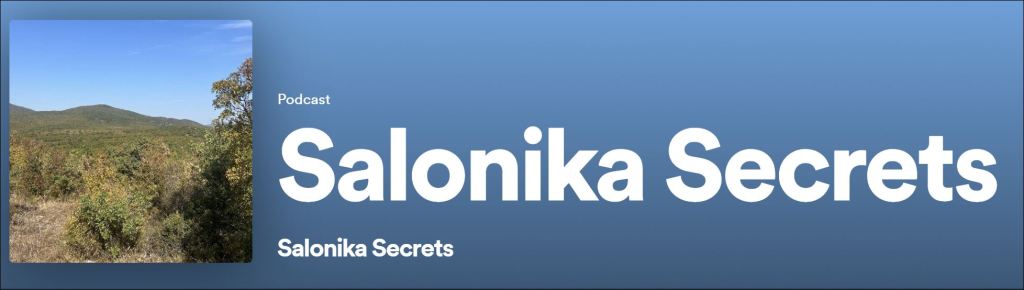
'Salonika Secrets' - a new podcast from Society member Chris Loader

‘Salonika Secrets’ – a new podcast from Society member Chris Loader

The podcast tells of Chris’s search to identify an unknown British officer commemorated at Doiran. Without giving too much away, Chris has so far managed to narrow down the identity to an officer who served in the 12th Hampshire Regiment. You can listen to the podcast free on Spotify, Amazon and Apple and, no doubt, other podcast providers. Chris also posts updates and extra information on ‘X’ (formerly Twitter) here.

Good luck with the search Chris!

‘Awards and Honours of the Macedonian Campaign’ research project – an update.

We are very grateful to SCS Member, Rob Elliott for leading this project that attempts to compile a single record of the awards and honours given to those serving in the Macedonian Campaign. Full details of the aims of the project can be found here.

Rob, with some help from Society Chairman Alan Wakefield, and Members Harry Fecitt and Andy Siddall, has made remarkable progress in compiling this database of honours. A first release was made on 12th January, containing 1067 entries with 276 citations, and Rob has just published the second update , comprising 1960 names of which 283 have full citations. The database is available on the SCS Members’ Area here.

For a full explanation of the work and progress made so far, please read Rob’s report here.

If you are able to spare some time in helping Rob, please send him a message via the form below.

Go back

Your message has been sent

Warning
Warning
Warning
Warning!

The SCS Philip Barnes Bursary

The Salonika Campaign Society is delighted to announce The Philip Barnes Bursary. This new initiative is offered to postgraduate students and postdoctoral researchers undertaking research that will contribute to knowledge of the Salonika Campaign fought across Greece, Serbia and Bulgaria between 1915 and 1918.

The successful candidate will be awarded a subsidised place on the Society’s 2024 battlefield tour. The tour of 9 days (8 nights) will run from Sunday 22 until Monday 30 September and will start and finish in Thessaloniki.

The bursary, named after Philip Barnes, SCS founder and pioneer traveller to the First World War battlefields across Macedonia, will cover accommodation, food and travel within Greece and North Macedonia for the duration of the tour. Travel to and from Greece will be at the candidate’s own expense.

Members and visitors to this site, please forward to anyone you think might be interested or who could promote the Bursary to others. Thank you.

Further details of the Bursary and how to apply are here.

Innovative mapping tool now available!

The Trench Maps Place Names Index

As a result of a remarkable piece of work researched and initiated by SCS Membership Secretary, Keith Edmonds, we are pleased to provide a new file to aid research and understanding of the Salonika Campaign.

The Trench Maps Index is a .pdf file which lists approximately 8,500 place names from the Salonika theatre, in alphabetic sequence, together with their corresponding coordinates. The names, and their respective Easting/Northing, have been determined from the collection of maps available from the Society and show:

  • Place Name
  • The map from where the location reference (Easting/Northing) was taken
  • The map scale
  • The Easting and Northing and
  • The calculated, corresponding Latitude and Longitude.

Where a location reference has been provided on the respective map, the place’s location is shown in italicised blue text in the index, as in the following example.

An entry from the Trench Maps Place Names Index.

But here’s the thing… clicking on any name shown in blue text will load Google Maps at that location as indicated by a red ‘pin’!

The location of Arthur´s Seat in Google Maps

This ability to locate campaign locations in Google Maps is a remarkable innovation made possible by the research begun by Keith leading to collaboration with Professors Clifford J Mugnier and Gábor Timár.
As a result, Professor Timár presented a paper on the subject, Georeference of the Allied Trench Maps of the WW1 Salonika Front at the 16th ICA Conference, Digital Approaches to Cartographic Heritage at the Faculty of Geography, Babeş–Bolyai University, Cluj-Napoca, Romania on 22nd-24th September 2022. The co-authors of the paper are listed as Gábor Timár, Keith Edmonds, Clifford J. Mugnier.

This new file is available to all members at the SCS Members’ Area and on all future purchases of the SCS Digital Collection DVDs.

Jimmy Crowley ‘Salonika’

In Episode 68 of Tales from the Battlefields (see previous post) the podcast starts with part of a song by Irish musician Jimmy Crowley. I was intrigued to find out more about the tune…

According to an article in The Irish Examiner the song was popular around the time of the First World War but had fallen out of use in later decades before being discovered by Crowley, “The jaunty ballad is sung from two different female perspectives — the first, a woman whose husband has enlisted in World War I, the title referring to the Greek city of Thessaloniki, which was home to a British military base. These women were known as ‘seperas’ as they were paid separation allowance by the British government when their husbands went off to fight. The other woman in the song is the wife of a ‘slacker’, the term given to men who did not join the army. The women in the song swap jibes and sprinkled through the song are references to Cork locations such as the Coliseum and characters including Dicky Glue, a well-known pawnbroker… It would have been popular as a street ballad up to the time of the Second World War. It is a tremendous song because it gives an insight into the lives of women around the time of the First World War. It kind of died out later, when ballads became uncool, because they were associated with the poor and uneducated. They would have started coming back into vogue with the rise of folk music in the 1960s.”

The song has since been recorded by ‘The Dubliners’ and even appeared on Later with Jools Holland in 2015 played by ‘Lynched’:

Lynched – Salonika – Later… with Jools Holland – BBC Two

And here is the ‘original’ Jimmy Crowley version:

‘Salonika’ – a play. Who knew?

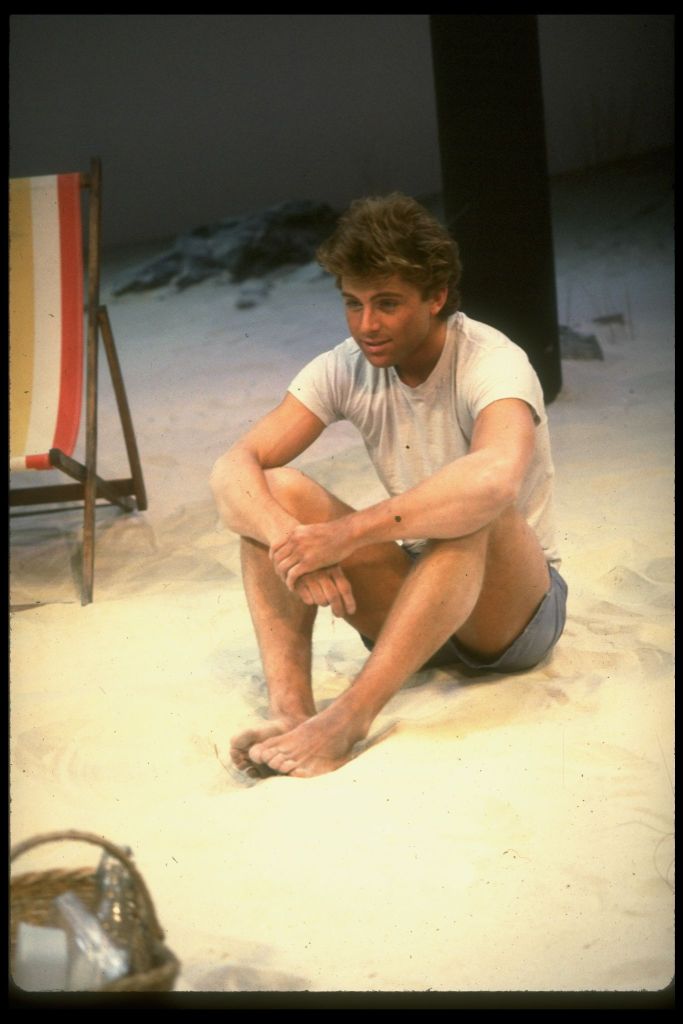
‘X’ (formerly Twitter) occasionally throws up gems of information and new, to me at least, was the fact that in 1982, the Royal Court Theatre, London staged the play Salonika. How a post by someone I do not know suddenly appeared in my news feed is a mystery of the ‘X’ algorithm…

With a little digging, I discovered that the play was written by British author Louise Page, and explores the relationship between 84 year old Charlotte and her 63 year old daughter Enid. They have travelled to Salonika to visit the grave of Charlotte’s husband, Ben, a casualty of the Salonika Campaign many years earlier.

The play won a prestigious George Devine Award and has been produced in both the UK and the USA on several times since its premier – most notably with American actress Jessica Tandy in the role of Charlotte.

Perhaps the best introduction and overview is from the Bench Theatre and its production of 1987 which also gives a description of the Salonika Campaign in its programme notes:

The “Army of the Orient” that endured a monotonous and unglamourous [sic] war in Macedonia (1915-1918) was the “forgotten” army of World War I. Entrenched in the environs of Salonika, the army stagnated, unable to move and achieved nothing.
The British War Committee wrote off the campaign as an ineffectual sideshow. The British public, reading no dramatic headlines in the press, was convinced that there was no fighting at Salonika – that it was a pleasant relaxing backwater of the war. The troops knew otherwise. The war for them consisted of weeks of inactivity, cooped up in inhospitable terrain and under the strain of constantly watching and waiting for the enemy, followed by brief and inglorious skirmishes. Their greatest enemies were sheer boredom and disease. Ten times as many British soldiers entered hospital with malaria as with wounds sustained in action. On 16 October 1917, one-fifth of the total British force – 21,434 men – were hospitalised as malarial cases.
There was no hero’s return for the veteran of Salonika. And there is no public memorial in Britain to the men who served there.

I wonder if any of our members and readers out there have seen a production of Salonika and have any thoughts on it?

The SRA at Mavroplayia

Salonika Reunion Association Centenary 1924-2024

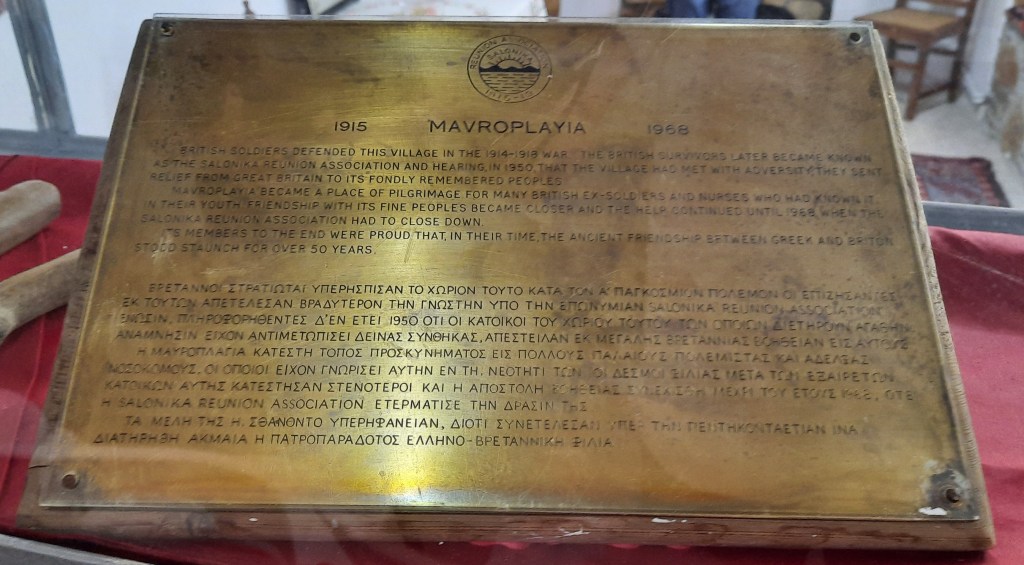
A highlight of the SCS Battlefield Tour of 2023 was a visit to the village of Mavroplayia. The village, named Karamudli back in the BSF’s day, was adopted by veterans of the Salonika Reunion Association between 1951 and 1968 under the Greek Red Cross Village Adoption Scheme. This is commemorated by a plaque now housed in the village heritage centre.

SRA Commemorative Plaque at Mavroplayia

The plaque reads:

             1915 Mavroplayia 1968
British soldiers defended this village in the 1914-1918 war. The British survivors later became known as the Salonika Reunion Association and hearing, in 1950, that the village had met with adversity they sent relief from Great Britain to its fondly remembered peoples.
Mavroplayia became a place of pilgrimage for many British ex-soldiers and nurses who had known it in their youth. Friendship with its fine peoples became closer and the help continued until 1968 when the Salonika Reunion Association had to close down.
Its members to the end were proud that, in their time, the ancient friendship between Greek and Briton stood staunch for over 50 years.

During this bond of 16 years, the SRA sent tools, sewing machines, clothing, toys and much else to the village, which had suffered greatly during the Second World War and Greek Civil War. British veterans also funded repairs to the roofs of the church and school and the supply of piped water to the village.

Soon after the tour’s arrival, a deputation from the village, including the local priest, arrived and the SCS tour party was shown the interior of the church and the old school building, the latter now the containing photographs and objects, including the SRA plaque. The group was then shown a fountain, built in 1916 by French troops, which served as the village water source prior to the arrival of the SRA’s sponsored piped water system. The afternoon concluded with drinks and much conversation and singing with the tour group contributing to the funds for running the heritage centre.

Through its visit the SCS tour had reestablished a small link between Britain and Greece, one forged by the generous spirit of British Salonika Force veterans whose aim, well fulfilled, was to do something tangible to help the Greek people following a second global conflict and bitter civil war. The SCS will maintain this link going forward and aims to return during the 2024 battlefield tour with a commemorative gift for the village in the form of a Salonika Reunion Association standard for display in the heritage centre.

New Year 2024 – looking forward and looking back…

Wishing all our members, friends, their families and loved ones all the very best for a happy and healthy 2024!

Of course, for our Scottish members and friends, this is an extra special time of year. And thoughts of Scotland reminded me that in November (last year!) The Scotsman published an article Remembrance: The Scots-style memorial on a Greek hillside in which the author during a visit to the memorial at Doiran considers that, “If there was an intense feeling of Scotland on this walled-off Greek hill as we pushed open a wrought iron gate, it was because the site was designed by Sir Robert Lorimer (1864-1929). Lorimer had also designed the Scottish National War Memorial at Edinburgh Castle (commissioned in 1919 and opened in 1927) and many more worldwide.”

Image by CWGC

It’s a well-written article that goes on to explain much of the background to the campaign – you can read it here.

Happy New Year!

Tales from the Battlefields

Tales from the Battlefields is a free podcast from battlefield guide and researcher Terry Whenham. It focuses on “the unheard stories of men who served on the Western Front during World War 1.”

However, in Episode 68 of the podcast, Terry interviews Chris Loader who travelled with the Society on the SCS Battlefield Tour in September this year. Chris describes the background to the campaign and his visit to the location where his two-times grandfather on his father’s side, Private Henry Loader of the 10th Hampshire’s, was mortally wounded in September 1918. I listened with a lot of interest to the story of Henry – and Chris’s research and visit – and I’m sure you will find it a worthwhile use of your time too. In my humble opinion of course!

You can listen to the podcast for free on Apple, Amazon Music, Spotify and directly from this page.

Lembet Road Cemetery – final resting place of Henry Loader. Image from CWGC

Dr Isobel Tate

‘X’ (formerly Twitter) is not a favourite medium of mine but it can, in some circumstances, be an informative and interesting forum. In the past year the Society has set up an account and we have managed to both share and learn from this online community. For example, in a series of posts, @DanielJPhelan (Speaker, tour guide, & EOHO volunteer for @CWGC ) shared a thread about a discovery while on holiday in Malta. During his stay, Dan visited Pieta Military Cemetery and it was there that he found the grave of Dr Isobel Tate.


On his return home, Dan researched and shared his findings in a series of posts and images on X (Twitter). Thanks Dan for sharing your research!

“Isobel Addey Tate was born, around 1874, in Country Armagh, Northern Ireland. At a time when female doctors were rare, she studied medicine at Queens University, Belfast graduating in 1899. Continuing her studies, she qualified as a Doctor of Medicine in 1902.

After qualifying, a huge achievement, she moved to England and held a number of positions in hospitals and medical institutions. However, it seems pursuing her career in medicine was not easy…

In 1904, while working at the Burnley Workhouse, Dr Tate obtained a Diploma in Public Health from Victoria University, Manchester. It was thought at the time that Dr Tate was the only lady in the kingdom who had ever secured that honour.

In 1915, with the Great War being fought, Dr Tate volunteered to serve with the Serbian Relief Fund. The relief fund was set up and commanded by Mrs Mabel St Clair Stobart. It had seven women surgeons and doctors, which included Dr Tate.

While serving with the Serbian Relief Fund, Dr Tate contracted typhoid and returned home to convalesce. Once well again she became a radiographer at Graylingwell War Hospital, near Chichester. Feeling she ‘was not doing enough’ Dr Tate offered to go abroad again.

Isobel Tate volunteered for service with RAMC and embarked for Malta in August 1916. In Malta she treated sick and wounded servicemen, including casualties from Gallipoli and Salonika. While working at Valletta Military Hospital she became ill. Sadly, on 28th January 1917, Dr Isobel Tate succumb to her illness and died of typhoid fever.

The funeral of Dr Isobel Tate took place on Tuesday 30th January 1917. Her flag-draped coffin was carried by medical officers, flanked by two lines of wreath carrying NCOs from the RAMC. The firing party contained 40 men of the Royal Garrison Artillery. A lengthy train of medical officers, officers from other units, and local members of the medical profession followed her coffin. At the graveside assembled ‘lady doctors’, principal matron, matrons, sisters, and nurses, from all hospitals and camps on the island.

It’s incredible to think that Isobel Addey Tate lived, served, and achieved so much, in an era before women even had the vote. I think this quote from a newspaper at the time is very fitting.”

You can read the complete thread from Dan on Twitter @DanielJPhelan:

The nature of ‘social media’ does not really allow for detail and detailed discussion, so Dan’s account of Isobel Tate’s life is necessarily short. If you would like to read more about her life, and the challenges she and other women faced, there is a more in-depth examination here.