Andy's interest in the campaign comes from his grandfather, Arthur, who served in Salonika as a sapper with the Royal Engineers from 1916-1918.
Opinions expressed in these posts are personal and do not necessarily reflect the views of the Society.
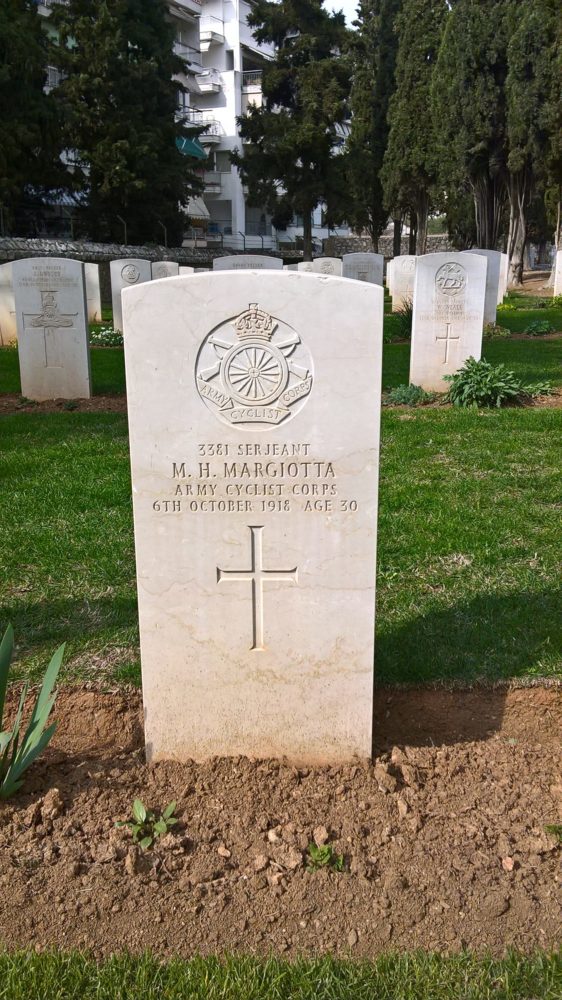
Regular contributor to these pages, Robin Braysher, first wrote about Michael Margiotta on 6th October 2018– the 100th anniversary of Michael’s death in Salonika. You can now read a much fuller account by Robin of Michael’s life and service and how he was honoured by the King of Serbia to become “A Gold Medal Cyclist” at the excellent site: Away from the Western Front.
Sgt Michael Margiotta’s grave in Lembet Road Cemetery in Thessaloniki (Photo: Robin Braysher)
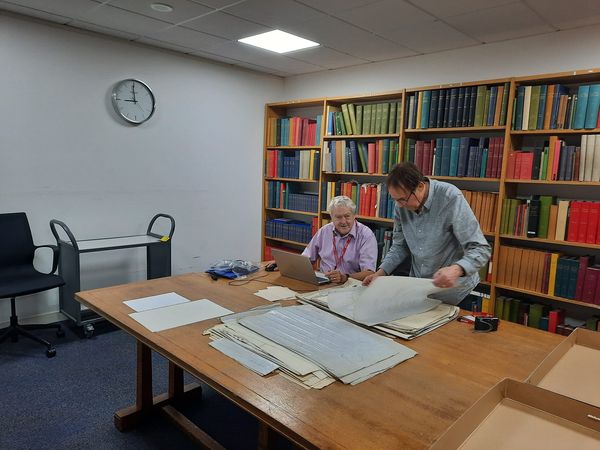
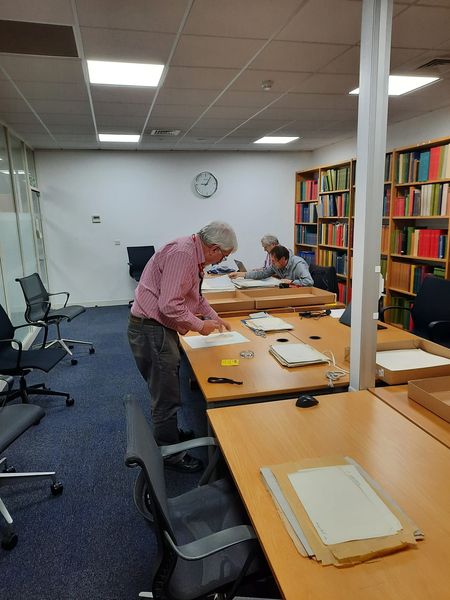
Hats off and three cheers to the valiant SCS members who have just completed their second visit to the National Archives with more maps checked, listed, and photographed. Great work!
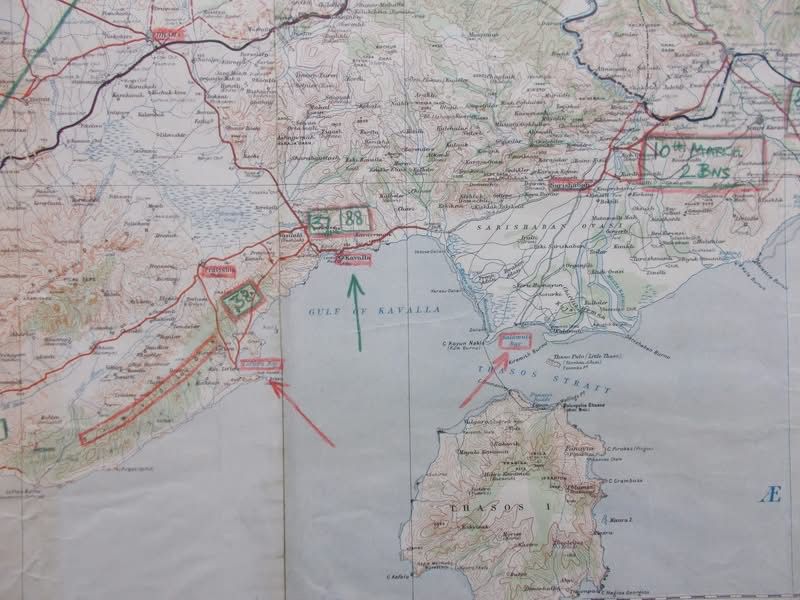
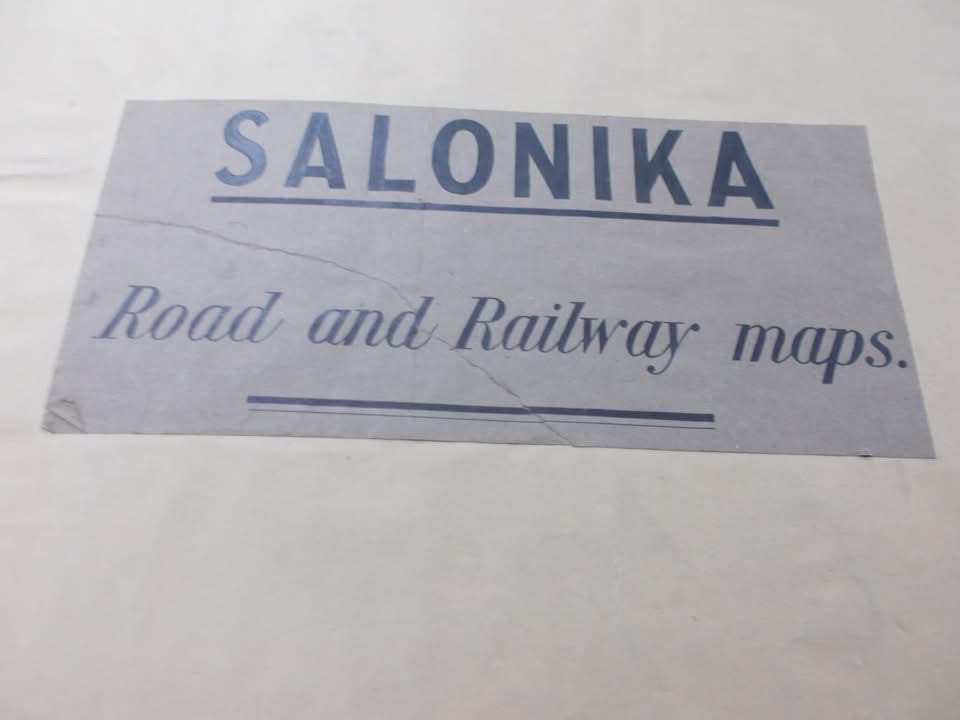
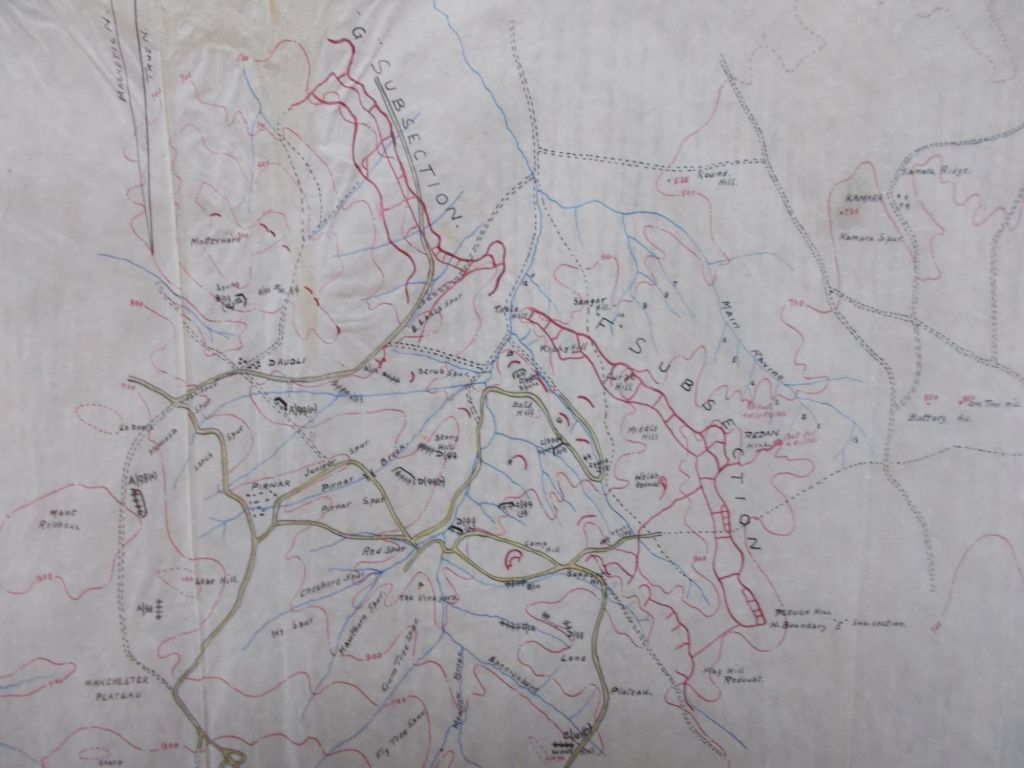
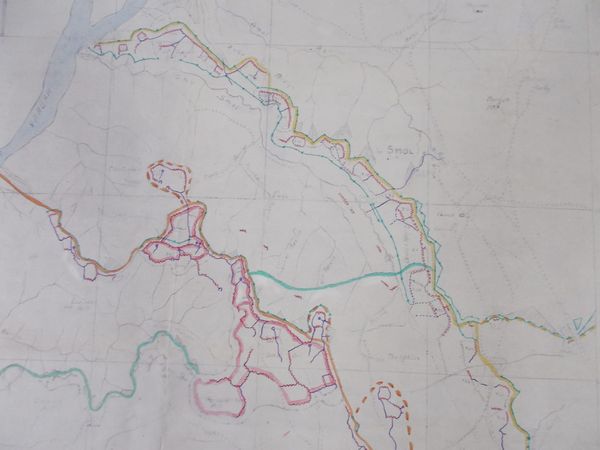
Part of map showing sites of proposed amphibious landings along the Aegean coast and Bulgarian units available to oppose such operations.Typical cover for a folder of Salonika maps under WO 153 series. The maps in this folder were too large to successfully photograph and work on these will have to be done onsite.Part of map showing British artillery battery locations on part of the Birdcage defence line
Dr Jake Gasson is a National Army Museum Fellow based at King’s College London, where he is a postdoctoral researcher. He obtained a DPhil from Pembroke College, Oxford, specialising in the Macedonian front of the First World War. He is also the first recipient of the Salonika Campaign Society’s Philip Barnes Bursary. Jake joined the Society’s 2024 battlefield visit to Greece, delivering two presentations to the tour party while there. We recently published his article on Searching for Scapegoats: The ‘unreliable Zouaves’ and the Second Battle of Doiran. Jake will also be writing a piece for the The New Mosquito in the future.
Jake Gasson, battlefield presentation on SCS tour. Image source: @JakeGasson1918 on X
In the meantime, Jake is giving a talk on ‘The Battle Against Boredom’ on 13th December 2024, 12.00pm – 1.00pm where he “seeks to understand the endurance and morale of British soldiers serving in territory that today spans northern Greece and North Macedonia. While focusing on the psychological challenges presented by boredom, he will also explore the wider campaign and the nature of this often-forgotten front.”
The free-of-charge talk is available online, and in-person at the National Army Museum, but advance booking is required. For full details, please click here.
As part of the to the Great War Group‘s series on online talks, SCS Secretary, Chris Loader recently presented Secrets of Salonika – Insights from the battlefields of Greece & North Macedonia. That talk is now freely available at YouTube.
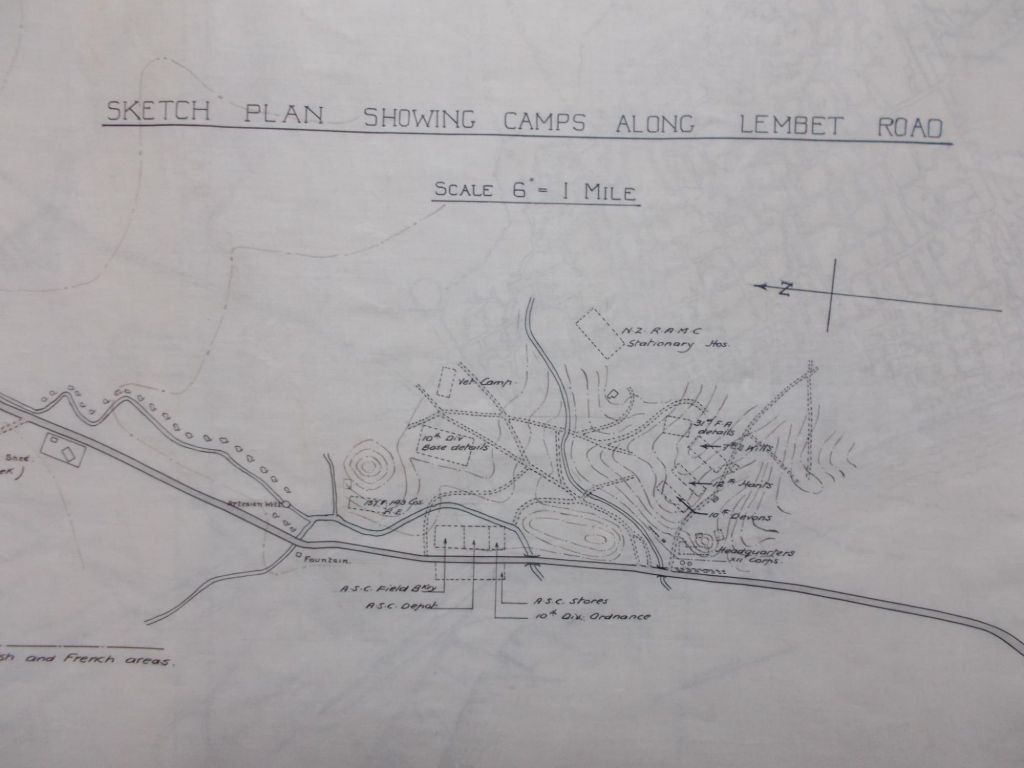
Last week a team of volunteers from the Salonika Campaign Society began a project at The National Archives to catalogue sets of Salonika Campaign maps to allow individual sheets to be identified by researchers using TNA’s online database. More detailed information on the maps will be released on the SCS website as the project progresses.
During the first session some fascinating material came to light including hand sketched panoramas of sectors of the Birdcage Line, artillery barrage maps and water supply maps for the Struma Valley.
Many thanks to Dr Will Butler, Head of Military Records at TNA, for organising a work space and access to the maps for this first scoping session.
As much as the malaria, harsh climate, and isolation of soldiering up-country, what came to define the Salonika Campaign in the eyes of British soldiers was the variety of Allied armies deployed to Macedonia. British, French, Italian, Serbian, Russian, and Greek troops (not to mention contingents from across the British and French colonial empires) all served alongside one another in the ranks of the French-led Armées Alliées en Orient (Allied Armies in the East). The sheer diversity of this multinational force made interallied friction an inevitability; from the generals and politicians responsible for directing the campaign down to the rank and file, who had to overcome differences in language, race, and culture to live and fight together – not to mention weather the effects of the high-level political disputes and battlefield defeats which marred the campaign.
The Salonika Army Christmas Card 1916 displaying soldiers of all Allied nations taking part in the campaign. From left to right standing: Montenegrin, British, Serbian, Italian, French Colonial Zouave, Indian, Greek. Kneeling: French Colonial Cochin Chinese, Russian, French, French Colonial. Image source IWM
When the British Salonika Force attacked either side of Lake Doiran on 18 and 19 September 1918, in what would become known as the Second Battle of Doiran, British troops did not go over the top alone. The Greek Serres and Cretan Divisions spearheaded the assaults of XII and XVI Corps. Both were formations of Venizelist volunteers raised by the Provisional Government of National Defence prior to Greece’s formal entry into the war the previous summer. Lieutenant General Sir Henry Fuller Maitland Wilson, the commander of XII Corps, was also assigned the French colonial troops of the 2ndBis Regiment of Zouaves. While part of the French Armée d’Afrique rather than the metropolitan French army, this designation reflected their institutional organisation rather than composition, with the ranks drawn from the white population of North Africa and supplemented by volunteers and drafts from France itself. After serving in some of the fiercest battles of 1914-15 on the Western Front, the 2ndBis Regiment had served at Salonika from the inception of the campaign, participating in the Serbian campaign in 1915, as well as the defensive and counteroffensive operations of 1916 around Florina and in the Cerna Bend.
General Bailloud, G.O.C. 156th French Division, helping Lieutenant General Sir Bryan Mahon fix a medal on a Zouave’s Coat. Lieutenant Colonel Bernard Forbes, 8th Earl of Granard is also present. Salonika, February 1916. Image source IWM
At Doiran, the Zouaves remained in Corps Reserve during the bloody repulse of the 22nd and Serres Divisions on the first day of the battle. The heavy losses suffered by the assaulting formations of XII Corps left only the 77th and 65th Brigades available to renew the assault, despite the latter having been ravaged by the Spanish Flu. One battalion of the 65th Brigade, the 9th King’s Own Royal Lancaster Regiment, was tasked with attacking Pip Ridge in conjunction with the Zouaves. In eventuality, the 9th King’s Own attacked entirely unsupported. While moving up to their assembly point in Jackson Ravine, the main column of Zouaves came under harassing artillery fire in Doljeli Ravine, which inflicted 50 casualties, including the commander of one battalion, and led the Zouaves to scatter. Because the new battalion commander refused to advance until the shelling of Jackson Ravine had ceased, few reached their assembly point, and the 2ndBis Regiment played no part in the attack. Major General Sir John Duncan, commander of the 22nd Division, attempted to halt the assault of the 9th King’s Own but his orders failed to reach the battalion in time, who proceeded to attack through the British barrage and suffered 233 casualties.
Overall, the renewed assault on 19 September ended in another bloody failure. In all, the losses sustained by the British units of XII Corps totalled 349 officers and 5,891 other ranks. Although their efforts around Doiran tied down Bulgarian troops, enabling Allied forces elsewhere to land the knockout blow, British soldiers searched for scapegoats for their defeat. Some blamed the Greeks, but others serving in units under XII Corps severely criticised the Zouaves for failing to attack. In his report to XII Corps after the attack, Major-General Duncan noted that their failure to advance had left the left flank of the 77th Brigade dangerously exposed. As a result, the 12th Battalion Argyll and Sutherland Highlanders, who had captured the position known as the Tongue, suffered from heavy machine gun fire as well as faced a Bulgarian counterattack from this direction.
Attributing blame to the Zouaves became an increasingly entrenched view in the interwar years. Cyril Falls, the British Official Historian, considered that their failure to reach their assembly positions had ‘made the task of the British troops impossible.’ In his anonymous memoir Fusilier Bluff: The Experiences of an unprofessional soldier in the Near East, 1918 to 1919, Colwyn Edward Vulliamy. labelled the Zouaves ‘unreliable’, a charge repeated when his account of the Second Battle of Doiran was republished by Sir John Alexander Hammerton in his series The Great War: ‘I Was There!’ under the title ‘I Saw the Futile Massacre at Doiran: A Plan that was Doomed to Failure’.
Almost fifty years after the Second Battle of Doiran, the culpability of the Zouaves resurfaced in the pages of The Mosquito. In 1968, Number 161 of the journal witnessed a fierce defence of the Zouaves sparked by a reprint in the previous edition of Vulliamy’s article from The Great War: ‘I Was There!’. A Colonel H.F. Heywood, who had served at XII Corps Headquarters during the battle, wrote furiously to the editor, enraged by “the slurs cast anonymously by ‘Unprofessional Soldier’ on a regiment of Zouaves”, as well as his criticisms of British officers and Milne specifically. He considered the charge of unreliability groundless given their heavy losses, having suffered severely from Bulgarian artillery fire:
“The floor of the ravine was so thickly carpeted with their corpses that two regiments which late had to cross the ravine reported that they had to walk on the bodies in order to get across.“
Heywood also invoked the example of one Zouave whose body he had come across after visiting the Devil’s Eye atop the Grand Couronné:
“His throat was slit from ear to ear. Had he refused to ‘talk’? Does ‘Unprofessional Soldier’ think him unreliable?”
Colonel H.F. Heywood’s letter rebutting the claim of ‘unreliable Zouaves’ – The Mosquito, Number 161, 1968
Ultimately, the British and their allies had emerged victorious in Macedonia. But such an exchange in The Mosquito reveals the persistent and deep-seated tensions evident in the conduct of coalition warfare. That alliances during the First World War extended far beyond the remit of political and military leaders is often undeservedly overlooked. On the ground, officers and soldiers had to grapple with the formidable task of turning strategic and operational decisions into battlefield success, the aftershocks of which persisted long after the guns had fallen silent.
*Dr Jake Gasson is a National Army Museum Fellow based at King’s College London, where he is a postdoctoral researcher. He obtained a DPhil from Pembroke College, Oxford, specialising in the Macedonian front of the First World War. Jake is the first recipient of the Salonika Campaign Society’s Philip Barnes Bursary.
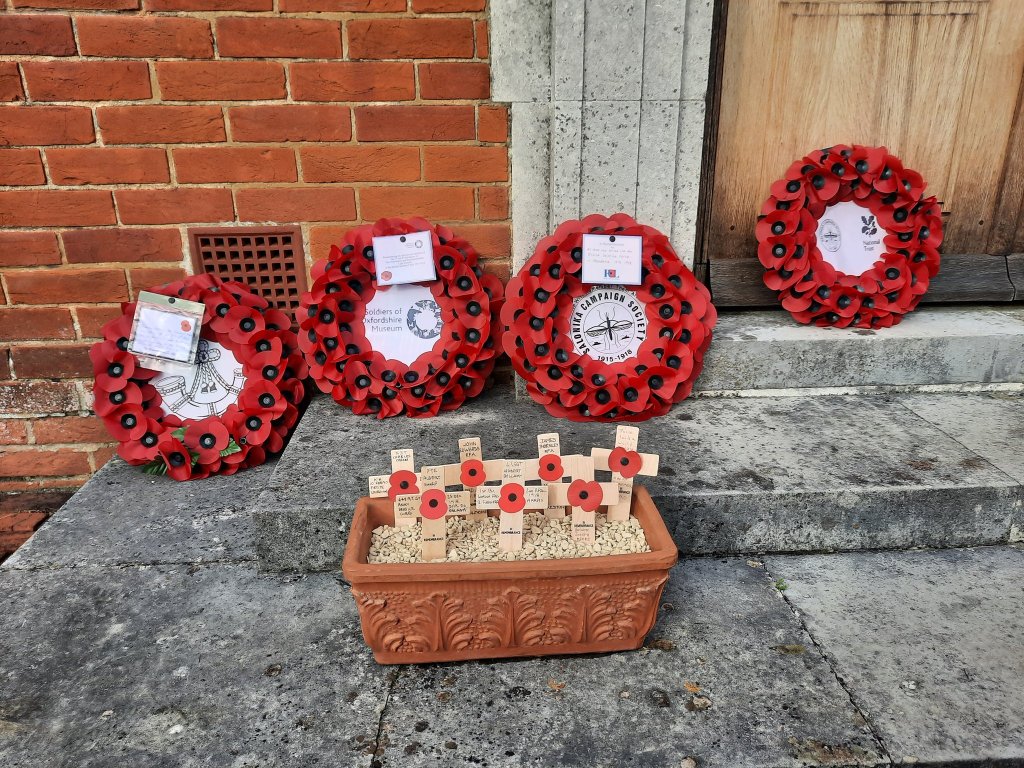
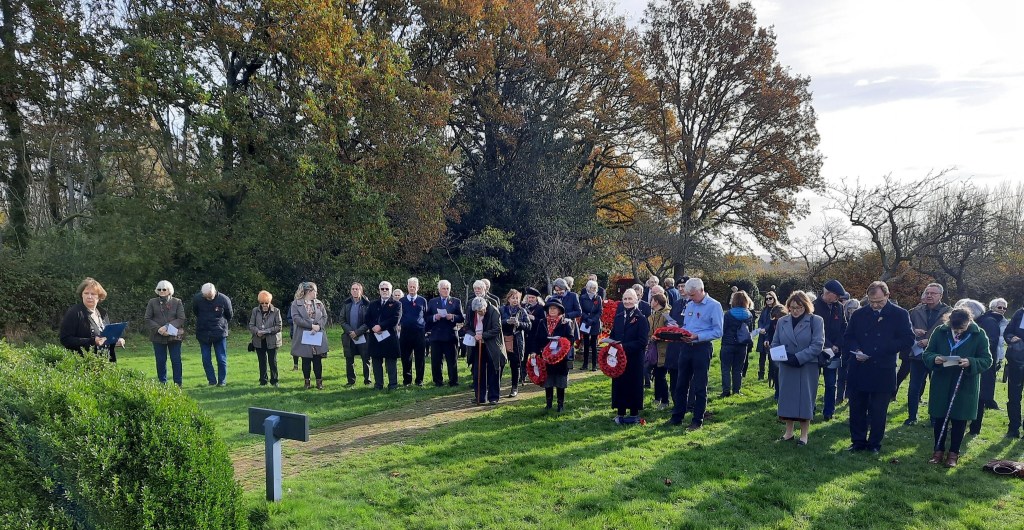
Yesterday saw a joint National Trust, Salonika Campaign Society service of Remembrance at Sandham Memorial Chapel. Our thanks go to the National Trust team at Sandham for organising the event, the Rev Mark Christian for officiating and to those members of the Society attending the service.
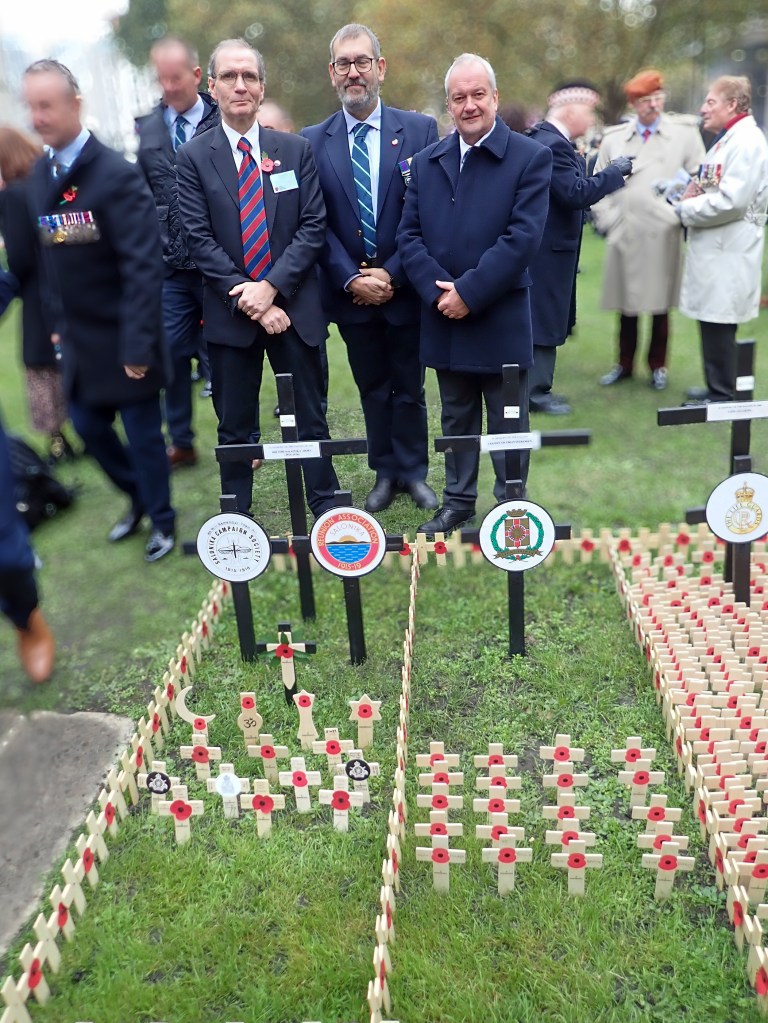
Thursday 7 November saw the opening of the Royal British Legion’s 96th Field of Remembrance outside Westminster Abbey. The British Salonika Army (1915-1918) plot was in its usual position, opposite St Margaret’s Church, alongside the plot for The Old Contemptibles and not far from where a senior member of the Royal Family marks the opening of the Field by planting a cross. The Salonika plot is sponsored by the Society, which maintains the tradition established by veterans of the Salonika Reunion Association and carried forward in the interim by Philip Barnes, a former Patron of the SCS.
The British Salonika Army (1915-1918) plot
This year, the Field was opened by The Duchess of Gloucester, as the Queen was unavailable due to illness. The SCS was represented by Chair, Alan Wakefield, with members Darren Rolfe and Jonathan Saunders also attending. The Duchess of Gloucester took time to speak to the representative of each plot, with Alan Wakefield outlining the work of the SCS in keeping alive the memory of all those who served with the British Salonika Force in Macedonia during the First World War.
SCS Chair, Alan Wakefield, talks ‘Salonika’ to The Duchess of Gloucester
Thanks go to those members who either laid crosses of remembrance or forwarded details of commemorations to the Chair so these could be planted in the Salonika plot. We hope as many members as possible will avail themselves of the opportunity to visit the Field of Remembrance, which remains open until the evening of Sunday 17 November. The Field is always an impressive sight and an important part of Britain’s national act of Remembrance. That the SCS plays a role in this is a privilege and a mark that the Society continues with one of its founding principles, namely the remembering of all those who served with the BSF in Macedonia during the First World War, and particularly those who still lie in the soil of the Balkans.
SCS Chair, Alan Wakefield, with SCS members Darren Rolfe and Jonathan Saunders at the Salonika plot
Here’s a date for your diary: Thursday 14th November at 8:00pm, when the Society’s very own Secretary, Chris Loader, will be giving an online talk revealing, ‘Secrets of Salonika – Insights from the battlefields of Greece & North Macedonia.’
Hosted by the Great War Group, the talk is free to attend and with no need to register – simply visithttps://t.co/BI41SvR2Zz at 8:00pm on Thursday 14th November.
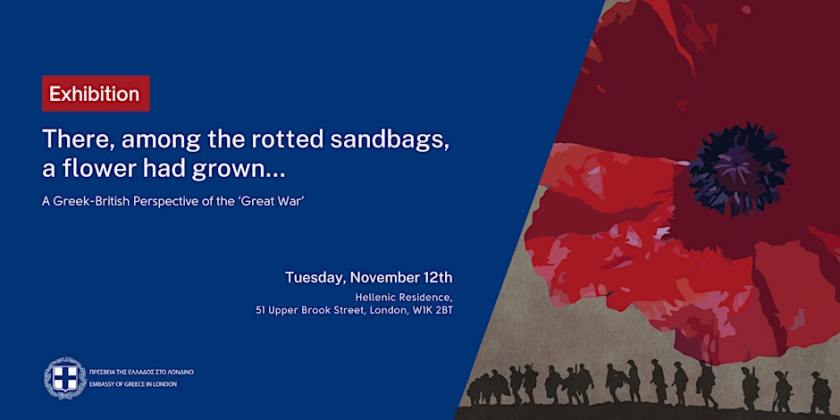
To mark Remembrance Day, the Embassy of Greece in London is hosting a special (free) exhibition on November 12th at the Hellenic Residence, 51 Upper Brook Street, London .
“There, among the rotted sandbags, a flower had grown…” is an exhibition to remember those who served in Greece during WWI. It is also a tribute to the enduring friendship and long-standing alliance between Greece and the UK.
Theexhibition will present a compelling narrative of the shared histories and sacrifice between Greek, British and Commonwealth personnel in WWI Greece. The exhibition takes its title from a line in “Life in the Tomb” by Stratis Myrivilis -a landmark war novel, and by far the most famous work written in Greece on the First World War.
Visitors will have the opportunity to explore an array of artifacts and objects, some never seen before in the UK such as parts from the wreckage of Zeppelin LZ.85 which was shot down over Thessaloniki by the British battleship HMS Agamemnon on 5 May 1916.
Other artefacts on display include:
Personal items and military paraphernalia from British troops stationed in Greece during WWI shedding light into everyday life and daily routines at the war front, but also speaking of the resilience and spirit of those who served.
Photographs and Maps: Visual documentation that captures the landscapes and faces of the era.
Medals and Decorations: Honours awarded to servicemen who fought at the Macedonian Front during WWI.
Visiting hours and Additional Information
The exhibition will be open to the public with free admission on November 12th from 12pm.-3pm. and from 5pm.-8pm., with guided tours available to provide further context and insight into the displayed items. Slots are bookable on the hour. Last entry is at 7.30 p.m. Click here for details and tickets.








 Salonika Campaign Society, 1915-1918