Andy's interest in the campaign comes from his grandfather, Arthur, who served in Salonika as a sapper with the Royal Engineers from 1916-1918.
Opinions expressed in these posts are personal and do not necessarily reflect the views of the Society.
Led by Alan Wakefield, the Salonika Campaign Society is offering a chance to visit key sites associated with British efforts during the Salonika Campaign, 1915-1918.
The overall theme of the tour will be the role of the Royal Engineers with the British Salonika Force.
Locations will include the Doiran battlefield, where the BSF suffered 35% of its total battle casualties; the Struma Valley, where XVI Corps faced the threat of endemic malaria as well as their Bulgarian adversaries; and Kosturino Ridge, where 10th (Irish) Division made a stand in the Winter of 1915. Time will also be spent on the Birdcage Line, built to defend the city and port of Salonika from Bulgarian attack in 1915-1916. We will also attend commemorations to remember all those who served and died during the campaign.
Proposed itinerary
Sunday 20 September
Tour begins late morning with meeting at Thessaloniki airport
Ceremony of Remembrance at CWGC Kirechkoi-Hortakoi Military Cemetery
Overnight in Serres.
Monday 21 September
A study of a range of operations in the Struma Valley – final locations to be confirmed but to include RE river crossing methods
Visit to Strimoniko (formerly Orliak) to discuss RE role in signals and lines of communications
CWGC Struma Cemetery
Overnight in Serres.
Tuesday 22 September
Dova Tepe Fort in the Krusha Balkan Hills
Doiran Memorial and CWGC Cemetery
Visit to Akritas (formerly Vladaya) to view British positions
Overnight in Doiran.
Wednesday 23 September
Visits to La Tortue; Petit Couronne; Hill 340 – to include RE involvement in raids and major operations against Petit Couronne
Overnight in Doiran.
Thursday 24 September
Visit the 22nd Division Memorial
Visit to the ‘Devil’s Eye’ Observation Post on Grand Couronne
Visit to The Hilt – key position in Bulgarian second line.
Friday 25 September
A Day on Kosturino Ridge
Rocky Peak and Ormanli village
Memesli village
Site of Kajali village
Crete Rivet and Crete Simonet
Tatarli village
10th (Irish) Division Memorial
Overnight in Doiran.
Saturday 26 September
Visits to sites on the Vardar sector and in the Krusha Balkan Hills – to include some of the following:
Horseshoe Hill
Bowls Barrow
Machukovo (now Evzoni)
Site of Rattray’s Bridges (Krusha Balkan Hills)
Mavroplagia (formerly Karamudli) village – RE aerial cableway
Overnight in Kilkis.
Sunday 27 September
Attend Official Commemorations at the Five Nations Memorial, Polykastro
CWGC Karasouli Cemetery
Kilindir (now Kilindria) railway station – to discuss RE role in railway operating
Overnight in Kilkis.
Monday 28 September
Birdcage line – including 99th Field Coy. bridge position
Lembet Road Allied Military Cemetery
Thessaloniki Port
Overnight in Thessaloniki.
Tuesday 29 September
End of tour.
If you are interested in joining the tour please contact SCS Chair, Alan Wakefield, to get your name on the emailing list for further details: aj.wakefield@talktalk.net
This information is also available as a PDF file for easier downloading and printing:
I’m very grateful to SCS member, Rob Elliott for writing this very timely piece… Thanks Rob!
On 3 March each year, Bulgaria celebrates its national day of independence from Ottoman Rule in 1878. A local shop owned and run by a Bulgarian family held a small celebration on the day and were playing some folk music in the background. Prompted by this and a conversation about folk music and dance, I wondered if Bulgaria had produced any classical composers and to my surprise, there are quite a lot.
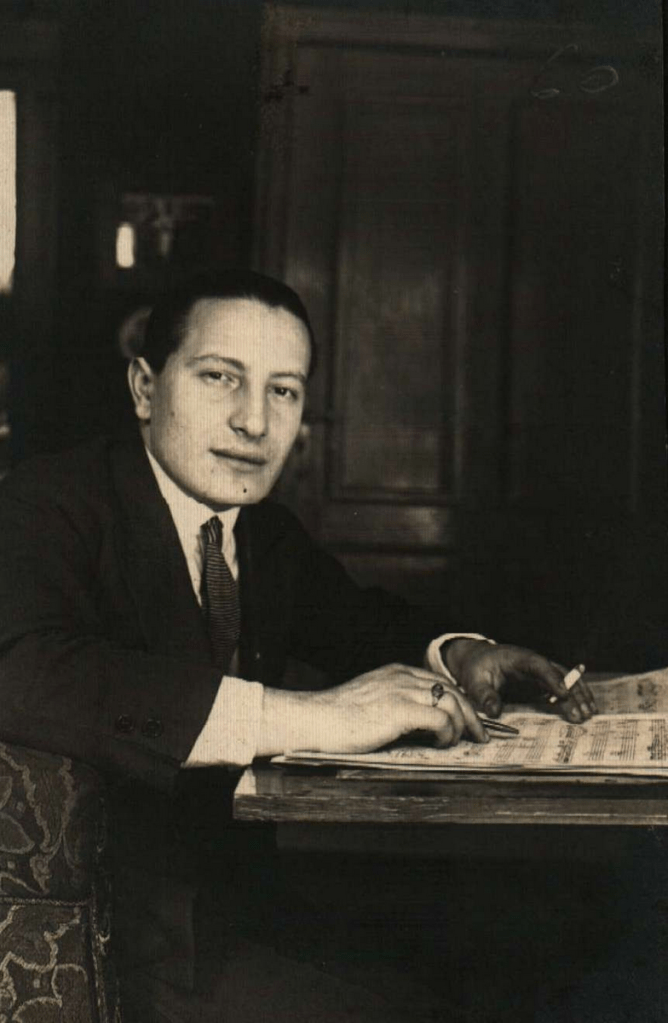
The most famous is Pancho Vladigerov (1899-1978). His mother was related to the author Boris Pasternak. Vladigerov is clearly a national treasure and his music includes Bulgarian folk idioms, one of the first composers to do so. He was admired by Dmitri Shostakovich, Richard Strauss and Aram Katchaturian but remains largely unknown outside Bulgaria.
But what is the significance of this? His most famous work is known as the Vardar Rhapsody. It was composed in 1922 for violin and piano, but it was also orchestrated shortly afterwards and exists in a few other versions. It lasts around 8 minutes and is an astonishing tour de force – well worth a listen.
Tonight (Monday 9th February) at 7pm, Nick Ilić will be giving a free online talk (as part of the Serbian Council of Great Britain Serbian Month programme of events).
Nick says on ‘X’, “The talk is about the ‘Second Serbian Campaign’ that was taking place 110 years ago during the Great War. The events culminated in what became called the ‘Serbian Golgotha’ – where rather than surrender to the advancing German, Austro-Hungarian and Bulgarian Armies, the Serbs decided to retreat over the Albanian and Montenegrin mountains to the Adriatic Coast. Thousands perished. The Serbs did not march on their own over the mountains – with them went the international military and medical missions that had deployed to Serbia in 1914 and 1915. It is a most remarkable, heroic, tragic and little known story. The events also witnessed the deployment of the French and British Salonika Armies to come to the rescue of the Serbs – but to no avail.”
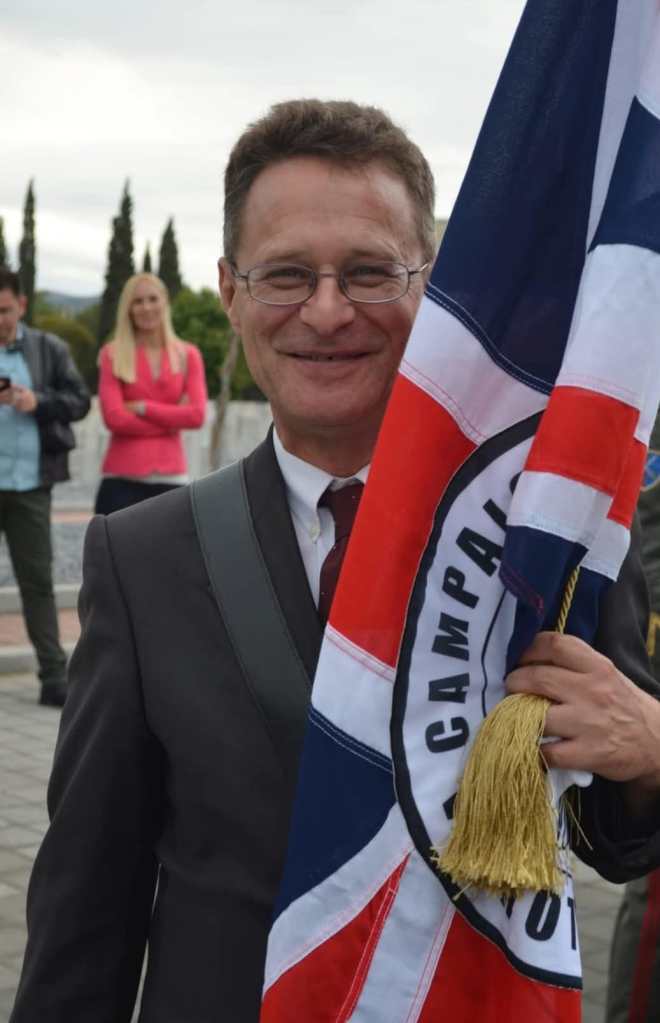
A week ago, I learnt the very sad news that friend and long-time member of the SCS, Adrian Wright, had died in Thessaloniki. Adrian will be known to many members of the Society, in particularly those who have joined one or more of our annual battlefield tours. For many years, Adrian acted as SCS standard bearer during official Remembrance ceremonies at Lembet Road Military Cemetery and the Five Nations Memorial, Polykastro. He would also often join tour parties during travels in northern Greece.
Along with Apostolos Nalmpantis and Minas Drestiliaris, Adrian has assisted the Society with location recces of new sites for the annual battlefield tours and with research into photographs and documents. Adrian’s linguistic skills opened very useful avenues of research into French, German and Greek sources relating to the Salonika Campaign. A particular memory that comes to mind is that of a day on part of the Birdcage Line with Adrian and Minas. From the sites of the vanished villages of Pirnar and Daudli, past the traces of trenches, dugouts and concrete shelters to the summit of the Matterhorn we walked. My friends sharing with me their discoveries in the landscape.
Adrian was always willing to share his wide knowledge of the campaign and wider Greek history with all those who shared his passion for the subject. I and many others have shared interesting conversations with Adrian both out in the field and over a meal or drinks. Sadly, such meetings became less frequent in recent years as Adrian’s declining health precluded him from many of our activities. Yet, whenever possible, he managed to join us in Thessaloniki to talk history. Now, it is with a sense of shock and true sadness to think that such moments and meetings will not come again.
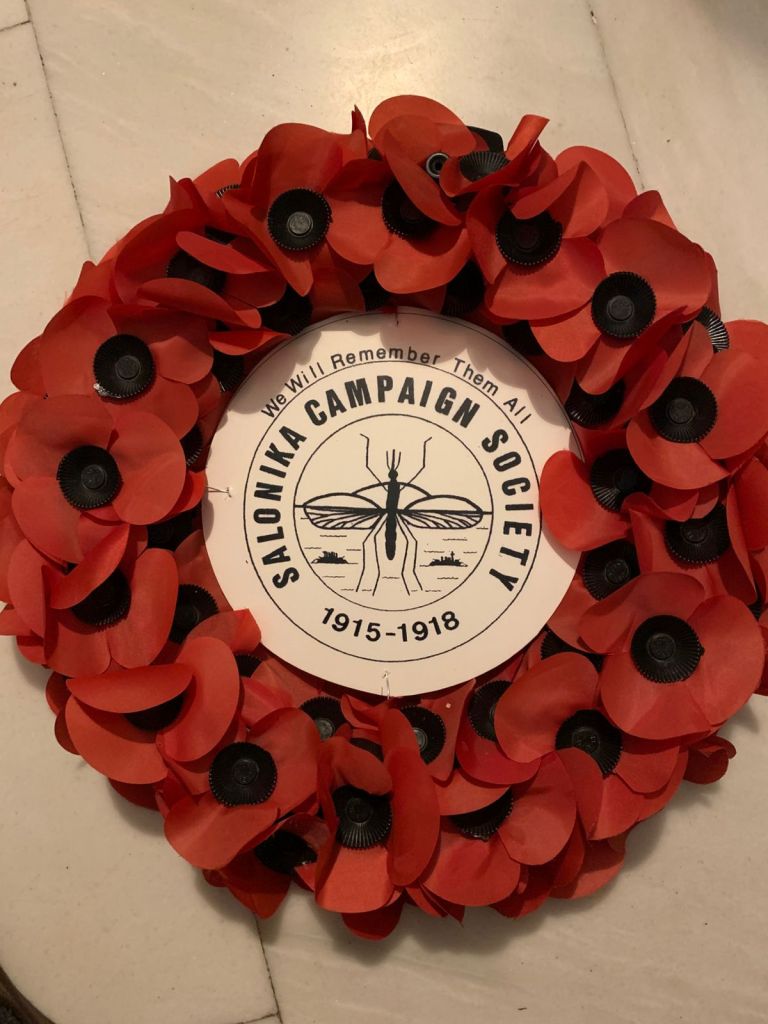
At Adrian’s funeral the SCS was represented by Apostolos Nalmpantis and Minas Drestiliaris. I would like to thank Apostolos for organising an SCS badged poppy wreath. That Adrian’s family allowed the wreath to be buried with him was a very fitting tribute to a man who has done so much to help further knowledge of and commemorate all those who served in Macedonia between 1915 and 1918.
Adrian, Rest in Peace, you were a truly good man and I am proud to call you my friend.
Searching for information recently about nursing in Salonika, I stumbled across Mettle and Steel: the AANS in Salonika.It’s an account of the punishing nature of Australian military nursing in Salonika. From 1917, Australian nurses were sent into this difficult and unfamiliar theatre of war to relieve the British, French and Canadian nurses and to provide nursing care to British soldiers and prisoners of war. As nursing ‘our boys’ was a major motivation for overseas service, it was something of a disappointment for many that they could not nurse Australian soldiers.
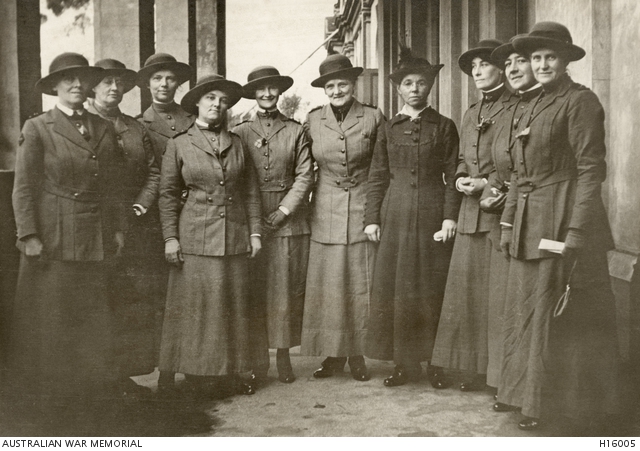
Accession Number: H16005 A group of Australian Army nurses about to depart from Adelaide for Salonica, 14 June 1917. From the left: Miss Molly Wilson, Mrs J. Tyers, Miss Edith Horton, Miss Marion Geddes, Miss Laura Begley, Mrs Jessie McHardie White (Principal Matron), Mrs Forsyth (wife of General Forsyth), Miss Violet Mills (Matron of No 5 Australian General Hospital who was on a visit to Adelaide), Miss Alice Prichard and Miss Florence G. Gregson.
I hadn’t quite appreciated the scale and complexity of the Australian nursing presence: four contingents were dispatched via Egypt, under constant U-boat threat, and then distributed across a shifting network of British hospitals in Greece and the surrounding hills. Each unit was allocated one Matron, ten AANS Sisters and eighty Staff Nurses. The nurses were led by senior matrons such as Jessie McHardie White, who oversaw not only clinical standards but the welfare and morale of hundreds of nurses. Staff Nurse Lucy May’s personal account helps convey the experience of Salonika in winter:
[12 October 1917] Water racing thru wards & reached halfway up bedsteads, haversacks, boots, socks, pants floating down road… [21 October] Lanterns blowing out & leaving you in dark… [23 October] Still don weather attire, only wearing men’s pyjama pants, putties, gum boots, man’s shirt also. Had dress tucked around waist all night… [2 November] Imagine me [on night duty] over my ankles in mud, dragging one foot out then other foot & standing on one leg in grim peril or sitting down hastily…feeling the rain oozing through my mack. This is the life?”
As winter ended, the nurses then faced oppressive summers dominated by malaria. The AANS uniform was adapted in an attempt to counter the mosquito risk. A ‘mosquito proof’ nurse would be clad in her working dress, huge gloves, rubber boots and thick veil which, according to Lucy Tydvil Armstrong:
“made it quite impossible to carry out our duties, when men were rigoring and vomiting all night long, we just had to do away with the precautions, & run the risk of being bitten with mosquitos.”
Accession Number: H15761 A group of Australian Army Nursing Service nurses at the 52nd British General Hospital at Kalamaria, Greece ready for night duty wearing headdress provided for protection against mosquitoes. C 1918.
Despite the precautions, Matron McHardie White later reported that, ‘most of the nurses were affected by it [malaria] one time or another…’ By August 1918 45 nurses had been sent back to Australia from Salonika and another 14 were waiting to go, mostly on grounds of ill health. The death of Sister Gertrude Evelyn Munro in 1918 underlines the very real cost of the AANS service.
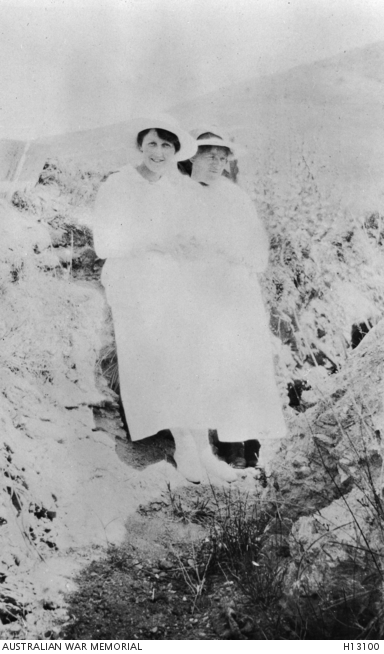
Accession Number: H13100 Sisters Gertrude Evelyn Munro and Amy Christie of the AANS. The photograph was probably taken at the 60th British General Hospital, Salonica.
Despite deteriorating health and official doubts about the value of their continued presence, the nurses remained in Salonika until after the war ended, not returning home until early in 1919. Their courage and professionalism were acknowledged through praise and decorations from British, Serbian and Greek authorities. Matron McHardie White, as just one example, was awarded the Serbian decoration of the Order of St Sava and was made a Member of the British Empire.
Nurses’ Narratives
It’s always interesting to read first-hand accounts of experience and so it was good to see that some diary and retrospective narratives written by the AANS nurses have been, and are being, transcribed. Staff Nurse Vivian A Lee Shea, for example, recalled,
We arrived in the midst of summer & the height of the Malaria & Dysentry season, & work commenced right away. We had much to learn. We were all new to each others ways & the medical Staff & personnel had only just landed as we ourselves had.
The Hospital was rather well situated at an elevation of about 2000 ft above sea level & this gave us a cooler summer, but made it impossible to live there in the winter months. During the winter months we occupied the Prisoners of War Hospital in the Base area. Here we nursed British Troops, as well as prisoners of War, the latter were representatives from practically every one of the Baltic States. Germans Bulgars, Turks, Romanians, Greeks Albanians & Serbs, in fact any one found in enemy lines.
Annie E Major-West remembered,
We remained in Salonika till February 1919, during the whole time the work was very heavy at times the hours on duty were particularly long. these conditions were occasioned by the prevalence of Sickness amongst the Sisters and Medical Officers. Frequently the Bulgars & Germans were over in Planes endeavouring to bomb the Town but the Vicinity of the Hospital was never damaged, during the Month of August 1917 the town was partially destroyed by fire, Supposed to have been the work of Spies.
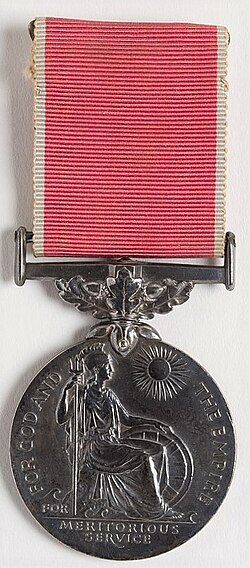
Our congratulations go to overseas SCS member Glenn Stennes. In recognition of his work in maintaining and improving access to sites on the Doiran battlefield, Glenn has been awarded the British Empire Medal (BEM) in the New Year Honours Overseas and International List 2026, for “services to UK Military Heritage Preservation.” Congratulations Glenn!
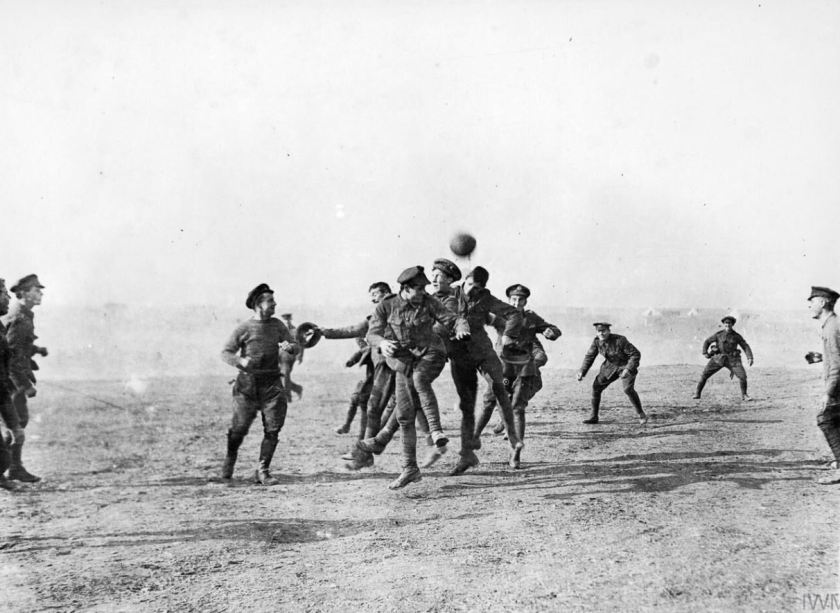
Officers and men of 26th Divisional Ammunition Train (Army Service Corps) playing football in Salonika, Christmas 1915. Image: IWM (Q 31576)
On behalf of the Committee, I’d like to wish all members and supporters of the SCS, their families and friends, a Merry Christmas. We hope that you all have an enjoyable festive period and can welcome 2026 in with good spirits.
Once again, I am pleased to report that the past year has been good one for the Society. Membership numbers remain strong, which is heartening to see, as your continued support is an indicator that the Committee are working in the right way to fulfil the Society’s objective of keeping alive the memory of all those who served in the Salonika Campaign through Remembrance activities, research and public facing outputs ranging from history talks, publications and social media to battlefield tours.
This year saw the successful trialling of a new format for our annual meeting and AGM. The problem over recent years of getting the majority of the Committee together in person was overcome by taking the AGM online. This proved a success with a wider range of members attending, including some from outside the UK. Several action points were forthcoming from the meeting, on which the Committee are now working. I would like to thank members for contributing ideas and volunteering for aspects of Society work both during the AGM and in subsequent email follow ups. At the annual meeting in London, members attending were treated to three excellent talks on a range of Salonika Campaign topics. I was pleased to welcome several new faces to the meeting, among them a few folk from this year’s battlefield tour. An in-person meeting in London is a good opportunity for members to get together and a way of maintaining the tradition, started by the SRA, of laying a wreath at The Cenotaph. Plans for next year are in progress.
In terms of our other commemorative events, the Society was represented by a plot at the RBL Field of Remembrance outside Westminster Abbey. Thanks to members Darren Rolfe, David Tarn and Jonathan Saunders for joining me at the opening. I hope members are taking the opportunity over the two-week lifespan of the Field to visit and plant a cross of Remembrance. The Field is an impressive spectacle, and a walk around really does bring home the sacrifice made in conflicts since 1914. A few days after the opening of the Field of Remembrance, SCS members gathered with staff and volunteers from the National Trust on 11 November at the Sandham Memorial Chapel for a Remembrance service. This event is now a fixture in the SCS calendar, is increasingly popular with SCS members and is a fitting way to round off our commemorations for the year. The Chapel is the nearest thing in the UK to a memorial to the BSF, which makes the active relationship between the team at the Chapel and the SCS something we should work hard to maintain.
The Society at Westminster Remembrance, 2025
Overseas we had a very successful battlefield tour that had as it’s theme the role of artillery with the BSF. A tour group of 27 visited key ground associated with British operations in the Salonika Campaign. This included new locations near the River Vardar (Axios) around Machukovo (Evzoni) and Smol (Mikro Dassos). Thanks to members Apostolos Nalmpantis, Graham Winton and Keith Roberts for assisting with a pre-tour recce to the area and again to Graham for taking on a couple of the associated stands. It was interesting to see that the SCS contingent formed the largest contingent of representatives of any of the commemorative associations/societies present at the official Remembrance ceremony at Polykastro. Members may be interested to know that I am now in touch with representatives from the Association Nationale Pour Le Souvenir Des Dardanelles Et Fronts d’Orient, who plan to be at Polykastro next year.
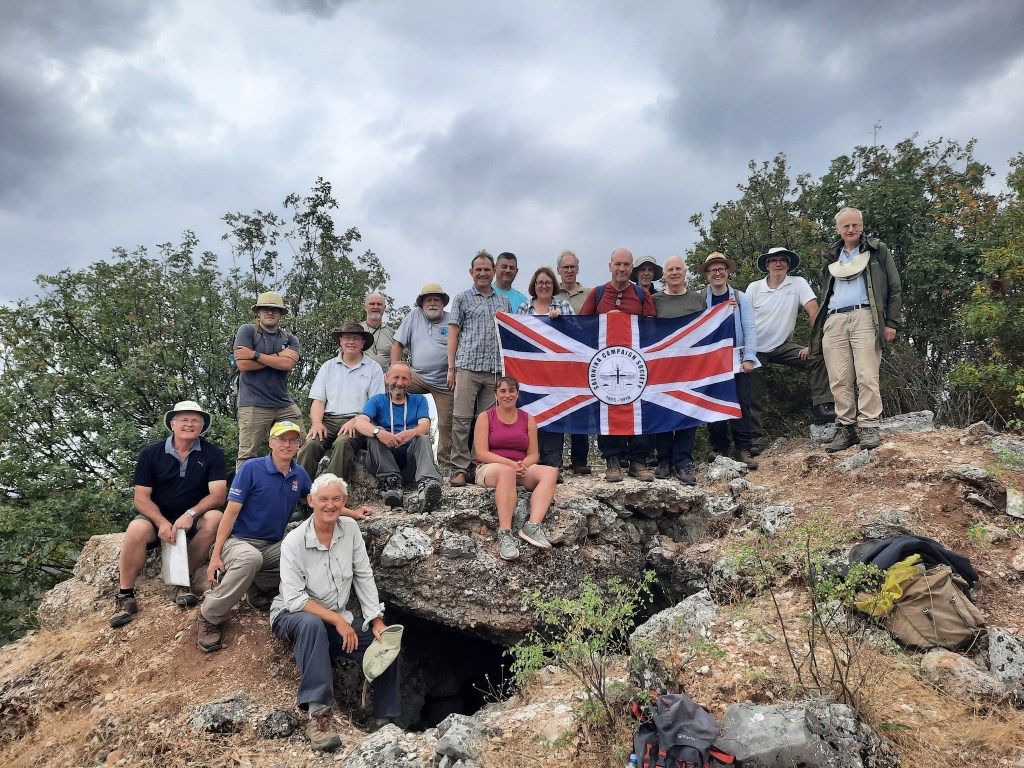
The SCS Battlefield Tour Party, 2025
For 2026, as well as another battlefield tour, it is planned to restart work on the map cataloguing project at the National Archives and to run the Philip Barnes Bursary for a second time, which will allow a university student or early career researcher to accompany the 2027 battlefield tour. The Society will also look at the feasibility of running another Salonika Study Day at a venue outside London in 2027. The Committee would welcome ideas for potential venues for a study day or to hear from members wishing to get involved with the map project.
Now, as I close and turn to eat another mince pie, I’d just like to thank my fellow Committee members for their work over the past year. We work as a team to keep the Society moving on the right track for the benefit of all members. Thanks also go to various members who have actively participated in events and projects run by the Society and those who have made suggestions and volunteered to assist the Committee in numerous ways.
It just remains for me to wish you all the best wishes for Christmas and the New Year. I hope 2026 gives us as many chances as possible to meet to remember all those men and women of the BSF who remain firmly at the heart of our fellowship.
Society Battlefield Tour 2026 – The ‘Sappers in Salonika’ Tour
Whilst having the central theme of the role of the Royal Engineers in the Salonika Campaign, the tour will visit all the key locations associated with the British Salonika Force and look to break some new ground:
Proposed dates for the tour are Sunday 20 – Tuesday 29 September
If you are interested in joining the tour please contact SCS Chair, Alan Wakefield, to get your name on the emailing list for further details.
Other Opportunities to visit the Salonika Battlefields in 2026
The battlefield tour operator The Cultural Experience is planning a tour (25 – 30 April) to key British related Salonika Campaign sites. The tour will be accompanied by SCS Chair, Alan Wakefield. Details here.
The Salonika Campaign Bibliography, researched and compiled by SCS Member Keith Roberts, is a fantastic resource for those researching or delving deeper into the campaign. Now in its sixth edition, it lists over 480 entries from a variety of sources. Interestingly, these sources also include novels and literature. Although literature isn’t usually a source for historically accurate facts, it has a role in helping to understand, to some degree, the experience and attitudes of others in other times.
With that in mind, and having recently been reading about the service of nurses in the campaign, two novelists from Keith’s list piqued my interest: Bessie Marchant and May Wynne the authors, respectively, of A V.A.D. in Salonika and An English Girl in Serbia – both novels written primarily for a young audience.
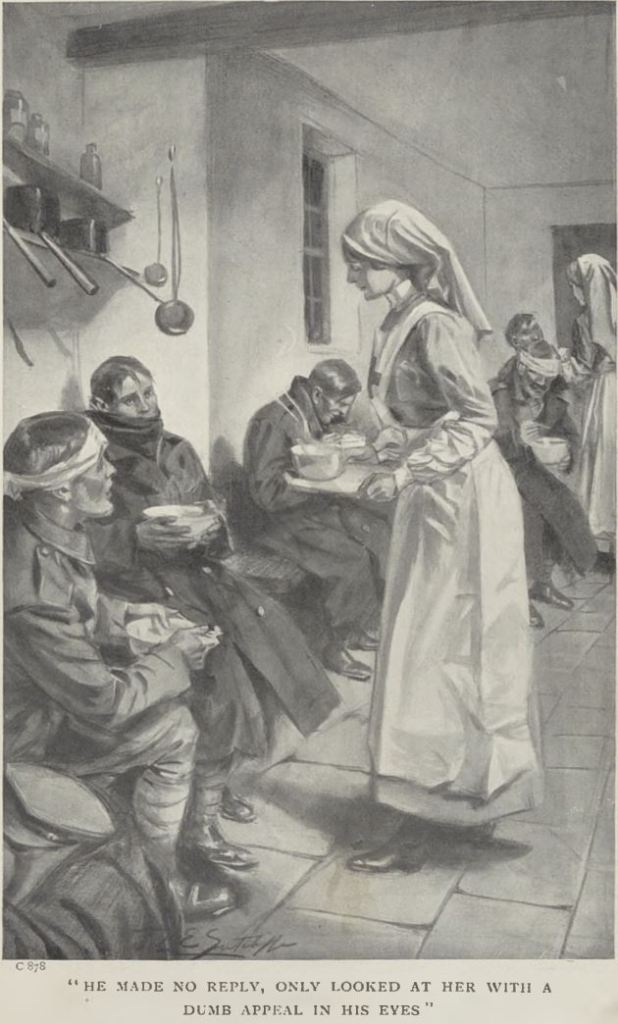
A V.A.D. in Salonika (1917) follows a young British woman, Joan Haysome, who volunteers to serve as a V.A.D. (Voluntary Aid Detachment) nurse in Salonika. The plot is full of unlikely coincidences as Joan, determined to prove her worth, and atone for a past mistake, attempts to stop a German spy within the Allied ranks. It is a novel of its time, and for that reason, interesting in the way it reflects diffierent contemporary attitudes towards women volunteering in the war effort.
The inspector bowed, looking properly impressed, but he had his private opinion all the same as to the use of young ladies in V.A.D. work. To his way of thinking, if one of the leisured classes set about trying to do something useful, it meant that a servant of some sort was necessary to do the work over again. Rich folks had their place in the scheme of creation, but their place was mainly to provide honest employment for other people.
Joan is not a passive or submissive figure. Marchant frequently describes Joan’s thought processes as she struggles to overcome doubts and crises of confidence to show courage, resourcefulness, and responsibility for others.
From A V.A.D. in Salonika
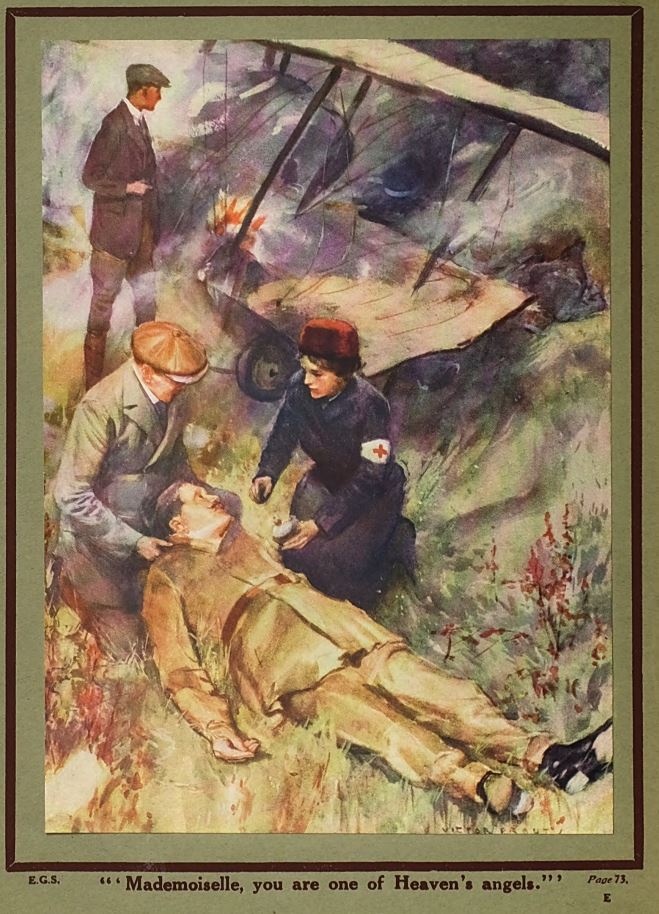
In An English Girl in Serbia(1916), two 16-year-old twins, Nancy and Tom Allerson, become caught up the turmoil of wartime Serbia. This is more of a “ripping yarn” involving danger and dramatic adventure. There is a little more detail about the war than in Marchant’s novel, with a depiction of the Serbian retreat from the Bulgars. Nancy has far less introspective reflection than Joan but the story does paint Nancy as an active, resourceful survivor determined to see the ordeal through.
From An English Girl in Serbia
Both novels follow a tradition of daring adventure stories for boys but in these the focus shifts to central female characters and, particularly in A V.A.D. in Salonika, contemporary attitudes to women in war,
“But don’t you think that the girls want to do their bit as well as the boys? The harder the work the greater the patriotism. A girl should have her opportunity, and she may be trusted to rise to it.”
I quite enjoyed reading the two books, which are fast-paced and easy to read. In these ‘enlightened’ times, An English Girl in Serbia would probably come with a trigger warning regarding some of its language and attitudes! It is, perhaps, more interesting from a historical point of view with its references to the Serbian retreat and comitadji. And, although the plot in A V.A.D. in Salonika relies too heavily on coincidence, the novel is more thoughtful. Joan is a much more interesting and developed character and, as such, the book may be seen as part of the wider body of literature that helped shape British public opinion about the role of women in war.
My thanks go to Keith for adding these titles to the SCS Bibliography:)
Colonel Nick Ilić MBE QGM, and former British Defence Attaché in the Embassy in Belgrade, will give a talk on the Second Serbian Campaign of 1915 at the National Army Museum, London, SW3 4HT, on Thursday, 20 November, at 2pm.
The talk will cover the arrival of the British and other international missions in Serbia, the Typhus epidemic, and the October 1915 invasion of Serbia that led to the Serbian Army’s epic retreat across the mountains to the Adriatic.
The talk will last about an hour. If you have attended a talk given by Nick in the past, you will know how informed, informative and interesting the talk is going to be.
Admission is free, but please let Nick know by 18 November if you plan to attend.
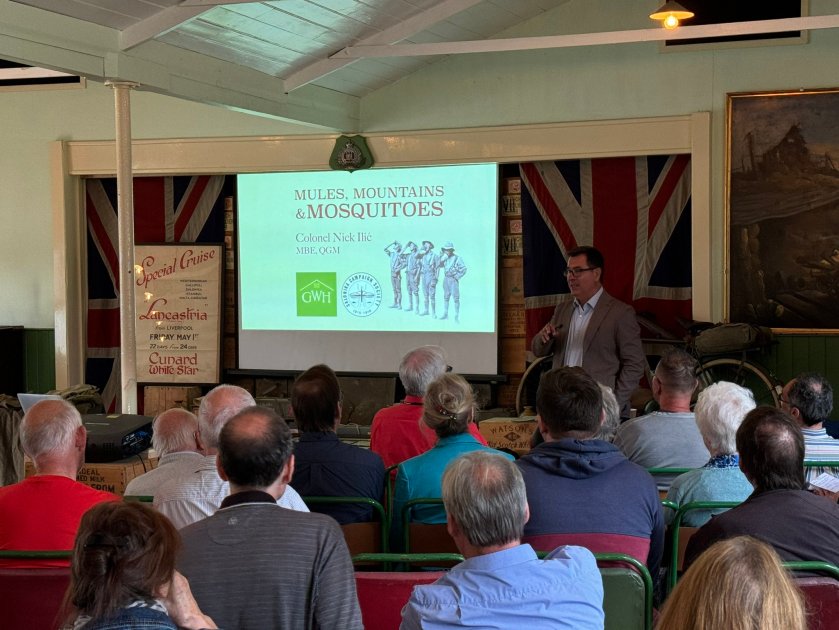
Nick presenting at the Salonika Study Day, Great War Huts, August 2024
As many members will already be aware, the Society’s journal, The New Mosquito, has not yet arrived on doorsteps as expected. We sincerely apologise for this delay and wish to assure you that every effort is being made to complete dispatch at the earliest opportunity. We thank all members for their patience and continued support.



 Salonika Campaign Society, 1915-1918