
I’m very grateful to SCS member, Rob Elliott for writing this very timely piece… Thanks Rob!
On 3 March each year, Bulgaria celebrates its national day of independence from Ottoman Rule in 1878. A local shop owned and run by a Bulgarian family held a small celebration on the day and were playing some folk music in the background. Prompted by this and a conversation about folk music and dance, I wondered if Bulgaria had produced any classical composers and to my surprise, there are quite a lot.
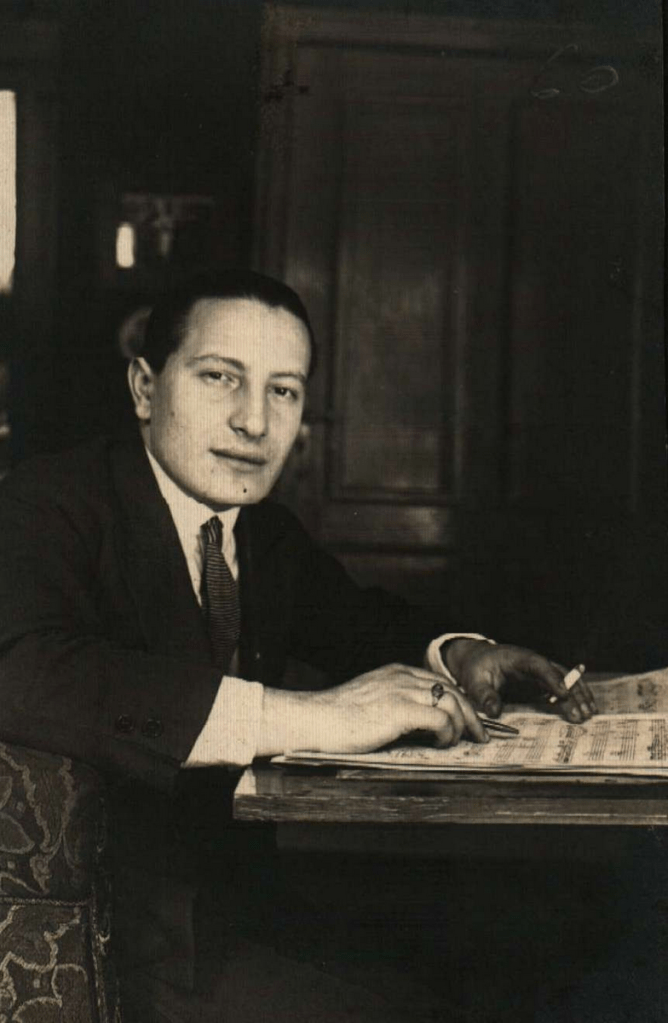
The most famous is Pancho Vladigerov (1899-1978). His mother was related to the author Boris Pasternak. Vladigerov is clearly a national treasure and his music includes Bulgarian folk idioms, one of the first composers to do so. He was admired by Dmitri Shostakovich, Richard Strauss and Aram Katchaturian but remains largely unknown outside Bulgaria.
But what is the significance of this? His most famous work is known as the Vardar Rhapsody. It was composed in 1922 for violin and piano, but it was also
orchestrated shortly afterwards and exists in a few other versions. It lasts around 8 minutes and is an astonishing tour de force – well worth a listen.
A recording of this dazzling music in its original version is available here:https://www.youtube.com/watch?v=WzMCjrqVryg
Rob Elliott
 Salonika Campaign Society, 1915-1918