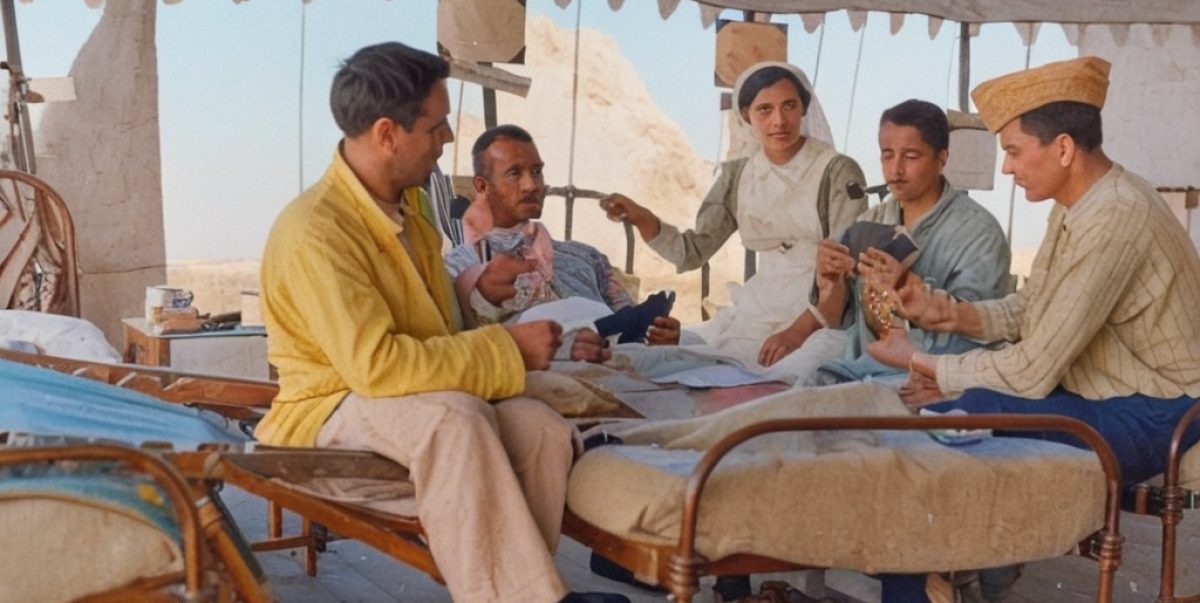
The Sinking of the Marquette, 1915

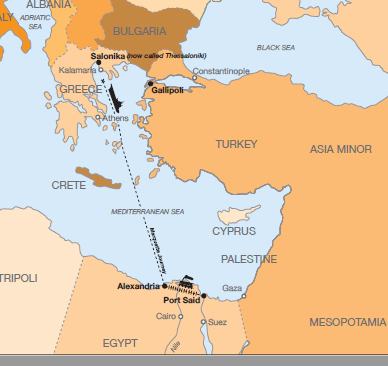
A little over 110 years ago, on Saturday 23 October 1915, the British transport ship Marquette was torpedoed by the German submarine U-35 as it entered the Gulf of Salonika. The ship sank within ten minutes. Of the 741 people on board, 167 died, including 32 New Zealanders – ten of whom were nurses.
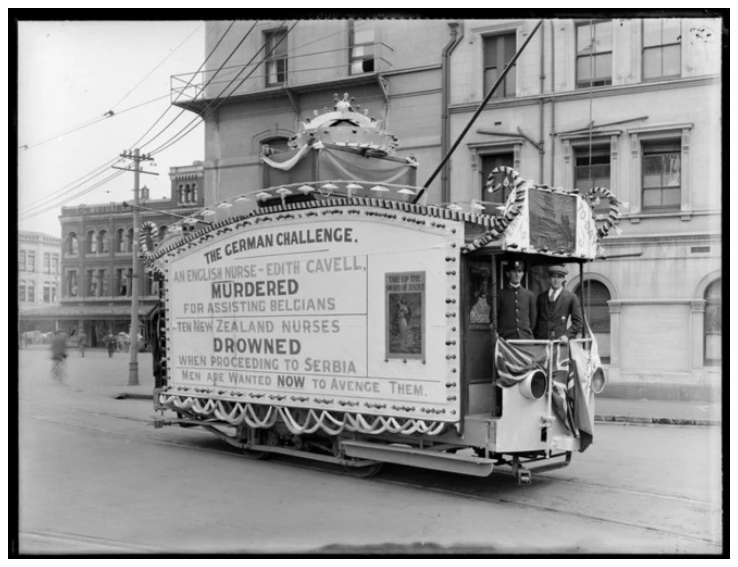
Tram decorated with World War 1 propaganda, including unidentified tram conductor and passenger, Temperance and General Life Assurance Society building in background, Cathedral Square, Christchurch
A call to arms in response to deaths of nurses. Image source: https://natlib.govt.nz/records/29941985

The New Zealand Nurses

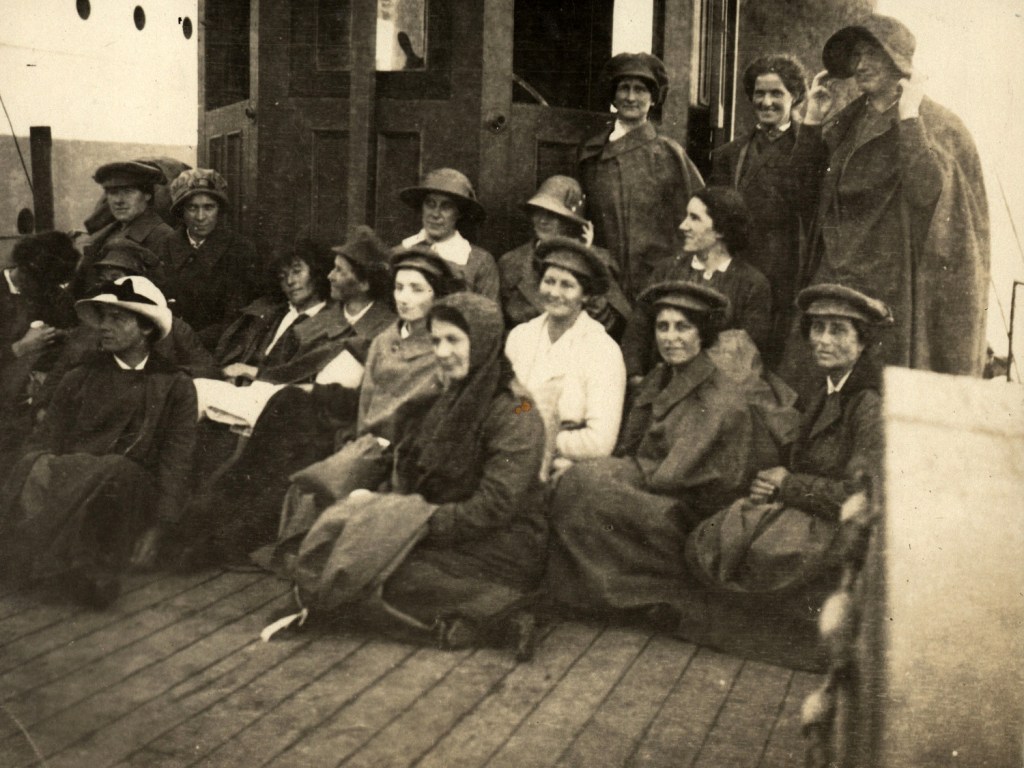
Most of the New Zealanders aboard were members of the 1st New Zealand Stationary Hospital. They had been serving in Egypt, treating casualties from Gallipoli, and were being transferred to support Allied operations in the Balkans. Among them was Staff Nurse Margaret Rogers, who had enlisted only months earlier in July. Indeed, The New Zealand Army Nursing Service was itself new and only established early in 1915.
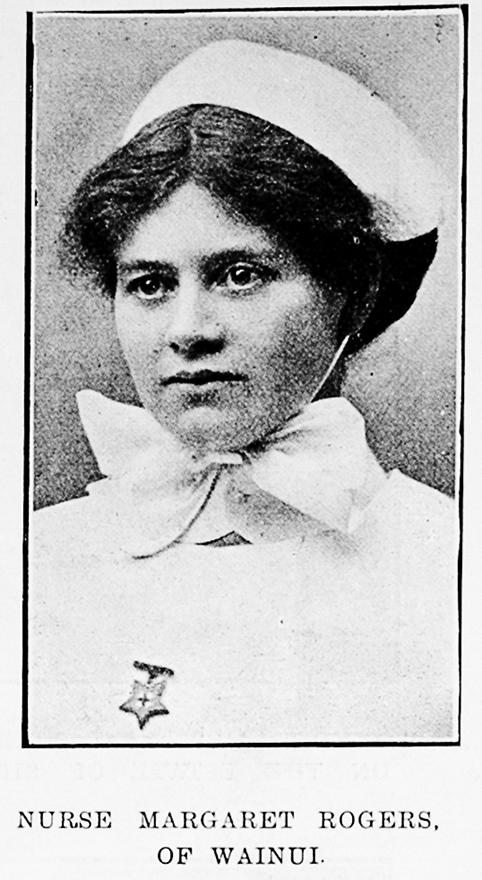
The Marquette, originally a cargo vessel, had been adapted for wartime transport.
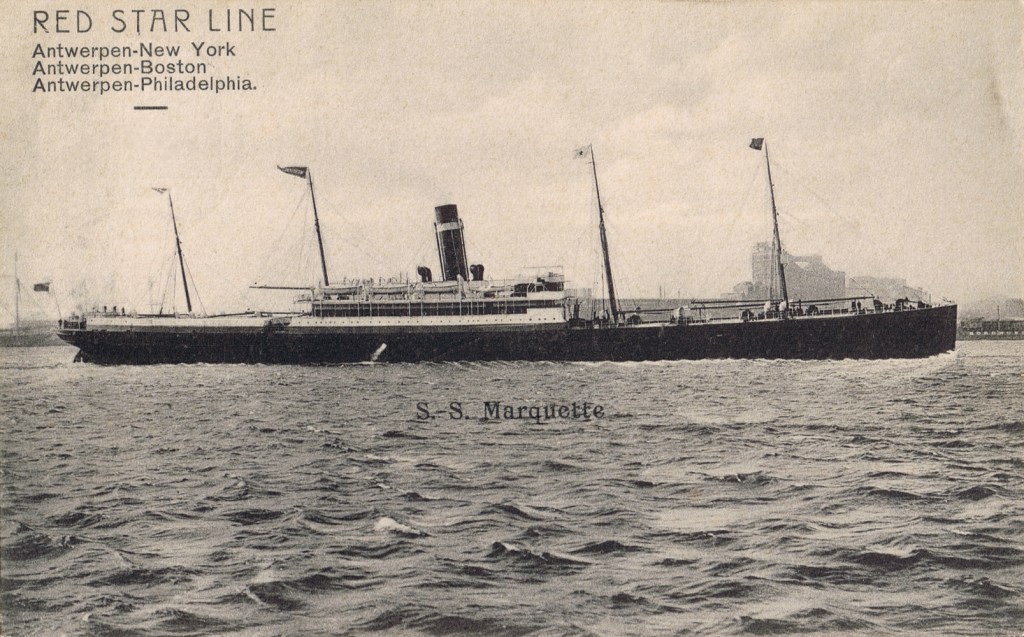
SS Marquette of the Red Star Shipping Line, 1910
Image source: https://ww100.govt.nz/no-ordinary-transport-the-sinking-of-the-marquette

When it departed from Alexandria on 19 October, it carried medical personnel, British troops, over 500 mules, and ammunition. Although accompanied by a French destroyer during part of the journey, the escort departed the day before the attack.
At approximately 9:15 a.m., witnesses reported sighting a torpedo shortly before it struck the starboard side of the ship. The impact caused the vessel to list sharply. Despite the suddenness of the event, many accounts describe those on board as remaining orderly.

Efforts to launch lifeboats were largely unsuccessful. Inexperienced personnel, the angle of the sinking ship, and mechanical difficulties led to lifeboats capsizing or being damaged. Several nurses and soldiers were killed during these attempts. It is believed that Margaret Rogers lost her life in this phase of the evacuation.

Ten New Zealand nurses and 22 men from the New Zealand Medical Corps and No. 1 Stationary Hospital died.

Survivors spent several hours in the water, exposed to cold conditions and exhaustion. Some clung to wreckage; others assisted colleagues unable to swim. Rescue vessels, including British and French destroyers, arrived later in the day. Six days later,on the 29th October, all surviving nurses and some medical officers returned to Alexandria on the hospital ship, the Grantully Castle.
Aftermath

The sinking of the Marquette led to outrage about the decision to transport medical personnel on a vessel carrying ammunition and troops rather than on a hospital ship. Marked with a red cross, hospital ships could sail with a much greater degree of safety with the protection of the Geneva Convention. The troopship was, for German submarines, a valid target.

One can only imagine the emotions of the survivors as they undertook the journey to Salonika again later in the year in order to establish a tented hospital at Lembet Camp. The hospital was in operation until March 1916, when it left for France.
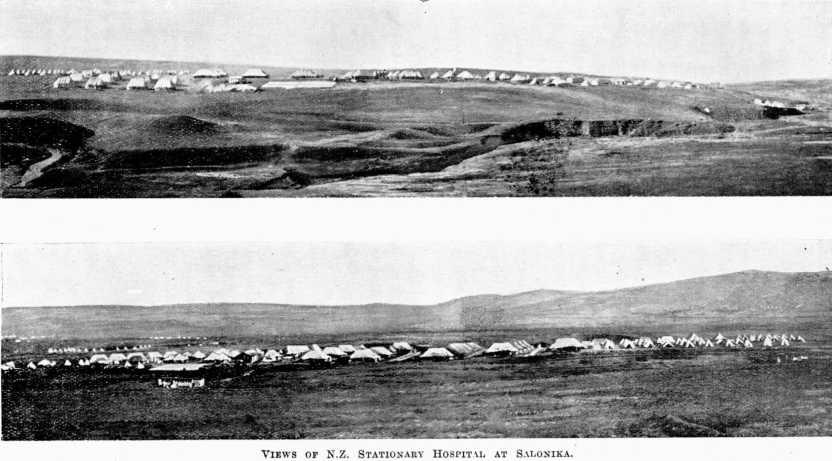
1st New Zealand Stationary Hospital at Salonika
Image source: https://nzhistory.govt.nz/media/photo/1st-new-zealand-stationary-hospital

In Memory

Margaret Rogers is buried at the Mikra British Cemetery at Kalamaria where there is a memorial to the loss of the Marquette.
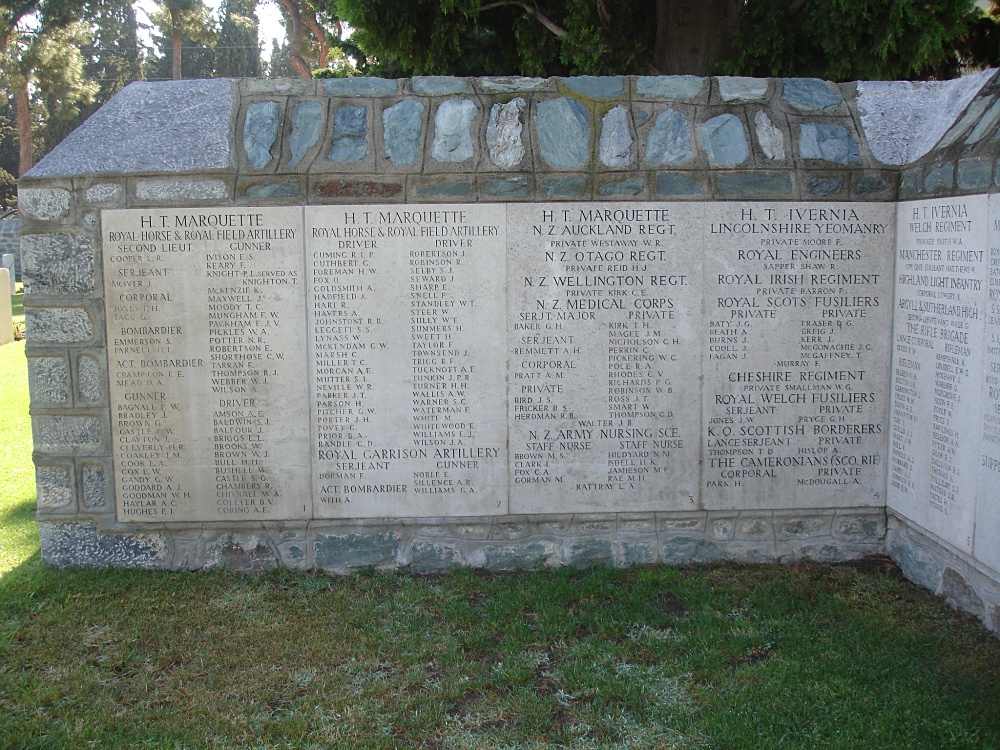
Image source: https://www.ww1cemeteries.com/gre-mikra-memorial.html

Margaret is also listed on the war memorial at Akaroa where her father lived.
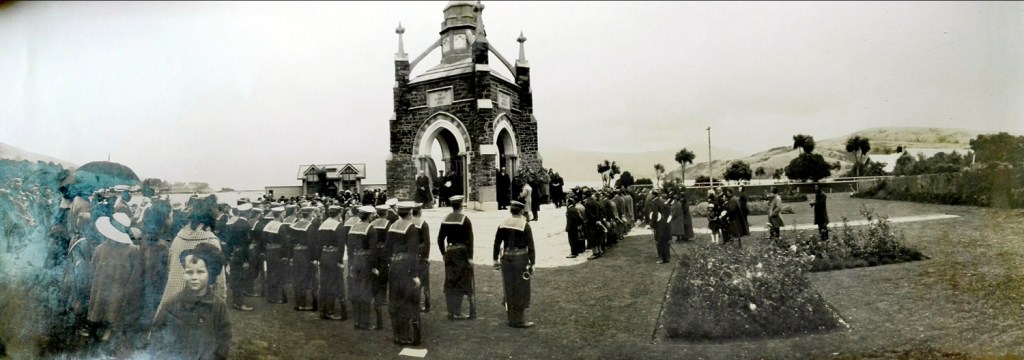
The unveiling of the Akaroa War Memorial, 1923
Image source: https://nzhistory.govt.nz/memorial/akaroa-war-memorial

Margaret and the other nine nurses lost in the Marquette sinking are remembered at the Nurses’ Memorial Chapel at Christchurch Hospital and at the Marquette Nurses’ Memorial at Waimate.

The events of 23 October 1915 are also dramatised in the Australian TV series, ANZAC Girls, which until December 31st, 2025 is freely available to view here.
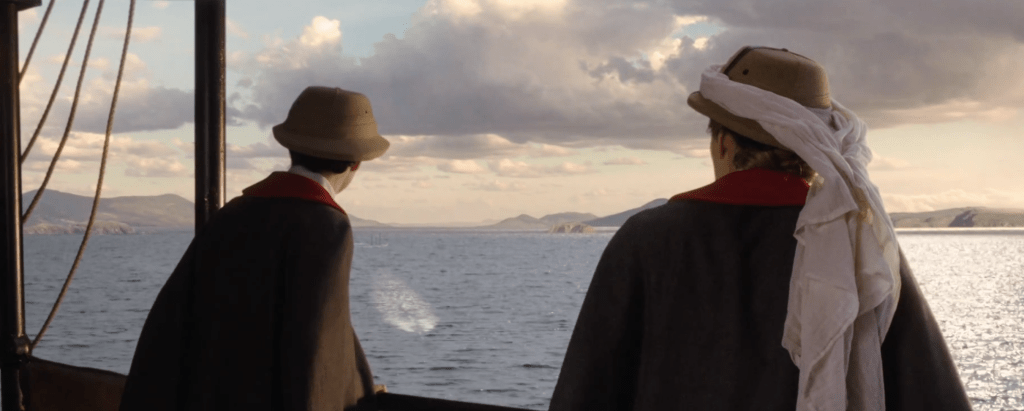
The moment the Marquette is torpedoed, as depicted in ANZAC Girls.
Image Source: Episode 3, https://player.stv.tv/summary/all3-anzac

Footnote

Wreckage of the Marquette was found in May 2009 by a Greek dive team. It rests in 87 metres of water of the Thermaikos Gulf in the North Aegean Sea. A protection order for the wreck has been sought by The British Embassy in Greece.


Reference Links


Animals in War

The news, yesterday, of the death of Dame Jilly Cooper had me searching my bookshelves for the only book of her’s that I own. No, not one of the infamous ‘bonkbusters’, but “Animals in War”, first published in 1983. My copy is the 2000 Corgi reprint, published as part of the campaign for a memorial to ‘Animals in War’. More of that in a moment.

Continue reading “Animals in War”

It was Christmas Day in the Cookhouse …

As you eat your Christmas meal – whether it’s traditional, exotic, vegetarian or vegan – spare a thought for the Mongey Wallahs, the cooks who had to feed large numbers of men everyday of the year during the Macedonian campaign: with no gas or electric hobs and ovens, often unreliable provisions and extremes of temperature to work in, not to mention the activities of the enemy. These unsung heroes of the BSF get little attention so, at this time of year when food plays such an important in the festivities, it’s good to remember them and their vital role.

Continue reading “It was Christmas Day in the Cookhouse …”

South Asian troops in the BSF

South Asian Heritage Month seems as good a time as any to consider the, often overlooked, South Asian contribution to the Macedonian campaign. Indeed, had the campaign continued into 1919, this contribution would have been even greater as plans were well underway to “Indianize” the BSF as had already happened in Palestine, but on an even greater scale.

Continue reading “South Asian troops in the BSF”

Tiny Takes Tea!

On International Tea Day, here’s a cute photograph of Tiny, the donkey mascot of the 26th Divisional Train, drinking tea.

“Tiny”, a small donkey, was found dying by the roadside by men of 26th Divisional Train. They took care of him and he became their mascot. “Tiny” would walk into any tent – including the officers’ mess – and help himself to any dainty lying about. As can be seen from the photo, he liked his tea from a mug, and was known to take as many as take nine mugs in succession! I hope they also treated him to ginger biscuits.

Continue reading “Tiny Takes Tea!”

Farewell to Muffin, SCS Honorary Member ‘Salonika 4’

Eight years ago, at the start of the centenary of the Macedonian campaign, the Society ‘adopted’ Muffin, a mule at the Redwings Horse Sanctuary at Caldecott in Norfolk. This was to acknowledge the huge contribution made by animals – especially mules – in the campaign. Through his column in ‘The New Mosquito’ we have learned more about mules in general and Muffin in particular. It has been clear from recent updates, though, (the last is in the forthcoming NM48) that Muffin has been feeling his age and experiencing declining health. So it was sad, but not altogether surprising, to receive this from Redwings:

Staff at Redwings Horse Sanctuary are heartbroken to announce the death of Muffin the mule, its much-loved and longest serving Adoption Star.

The beloved boy was 36 years old and had been at Redwings since he was rescued from slaughter in 1987 along with his mum, a pony called Doris, when he was just a tiny foal. 

Tragically, Doris passed away shortly after their arrival at the Sanctuary when it was discovered she had a stomach ulcer. Baby Muffin had become friends with another youngster – April – and, with the support of the Redwings staff who cared for him, went on to become one of the charity’s most famous Adoption Stars for 30 years.

The Redwings Adoption Scheme allows people to support the charity through sponsoring one of their residents, who in turn receive updates on their lives as well as the chance to visit them. The funds raised go towards the care of their friend and that of the other horses, ponies, donkeys and mules at Redwings.

Lynn Cutress, Redwings Chief Executive, said: “We know so many people will be upset to hear this news. It’s left a huge hole in the hearts of all the staff here at Redwings and we know our supporters will feel that too. 

“When people discover you work here, they always tell you that they remember Muffin and ask if he’s still with us. They tell you that their grandparents or parents sponsored him for them as gifts, and they grew up with his pictures on their childhood bedroom walls. 

“Some families sponsored him for generations, and our priority was to write to them all personally before announcing this publicly as we wanted them to be the first to know. 

“Visitors to Redwings Caldecott, where he lived, were delighted by Muffin’s friendly nature and mischievous ways for over three decades, as of course were the staff who cared for him day in and day out. We all loved him dearly.”

In his later years Muffin was diagnosed with Cushing’s disease (PPID) which made him prone to a painful hoof condition called laminitis. As a result of his specialist needs, which increased with his age, Redwings retired him from the Adoption Scheme in 2017 so he could enjoy a quieter life with his friends. 

As such an elderly boy, it was becoming increasingly challenging to care for him without him needing to have extended periods of time away from his herd. The recent addition of front shoes helped him feel more comfortable, and happily he had recently been living on a more-gentle woodchip paddock at his Caldecott home with a friend. Unfortunately, he had become very reluctant to take his medication and despite his carers trying various foods and methods of feeding and providing him with enrichment activities to improve his emotional health whilst in vet care, these measures were not working as well as was hoped. Sadly, on 11th September, it was decided that the kindest thing to do was to put Muffin to sleep to prevent his health and comfort deteriorating.

Laura Starkey, Redwings Caldecott Equine Centre Manager, said: “Our staff and the vet team cared for Muffin with such love and dedication.

“Muffin was one in a million, such a patient, calm boy. He loved his feed, and would often stand waiting by his bowl, 30 minutes before time, with a face that said: ‘What’s been keeping you?’. He took life at his own pace and you certainly couldn’t rush him. He has been here since the beginning of Redwings Caldecott and we will miss him terribly.”

Muffin receiving his SCS membership certificate and badge from Robin Braysher on his birthday in April 2016 – ginger biscuits may also have changed hands! (Photo by Robin Braysher).

Young Muffin and mum, Doris, in 1987 (thanks to Redwings for the photo).

The birthday boy, April 2023 (thanks to Redwings for the photo).

Muffin at sunset, summer 2023 (thanks to Redwings for the photo).

For John …

John asked a question on the previous post about 10th (Irish) Division’s Army Service Corps Divisional Train in which a relative may have served as a driver of mule transport, so I thought I would share this photograph from my collection. From the summer of 1916, it shows an ASC column stretched out over a Macedonian plain. These draught mule are pulling supply limbers which were more flexible than lumbering, general service wagons, but weren’t as useful in the hills and mountains of Macedonia as nimble pack mules.

Continue reading “For John …”

Colombian Mules

No, I’m not straying off topic with a post about drug smuggling, this is genuinely about four-legged equines. Mules are a rare sight in the UK so I guess, for most of us, they are something from the past – maybe an animal that frustrated or amused our grandfathers (or great-grandfathers etc.) over one hundred years ago in Macedonia. However, because of their versatility they are still very much in use around the world, particularly in hilly or mountainous country.

Continue reading “Colombian Mules”