
I have always loved illustrated books, so couldn’t let National Illustration Day go unnoticed. Obviously, as children, we start off looking at picture books but my love of illustrated books has continued, although I do read the words too – honest!
Continue reading “Happy National Illustration Day!”Tag: Bulgarian Army
The Bulgarian Army during the Salonika campaign, 1915-1918.
Heavy Metal History
By SCS member Nick Palmer
Q: What does a Swedish heavy metal group have in common with the Salonika Campaign Society ?
A: A mission to increase awareness of the lesser known events in military history.
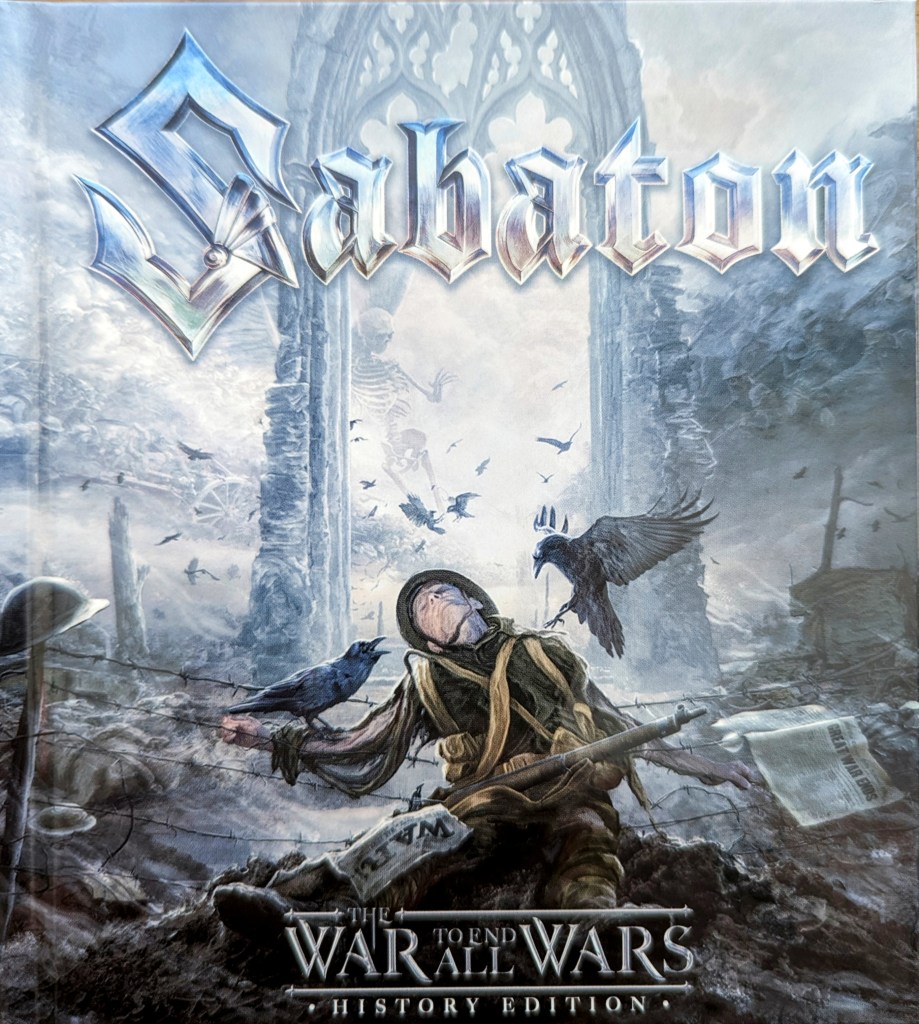
Sabaton, a five-piece heavy metal band from Sweden, has been playing its brand of very loud, fast, intense, military-style rock for nearly 20 years. They have built a sizable following of dedicated fans world-wide and have headlined rock festivals throughout Europe. They have released over a dozen albums and their most recent releases, ‘The War to End All Wars’, and ‘The Great War’, have concentrated entirely on recounting specific events and features of the world wars, on a mission to inform as well as entertain. Indeed, the band has its own YouTube channel (Sabaton History) that presents documentary-style shows using their music as the context.
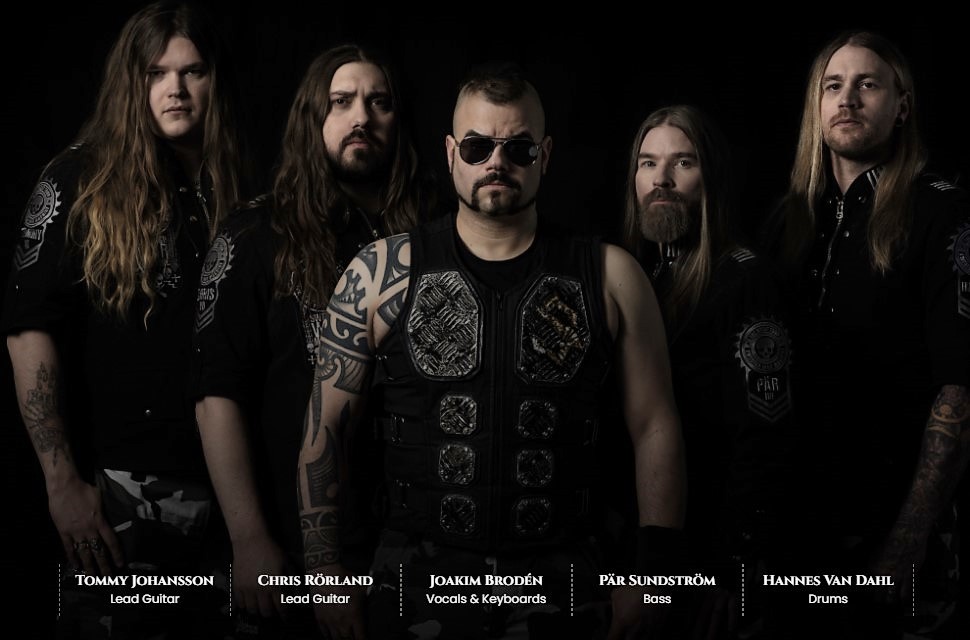
I recently agreed to accompany my teenage son, a keen heavy metal fan, to an upcoming concert by Sabaton, in Cardiff. In addition to securing a good pair of ear plugs, I decided to read up on the band and subsequently ended up being thoroughly immersed in their website. Of particular interest from the SCS perspective is track no.9 on ‘The War to End All Wars’ album which is entitled ‘The Valley Of Death’. As I discovered, it is based on the Battles of Doiran and, interestingly, the story-through-song is told mainly from the perspective of the Bulgarian defenders. In particular it highlights their great skill, resourcefulness and bravery in what are considered great victories in Bulgarian military history against a stronger Allied force.
The detailed information on the Sabaton website is supplemented by a link to, and transcription of, a special edition of the Sabaton History Channel which focuses on the ‘The Valley of Death’ , and the events that it refers to. The fifteen-minute show is presented by an actor/historian called Indy Neidell who has an extensive repertoire in this field. His account seems to be well researched and he presents very enthusiastically with a number of interesting graphics and photos. Towards the end, he is joined by Sabaton’s bass guitarist, Par Sundstrom, and he explains that the song was written partly in response to the demands of their Bulgaria-based fans. Subsequently, the band performed the song live for the first time ever when they headlined the ‘Hills of Rock Festival’ in Plovdiv, Bulgaria on 23 July 2022.
YouTube clips show that the song went down a storm with the partisan crowd, unsurprisingly. The closing lines of “The Valley of Death” summarise what is regarded as a triumph of defence:
For white, green and red,
For the nation they’re fighting for,
The British are done,
Three times the defence of Doiran has been won.
In addition, the Sabaton website and the YouTube video make an appropriate reference to the poetry of Owen Rutter, “Tiadatha”, which was partly based on his experiences at Doiran. The extract used is as follows:
Had you been there when the dawn broke,
Had you looked out from the trenches,
You’d have seen that Serbian hillside,
Seen the aftermath of battle,
Seen the scattered picks and shovels,
Seen the scraps of stray equipment,
Here and there a lonely rifle,
Or a Lewis gun all twisted.
Seen the little heaps of khaki,
Lying huddled on the hillside,
Huddled by the Bulgar trenches,
Very still and very silent.
Nick Palmer
Our thanks go to SCS member Nick Palmer for researching and writing this article. Thanks Nick!
References
- Page on Sabaton web-site.
- YouTube video: ‘The Valley of Death – The Battles of Doiran – Sabaton History 115 [Official]’
- The blurb accompanying the video: “The Bulgarian defences in the Lake Doiran region were pretty much the best defences any country had anywhere in the Great War, which the Entente forces discovered as they tried time and again and failed time and again – to break the front. “
- Hills of Rock Festival, Plovdiv, 23 July 2022, with introduction from the singer about the song:
NEW BOOK : The Bulgarian Contract
The Bulgarian Contract: the secret lie that ended the Great War
By Graeme Sheppard
SCS members will already appreciate the pivotal role the Macedonian front played during the end-stage of the Great War, and how a mere six weeks after Bulgaria’s collapse the entire conflict was over. But what they will not know, and will be surprised to learn, is that the success of the Balkan breakthrough that September depended upon a secret and hitherto unknown act of political deception, a masterly and cunning piece of misinformation known as the contract, archival evidence for which has only recently been discovered in the UK by the author.
Continue reading “NEW BOOK : The Bulgarian Contract”Plant specimens collected on the Salonica Front
The New Mosquito of April 2015 (issue 31) contains a fascinating article by Dr James Wearn of the Royal Botanic Gardens, Kew, entitled ‘Risking their lives to collect plants on the Salonika Front’. It is about the eight members of Kew Gardens’ staff who served in Salonika with the armed forces, but were able to collect plants as an extra-curricular activity.
Some while later I was contacted about this article by Emeritus Professor Arne Strid, distinguished Swedish botanist and expert on Greek flora, whose two-volume Atlas of the Aegean Flora was published in 2016. Professor Strid provided additional interesting information about plant collecting in the region and kindly allowed me reproduce this here.
Continue reading “Plant specimens collected on the Salonica Front”
Happy Christmas!
Happy Christmas to all our members, friends and visitors!
We thank you for your continued interest in the campaign and helping keep alive the memory of all those who served, whether they came home or still lie in the Balkans.
Remembering CQMS Michael Margiotta of 12 Corps Cyclist Battalion
One hundred years ago today, Serjeant Michael Margiotta died of dysentery and pneumonia in Salonika. He is buried in the CWGC Lembet Road Military Cemetery.
Continue reading “Remembering CQMS Michael Margiotta of 12 Corps Cyclist Battalion”
“The women kept kissing our hands …”
Now to finish the story of the Brigade Jouinot-Gambetta. I’m rather late with this as the capture of Skopje (Uskub) was all over by 9am!
‘… hoping Johnny Bulgar would very shortly cry quits!’
B Squadron, 1/1st Derbyshire Yeomanry was pursuing the retreating Bulgarians beyond Strumitza when it took possession of three cars containing Bulgarian officials, accompanied by the USA Consul General (the USA was not at war with Bulgaria), sent to negotiate an armistice. The cars were stopped, the officials blindfolded and their driver sent back with two of the cars. Trooper Maurice Hawley continues the story (quoted in Under the Devil’s Eye):
Continue reading “‘… hoping Johnny Bulgar would very shortly cry quits!’”
‘The Brigade was on its own…’
Before continuing the story of the Brigade-Jouinot-Gambetta, I should mention that Serbian and British cavalry were also doing their bit, although the latter was in short supply (but that could be said about much of the BSF). Serbian cavalry entered Gradsko – a vital communications hub – on the 25th and the Derbyshire Yeomanry were following the retreating Bulgarians along the road to Strumica.
Meanwhile …
I’m going to take a break from French colonial cavalry to consider what the BSF was doing at this time, using the Official History of Military Operations in Macedonia (Vol. 2 – 1935) by Capt. Cyril Falls.
 Salonika Campaign Society, 1915-1918