
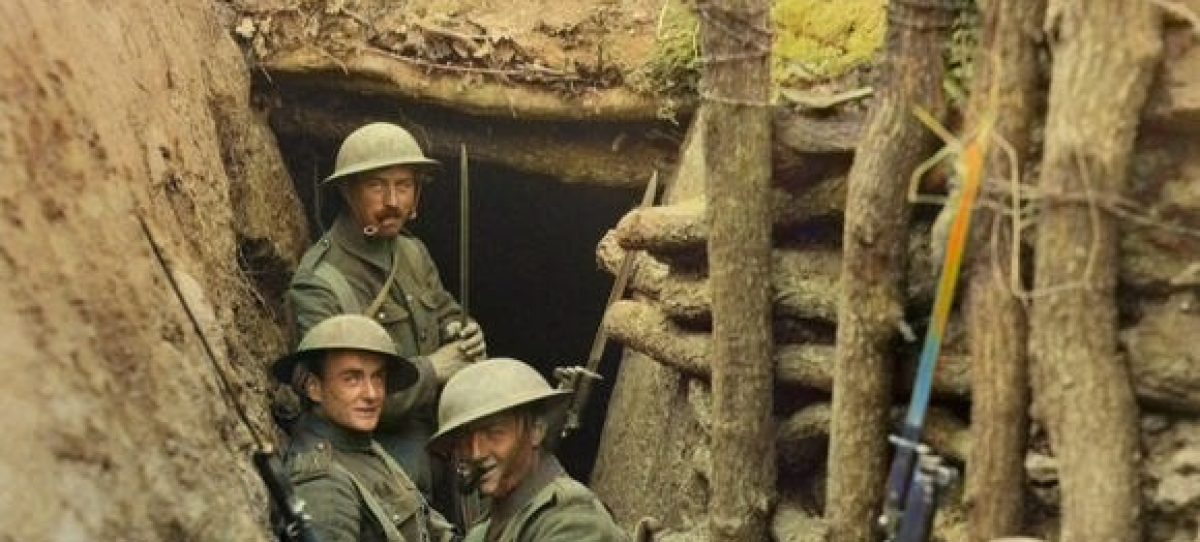
Last year I resolved to share the story of the sinking of the hospital ship, Rewa. I decided to do this on the anniversary of the event in 2026. The trouble was, I failed to check the date and, convinced that it was in February, by the time I looked up the details I realised I had missed it – 4 January! I could have left it until 2027 but, instead, decided to post the story today, Fred Braysher’s birthday, as it was Fred (my grandfather) who told me the story 44 years ago.
Continue reading “The Sinking of the Rewa”Tag: 1918
Events during the year 1915.
2025 Salonika Tour now underway
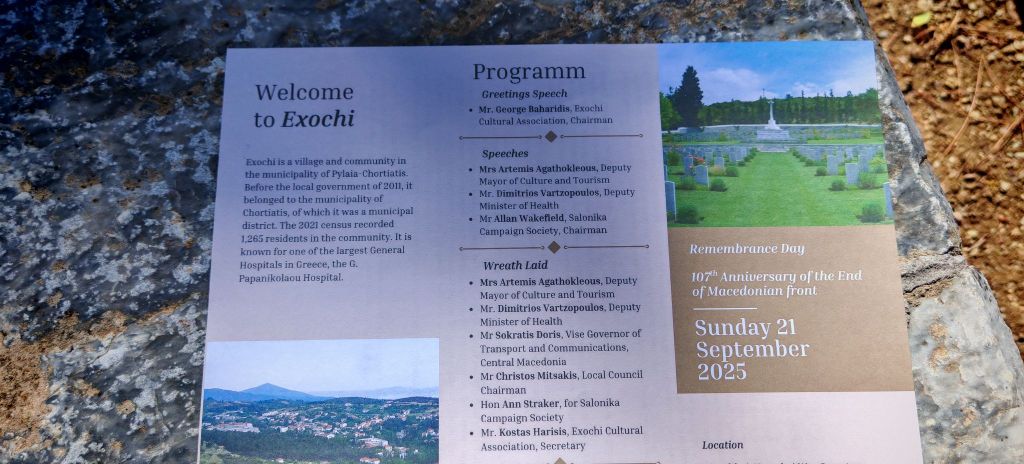
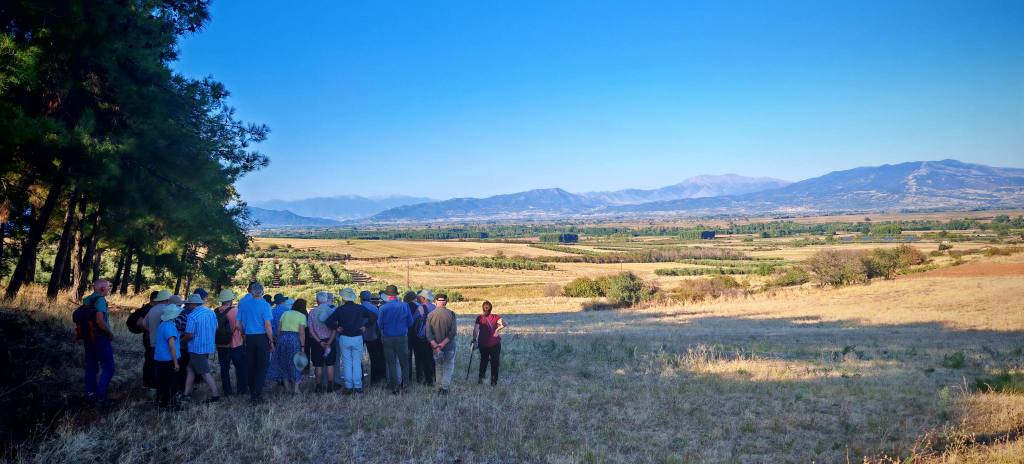
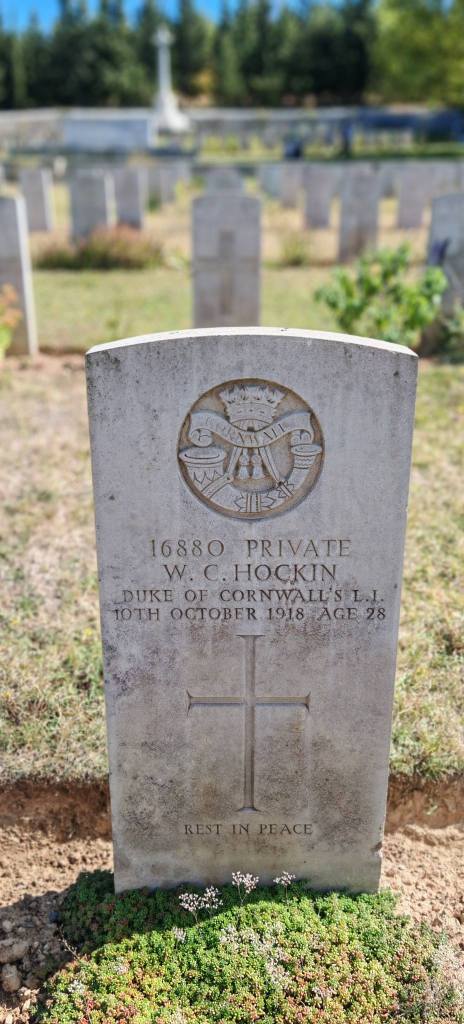
The Society’s 2025 tour (Sunday 21st to Tuesday 30th September) of the British Salonika Force battlefields is now well underway – with battlefield studies, cemetery visits and acts of commemoration. This year the tour has a special focus on artillery and small-scale operations.
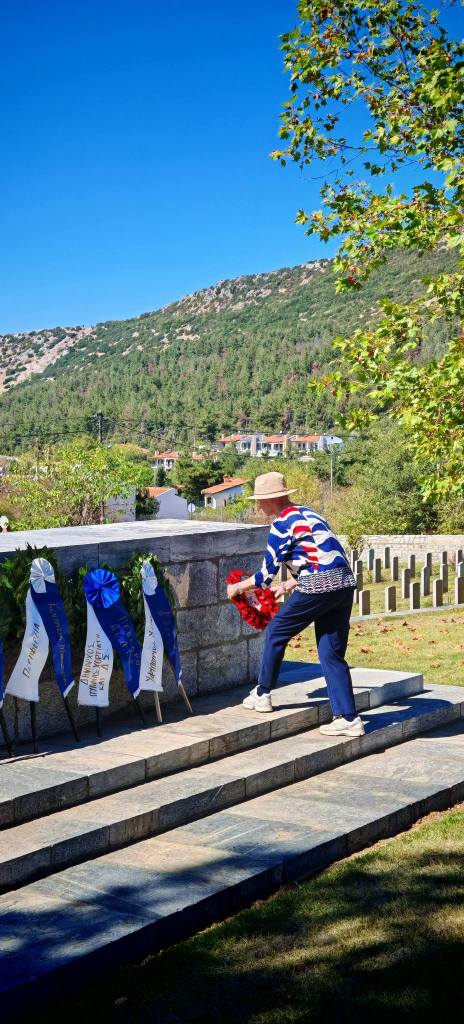
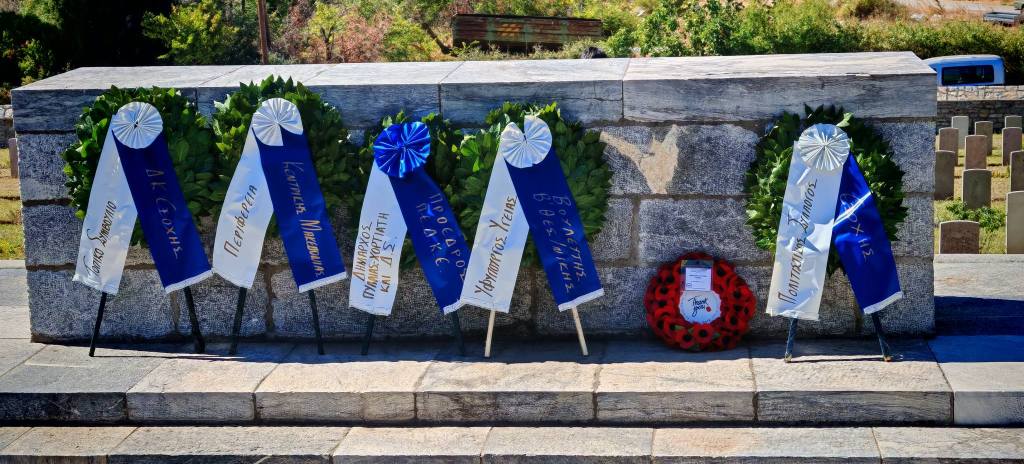
The tour began with a Ceremony of Remembrance at Kirechkoi-Hortkoi cemetery, with a wreath laid by Patron of the Society, the Honourable Ann Straker, before moving on to Triada village for an introduction on the BSF in the Struma Valley and the role of artillery on that part of the front.
You can follow the progress of the tour on Facebook here.
Podcast: “Lost in the Balkans: The Salonika Campaign of World War I with Chris Loader”
SCS Secretary Chris Loader recently recorded (on July 28th) a new podcast as part of the History Rage series in which he shares his personal connection to the Salonika Campaign, through his family history, and discusses the background and complexities of the war in Greece.
You can listen to the podcast here (or via the image below):
The podcast is also available via these other podcast channels:
Wot … no tanks?
A recent holiday in Dorset gave me the opportunity to visit the Tank Museum at Bovington, something I haven’t done for more than 50 years. It was very exciting, although a little alarming to find myself older than some of the exhibits! Although I did have a quick look at the First World War monstrosities (and took a few photos, below), they were not the reason for my visit. What I wanted to see were tanks from the Second World War: Matildas, Valentines, Churchills, Shermans – especially ‘The Funnies’ – and, my all time favourite, Cromwells … but that’s what happens when your formative years were spent with war comics, classic war movies and Airfix kits … lots of Airfix kits! Anyway, I wasn’t disappointed, but this is not the place to discuss my favourite tanks.
Continue reading “Wot … no tanks?”Pte George Excell of Wotton-under-Edge
One of the things I enjoy most about living in the county of Gloucestershire is its beautiful countryside and many wonderful walks. After a recent hike involving some strenous Cotswold climbs, I stopped for refreshments and recovery in Wotton-under-Edge. Of course, I had to take in the Wotton war memorial where I later discovered a Salonika connection…
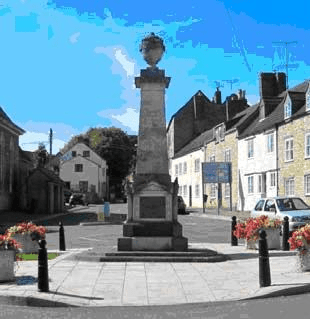
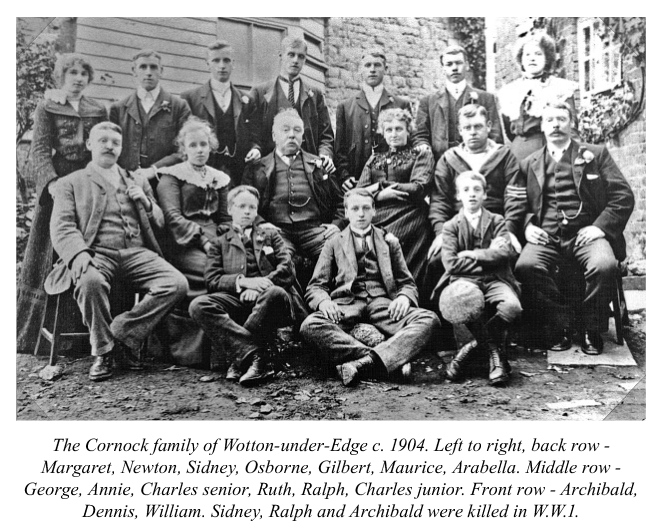
According to the town’s heritage centre, the memorial was erected in 1920 and unveiled by a Mrs Cornock. Apparently, and tragically, eight of her sons served in WWI – three did not return*. Among the names on the memorial is that of George Edward Excell.
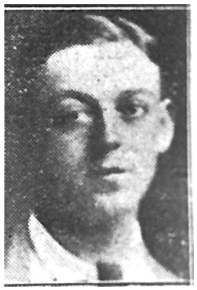
George Edward Excell was born in 1896 in Wotton-under-Edge, one of six children of Edwin and Elizabeth Excell, who lived in the Sinwell area of the town. His father, Edwin, worked as a rural postman, while his mother, Elizabeth served as matron at the Perry & Dawes Almshouses on Church Street, Wotton. Edwin died while George was still young.
After finishing school, George began working for Mr. G. W. Palmer, a boot maker based on Long Street in Wotton. Mr. Palmer later served in the Royal Naval Division as an Able Seaman during the Great War.
At the outbreak of the war, George enlisted in Wotton, joining the 11th Battalion of the Worcestershire Regiment with the service number 18644. The battalion was formed on 14 September 1914 as part of the 78th Brigade in the 26th Division. They trained in Wiltshire, including at Sherrington and on Salisbury Plain, before landing in Boulogne on 21 September 1915. Over the next two years, George saw extensive action on the front lines and was wounded twice.
George Excell recovered from his wounds and resumed service with the Worcestershire Regiment. In September 1918, the 11th Battalion of the Worcesters, including George, was deployed to the Salonika front.
On 16th October 1918, George’s mother, Elizabeth Excell, received a telegram stating that her son was dangerously ill in a hospital in Salonika. Tragically, George had already died of pneumonia four days earlier. It wasn’t until Saturday, 19th October, that she received confirmation of his death. George Excell was 22 years old.
George is buried at Doiran Military Cemetery, in Plot 5, Row H, Grave 28.
Source: ‘First World War Heroes of Wotton-under-Edge’ by Bill Griffiths available online here.
*Bill Griffiths’ book also includes this picture of the Cornock family and the three sons that never returned to Wotton-under-Edge.
Two videos that might be of interest…
Awarded the first SCS Philip Barnes Bursary in 2024, Dr Jake Gasson* recently spoke on ‘The Battle Against Boredom‘ at the National Army Museum. The topic was explored in August this year in this YouTube video for Redcoat History.
And earlier in the year, Jake also explained the background to the Salonika Campaign for Redcoat History.
*Dr Jake Gasson is a National Army Museum Fellow based at King’s College London, where he is a postdoctoral researcher. He obtained a DPhil from Pembroke College, Oxford, specialising in the Macedonian front of the First World War.
Join the 2025 Tour of the British Salonika Force Battlefields
The ‘Artillery & Small Operations’ Tour – Sunday 21 to Tuesday 30 September 2025
Explore the key locations of the British Salonika Force during the 2025 battlefield tour, with a special focus on artillery and the small-scale but intense operations that defined the campaign—raids, ambushes, and offensive patrols.
At Doiran, we’ll examine the crucial role of both British and Bulgarian artillery during the First and Second Battles of Doiran. On the Kosturino battlefield, we’ll revisit the desperate December 1915 fighting of the 10th (Irish) Division. In the Struma Valley, we’ll explore the sites of XVI Corps’ limited offensives between 1916 and 1918, as well as the defensive positions held by British forces.
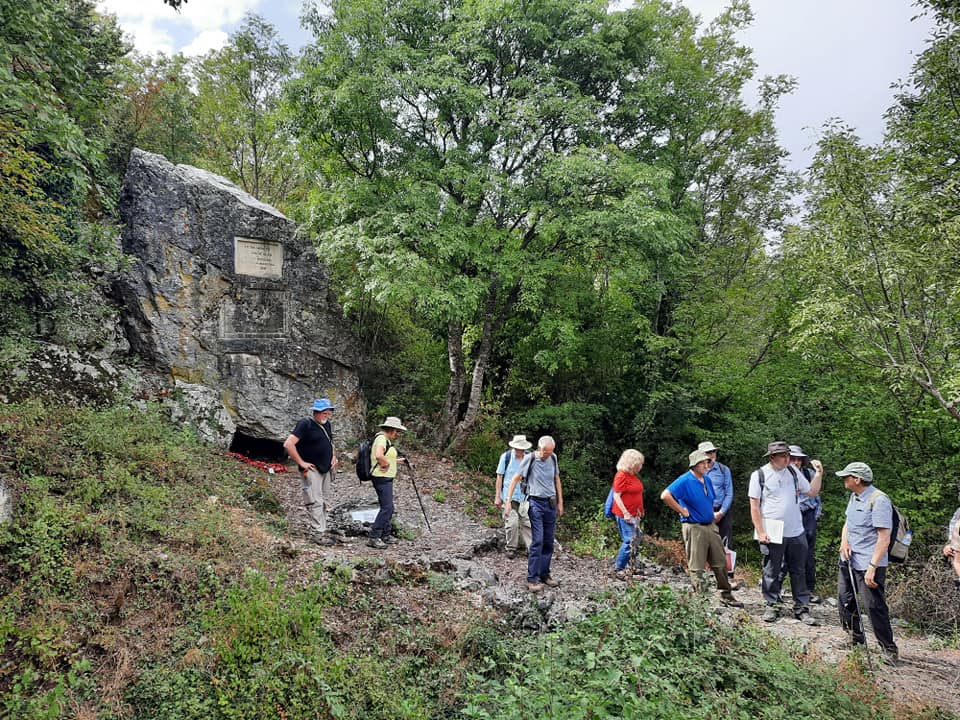
Our journey continues to Bowls Barrow and Smol (now Micro Dassos) in the Vardar sector, where we’ll see firsthand how operations were often designed to divert Bulgarian attention from Doiran. We’ll also visit sections of the Birdcage Line defences and the village of Mavroplagia (formerly Karamudli) in the Krusha Balkan Hills.
The tour will include visits to several Commonwealth War Graves Commission cemeteries, including Doiran (with the Memorial to the Missing), Karasouli, Kirechkoi-Hortakoi, Lembet Road, and Struma.
Running from Sunday 21 to Tuesday 30 September 2025, the tour is timed to coincide with the official commemorations marking the end of the Salonika Campaign, held over the last full weekend of September.
Led by SCS Chair, Alan Wakefield, this is a great opportunity to walk in the footsteps of BSF history.
To register your interest and receive further details, contact Alan Wakefield via email.
South Asian troops in the BSF
South Asian Heritage Month seems as good a time as any to consider the, often overlooked, South Asian contribution to the Macedonian campaign. Indeed, had the campaign continued into 1919, this contribution would have been even greater as plans were well underway to “Indianize” the BSF as had already happened in Palestine, but on an even greater scale.
Continue reading “South Asian troops in the BSF”Ribbit! Ribbit!
When I discovered that today is World Frog Day, I doubted that I could find any frogs with a Salonika connection. Then a memory stirred of a story read in The Mosquito – the journal of the Salonika Reunion Association – but would I find it again … ?
Continue reading “Ribbit! Ribbit!”Remembering Great Uncle David and 11/Welsh
Continue reading “Remembering Great Uncle David and 11/Welsh”It was five o’clock in the morning on the edge of hell. Captain Jimmy Eynon looked up through the goggles of his gas mask at Grande Couronne, cursed savagely, and kicked a rugby ball high into the air. Before it fell, a Welshman had been shot to pieces … and another … and another.
from ‘Now the Agony!’ by Gareth Bowen in ‘The South Wales Echo‘, 1964
 Salonika Campaign Society, 1915-1918