
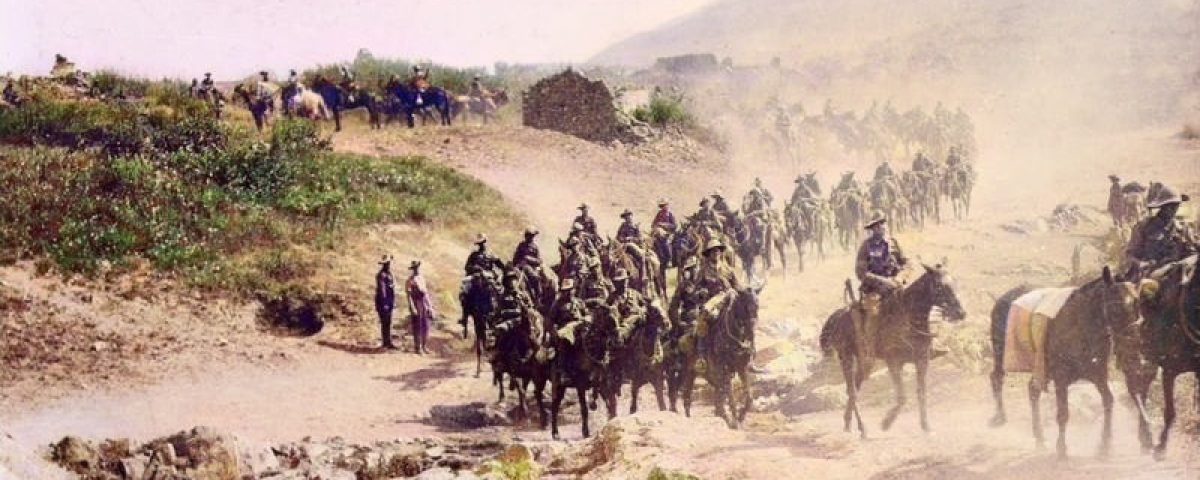
In April 2025 I described my exploration of another possible family connection (albeit by marriage) with the Salonika campaign. This concerned Lt George Clark who was the Medical Officer of 7/Royal Munster Fusiliers. His medal index card and the Battalion war diary (WO 95/4296) conclusively place him in Gallipoli but, to see what happened next, required a visit to The National Archives at Kew to look at the next part of the war diary which, of course, has not been digitised. I can now share the next stage of my investigations and, whilst I don’t expect you to be especially interested in my family history, what I found out about 7/RMF may be of wider interest.
Continue reading “More on the Munsters”Tag: 1915
Events during the year 1915.
Nick Ilić lecture on the ‘Serbian Golgotha’
Apologies for the late notice…
Tonight (Monday 9th February) at 7pm, Nick Ilić will be giving a free online talk (as part of the Serbian Council of Great Britain Serbian Month programme of events).
Nick says on ‘X’, “The talk is about the ‘Second Serbian Campaign’ that was taking place 110 years ago during the Great War. The events culminated in what became called the ‘Serbian Golgotha’ – where rather than surrender to the advancing German, Austro-Hungarian and Bulgarian Armies, the Serbs decided to retreat over the Albanian and Montenegrin mountains to the Adriatic Coast. Thousands perished.
The Serbs did not march on their own over the mountains – with them went the international military and medical missions that had deployed to Serbia in 1914 and 1915.
It is a most remarkable, heroic, tragic and little known story.
The events also witnessed the deployment of the French and British Salonika Armies to come to the rescue of the Serbs – but to no avail.”
To access the talk:
Join Zoom Meeting
https://us06web.zoom.us/j/88643782272?pwd=NMRfjni3cQdTiGy3bLvMDeNAgzYxeb.1
Meeting ID: 886 4378 2272
Passcode: 443996 from this page.
The Second Serbian Campaign of 1915: A Talk by Nick Ilić
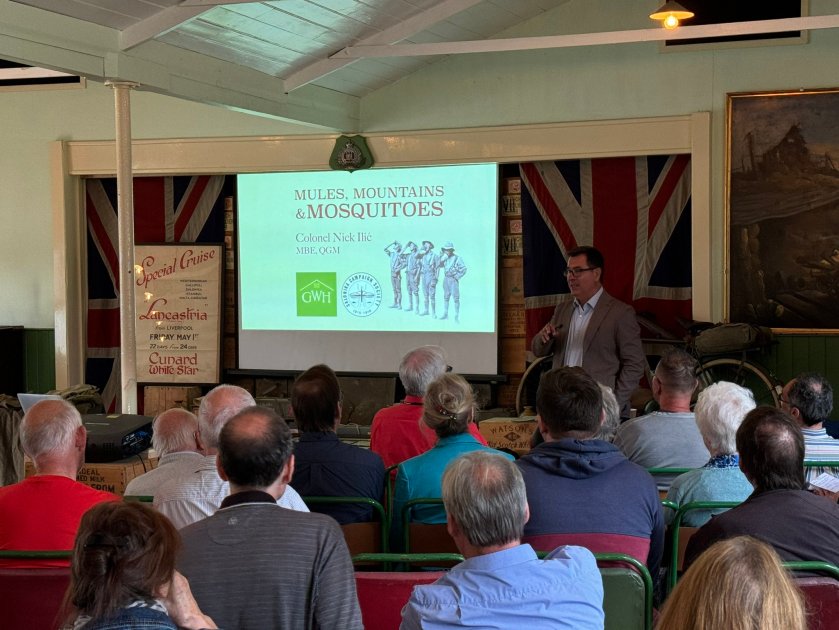
Colonel Nick Ilić MBE QGM, and former British Defence Attaché in the Embassy in Belgrade, will give a talk on the Second Serbian Campaign of 1915 at the National Army Museum, London, SW3 4HT, on Thursday, 20 November, at 2pm.
The talk will cover the arrival of the British and other international missions in Serbia, the Typhus epidemic, and the October 1915 invasion of Serbia that led to the Serbian Army’s epic retreat across the mountains to the Adriatic.
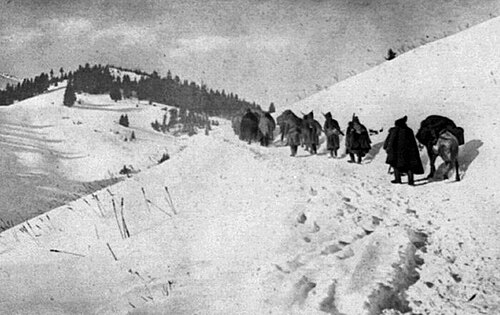
Image source: https://en.wikipedia.org/wiki/Great_Retreat_%28Serbia%29
The talk will last about an hour. If you have attended a talk given by Nick in the past, you will know how informed, informative and interesting the talk is going to be.
Admission is free, but please let Nick know by 18 November if you plan to attend.
The Sinking of the Marquette, 1915
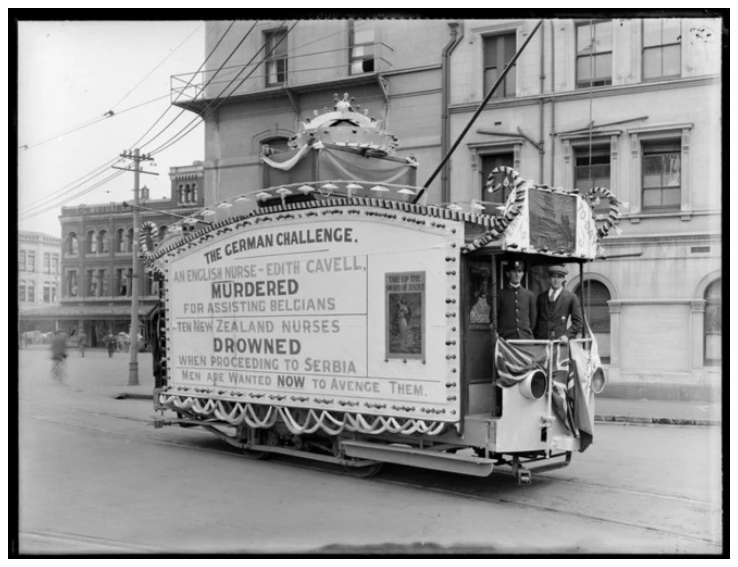
A little over 110 years ago, on Saturday 23 October 1915, the British transport ship Marquette was torpedoed by the German submarine U-35 as it entered the Gulf of Salonika. The ship sank within ten minutes. Of the 741 people on board, 167 died, including 32 New Zealanders – ten of whom were nurses.
The New Zealand Nurses
Most of the New Zealanders aboard were members of the 1st New Zealand Stationary Hospital. They had been serving in Egypt, treating casualties from Gallipoli, and were being transferred to support Allied operations in the Balkans. Among them was Staff Nurse Margaret Rogers, who had enlisted only months earlier in July. Indeed, The New Zealand Army Nursing Service was itself new and only established early in 1915.
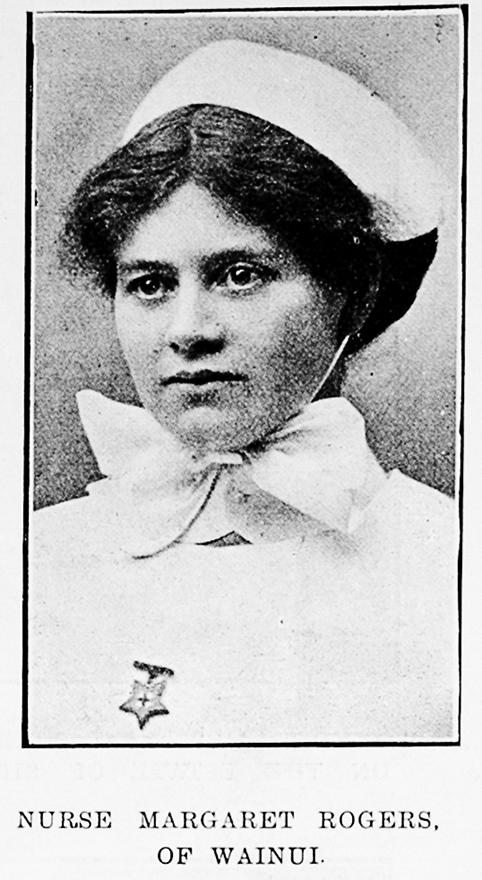
Image source: Nurse Margaret Rogers, URL: https://nzhistory.govt.nz/media/photo/nurse-margaret-rogers, (Manatū Taonga — Ministry for Culture and Heritage), updated 28-May-2024
The Marquette, originally a cargo vessel, had been adapted for wartime transport.
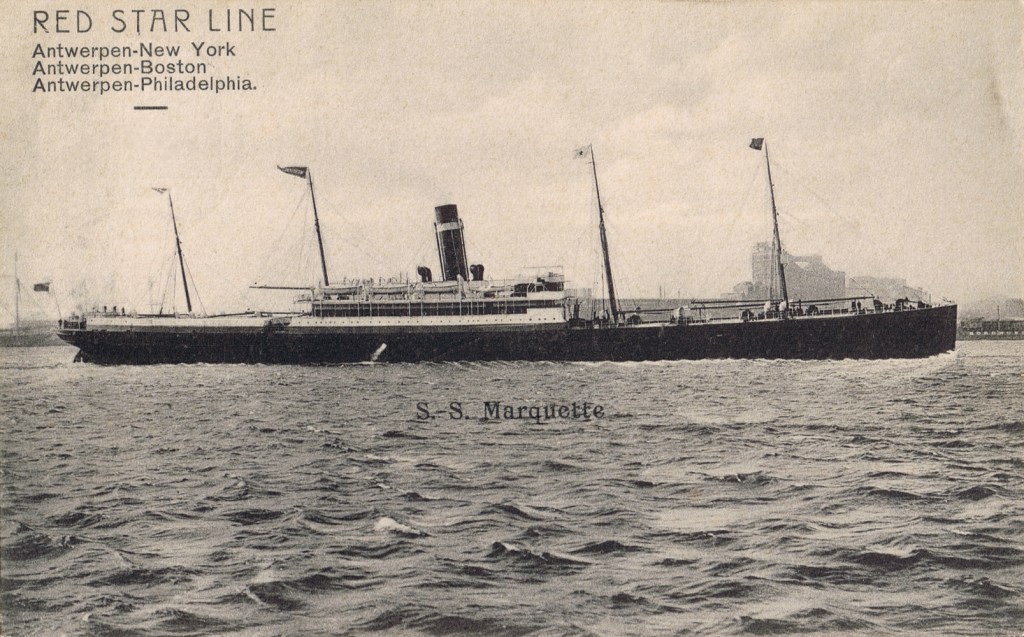
Image source: https://ww100.govt.nz/no-ordinary-transport-the-sinking-of-the-marquette
When it departed from Alexandria on 19 October, it carried medical personnel, British troops, over 500 mules, and ammunition. Although accompanied by a French destroyer during part of the journey, the escort departed the day before the attack.
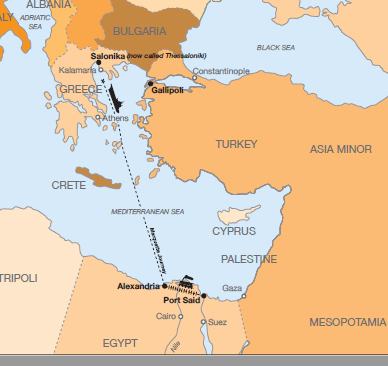
At approximately 9:15 a.m., witnesses reported sighting a torpedo shortly before it struck the starboard side of the ship. The impact caused the vessel to list sharply. Despite the suddenness of the event, many accounts describe those on board as remaining orderly.
Efforts to launch lifeboats were largely unsuccessful. Inexperienced personnel, the angle of the sinking ship, and mechanical difficulties led to lifeboats capsizing or being damaged. Several nurses and soldiers were killed during these attempts. It is believed that Margaret Rogers lost her life in this phase of the evacuation.
Ten New Zealand nurses and 22 men from the New Zealand Medical Corps and No. 1 Stationary Hospital died.
Survivors spent several hours in the water, exposed to cold conditions and exhaustion. Some clung to wreckage; others assisted colleagues unable to swim. Rescue vessels, including British and French destroyers, arrived later in the day. Six days later,on the 29th October, all surviving nurses and some medical officers returned to Alexandria on the hospital ship, the Grantully Castle.
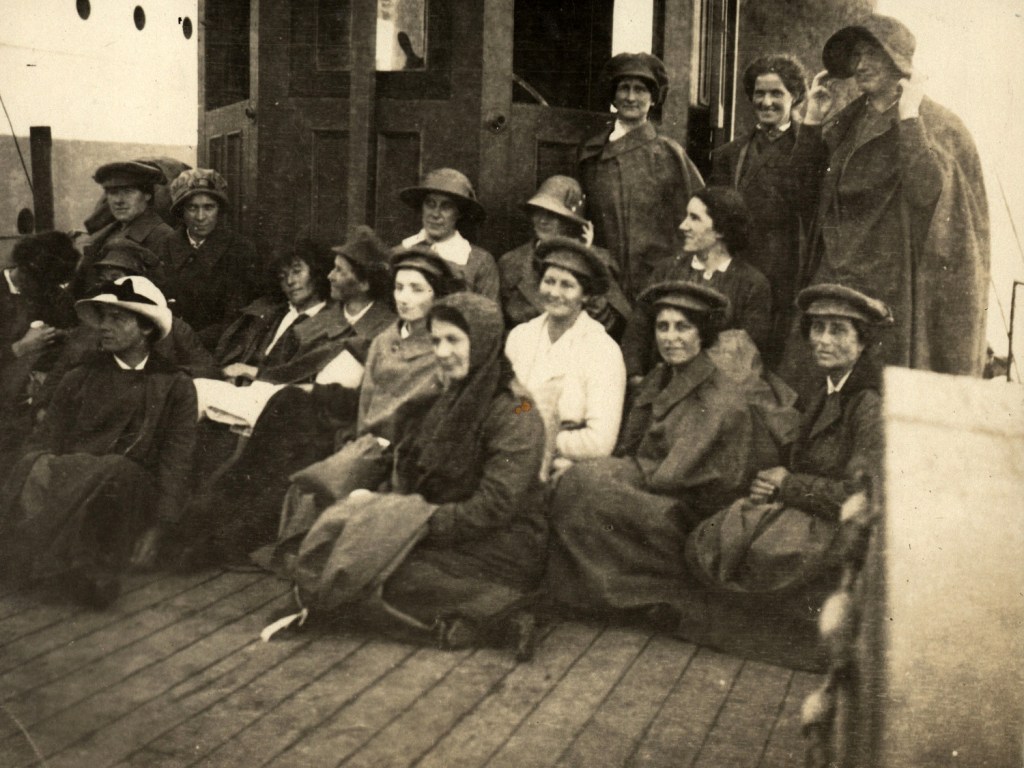
Image source: https://ww100.govt.nz/no-ordinary-transport-the-sinking-of-the-marquette
Aftermath
The sinking of the Marquette led to outrage about the decision to transport medical personnel on a vessel carrying ammunition and troops rather than on a hospital ship. Marked with a red cross, hospital ships could sail with a much greater degree of safety with the protection of the Geneva Convention. The troopship was, for German submarines, a valid target.
One can only imagine the emotions of the survivors as they undertook the journey to Salonika again later in the year in order to establish a tented hospital at Lembet Camp. The hospital was in operation until March 1916, when it left for France.
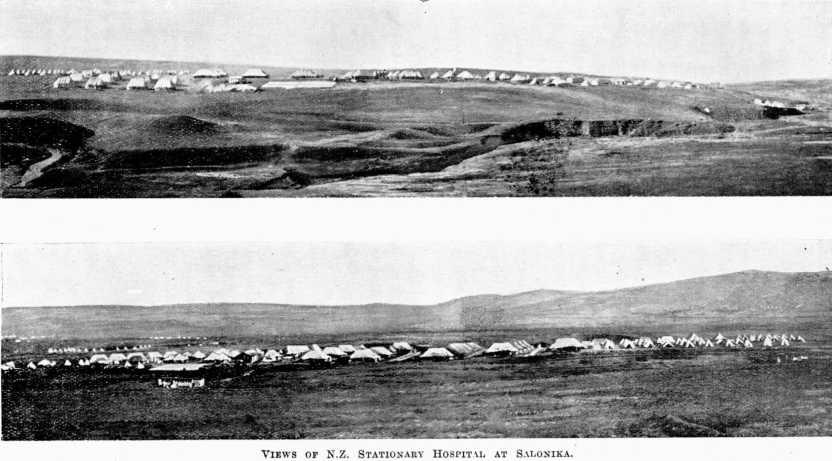
Image source: https://nzhistory.govt.nz/media/photo/1st-new-zealand-stationary-hospital
In Memory
Margaret Rogers is buried at the Mikra British Cemetery at Kalamaria where there is a memorial to the loss of the Marquette.
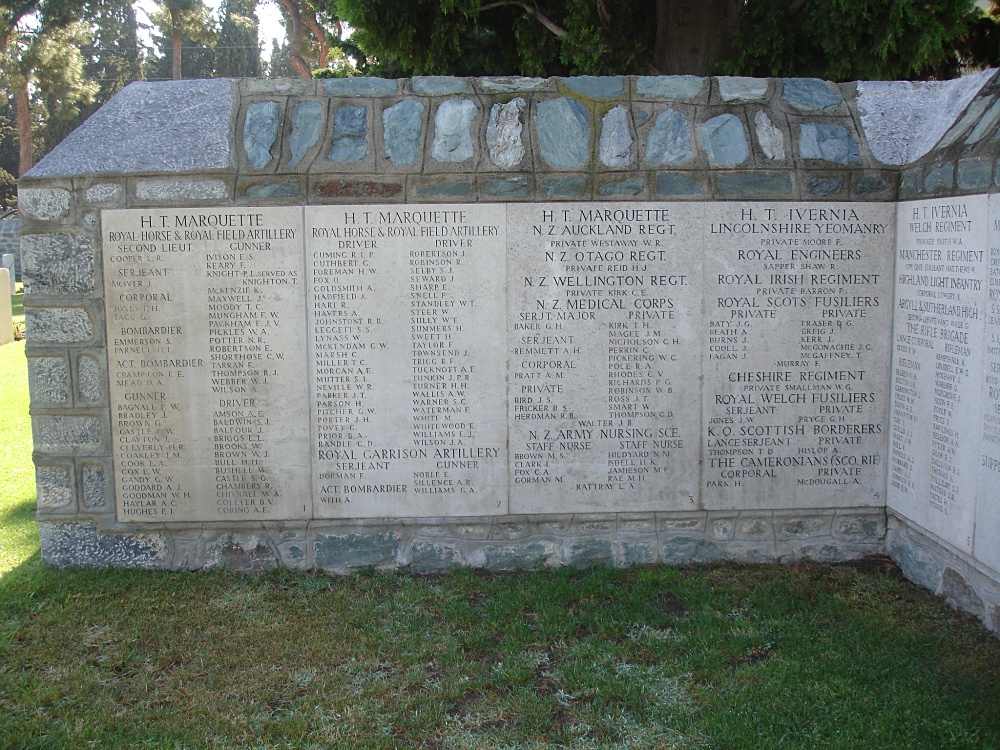
Margaret is also listed on the war memorial at Akaroa where her father lived.
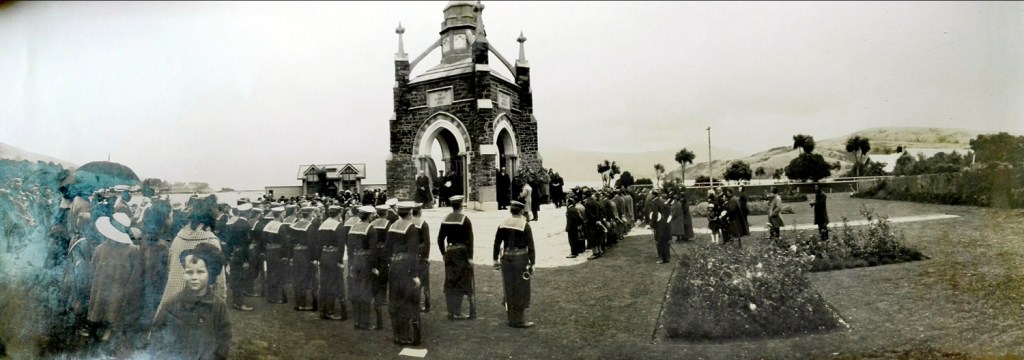
Image source: https://nzhistory.govt.nz/memorial/akaroa-war-memorial
Margaret and the other nine nurses lost in the Marquette sinking are remembered at the Nurses’ Memorial Chapel at Christchurch Hospital and at the Marquette Nurses’ Memorial at Waimate.
The events of 23 October 1915 are also dramatised in the Australian TV series, ANZAC Girls, which until December 31st, 2025 is freely available to view here.
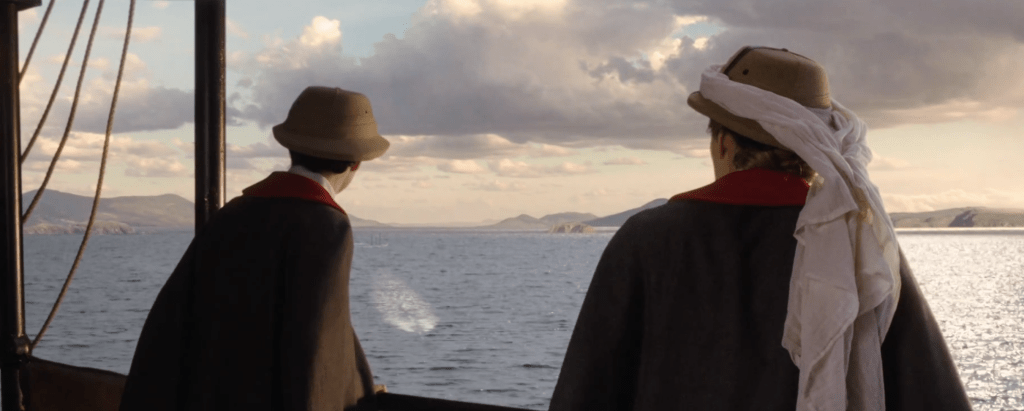
Image Source: Episode 3, https://player.stv.tv/summary/all3-anzac
Footnote
Wreckage of the Marquette was found in May 2009 by a Greek dive team. It rests in 87 metres of water of the Thermaikos Gulf in the North Aegean Sea. A protection order for the wreck has been sought by The British Embassy in Greece.
Reference Links
- https://www.armymuseum.co.nz/2023-today-in-history-marquette-sinking/
- https://ww100.govt.nz/no-ordinary-transport-the-sinking-of-the-marquette
- https://nzhistory.govt.nz/media/video/marquette-great-war-story
- https://ww100.govt.nz/no-ordinary-transport-the-sinking-of-the-marquette
- https://www.cnmc.org.nz/the-marquette/
- https://www.rnz.co.nz/news/national/287792/%27all-of-a-sudden-there-was-this-bang%27
- https://www.cnmc.org.nz/resources/museum/prentice-papers/
Another Salonika connection … ?
I don’t think I have ever written here on Gallipoli, except in passing about those troops who went on to Salonika. I mean no disrespect to those of all nations who fought and died in the Gallipoli campaign but, with no family connections to the campaign, as with so many other areas of the First World War, I have had no more than a passing interest. I will admit, too, to a little irritation that with the landings in Gallipoli coming so hard on the heels of the start of the Second Battle of Ypres, this latter battle is so often overlooked (see Tuesday’s post). However, I have now had to revise my opinion.
Continue reading “Another Salonika connection … ?”One hundred and ten years ago …
Recently, I had the good fortune to find a reasonably priced copy of Bruce Bairnsfather’s memoir, Bullets & Billets (Grant Richards Ltd, December 1916). This covers his time as a junior officer in the Royal Warwickshire Regiment on the Western Front from November 1914. To my knowledge neither he, nor his famous creation ‘Old Bill’, had any connections with the BSF. So why do I mention him here?
Continue reading “One hundred and ten years ago …”Remembering Samuel Jenkins and 6/Royal Inniskilling Fusiliers
My thanks go to David Jenkins who – rather longer ago than I am prepared to admit – shared the story of his grandfather, along with some fascinating photos.
Samuel Jenkins enlisted in the 6th (Service Battalion), Royal Inniskilling Fusiliers on 1 September 1914, the Battalion having been raised in Omagh during the previous month. Samuel’s service with The Skins is a little hazy, but we know he sailed from Liverpool in early July with the rest of 10th (Irish) Division, with his overseas service commencing with his disembarkation on 11 July 1915, probably on Lemnos. One (!) of his National Archive medal index cards give this date with the note ‘(2B) Balkans’, meaning ‘Balkan Theatre – Gallipoli and Aegean Islands’. This made him eligible for the 1914/15 Star. Four weeks later, the Division landed at Suvla Bay, Gallipoli.
Continue reading “Remembering Samuel Jenkins and 6/Royal Inniskilling Fusiliers”Soles of boots were tied on with rags
Although women who had served in Salonika – in whatever capacity – were eligible to join the SRA from the very start, they didn’t gain their own specific section in The Mosquito until September 1931 (issue 15), with Eileen Moore’s ‘Woman’s Page’. Later, this was expanded to ‘Women’s Pages’ and continued for the rest of The Mosquito’s long existence. So it was only right and proper that the final issue in May 1969 – a longer, glossier souvenir album, entitled Salonika Memories 1915-1919 – included it’s own ‘Women’s Pages’. By now this was edited by Miss N. M. Simcox. In her final editorial, she had this to say:
Continue reading “Soles of boots were tied on with rags”That song!
As I suspected, the song that Andy gave us on 7 January – Salonika – has been going round and round in my head. It’s also been leading me down various rabbit holes on the internet. The lyrics are available on a range of websites, alongside some very earnest discussions about the meaning of the song, including some rather fanciful descriptions of the role of Salonika in the First World War: a supply base for the Gallipoli campaign. Really?
Continue reading “That song!”“Now, Dasher! now, Dancer!
Continue reading ““Now, Dasher! now, Dancer!”… now Prancer and Vixen!
On, Comet! on, Cupid! on, Donner and Blitzen!
To the top of the porch! to the top of the wall!
Now dash away! dash away! dash away all!”
 Salonika Campaign Society, 1915-1918