My thanks go to Australian author Bojan Pajic for sharing a link with us to a fascinating article on the Australian War Memorial website about Australians and New Zealanders who served on the Serbian Front.
The New Mosquito of April 2015 (issue 31) contains a fascinating article by Dr James Wearn of the Royal Botanic Gardens, Kew, entitled ‘Risking their lives to collect plants on the Salonika Front’. It is about the eight members of Kew Gardens’ staff who served in Salonika with the armed forces, but were able to collect plants as an extra-curricular activity.
Some while later I was contacted about this article by Emeritus Professor Arne Strid, distinguished Swedish botanist and expert on Greek flora, whose two-volume Atlas of the Aegean Flora was published in 2016. Professor Strid provided additional interesting information about plant collecting in the region and kindly allowed me reproduce this here.
It was pointed out today that the one thing everyone remembers about the 14th Army is that it was ‘The Forgotten Army’! It is to be hoped that today’s VJ Day commemorations will get people beyond that fact, to recognise what an incredibly diverse force it was and that it was, by and large, an Indian Army that won victory in Burma. Continue reading “Remembering the Indian Army on VJ Day”
Are you enjoying the hot weather? I don’t mind it hot as long as I can sit in the shade and not do anything! When it is particularly hot I often think about the BSF and the trials of putting up with hot weather – day after day – along with the dust and flies and having to dig or lug around ammunition boxes and stores or maybe a Lewis gun. Continue reading “What a scorcher!”
I am a member of just two military societies, the SCS – of course – and The Friends of the Suffolk Regiment. The latter on account of my grandfather who served with the Regiment from 1906 until 1914, when he volunteered for the newly created Army Cyclist Corps. The latest issue of the Friends’ Gazette (No. 16, March 2020 pp6-7) touches on the Macedonian campaign, so I thought I would share this with you and explore further an inconsequential – but to me entirely fascinating – piece of military ephemera, which follows on very nicely from my previous post on slouch hats in Salonika.
Many of you will be familiar with ‘Away from the Western Front’ (AFTWF), which was a First World War centenary project funded by the Heritage Lottery Fund and was supported by the expertise of the Salonika Campaign Society. Salonika featured as a campaign in several of the AFTWF sub-projects including their work with homeless veterans and the Sandham Memorial Chapel and also Castle Drogo where one of their stonemasons, Pte WG Arscott, fought and died in Salonika with the 10th (Service) Battalion, Devonshire Regiment. Continue reading “Away from the Western Front and the ‘Turin men’”
Apologies for a heading with not one but two acronyms. However, with your interest in the Salonika Campaign and the national news coverage since the outbreak of the Coronavirus pandemic, both should be well known to you. We currently hear every day about the lack of sufficient Personal Protective Equipment for NHS and care workers in the front line of the fight against COVID-19. Back in 1916, soldiers of the BSF faced a similar lack of PPE when about to face their first summer in Northern Greece, an area known for endemic malaria, especially the Struma Valley. By the end of the campaign, two years later, the BSF had suffered a total of 162,517 malaria cases, a third of all its hospital admissions during the war.
Despite the War Office knowing of the malarial threat and sufficient notice being given by BSF GHQ of its equipment needs for summer 1916, the men serving under Lt Gen George Milne suffered severe shortages of vital equipment, chief amongst which were mosquito netting and sun helmets. At this time the BSF’s administration came under GHQ Egypt. Under these arrangements ships carrying equipment and stores for the BSF sometimes came out to Salonika via Alexandria and it was not unknown for material considered vital to the needs of the Egyptian Expeditionary Force (EEF) to be unloaded before the ships sailed on to the Aegean.
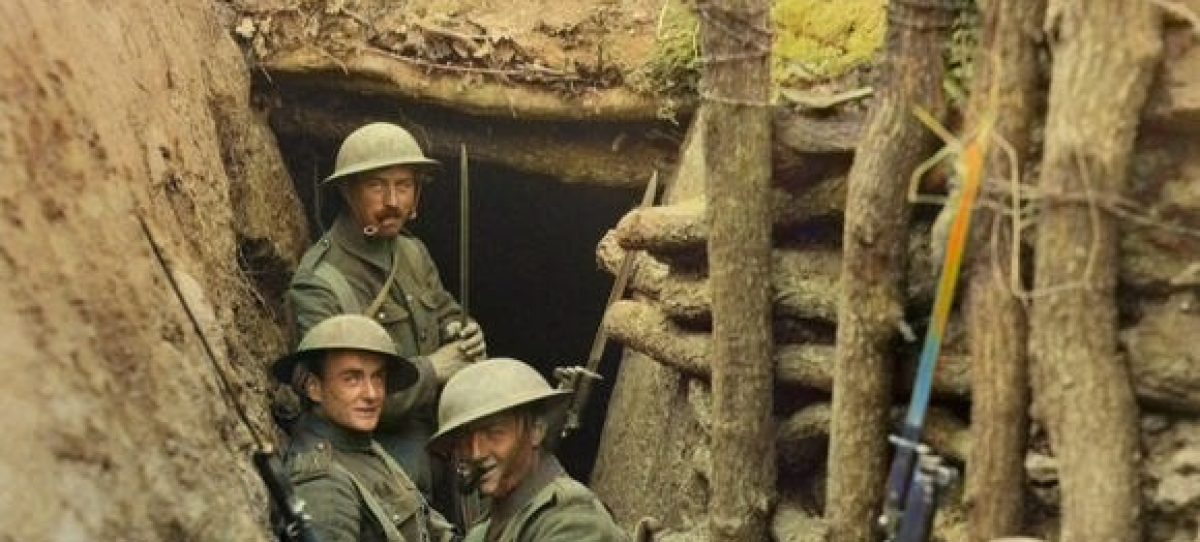
Although the missing sun helmets were replaced by slouch hats, making members of the BSF resemble ANZACs for their first summer campaigning, the lack of mosquito netting was not made up and adversely impacted on troops in the front line. Worst hit were the units of XVI Corps in the Struma Valley. Here, high daily sickness rates due to malaria, led to the formation of composite battalions at brigade level, with only enough men fit to form a single weak battalion from as entire brigade for front line service. All other officers and men were to be found somewhere on the medical chain or forming a cadre to keep alive the original units. By July 1916, 10th (Irish) Division was suffering a sick rate of 150 men per day and 28th Division was not far behind.
In July 1916, unable to provide his men with sufficient protective equipment, Milne ordered General Briggs to withdraw his troops from their line along the River Struma between Orlyak and Lake Tahinos. This summer withdrawal into the foothills, to protect the health of the front line soldiers, became routine for the BSF for the remainder of the campaign.
A mosquito net head cover as issued to the BSF (IWM EQU 3855)
Once the War Office directly devolved administration of the campaign to Milne’s GHQ on 21 September 1916, the commander of the BSF was better placed to ensure the maximum available anti-mosquito equipment arrived for summer 1917. Unfortunately, delays in procurement led to continued shortages during the opening months of the BSF’s second malarial season. In December 1917, Sir Ronald Ross, one of the world’s leading authorities on malaria, visited the Salonika Front and produced a report for the War Office on the effects of and potential counter measures to malaria in northern Greece. This expert medical advice, along with the War Office decision to send minimal additional manpower to Salonika, ensured the flow of PPE reaching Milne’s troops reached adequate levels for the final summer of the campaign.
Lance Corporal Harrison (12th Lancashire Fusiliers) wearing full anti-mosquito PPE in June 1918 (Private Collection)
The PPE included the mosquito net head cover shown in the accompanying photographs. This piece of equipment was worn tucked into the shirt or tunic. In combination with specially designed shorts, the legs of which could be unbuttoned and rolled down and wrapped into puttees, and a pair of gloves, no skin was left exposed to potential mosquito attack. This equipment was generally worn by those on night duty, when mosquitoes were at their most active. Second Lieutenant Richard Skilbeck-Smith (1st Leinsters) likened the look of a soldier wearing the equipment to a cross between a scarecrow and a beekeeper. Even nurses found themselves required to wear such unwieldy PPE whilst making night rounds at hospital.
Along with this specialist personal equipment, all bivouacs, tents and huts and hospital beds were equipped with mosquito netting. Training in the use of all anti-mosquito equipment was rolled out across the BSF and medical officers and sanitary sections made spot checks to ensure troops were making correct use of their nets so as to keep malaria infection rates as low as possible. Even so, by 1918, there were 15,000 chronic malaria sufferers in the base hospitals around Salonika. These men were debilitated by the disease and were of little military value, a factor always borne in mind by Milne and his subordinate commanders when planning military operations. It is no wonder then, as Cyril Falls records in volume 2 of the Official History of the campaign, that Milne declared the mosquito net to be ‘as important as a rifle.’
My thanks go to Bernard Green who contacted the Society to tell us about his book on Zeppelins, which includes a section on LZ85 – brought down over Salonika on 5 May 1916 – and, in particular, its compass. Bernard very kindly sent a copy of the book so that I can tell you more about it. Continue reading “The Story of the LZ85 Compass”

 Despite the War Office knowing of the malarial threat and sufficient notice being given by BSF GHQ of its equipment needs for summer 1916, the men serving under Lt Gen George Milne suffered severe shortages of vital equipment, chief amongst which were mosquito netting and sun helmets. At this time the BSF’s administration came under GHQ Egypt. Under these arrangements ships carrying equipment and stores for the BSF sometimes came out to Salonika via Alexandria and it was not unknown for material considered vital to the needs of the Egyptian Expeditionary Force (EEF) to be unloaded before the ships sailed on to the Aegean.
 Although the missing sun helmets were replaced by slouch hats, making members of the BSF resemble ANZACs for their first summer campaigning, the lack of mosquito netting was not made up and adversely impacted on troops in the front line. Worst hit were the units of XVI Corps in the Struma Valley. Here, high daily sickness rates due to malaria, led to the formation of composite battalions at brigade level, with only enough men fit to form a single weak battalion from as entire brigade for front line service. All other officers and men were to be found somewhere on the medical chain or forming a cadre to keep alive the original units. By July 1916, 10th (Irish) Division was suffering a sick rate of 150 men per day and 28th Division was not far behind.

 Salonika Campaign Society, 1915-1918