

As is customary on the first Saturday after the anniversary of the Bulgarian armistice (30 September 1918), SCS members and friends gathered at the Cenotaph in Whitehall on Saturday 5 October to lay a wreath and remember the dead of the British Salonika Force.
Continue reading “Remembering the BSF”Category: Meetings and events
Salonika Study Day – A Resounding Success!
Both new and old visitors to Great War Huts enjoyed an inspirational day of presentations, chat and site tours on Saturday 31 August. The venue, at Brook Farm Camp, Bury St Edmunds is a unique site in which to learn about the personal, military and social history of the First World War – and it was ideal for a study day focusing on the Salonika Campaign.
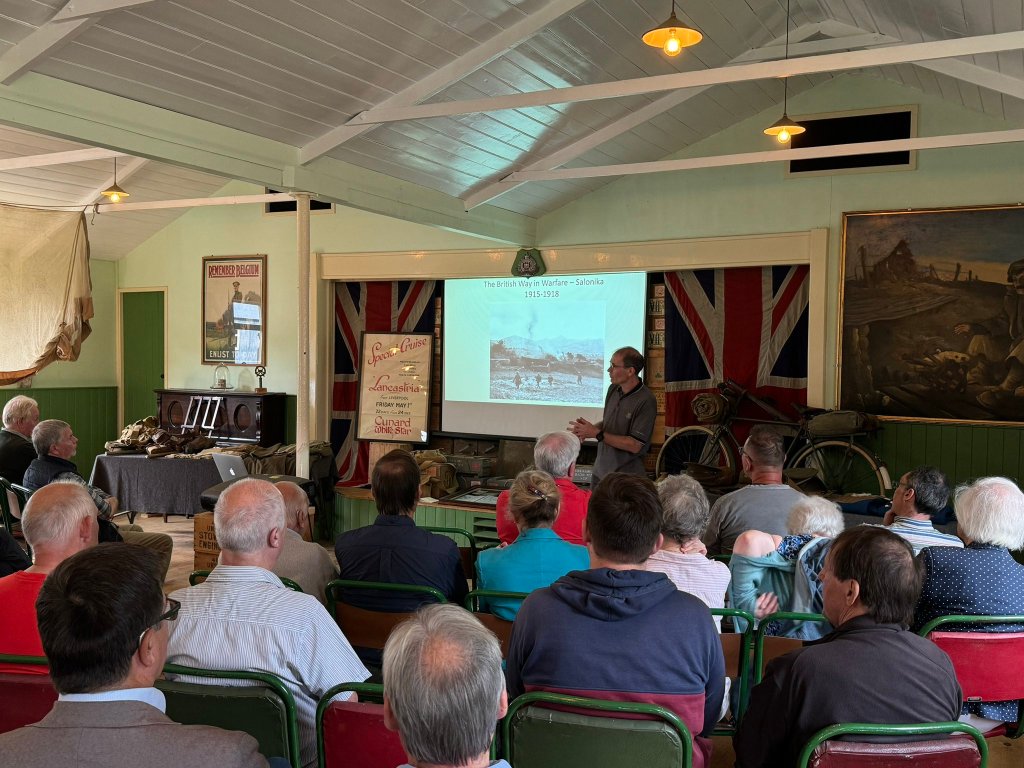
Ably chaired by SCS member, Keith Roberts, the day began with a welcome from military historian and Great War Huts founder, Taff Gillingham. SCS Chair, Alan Wakefield then spoke of ‘The British Way in Warfare – How the BSF Conducted Military Operations in Macedonia 1915-1918’. Alan focused on different geographical areas in Salonika and how the British army adapted to the terrain of each area, whether in the Struma valley or on the Dorain front.
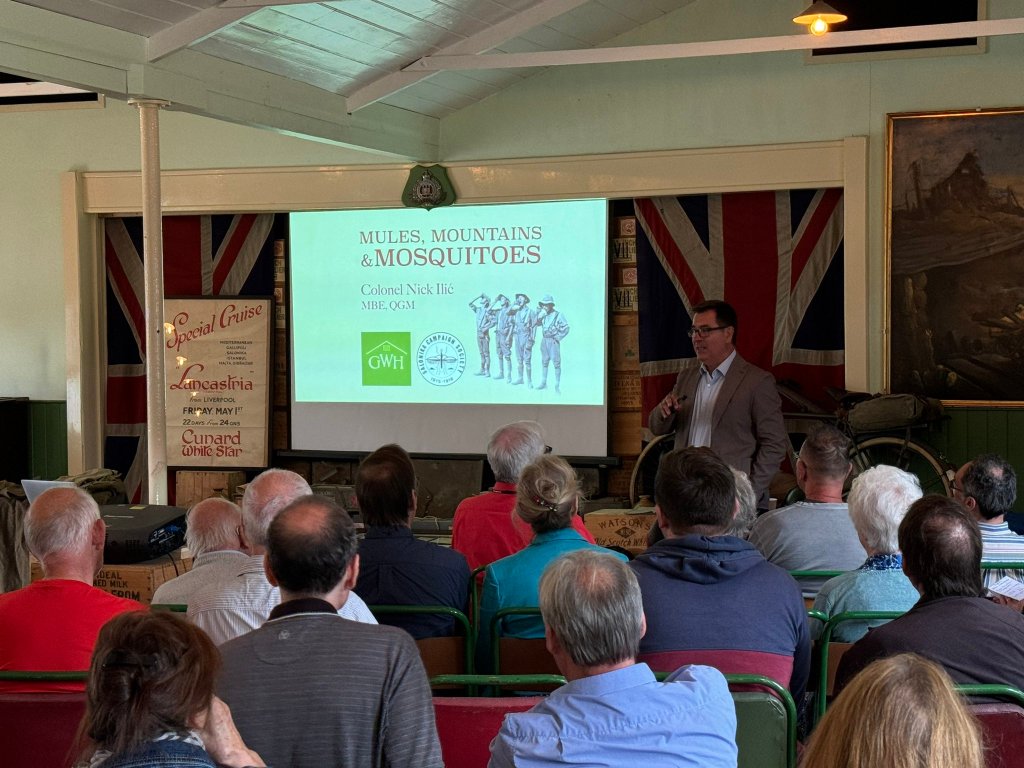
Second speaker of the day was Colonel Nick Ilić MBE QGM on ‘The British who defended Serbia during the Great War 1915-18 – The story of Admiral Ernest Troubridge and the wider British contribution to the Second Serbian Campaign through to the end of the War’. I had no previous knowledge of who Troubridge was or his role in the campaign but Nick’s fascinating presentation brought to life Troubridge’s enormous contribution in a story that we shall surely return to on this site.
Lunch, provided as part of the day, gave visitors the opportunity to view exhibitions, to tour the site and appreciate the truly ground-breaking nature of the Great War Huts project.
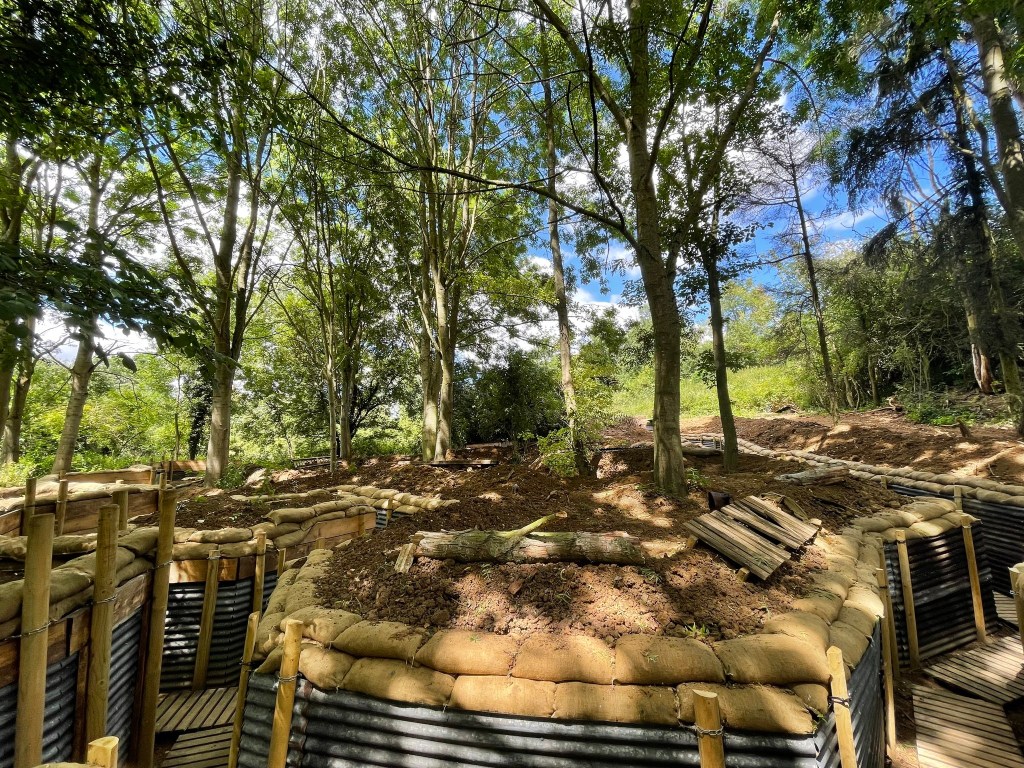
Trench reconstruction at Brook Farm Camp. Image source Great War Huts
Refreshed, we returned to hear Taff Gillingham’s engaging and expert talk on ‘Uniforms and Equipment of the British Salonika Force’. Taff based his session on photographs from the time, pointing out features of uniform and illustrating these with real items of clothing to highlight the practical uses and implications for the men of the campaign.

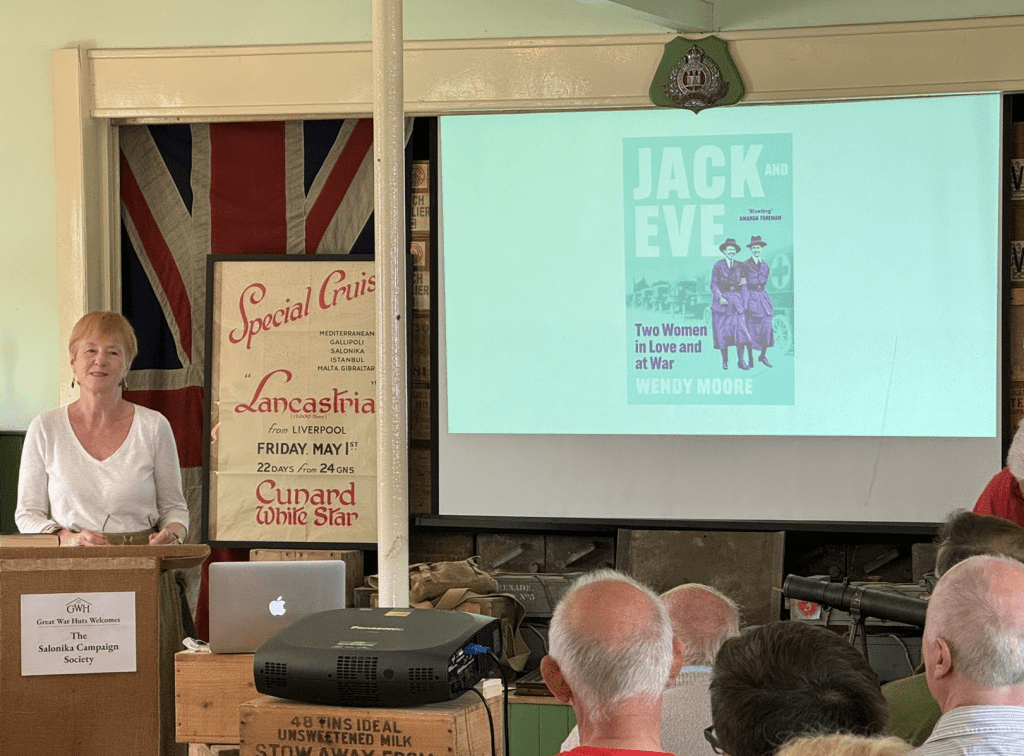
Wendy Moore then gave us a moving and uplifting talk: ‘With the Scottish Women’s Hospitals in Serbia, Russia and Romania: the story of Vera ‘Jack’ Holme and Evelina Haverfield in love and at war’. This provided a shift in focus from the campaign and the activities of men, to the contribution of women in the Scottish Women’s Hospitals and, in particular, the personal lives of the remarkable Jack and Eve.
There was time for some scrumptiouus cake and tea before the final presentation of the day from none other than fellow author of these blog posts, Robin Braysher. Inspired by his grandfather Fred Braysher’s service, Robin gave a fascinating talk: ‘On Patrol with the Pneumatic Cavalry: innovation and adaptability in the Army Cyclist Corps in northern Greece, 1915-18.’ Who knew that a Lewis Gun could be carried on a bicycle, ready for instant use through its quick release clips!

The day concluded with a Q&A session, chaired by Keith, where all the speakers of the day faced questions from the audience. My key memory of this was an impassioned answer from Taff Gillingham on what had inspired his interest in the Great War. I only wish that I had recorded it as my notes and memory can in no way do justice to his reponse!
This was a truly special day and a great collaboration between the Society and Great War Huts. My personal thanks go to all those organising, speaking and contributing to the success of the day – not least to the GWH hospitality heroes Jane and Alan for delicious lunches, cakes and refreshments, and to GWH volunteer Mark for guiding us through the trenches at lunchtime.

Links
- Great War Huts
- Wendy Moore author of ‘Jack and Eve, Two Women In Love and At War’
- Colonel Nick Ilić MBE QGM
Salonika Study Day – Book Now!
We are very pleased to announce a special day focusing on the the Salonika Campaign, at the Great War Huts site near Bury St Edmunds, Suffolk. The date for your diary is Saturday 31 August.
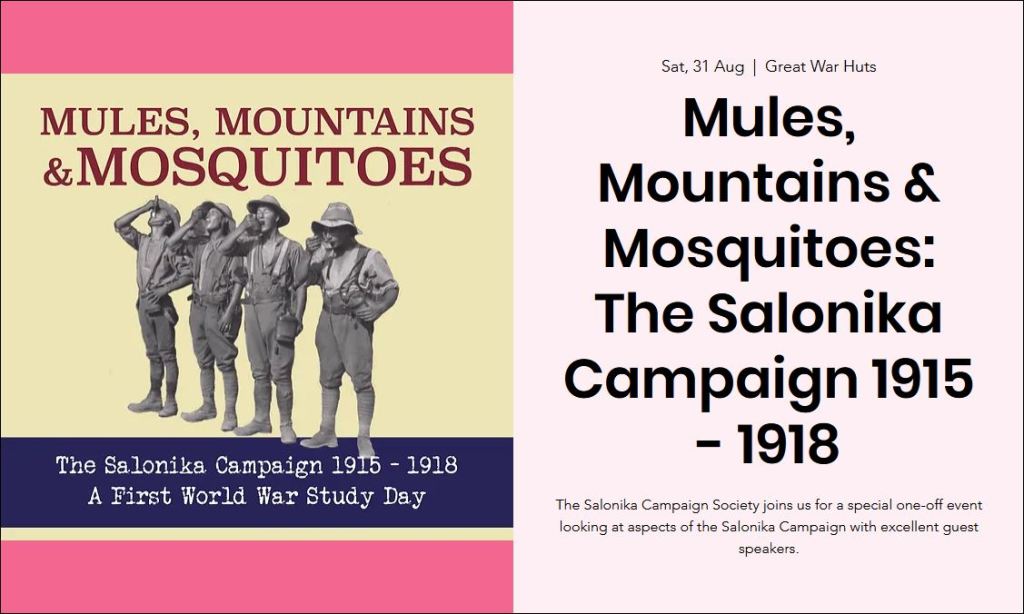
Together with our friends at Great War Huts, we have planned a special study day featuring five talks on aspects of the Salonika Campaign with expert speakers – including our own Alan Wakefield and Robin Braysher. The day also gives the chance to learn more about the work of Great War Huts and to visit the reconstructed First World War huts and trench network on site.
All this for just £25 – and that even includes lunch! Tickets MUST be booked in advance.
Full details of the day, the location, and how to buy tickets can be found here.
On Yer Bike!
With my particular interest in the Army Cyclist Corps in the Macedonian campaign, I could hardly let ‘World Bicycle Day’ go unnoticed!
Continue reading “On Yer Bike!”Field of Remembrance – Westminster Abbey
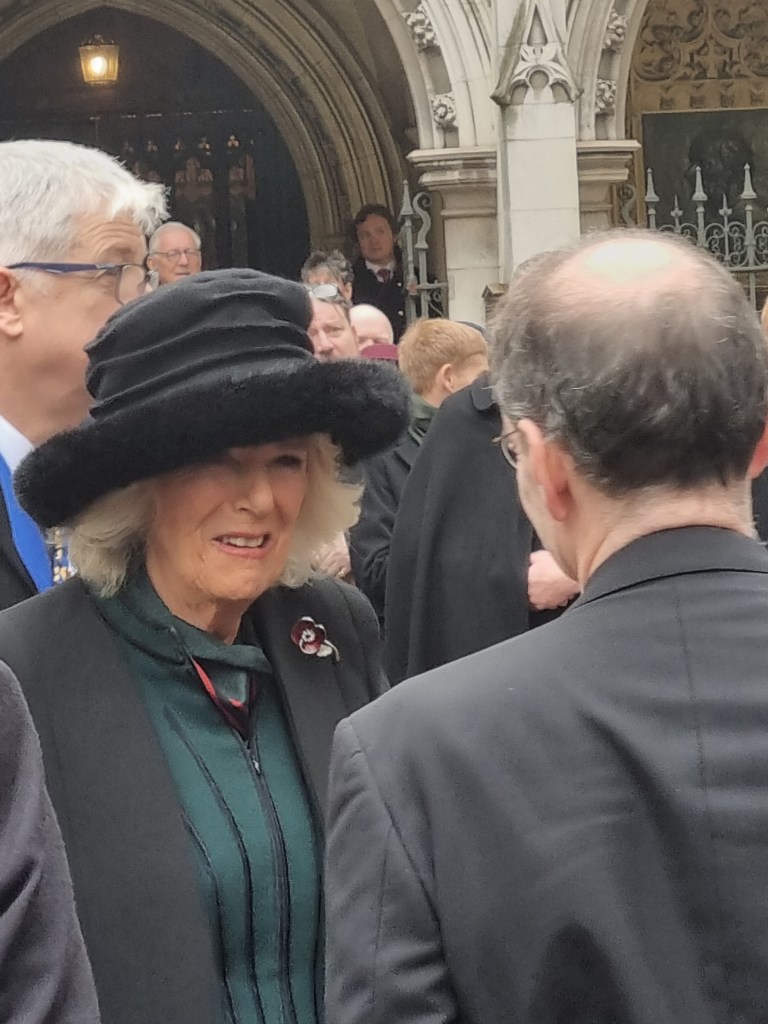
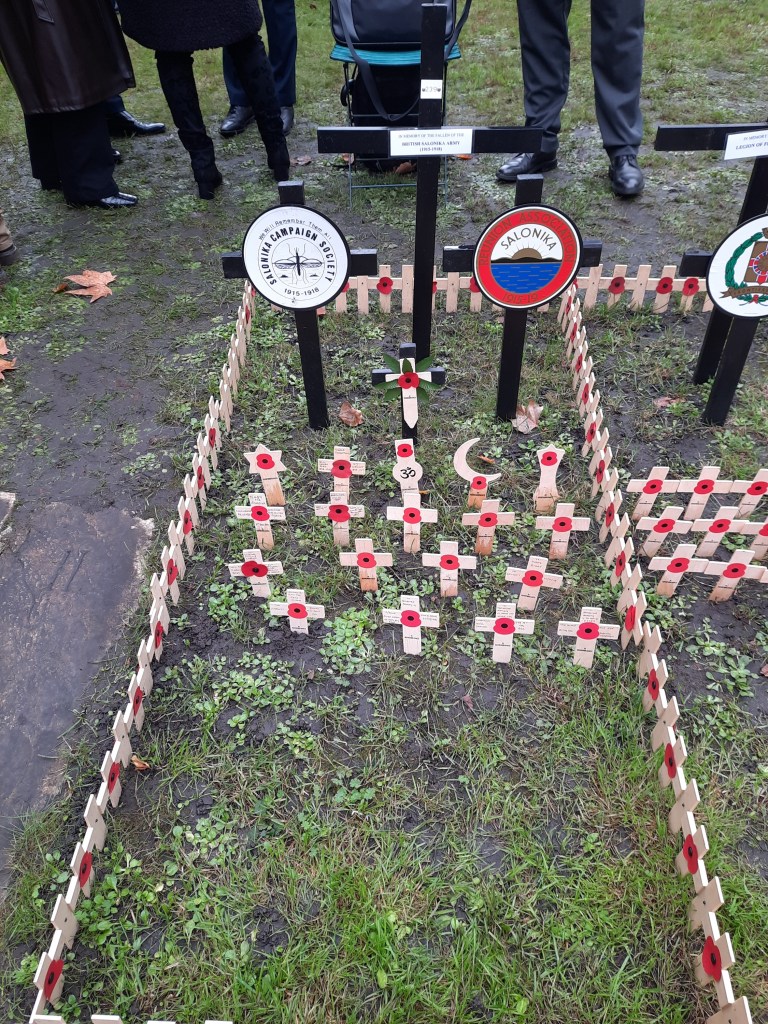
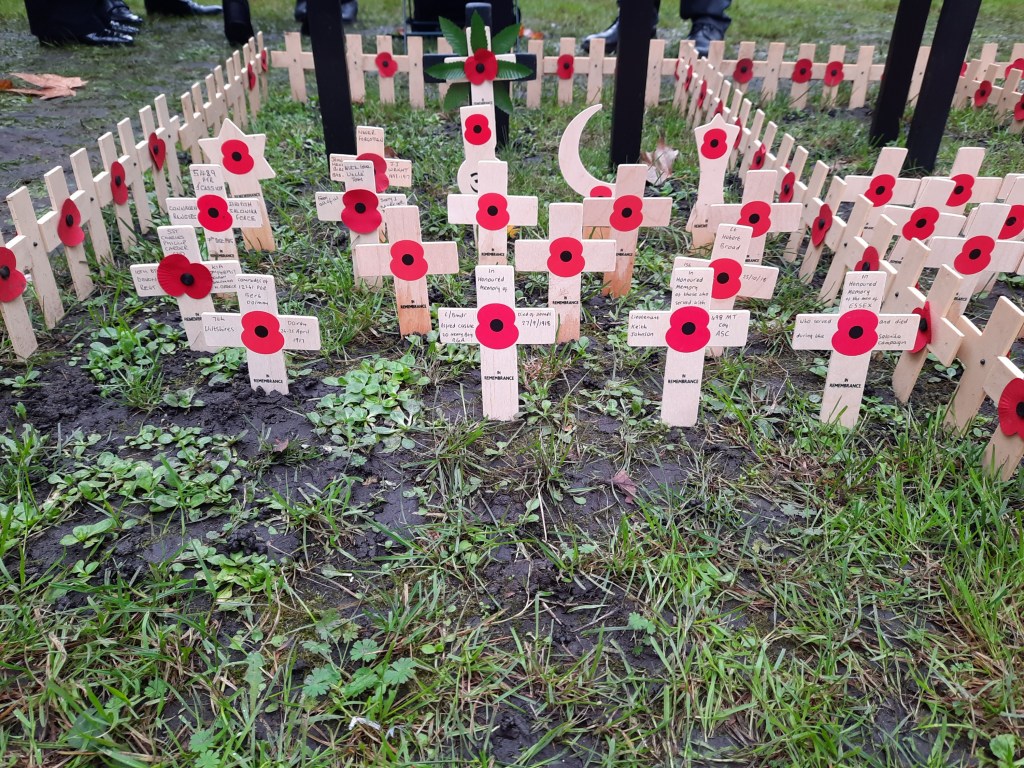
On the morning of Thursday 8 November, SCS Chair, Alan Wakefield, represented the Society at the Opening of the 95th Field of Remembrance outside Westminster Abbey. SCS members Jonathan Saunders and Darren Rolfe were also in attendance. The Field is organised by the Royal British Legion’s Poppy Factory and the SCS is very lucky to have its plot in a prime location opposite the west door of St Margaret’s Church, which stands alongside the Abbey. This year the Field was opened by Her Majesty Queen Camilla who is Patron of the Poppy Factory.
Annual General Meeting – 2023
The SCS Annual Meeting takes place on Saturday 7th October. If you haven’t already reserved your place, please do so by Monday September 25th. Click here for details of how to do this. We look forward to seeing you at the AGM!

Spring Webinars from the WFA
Readers may well be interested in the following webinars* from the Western Front Association. To join, please register using the links below. Start time for all webinars is 8pm (UK time).
1. Monday 15 May – Delayed in the Desert: The Gaza Stalemate and Beersheba Breakthrough
In this presentation, Robert Fleming will talk about how in 1917, British Prime Minister David Lloyd George ordered the Egyptian Expeditionary Force to capture Jerusalem by Christmas. This was – arguably – a diversion from the main focus of the war on the western front. He believed this would be a good ‘Christmas Present’ for the British people. However, the route to Jerusalem was across the Sinai desert and blocked by the Ottoman defences at Gaza and Beersheba. The eventual Allied victory at the Battle of Beersheba was a grave setback for the Ottoman Empire and led to the eventual defeat of the Central Powers in what was then Palestine.
To register for this webinar, click this link: Delayed in the Desert
2. Monday 22 May – Allenby’s Checkmate: Jerusalem to Victory in the Middle East, 1918
Robert Fleming will follow up from the previous week’s talk by picking up the story after the capture of Beersheba, and exploring how Allenby skilfully mustered and mastered his resources to defeat the Ottoman Army at the Battle of Megiddo and end the war in the Middle East.
To register for this webinar, click this link: Allenby’s Checkmate
3. Monday 5 June – The Road to 11 November: War and Politics in 1918
This presentation by Prof David Stevenson will reappraise the final stages of the First World War in Western Europe, analysing the factors that led Germany to seek an armistice and led the Allies and the United States to grant one. Particular attention will be given to the turn of the tide and to the sources of Allied superiority on the Western Front; and to the interaction of political and military considerations in shaping decision-making during the ceasefire negotiations of October-November 1918.
To register for this webinar, click this link: The Road to 11 November
*Webinars are also subsequently published on the WFA’s YouTube Channel.
SCS Battlefield Tour 2023: September 24 – October 2
After the success of the 2022 Salonika Battlefield Tour, the SCS offers another chance to visit a number of key sites linked to the history of the British Salonika Force.
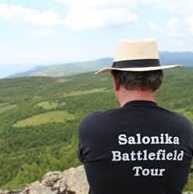
If you have not visited the ground once trodden by the BSF, we encourage you to come along as there is nothing like walking the ground to help get a better understanding of the campaign and the experiences of the men and women who served in the Balkans during the First World War.
The tour, starting on Sunday 24th September and finishing on Monday 2nd October, will be led by SCS Chair and co-author of Under the Devil’s Eye, Alan Wakefield. The plan is for the tour to cover Thessaloniki, The Birdcage Line, The Struma Valley, the Doiran battlefield, the Krusha Balkan Hills and the Roche Noire Salient. The tour group will also attend official ceremonies of Remembrance connected to the Salonika Campaign and visit a number of the CWGC cemeteries.
For further information, please contact SCS Chair, Alan Wakefield by email here.
Proposed Itinerary
Sunday 24th September
Tour group meets at the airport in Thessaloniki at 11.10am
Visit to Birdcage Line defences
Overnight in Doiran
Monday 25th September
Visit to the Doiran Battlefield – Grand Couronne, The Hilt, Hill 340
Overnight in Doiran
Tuesday 26th September
Visit to Doiran Battlefield – La Tortue, Petit Couronne, Pip Ridge
Overnight in Doiran
Wednesday 27th September
Visit to the Doiran Memorial & CWGC Cemetery
A trip into the Krusha Balkan (‘Cushy Balkan’) Hills
Overnight in Kilkis
Thursday 28th September
A drive through the Krusha Balkan Hills to the Struma Valley
Visit to the village of Mavroplagia (formerly Karamudli) once sponsored by the Salonika Reunion Association.
Paleokastro Bulgarian trench network
Skotoussa (Prosenik) village – site of 4th Rifle Brigade ambush in 1918
Overnight in Serres
Friday 29th September
Visits to various locations in the Struma Valley including:
Monokklisia and Provatas (The Karajakois and Yenikoi)
BSF Outpost line river defence line positions
CWGC Struma Cemetery
CWGC Kirechkoi-Hortakoi Cemetery
Overnight in Thessaloniki
Saturday 30th September
Visit to Lembet Road Allied Military Cemetery
Visit to Monastir Road Indian Cemetery
Visit to the site of the former BSF GHQ
Overnight in Thessaloniki
Sunday 1st October
Attend ceremony of commemoration at the Allied Five Nations Memorial near Polykastro
Visit to CWGC Karasouli Cemetery
Visit to the Roche Noire Salient
Overnight in Thessaloniki
Monday 2nd October
End of tour and return home
Memorial Service and Talk
The ‘Ninth Annual Memorial Service for Women in Foreign Medical Missions in the Great War’ takes place on Saturday 18th February 2023.
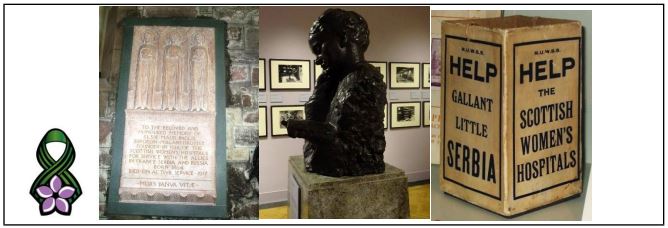
The event takes from 11:00 -14:30 at the Serbian Orthodox Church of St Sava
89 Lancaster Rd, London W11 1QQ with speakers Colonel Nick Ilic, the former British Defence Attaché in the Embassy in Belgrade, and Zvezdana Popovic.
- 11.00 – Memorial Service in The Serbian Orthodox Church of St Sava
- 13.00 -14.30 – Refreshments and Talk in the Bishop Nikolaj Community Centre
The occasion will also feature a talk about the legacy of Dr Elsie Inglis, Scottish Women’s Hospitals and women in other foreign medical missions in Serbia, Corfu, Vido and the Salonika Front after the death of Dr Inglis.
If you would like to attend, RSVP via: info@serbiancouncil.org.uk
You can download the event poster below:
Featured image source: Wikipedia
Swindon soldiers from Salonika Campaign set to be remembered
Working with the Society, Swindon Borough Council intends to commemorate the role of Swindonians in the Salonika Campaign. We are grateful to the Swindon Advertiser for allowing us to reproduce this article which explains the Council’s plans.
“The men of Swindon and Wiltshire who fought in a long and bitter, if often forgotten, campaign in World War I will be remembered by a plaque or some other memorial.
Members of Swindon Borough Council voted unanimously to approve a motion brought by Conservative councillor Jake Chandler.
He said he had been set on the way of researching the Salonika campaign by his great-grandfather and he had learned of significant links to Swindon and Wiltshire and the fighting which took place in Greece and what is now North Macedonia in the southern Balkans between allied forces and The Bulgarian army with support from Germany, Turkey and Austria-Hungary.
Coun Chandler added: “I have been in contact with the Salonika Campaign Society and there are 41 pages of names about 900 military personnel from Swindon.”
The link with Swindon is so strong because the 7th Battalion of the Wiltshire Regiment, the 79th Infantry Brigade of the 26th Division, which had many men from Swindon in its ranks was one of the allied units, fighting on the front there for three years from 1915.
Also operating in the theatre were the Royal Engineers, and Swindon’s railway works and the skills of the men meant many of them fighting in that regiment and in the Salonika campaign were responsible for laying miles of new railway track.
The presence was such that landmarks in the area were given names such as Swindon Hill, Rickley Hill and the names of other villages around north Wiltshire.
Coun Chandler said: “There is a unique connection to this episode in history.”
The motion was seconded by the council’s Military Champion, Coun Lawrence Elliott.
He said: “Many from Swindon made the ultimate sacrifice out in the Balkans, far from home, and did not come back to a hero’s welcome.
“My grandfather came from Australia to do his bit and he lasted about three weeks in France. His sacrifice is marked on the Menin Gate, and my family can remember him.
“But many from Swindon and around have nowhere to remember those who fought and dies in this campaign.”
As Armed Forces Champion, Coun Elliott will “investigate the commissioning of a commemorative plaque or other memorial in partnership with the Salonika Campaign Society to be completed by 2025, in time for the 110-year anniversary of the start of the conflict”.
There will also be documents photographs and maps relating to the campaign put on display in the museum and art gallery when it puts on exhibitions and Swindon’s role in the First World War.”
Featured image, Swindon Hill. Source: Imperial War Museum
 Salonika Campaign Society, 1915-1918