Once Through The Alphabet

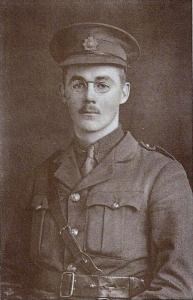
Whilst the BSF did not produce a poet of the stature of Wilfred Owen, it did have Rifleman T. B. Clark of the King’s Royal Rifle Corps whose poetry was published in a small volume – Rhymes of A Rifleman – by William Nicholson & Sons Ltd of London. Whilst this has not been perpetuated through exam syllabuses, from it we get an interesting view of the campaign from a thoughtful, pre-war private soldier. So, for National Poetry Day, here is Rifleman Clark’s poem, Once Through The Alphabet – Tommy’s Version, composed in the trenches in Macedonia, October 1917.

Continue reading “Once Through The Alphabet”

South Asian troops in the BSF

South Asian Heritage Month seems as good a time as any to consider the, often overlooked, South Asian contribution to the Macedonian campaign. Indeed, had the campaign continued into 1919, this contribution would have been even greater as plans were well underway to “Indianize” the BSF as had already happened in Palestine, but on an even greater scale.

Continue reading “South Asian troops in the BSF”

‘Salonika Secrets’ – a new podcast

In December of last year, we posted about a podcast series that featured an interview with Society member Chris Loader who had travelled with the Society on the September 2023 SCS Battlefield Tour to visit the grave of his great-great-grandfather, Henry Albert Obadiah Loader.

Inspired by a visit to Doiran Military Cemetery during the tour, Chris has now branched out to record his own podcast series: Salonika Secrets.

'Salonika Secrets' - a new podcast from Society member Chris Loader

‘Salonika Secrets’ – a new podcast from Society member Chris Loader

The podcast tells of Chris’s search to identify an unknown British officer commemorated at Doiran. Without giving too much away, Chris has so far managed to narrow down the identity to an officer who served in the 12th Hampshire Regiment. You can listen to the podcast free on Spotify, Amazon and Apple and, no doubt, other podcast providers. Chris also posts updates and extra information on ‘X’ (formerly Twitter) here.

Good luck with the search Chris!

Remembering Samuel Jenkins and 6/Royal Inniskilling Fusiliers

My thanks go to David Jenkins who – rather longer ago than I am prepared to admit – shared the story of his grandfather, along with some fascinating photos.

Samuel Jenkins enlisted in the 6th (Service Battalion), Royal Inniskilling Fusiliers on 1 September 1914, the Battalion having been raised in Omagh during the previous month. Samuel’s service with The Skins is a little hazy, but we know he sailed from Liverpool in early July with the rest of 10th (Irish) Division, with his overseas service commencing with his disembarkation on 11 July 1915, probably on Lemnos. One (!) of his National Archive medal index cards give this date with the note ‘(2B) Balkans’, meaning ‘Balkan Theatre – Gallipoli and Aegean Islands’. This made him eligible for the 1914/15 Star. Four weeks later, the Division landed at Suvla Bay, Gallipoli.

Continue reading “Remembering Samuel Jenkins and 6/Royal Inniskilling Fusiliers”

Remembering Great Uncle David and 11/Welsh

It was five o’clock in the morning on the edge of hell. Captain Jimmy Eynon looked up through the goggles of his gas mask at Grande Couronne, cursed savagely, and kicked a rugby ball high into the air. Before it fell, a Welshman had been shot to pieces … and another … and another.

from ‘Now the Agony!’ by Gareth Bowen in ‘The South Wales Echo‘, 1964
Continue reading “Remembering Great Uncle David and 11/Welsh”

William Richmond and 10/Black Watch (4)

William Richmond was demobbed in 1919; his medal index card in The National Archives shows that he entered the ‘Class Z Reserve’ on Valentine’s Day. This allowed him to return to civilian life, but there was an obligation to ‘return to the colours’ if necessary, an obligation which was not abolished until 31 March 1920. The card also shows that he was eligible for the famous trio of Great War campaign medals known as Pip, Squeak and Wilfred, named after cartoon characters: the 1914/15 Star (for his service overseas before 31 December 1915), the British War Medal and Victory Medal.

Continue reading “William Richmond and 10/Black Watch (4)”

William Richmond and 10/Black Watch (3)

In January 1918 General Headquarters (GHQ) in Salonika felt the need to issue memoranda reminding commanders of formations that they were responsible for the efficiency of their units and for the training of all officers and men in them. In certain technical fields training had to be done at army schools but, generally, the purpose of these schools was to support units by training the trainers who would share, what we would now call ‘best practice’, within them. By this time GHQ Salonika had a number of schools under its control, covering subjects such as infantry training, artillery, signals, the Lewis Gun and anti-gas precautions. A School of Physical and Bayonet Training was also set up, with an Assistant Superintendent authorised by the War Office to coordinate and supervise this training, with a staff of 10 NCOs from the Army Gymnastic Staff (Official History vol. 2, chap. III). Our next sight of William Richmond is as a student at this School.

Continue reading “William Richmond and 10/Black Watch (3)”

William Richmond and 10/Black Watch (2)

On Burn’s Night (25 January) I introduced William Richmond who, at the age of 20, enlisted in the 10th (Service) Battalion of the Royal Highland Regiment (Black Watch) on 11 September 1914. After finding themselves in various English camps during 1915 and spending two months in France the Battalion, with the rest of 26th Division, started heading off for Salonika – via Marseille – in November 1915.

Continue reading “William Richmond and 10/Black Watch (2)”

A lost world …

Although the White Tower would have been familiar, my late grandfather would not have recognised modern Thessaloniki – the vibrant Greek city rebuilt after the great fire of 1917 and developed in the decades after that. To him and other members of the British Salonika Force who passed through it was very much an eastern city – not always remembered fondly – populated by a multiplicity of different peoples. Notable among the inhabitants was the strong Jewish community, but the fire of 1917, subsequent upheavals and the appalling events of the Holocaust changed the city forever.

Continue reading “A lost world …”

William Richmond and 10/Black Watch (1)

Happy Burn’s Night to all our Scottish readers – wherever you are in the world – and all those Sassenachs who, like me, enjoy nothing more than tucking into a haggis with ‘neeps and tatties’, washed down with a ‘wee dram’!

This seems an ideal occasion to celebrate one of the Scottish units of the British Salonika Force – 10th (Service) Battalion, Royal Highlanders (Black Watch). Formed in Perth in 1914 the Battalion joined 26th Division (77th Brigade) and soon found itself far from the Highlands: on Salisbury Plain, in Bristol and Sutton Veny in Wiltshire. In September 1915 it sailed for France but, after just two months, it was off to Salonika where it remained until returning to the Western Front in June 1918.

Continue reading “William Richmond and 10/Black Watch (1)”