
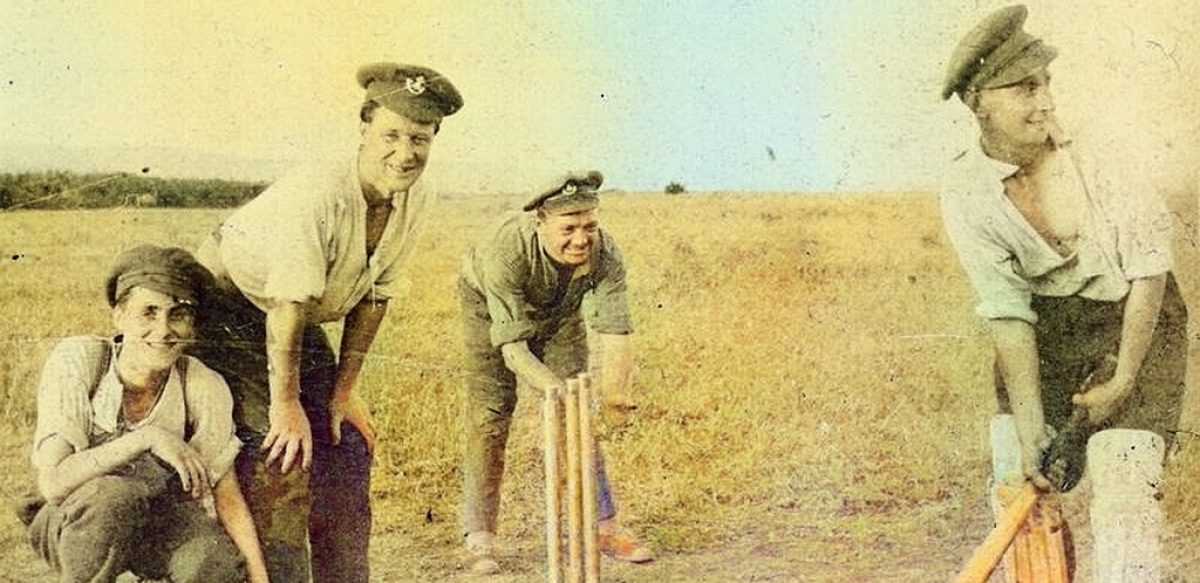
Salonika 1915-1918 (Stroud: Sutton Publishing, 2004)
1915
The Salonika campaign began on the 5th of October 1915 when one British and two French divisions were landed at the port of Salonika in neutral Greece. The troops had been sent to deter Bulgaria from joining an Austro-German attack on Serbia and they’d been invited to land by the Greek Prime Minister. Venizelos Venizelos actually fell from power almost at a time when the troops stepped ashore because there was a division in Greek politics that would blight the country for decades to come. This meant that the Allied force now faced a potentially hostile government in Athens, whilst trying to organise ways to materially support their Serbian Ally.
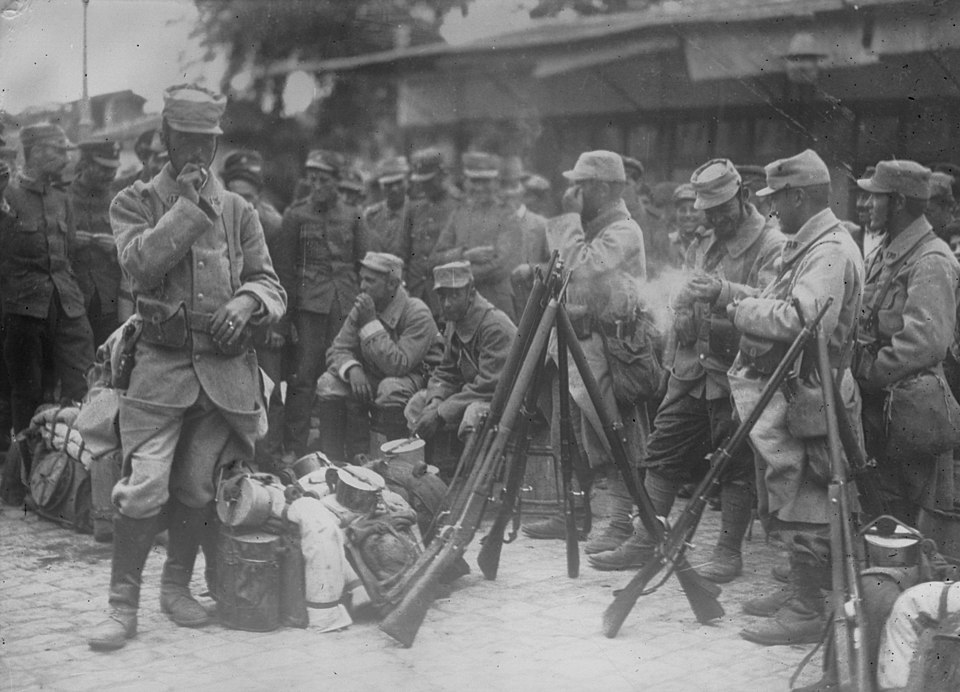
https://commons.wikimedia.org/wiki/File:French_soldiers-salonika-1915.jpg
By late October 1915, the British and French troops were in southern Serbia trying to maintain contact with the retreating Serbs who were under pressure from German, Austrian and Bulgarian armies. The Serbs could no longer defend their country and decided to undertake an epic march across the mountains of Albania in terrible weather conditions. Here the survivors were rescued by British and French warships and taken to the island of Corfu. On Corfu the Serbian army was rebuilt and re-entered the field at Salonika in 1916. The victorious Bulgarian army now turned its attention to the allied force in southern Serbia.
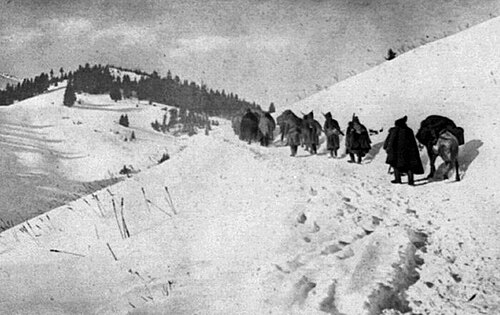
https://en.wikipedia.org/wiki/Great_Retreat_%28Serbia%29
In heavy snow on the 7th of December 1915, elements of the second Bulgarian army smashed into the 10th Irish division’s improvised line on Kostorino Ridge. In two days of heavy fighting, over a fog-shrouded battlefield, the Irish were pushed back by weight of numbers and within a week all British and French troops were back on Greek soil and heading for Salonika.
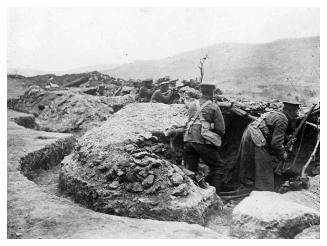
https://www.royal-irish.com/events/bulgarians-attack-10th-irish-division-the-balkans
Much against British wishes, Allied war leaders decided to maintain a military force in the Balkans. The reason for this was to establish and to secure Greek neutrality and to encourage the Romanians to join the war against the Central Powers. British and French troops then spent five months building defences around the port of Salonika in case of a Bulgarian attack. These defences stretched from the mouth of the river Vardar right round to the village of Stavros on the Aegean Sea. The defences consisted of a number of entrenched positions with machine-gun post, artillery positions and concrete pillboxes. In front of this line were miles and miles of barbed wire which led British soldiers to nickname the position ‘The Birdcage Line’.
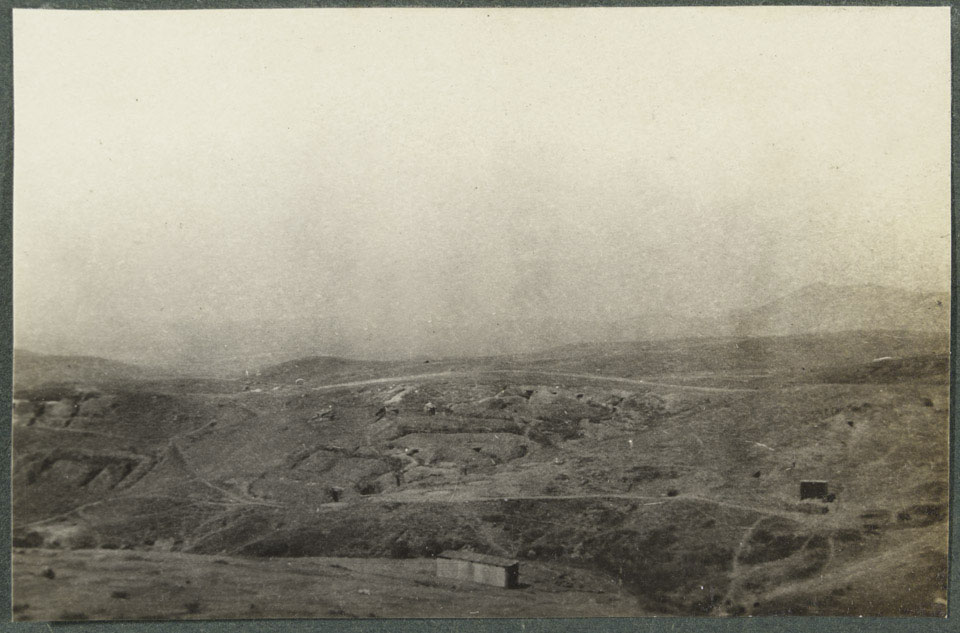
https://collection.nam.ac.uk/detail.php?acc=1997-02-18-23
Within months the city of Salonika was under allied military control. It was turned into a vast military encampment. Throughout the campaign, Salonika would remain the main supply base for the Allied Force in the Balkans.
1916
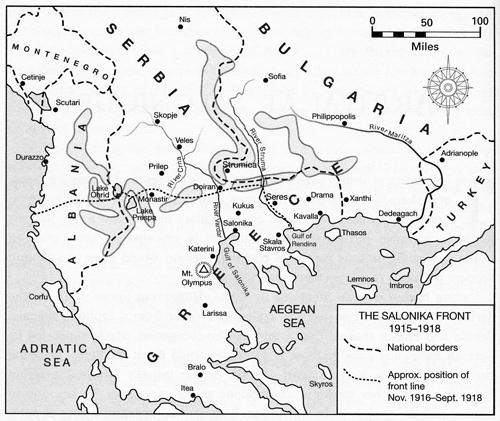
By the spring of 1916, it was obvious to General Maurice Sarrail, the Allied commander at Salonika, the Bulgarians were not going to attack the port, so he decided to move his men northwards towards Doiran and into the Struma Valley. The Allied forces quickly spread out and established a front line of around 250 miles in length stretching from the Adriatic coast of Albania round to the mouth of the Struma River on the Aegean. Holding the Allied line were 600,000 soldiers with contingents from Britain, France, Italy, Russia and Serbia. In the British and French contingents were colonial troops from India, north and west Africa and French Indochina.
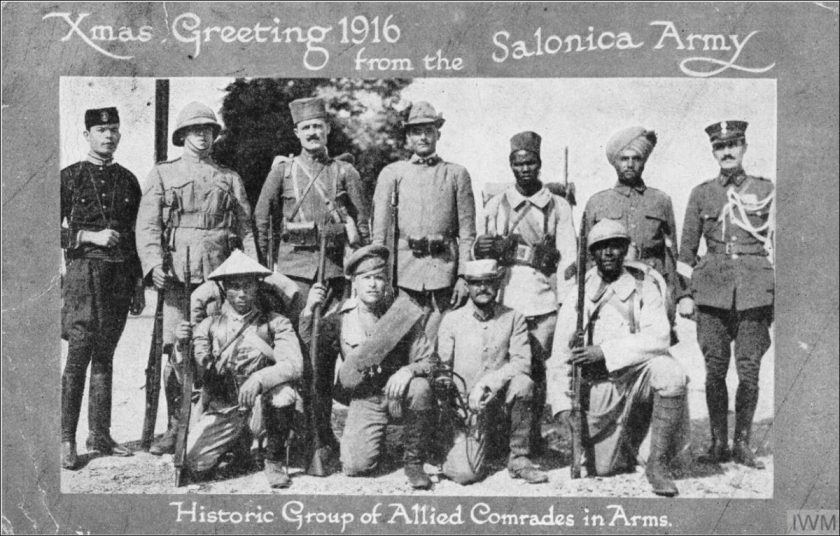
https://www.iwm.org.uk/collections/item/object/205315079
In October 1916 a Greek force joined the Allies after Venizelos arrived at Salonika and proclaimed a provisional government with his own army, The National Defence Corps. This new Greek force was supplied and equipped by the British and French. Facing the Allies across no-man’s land was the Bulgarian army. This battle-hardened force had learnt how to fight a modern war in the Balkan wars of 1912-1913. The Bulgarians were well supported by German forces – especially artillery machine guns and engineers. Some Turkish and Austro-Hungarian forces also supported the Bulgarians on the Salonika Front.
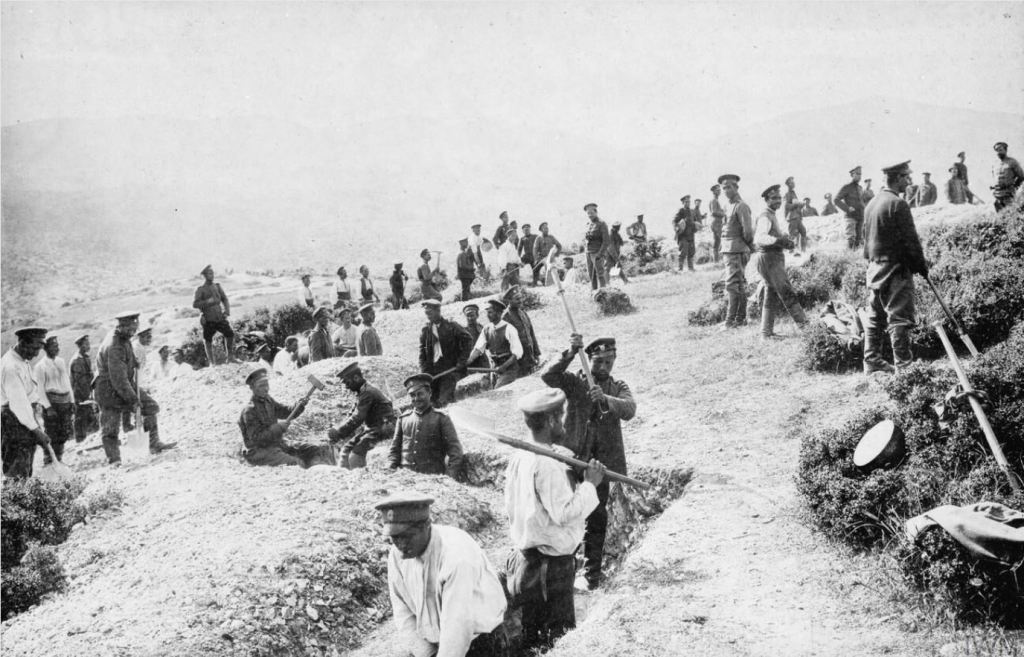
https://www.iwm.org.uk/collections/item/object/205217382
In the autumn of 1916, the Allies launched an offensive which culminated in the capture of the town of Monastir on the 19th of November. This victory placed the Serbian army back on home soil for the first time in over a year. However, lack of manpower and ammunition ensured that the Bulgarians could not be pushed from their main positions along the Salonika Front and therefore stalemate seemed set in. Unlike on the Western Front – where equipment, ammunition and manpower seemed to be available in almost endless quantities – on the Salonika Front the commanders had to husband resources to fight large-scale offensive actions and this meant they had to keep the front quiet for long periods of time. This situation seemed quite strange especially to those coming from the Western Front.
By the end of 1916, the British Salonika Force under Lieutenant General Sir George Milne was holding a 90-mile front, from the River Vardar eastward to do the mouth of the River Struma. At its peak in the spring of 1917, the BSF numbered around two hundred and twenty-eight thousand military personnel. The troops were a mixture of regular army, territorials, and new army volunteers. However, the BSF was always short in terms of reinforcement manpower, ammunition and especially artillery, as the Salonika campaign was a very low priority for the War Office in London.
1917
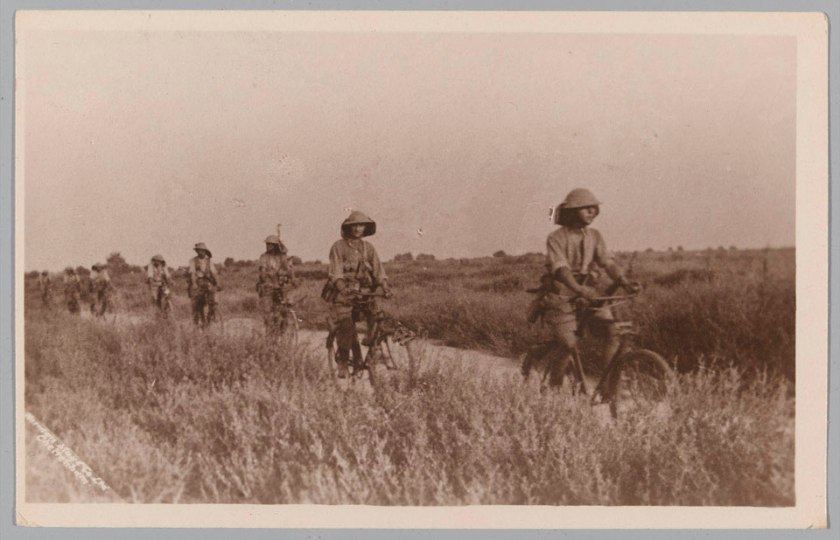
The focus for BSF activity in 1917 and 1918 was a tangled mass of hills and ravines above Lake Doiran. Here the Twenty-Second and Twenty-Six Divisions fought the Bulgarian elite Ninth Pleven Division in the two main British battles of the campaign and suffered 35% of the total battle casualties suffered by the British in Salonika. In contrast, British troops in the Struma Valley fought a low-intensity war to dominate the region. This included the capture of key villages and woods across the valley floor and the putting in of raids, patrols and ambushes launched by infantry, cavalry, and cyclists.
https://collection.nam.ac.uk/detail.php?acc=1965-09-138-32
Military activity on the Salonika front was mainly restricted to the spring and autumn as extremes of climate in the summer and winter made active military activity almost impossible. The winters were marked by bone-chilling Vardar winds, blizzards, and freezing rain but there were a few spring-like days. During the winter months the men had to guard against frostbite and trenchfoot and this was done by regular feet inspections, the changing of socks every day and the rubbing of whale oil into feet. All this was supervised by officers to ensure that this was undertaken.
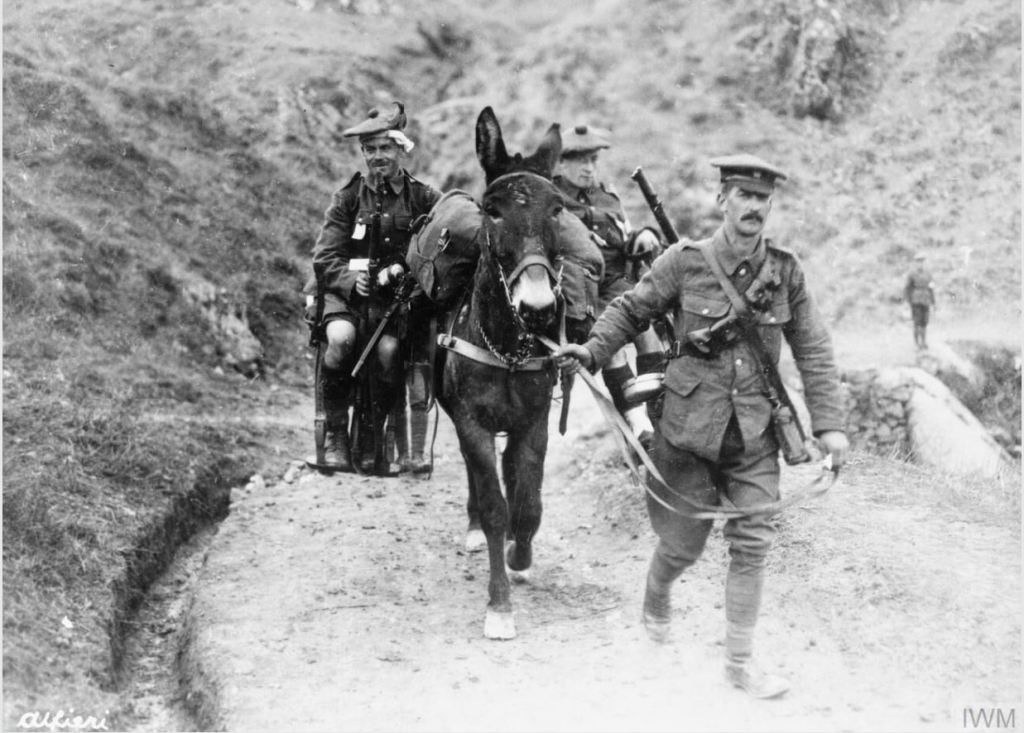
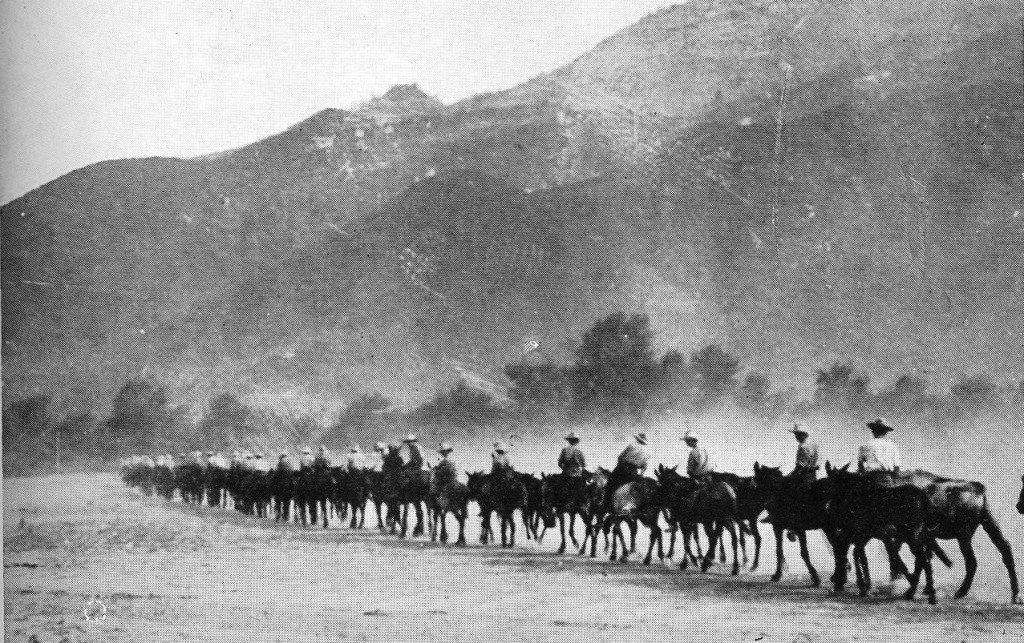
Keeping the army supplied under such winter conditions was very problematic as the few decent roads in the area broke down under the weight of the constant use of motor transport. This meant the only secure way to supply frontline troops was using pack mules. The mules carried equipment and supplies from rail heads to dumps and depots just behind the frontline.
https://www.iwm.org.uk/collections/item/object/205213272
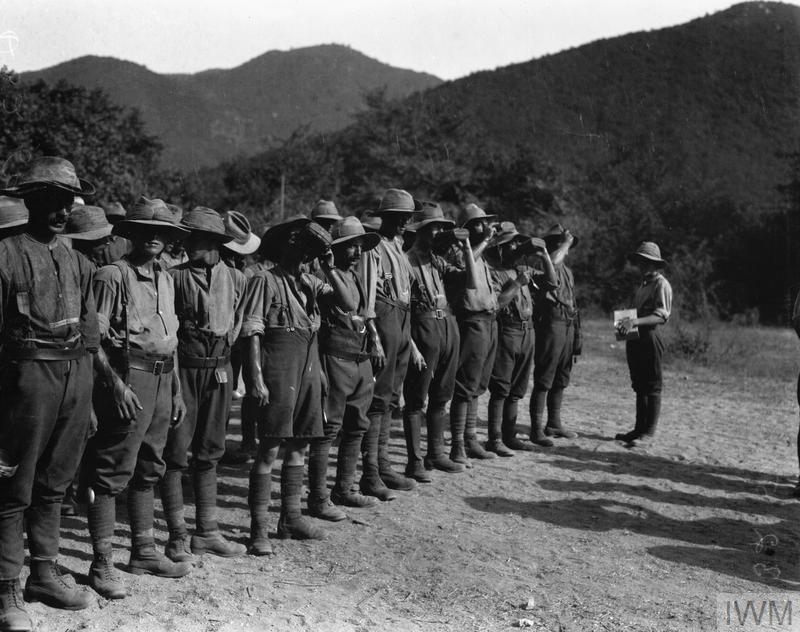
In total contrast to the winter, summers in Salonika brought temperatures of over 112 degrees Fahrenheit in the shade. During the high points of the day the men would remain in under canvas or under shade and tried not to do any work. Fatigues and training were undertaken in mornings and evenings. The summer also brought swarms of insects that made men’s life a misery and spread diseases. Chief among these were malaria carrying mosquitoes and, although the death rate for malaria was not high, the disease debilitated thousands of men on both sides – which made the conducting of active military campaigns a great problem in Salonika. Amongst British troops there were preventative measures against malaria, such as the taking of quinine powder, the use of mosquito nets in tents and dugouts, and the wearing of anti-mosquito clothing for sentries and other men on night duty.
1918
In June 1918, a new Allied commander arrived at Salonika. French General Franchet d’Espèrey was a man who knew the Balkans and he was looking for a path to victory. Nicknamed ‘Desperate Frankie’ by British troops, d’Espèrey toured the front line and was soon talking with Serbian commander, Field Marshal Mišić. The two men hatched a plan to capture the key Bulgarian railheads at Gradsko and Krivolak, 35 miles behind the frontline. Taking these two strategic points would dislocate the Bulgarian rail network all along the Salonika Front and mean that the German and Bulgarian troops would have to pull back or be cut off without supplies.
To achieve this plan, French and Serbian troops attacked into the Moglena Mountains on the 15th of September 1918 and within four days had punched a hole in the Bulgarian lines and were moving out into the plains beyond. As the Germans and Bulgarians tried to stem the Allied advance, British and Greek troops attacked at Doiran on the 18th of September. The idea here was to pin the Ninth Pleven division to their front so that none of these Bulgarian troops could move west of the Vardar River to combat the French and Serbian advance. In two days of hard fighting at Doiran, the British and Greeks suffered 7103 casualties for little gain. However not one Bulgarian soldier moved west of the Vardar River to counter to the main Allied advance.
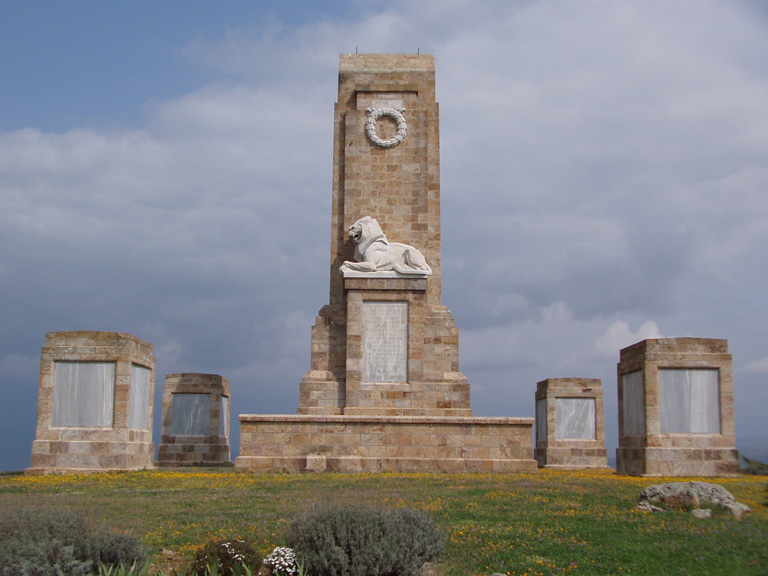
Victory was now in sight and on the 21st of September, British troops at Doiran found the Bulgarians had abandoned their positions and were in retreat. The Bulgarian army was caught by aircraft of the Royal Air Force in mountain passes near Strumitza and bombed and machine-gunned, and their retreat was turned into a rout. Evidence of this action was found with British troops following the Bulgarian advance when they found abandoned vehicles, smashed equipment and dead horses strewn along the roadside.
Unable to stop the Allied advance, and with their army disintegrating, the Bulgarian government called for an armistice. This was signed on the 29th of September and came into force at noon the following day. However, these dramatic events in the Balkans were quickly forgotten with the coming of the signing of the armistice with Germany on the 11th of November 1918, which brought the First World War to a close.
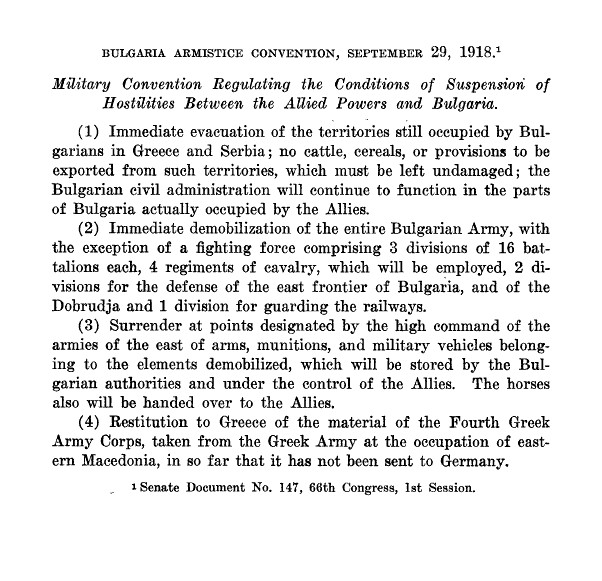
By The signatories/negotiators (and/or their unknown aide-de-camps. – US gov, Public Domain, https://commons.wikimedia.org/w/index.php?curid=10310748
Legacy
Little regarded by the British public during the war, the Salonika Campaign quickly became a forgotten sideshow and the British Salonika Force a forgotten army. To keep the story alive, veterans of the BSF formed the Salonika Reunion Association in 1924. Membership of this group was open to anybody who had served with a British unit in the Balkans during that war.
https://salonikacampaignsociety.org.uk/salonika-reunion-association-centenary/
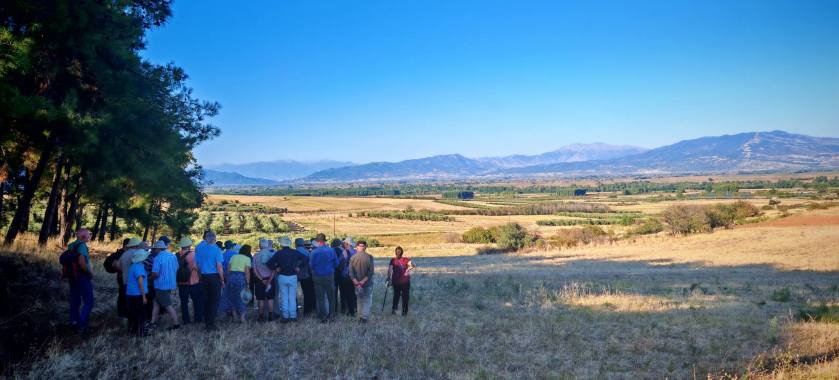
Since the passing of the last Salonika veterans, the story has been kept alive by members of the Salonika Campaign Society. The Society studies the campaign and publishes a journal twice a year, which includes many personal accounts from Salonika veterans that have been given by family members for publication. In addition, we run battlefield tours to the old Salonika battlefield sites in Greece and FYRoM, the Former Yugoslav Republic of Macedonia, where we look at the Struma Valley, Doiran and Kostorino as the three main battlefield areas.
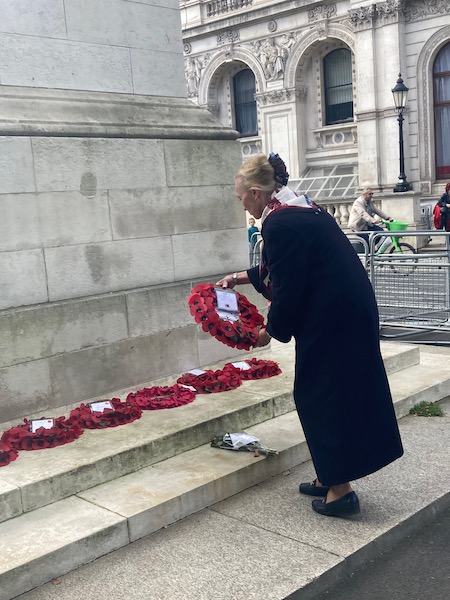
In the UK the Society has an annual meeting in October with wreath laying at the Cenotaph and a historical lecture on a theme of the campaign. We also have a plot at the Royal British Legion Field of Remembrance and through these activities we ensure that the memory of those who died in the campaign is not forgotten.
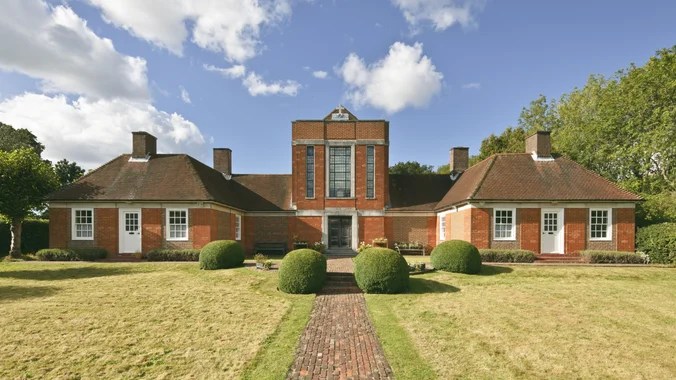
The National Trust’s memorial chapel is the nearest one can get in the UK to a memorial to the men and women of the British Salonika Force. The chapel is dedicated to the memory of Lieutenant Harry Sandham who died of illness in 1920 shortly after returning from Salonika. The chapel is decorated by murals by the famous artist Sir Stanley Spencer. These depict his time as a medical orderly at the Beaufort War Hospital in Bristol as an orderly and then infantryman in Salonika.
https://www.nationaltrust.org.uk/visit/hampshire/sandham-memorial-chapel
The Sandham Memorial Chapel is the one place in Britain where the Salonika campaign is still remembered today.
Find out more:
- Away from the Western Front: Salonika (film)
- WFA talk: ‘Mules, Mountains and Malaria’ by Alan Wakefield (film)
- Imperial War Museum: A Short History of the Salonika Campaign
- National Army Museum: Salonika Campaign
- BBC Radio 4 podcast: Voices of the First World War – Salonika
 Salonika Campaign Society, 1915-1918
