
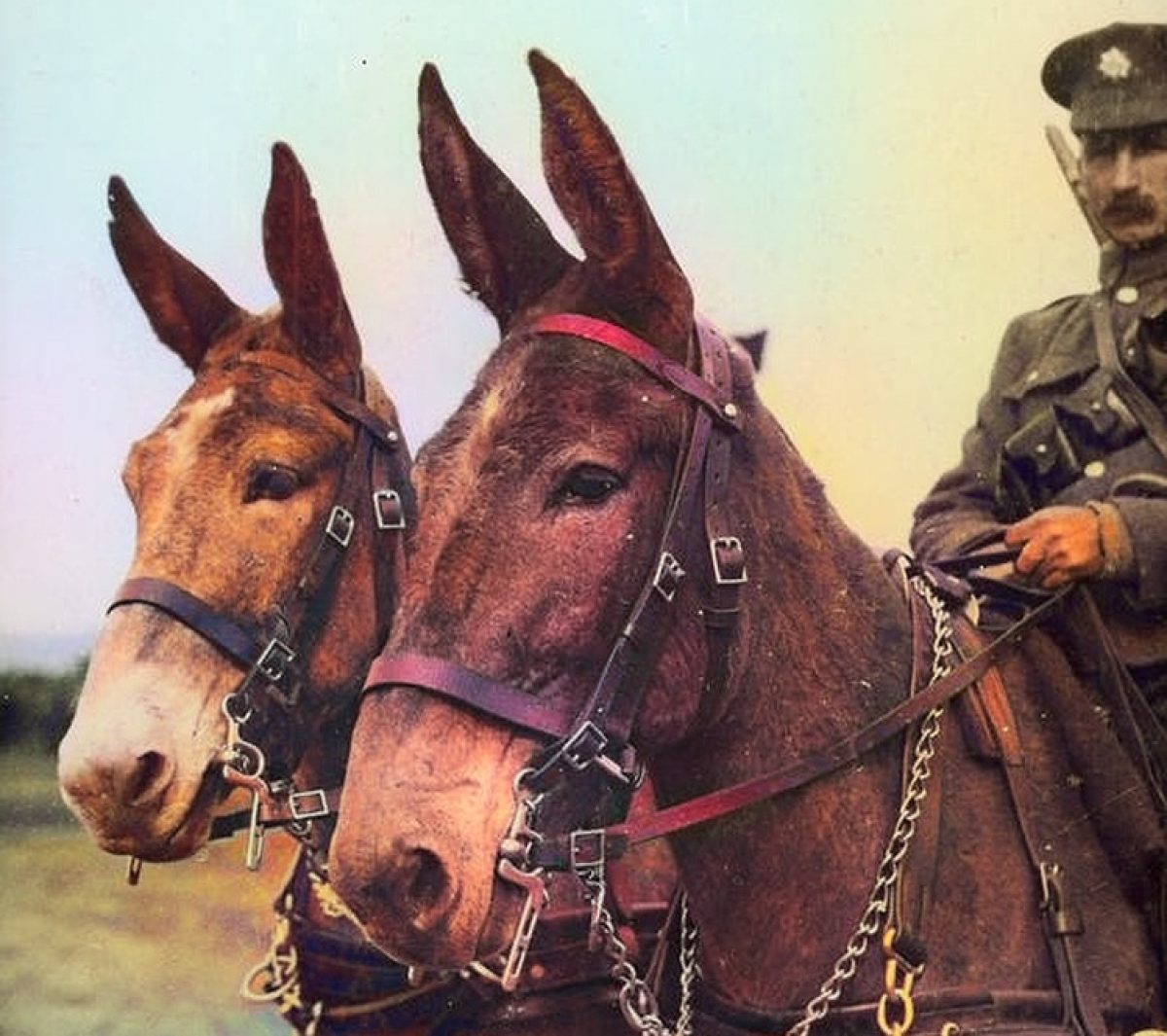
Eight years ago, at the start of the centenary of the Macedonian campaign, the Society ‘adopted’ Muffin, a mule at the Redwings Horse Sanctuary at Caldecott in Norfolk. This was to acknowledge the huge contribution made by animals – especially mules – in the campaign. Through his column in ‘The New Mosquito’ we have learned more about mules in general and Muffin in particular. It has been clear from recent updates, though, (the last is in the forthcoming NM48) that Muffin has been feeling his age and experiencing declining health. So it was sad, but not altogether surprising, to receive this from Redwings:
Staff at Redwings Horse Sanctuary are heartbroken to announce the death of Muffin the mule, its much-loved and longest serving Adoption Star.
The beloved boy was 36 years old and had been at Redwings since he was rescued from slaughter in 1987 along with his mum, a pony called Doris, when he was just a tiny foal.
Tragically, Doris passed away shortly after their arrival at the Sanctuary when it was discovered she had a stomach ulcer. Baby Muffin had become friends with another youngster – April – and, with the support of the Redwings staff who cared for him, went on to become one of the charity’s most famous Adoption Stars for 30 years.
The Redwings Adoption Scheme allows people to support the charity through sponsoring one of their residents, who in turn receive updates on their lives as well as the chance to visit them. The funds raised go towards the care of their friend and that of the other horses, ponies, donkeys and mules at Redwings.
Lynn Cutress, Redwings Chief Executive, said: “We know so many people will be upset to hear this news. It’s left a huge hole in the hearts of all the staff here at Redwings and we know our supporters will feel that too.
“When people discover you work here, they always tell you that they remember Muffin and ask if he’s still with us. They tell you that their grandparents or parents sponsored him for them as gifts, and they grew up with his pictures on their childhood bedroom walls.
“Some families sponsored him for generations, and our priority was to write to them all personally before announcing this publicly as we wanted them to be the first to know.
“Visitors to Redwings Caldecott, where he lived, were delighted by Muffin’s friendly nature and mischievous ways for over three decades, as of course were the staff who cared for him day in and day out. We all loved him dearly.”
In his later years Muffin was diagnosed with Cushing’s disease (PPID) which made him prone to a painful hoof condition called laminitis. As a result of his specialist needs, which increased with his age, Redwings retired him from the Adoption Scheme in 2017 so he could enjoy a quieter life with his friends.
As such an elderly boy, it was becoming increasingly challenging to care for him without him needing to have extended periods of time away from his herd. The recent addition of front shoes helped him feel more comfortable, and happily he had recently been living on a more-gentle woodchip paddock at his Caldecott home with a friend. Unfortunately, he had become very reluctant to take his medication and despite his carers trying various foods and methods of feeding and providing him with enrichment activities to improve his emotional health whilst in vet care, these measures were not working as well as was hoped. Sadly, on 11th September, it was decided that the kindest thing to do was to put Muffin to sleep to prevent his health and comfort deteriorating.
Laura Starkey, Redwings Caldecott Equine Centre Manager, said: “Our staff and the vet team cared for Muffin with such love and dedication.
“Muffin was one in a million, such a patient, calm boy. He loved his feed, and would often stand waiting by his bowl, 30 minutes before time, with a face that said: ‘What’s been keeping you?’. He took life at his own pace and you certainly couldn’t rush him. He has been here since the beginning of Redwings Caldecott and we will miss him terribly.”

Muffin receiving his SCS membership certificate and badge from Robin Braysher on his birthday in April 2016 – ginger biscuits may also have changed hands! (Photo by Robin Braysher).

Young Muffin and mum, Doris, in 1987 (thanks to Redwings for the photo).

The birthday boy, April 2023 (thanks to Redwings for the photo).

Muffin at sunset, summer 2023 (thanks to Redwings for the photo).
 Salonika Campaign Society, 1915-1918