
by Jake Gasson*
As much as the malaria, harsh climate, and isolation of soldiering up-country, what came to define the Salonika Campaign in the eyes of British soldiers was the variety of Allied armies deployed to Macedonia. British, French, Italian, Serbian, Russian, and Greek troops (not to mention contingents from across the British and French colonial empires) all served alongside one another in the ranks of the French-led Armées Alliées en Orient (Allied Armies in the East). The sheer diversity of this multinational force made interallied friction an inevitability; from the generals and politicians responsible for directing the campaign down to the rank and file, who had to overcome differences in language, race, and culture to live and fight together – not to mention weather the effects of the high-level political disputes and battlefield defeats which marred the campaign.

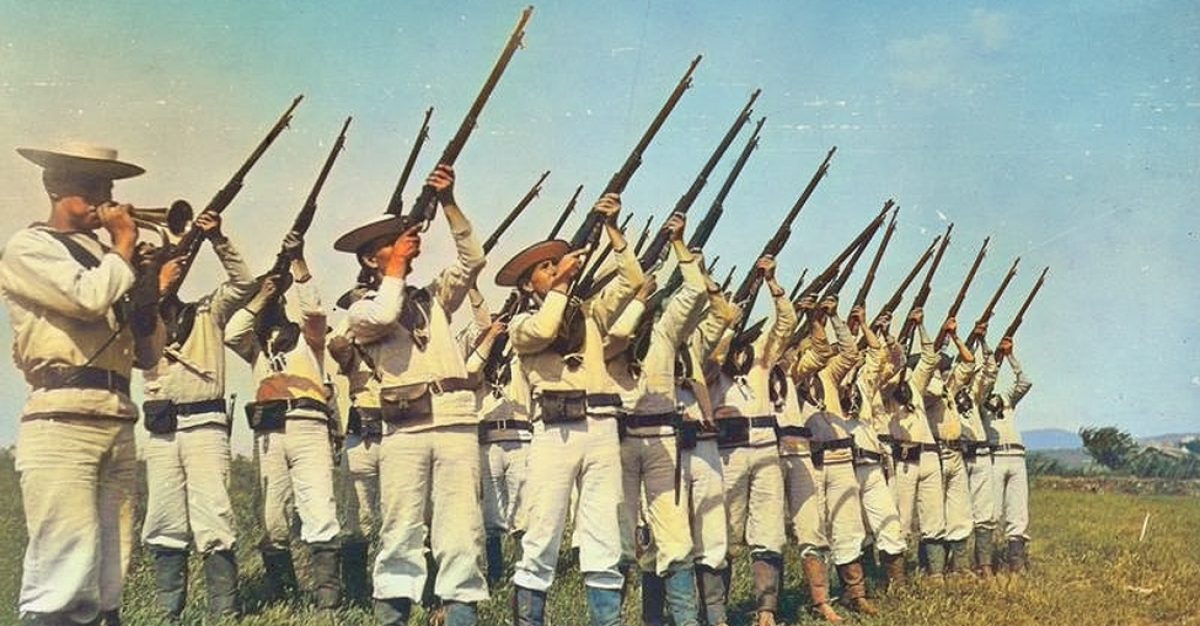
When the British Salonika Force attacked either side of Lake Doiran on 18 and 19 September 1918, in what would become known as the Second Battle of Doiran, British troops did not go over the top alone. The Greek Serres and Cretan Divisions spearheaded the assaults of XII and XVI Corps. Both were formations of Venizelist volunteers raised by the Provisional Government of National Defence prior to Greece’s formal entry into the war the previous summer. Lieutenant General Sir Henry Fuller Maitland Wilson, the commander of XII Corps, was also assigned the French colonial troops of the 2nd Bis Regiment of Zouaves. While part of the French Armée d’Afrique rather than the metropolitan French army, this designation reflected their institutional organisation rather than composition, with the ranks drawn from the white population of North Africa and supplemented by volunteers and drafts from France itself. After serving in some of the fiercest battles of 1914-15 on the Western Front, the 2nd Bis Regiment had served at Salonika from the inception of the campaign, participating in the Serbian campaign in 1915, as well as the defensive and counteroffensive operations of 1916 around Florina and in the Cerna Bend.

At Doiran, the Zouaves remained in Corps Reserve during the bloody repulse of the 22nd and Serres Divisions on the first day of the battle. The heavy losses suffered by the assaulting formations of XII Corps left only the 77th and 65th Brigades available to renew the assault, despite the latter having been ravaged by the Spanish Flu. One battalion of the 65th Brigade, the 9th King’s Own Royal Lancaster Regiment, was tasked with attacking Pip Ridge in conjunction with the Zouaves. In eventuality, the 9th King’s Own attacked entirely unsupported. While moving up to their assembly point in Jackson Ravine, the main column of Zouaves came under harassing artillery fire in Doljeli Ravine, which inflicted 50 casualties, including the commander of one battalion, and led the Zouaves to scatter. Because the new battalion commander refused to advance until the shelling of Jackson Ravine had ceased, few reached their assembly point, and the 2nd Bis Regiment played no part in the attack. Major General Sir John Duncan, commander of the 22nd Division, attempted to halt the assault of the 9th King’s Own but his orders failed to reach the battalion in time, who proceeded to attack through the British barrage and suffered 233 casualties.
Overall, the renewed assault on 19 September ended in another bloody failure. In all, the losses sustained by the British units of XII Corps totalled 349 officers and 5,891 other ranks. Although their efforts around Doiran tied down Bulgarian troops, enabling Allied forces elsewhere to land the knockout blow, British soldiers searched for scapegoats for their defeat. Some blamed the Greeks, but others serving in units under XII Corps severely criticised the Zouaves for failing to attack. In his report to XII Corps after the attack, Major-General Duncan noted that their failure to advance had left the left flank of the 77th Brigade dangerously exposed. As a result, the 12th Battalion Argyll and Sutherland Highlanders, who had captured the position known as the Tongue, suffered from heavy machine gun fire as well as faced a Bulgarian counterattack from this direction.
Attributing blame to the Zouaves became an increasingly entrenched view in the interwar years. Cyril Falls, the British Official Historian, considered that their failure to reach their assembly positions had ‘made the task of the British troops impossible.’ In his anonymous memoir Fusilier Bluff: The Experiences of an unprofessional soldier in the Near East, 1918 to 1919, Colwyn Edward Vulliamy. labelled the Zouaves ‘unreliable’, a charge repeated when his account of the Second Battle of Doiran was republished by Sir John Alexander Hammerton in his series The Great War: ‘I Was There!’ under the title ‘I Saw the Futile Massacre at Doiran: A Plan that was Doomed to Failure’.
Almost fifty years after the Second Battle of Doiran, the culpability of the Zouaves resurfaced in the pages of The Mosquito. In 1968, Number 161 of the journal witnessed a fierce defence of the Zouaves sparked by a reprint in the previous edition of Vulliamy’s article from The Great War: ‘I Was There!’. A Colonel H.F. Heywood, who had served at XII Corps Headquarters during the battle, wrote furiously to the editor, enraged by “the slurs cast anonymously by ‘Unprofessional Soldier’ on a regiment of Zouaves”, as well as his criticisms of British officers and Milne specifically. He considered the charge of unreliability groundless given their heavy losses, having suffered severely from Bulgarian artillery fire:
“The floor of the ravine was so thickly carpeted with their corpses that two regiments which late had to cross the ravine reported that they had to walk on the bodies in order to get across.“
Heywood also invoked the example of one Zouave whose body he had come across after visiting the Devil’s Eye atop the Grand Couronné:
“His throat was slit from ear to ear. Had he refused to ‘talk’? Does ‘Unprofessional Soldier’ think him unreliable?”

Ultimately, the British and their allies had emerged victorious in Macedonia. But such an exchange in The Mosquito reveals the persistent and deep-seated tensions evident in the conduct of coalition warfare. That alliances during the First World War extended far beyond the remit of political and military leaders is often undeservedly overlooked. On the ground, officers and soldiers had to grapple with the formidable task of turning strategic and operational decisions into battlefield success, the aftershocks of which persisted long after the guns had fallen silent.
*Dr Jake Gasson is a National Army Museum Fellow based at King’s College London, where he is a postdoctoral researcher. He obtained a DPhil from Pembroke College, Oxford, specialising in the Macedonian front of the First World War. Jake is the first recipient of the Salonika Campaign Society’s Philip Barnes Bursary.
Discover more from Salonika Campaign Society, 1915-1918
Subscribe to get the latest posts sent to your email.
 Salonika Campaign Society, 1915-1918
Thank you for publishing this article.