
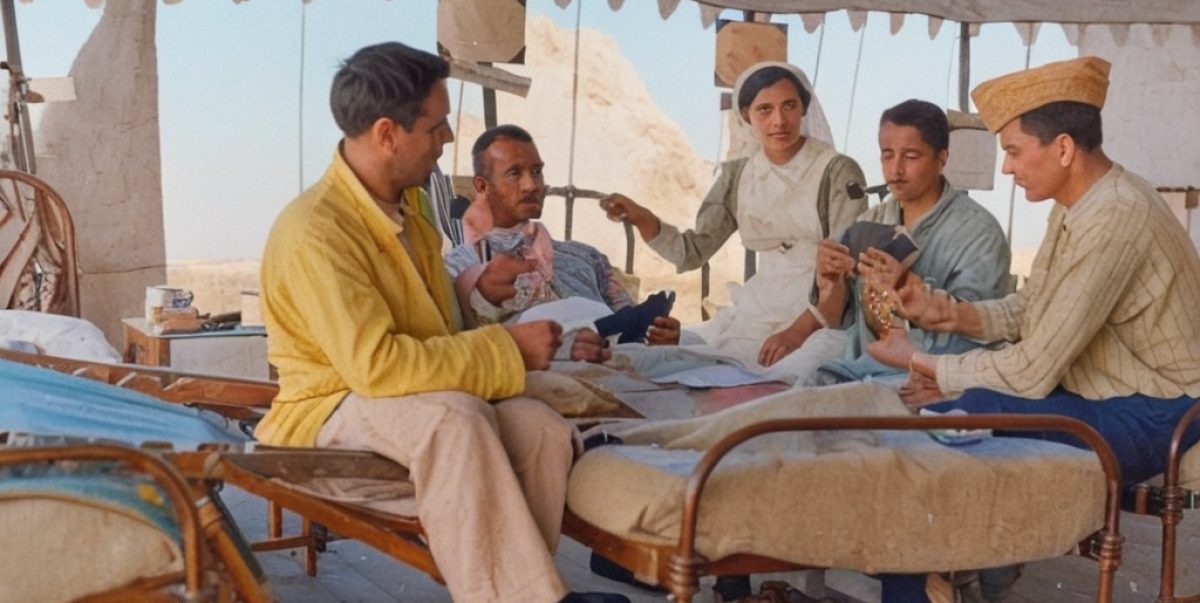
On Burn’s Night (25 January) I introduced William Richmond who, at the age of 20, enlisted in the 10th (Service) Battalion of the Royal Highland Regiment (Black Watch) on 11 September 1914. After finding themselves in various English camps during 1915 and spending two months in France the Battalion, with the rest of 26th Division, started heading off for Salonika – via Marseille – in November 1915.
The Society is grateful to William’s grandson – Iain Richmond – for sharing with us, not just photographs, but other items that William kept from his time with 10/Black Watch. These include both of his identity discs. Known to the troops as ‘cold meat tickets’, the fibre discs were issued in pairs from August 1916 – so these were issued in Salonika – with, in the event of death, the green one to remain with the body and the red to be removed for recording the casualty.

Given their age, these discs are in remarkably good condition and clearly show the information recorded: service number (5292), rank and name (LANCE CORPORAL W. RICHMOND), unit (10Royal Highlanders) and religion (PRESbyterian).
After a spell at Lembet, by early February 1916 26th Division was concentrated at the inappropriately named ‘Happy Valley Camp’. The winter would have been a miserable business, with much digging of the famous ‘Birdcage Lines’, where the Division was positioned north-east of Salonika, to the west of Lake Langaza. But it wasn’t all digging …
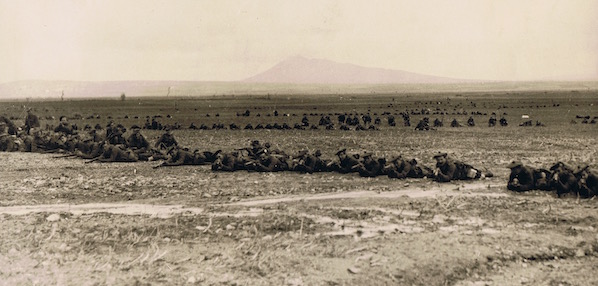
This official photo (220 – from my collection) cheerfully notes: Tommy (Jock, surely?) in Macedonia is kept fairly busy with spade and pick, and manoeuvres as well as sports are looked upon as welcome reliefs from continual digging. A sham attack by two battalions on our positions – The Advance. Related photos in the IWM Collection – Q 31800 and Q 31791 – suggest that the two highland battalions shown are 10/Black Watch and 12/A&SH, both from 77th Brigade.
Another official photo, reproduced in The Mosquito, shows 77th Brigade on the march in April 1916 during a tactical exercise, with 10/Black Watch in the lead.

Photo on the front cover of The Mosquito, number 41, March 1938; all copies of this fascinating and valuable publication are available on DVD from the SCS! The destination, Ambarkoi (Ambarkeuy), is about 25 miles (40km) north of Salonika.
In the summer, the BSF moved up country with the 26th Division taking up positions on the Doiran front, where they would remain for the rest of the campaign, although 10/Black Watch was not destined to remain to the bitter end.
In April 1917, William Richmond was lucky enough to get leave back to the UK, something that obviously meant a lot to him as he retained the combined leave and rail ticket (3rd class) to Coatbridge in North Lanarkshire – via Le Havre and Waterloo Station – which was quite a journey from Salonika!
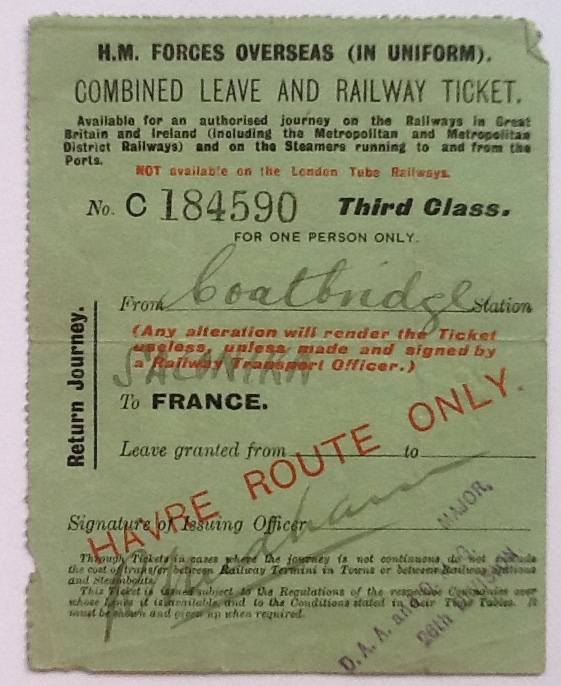
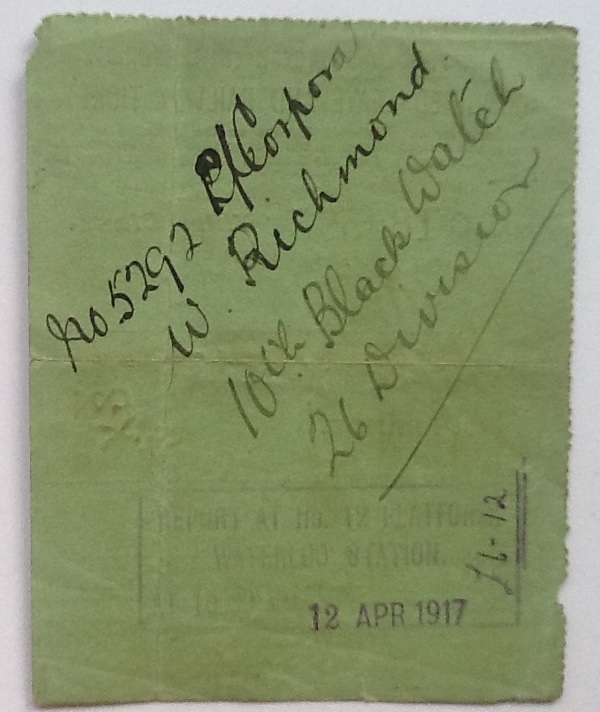
On his return to Salonika 10/Black Watch faced their first major action: at Doiran on 24-25 April and 8-9 May 1917. Many years later another William in 10/Black Watch – Private William Gibb Stuart MM – recorded his recollections in The Mosquito (No. 42, June 1938, pp50-51) as, on behalf of the 10/Black Watch Old Comrades Association, he wrote to affiliate the OCA with the Salonika Reunion Association:
To all ranks who served with the 26th Div., the days passing now will bring back memories of the impossible task given to the British Troops between April 28th and May 8th and 9th, 1917 – 21 years ago. In fancy I see the scarred top of Grand Courroné still mocking, live over again the awful crawl down the Wylie Ravine, feel the jolts of that stretcher journey down the Jumeaux and still dream at nights of a runaway mule-drawn ambulance waggon taking everything in its stride to the dressing station.
William Richmond’s story will continue …
Discover more from Salonika Campaign Society, 1915-1918
Subscribe to get the latest posts sent to your email.
 Salonika Campaign Society, 1915-1918