
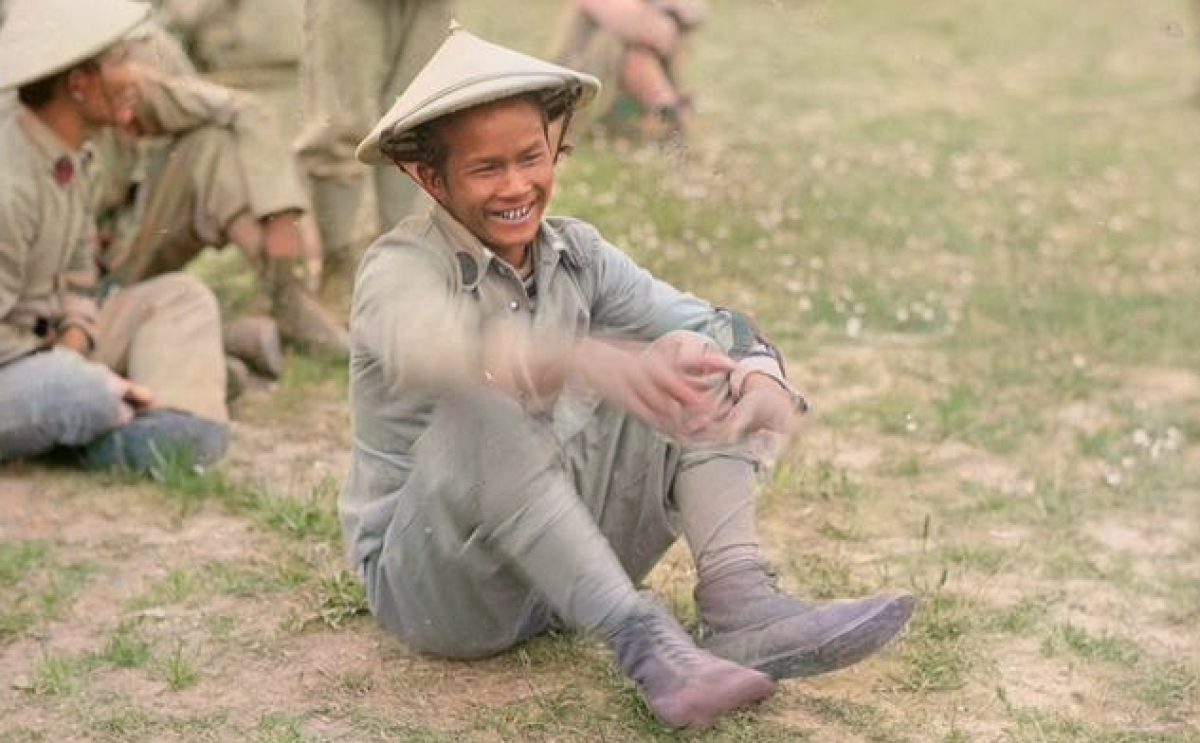
With Bonfire Night a rather damp memory we are now very firmly in the season of remembrance, although for our Society remembrance of the achievements, suffering and sacrifice of the British Salonika Force – and associated organisations, individuals and even animals in the campaign – is ongoing and not restricted to a specific time of year. Even so, members and friends will be gathering at war memorials across the country and at CWGC cemeteries further afield in the coming week.
I’ve long been fascinated by war memorials, which come in different shapes and styles: the one where I grew up (Barnet) has a splendid ‘winged victory’, but as she’s topless it was a bit embarrassing!; my local one (Dereham, Norfolk) is a sober Cenotaph lookalike; Bishop’s Stortford memorial once caught my eye because it has items of soldiers’ kit carved in stone; I rather like the one in Cambridge, showing a fully equipped ‘Tommy’ swinging along in fine style with victors’ laurels slung on his rifle. I think, though, that my favourite is in Rawtenstall, Lancashire.
I have mentioned it before, but make no excuse for including it again. What makes it so interesting is that it isn’t just about the army, or even the wider armed services in the First World War, nor is it dedicated to ‘The Glorious Dead’ alone, but has a much wider dedication. Entitled Tribute of Honour, it reads as follows:
To the men who made the supreme sacrifice, to the men who came back and to those who worked at home to win safety for the Empire. 1914-1918.
No mention of women specifically in the dedication, but they certainly feature in the friezes around the base of the memorial, which I shared with you on an International Women’s Day. For this remembrance season here are all the friezes, showing many aspects of the war effort at home and overseas.
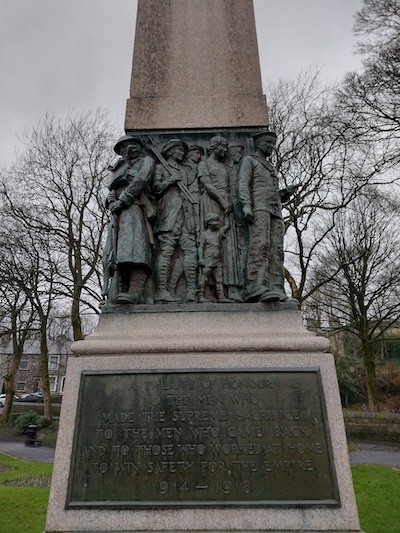
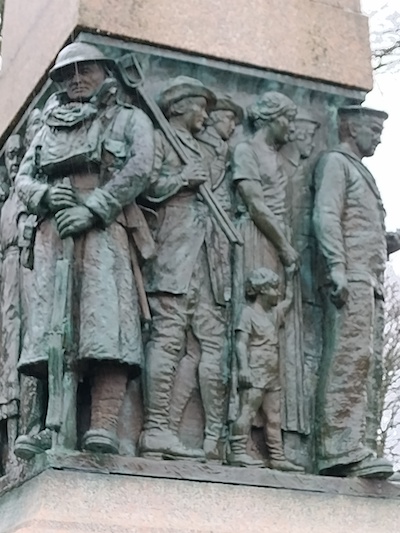
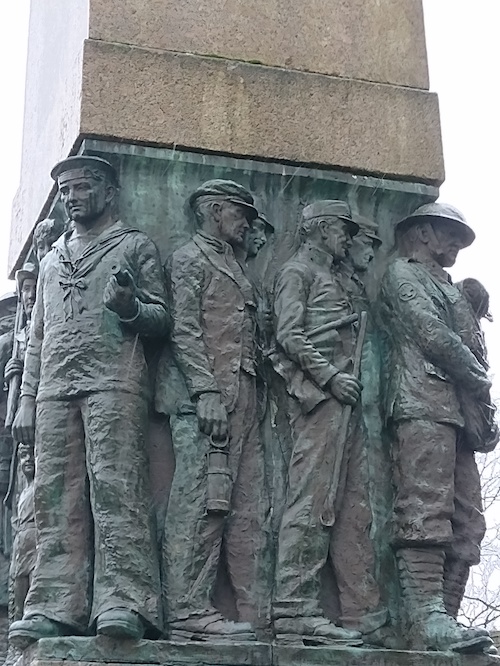

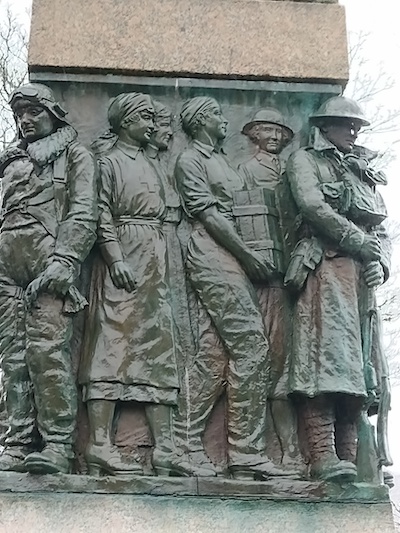

We will remember them all.
Discover more from Salonika Campaign Society, 1915-1918
Subscribe to get the latest posts sent to your email.
 Salonika Campaign Society, 1915-1918